Full Article
about Villacarrillo
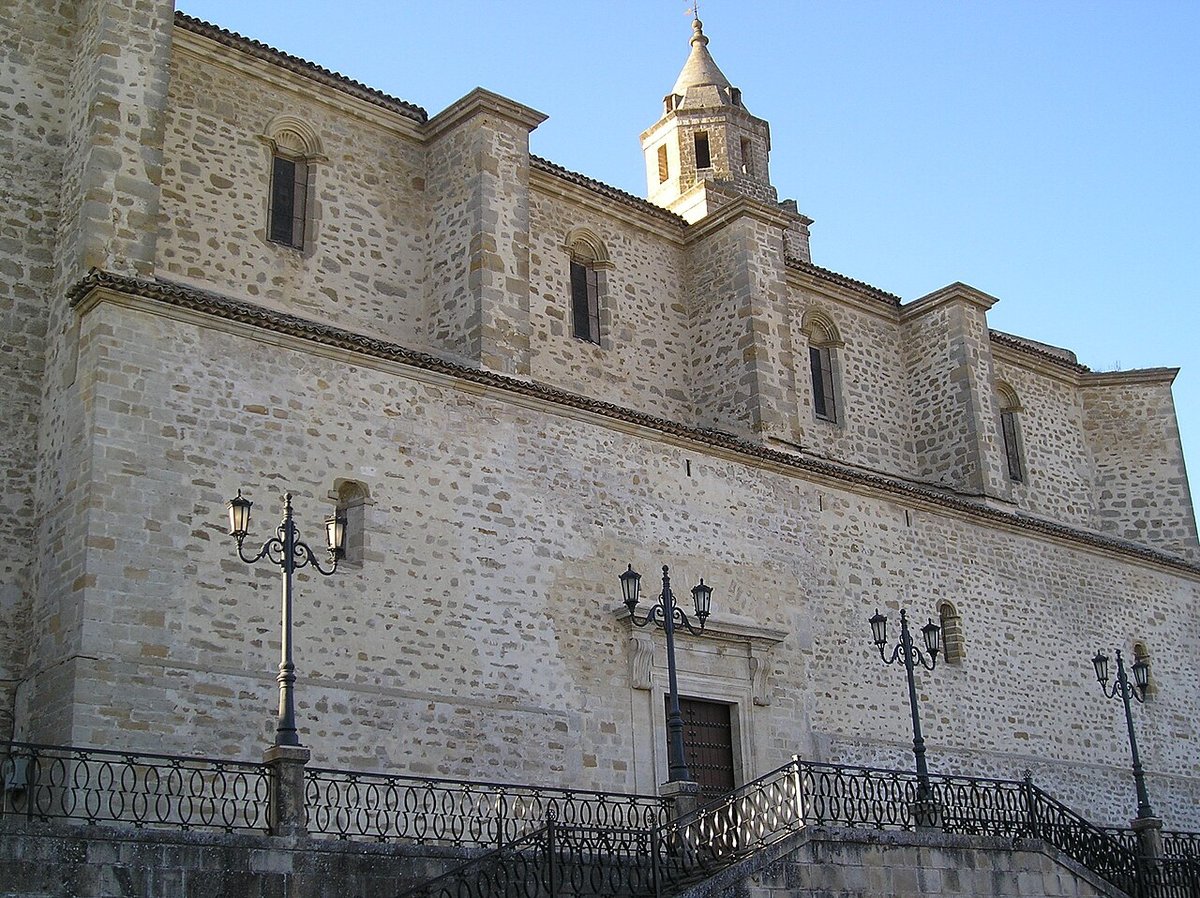
Gateway to the Sierra de las Villas; its standout feature is the monumental Church of the Asunción, a Vandelvira design.
Hide article Read full article
An olive town in full view
If you are looking up tourism in Villacarrillo, the first thing you notice is not a monument. It is the olive lorries. They pass frequently along the N-322, piled high, carrying the smell of freshly milled fruit that lingers in the air. Villacarrillo lives off olive oil and makes no attempt to disguise it. There are more tractors than cameras here.
The drive in from Jaén along the N-322 is long and repetitive, kilometre after kilometre of olive groves with barely a change in scenery. At the junction, the town appears on the hillside, rising above the ordered lines of trees.
Parking is rarely a major issue. In the central streets there is sometimes regulated parking, so it is worth checking the meter, but usually a couple of turns around the block will do. During festivals or in August it can be trickier.
Those planning to head out on foot towards the sierra often leave the car near the sports areas or in the upper part of town and set off from there. There is more space and it avoids navigating the narrower streets.
La Asunción: stone and scale
The Iglesia de la Asunción dominates the skyline. You spot it quickly, yet it is worth stepping inside. The scale surprises, larger than expected for a town of this size. The project is attributed to Vandelvira in the 16th century, a name closely linked to Renaissance architecture in this part of Andalusia.
Inside, stone sets the tone. Thick columns, height and very little ornamentation. Looking up, everything draws the eye upwards. The impression is solid rather than decorative. Beneath your feet are old gravestones. Most people walk across them without much thought, but they have formed part of the paving for centuries.
It is the kind of building that anchors a place. In Villacarrillo, the church is the clearest architectural statement, visible from different points as you move through the centre.
A ruined tower and a sea of olives
Behind the old quarter lie the remains of former defensive structures. The watchtower known as Mingo Priego is essentially a ruined tower, reached by a dirt path. It is not restored into a visitor attraction. What it offers are views.
From the top, the logic of the location becomes clear. This was about visual control of the valley and the routes that once crossed the area. Today the view is a vast expanse of olive groves, stretching out in all directions. On clear days, the surrounding sierras form the backdrop.
The landscape explains much about the town. The economy, the traffic of lorries, the rhythm of daily life during the olive harvest all connect back to that panorama. From above, Villacarrillo feels part of a much larger agricultural system.
Food rooted in the land
Local cooking follows the same logic as the landscape: direct and filling.
Ajilimójili villacarrillense combines garlic, olive oil and crushed hard-boiled egg into a thick mixture. It is usually served alongside spoon dishes such as lentils, adding richness and heat.
Ochíos con miel are wheat dough cakes cooked on a hot plate and covered with honey. They disappear quickly and leave your fingers sticky. Simple ingredients, immediate effect.
Field dishes also appear, including andrajos con conejo. These are strips of dough simmered in a robust stew with herbs and a thick broth. They are more about substance than presentation.
At festivals and popular gatherings, gazpacho manchego prepared in the style of this area is common. It differs quite a bit from versions found in other parts of Castilla-La Mancha, reflecting local preferences and traditions.
The food here makes sense in context. Olive oil is central, portions are generous, and recipes lean towards what sustains rather than what decorates.
Walking out towards the Sierra de Cazorla
Behind Villacarrillo the land rises towards the Sierra de Cazorla. Marked routes and footpaths gain height quickly. Some climbs exceed 600 metres of elevation with little difficulty, so carrying water and pacing yourself is advisable, particularly in summer.
The shift is noticeable. One moment you are among houses and olive groves, the next on tracks that lead into rougher terrain. The sierra feels close and accessible, even if the effort required should not be underestimated.
For something gentler, near the Guadiana Menor there are fairly flat paths that can be followed without hurry. These are straightforward walks, the sort you can do over the course of a morning. Wildlife sometimes appears along the riverbank, though there are no guarantees.
This contrast between steep mountain routes and easier riverside strolls gives Villacarrillo a practical advantage. You can choose between a demanding ascent or a relaxed walk, all starting from the town itself.
Corpus and the local calendar
Corpus Christi is usually the moment when Villacarrillo most visibly takes to the streets. The procession winds through the centre and tends to last a long time. The monstrance carried in the procession is old and heavy, and the effort of those bearing it becomes clear when they turn into narrow streets.
Beyond Corpus, the annual cycle follows the familiar Andalusian pattern: a spring romería, Holy Week processions and the August fair. These are local celebrations first and foremost, with fewer visitors than in other towns in the province. The atmosphere is shaped more by residents than by tourism.
A town that keeps its pace
Villacarrillo does not live off tourism, and that is evident. The main points of interest are the Iglesia de la Asunción, the views across the valley and the relative proximity of the sierra.
It is a place to approach without haste. A walk through the centre, a short climb for the panorama, perhaps a longer route if the weather allows. Little more is required.
If driving in the area during the olive harvest season, patience helps. The lorries set the rhythm. In Villacarrillo, olive oil comes first, and everything else fits around it.