Full Article
about Villanueva del Arzobispo
Town with a striking bullring and Marian shrine; major olive-growing activity
Hide article Read full article
There is a moment, just as the road begins to climb towards the sierra and the town comes into view, when the smell shifts. It is not only pine. It is the scent of the almazara, of freshly milled olives, drifting in unexpectedly. That is often the first association with tourism in Villanueva del Arzobispo. Before seeing much at all, it is clear this is olive oil country.
Villanueva del Arzobispo lies in the comarca of Las Villas, right beside the vast natural park of Cazorla, Segura y Las Villas. That setting shapes its character. It is both an agricultural town and a gateway to the mountains.
A Town with the Title of City
The sign reading “Ciudad de Villanueva del Arzobispo” can raise a smile at first glance. The title of city was granted at the start of the 20th century, and once that is known it carries more weight.
Within Las Villas, Villanueva is one of the largest and most active population centres. There is daily movement in the streets, open shops and a steady flow of people throughout the day. It does not feel like a place that has slipped into quiet isolation, as can happen in other mountain settlements.
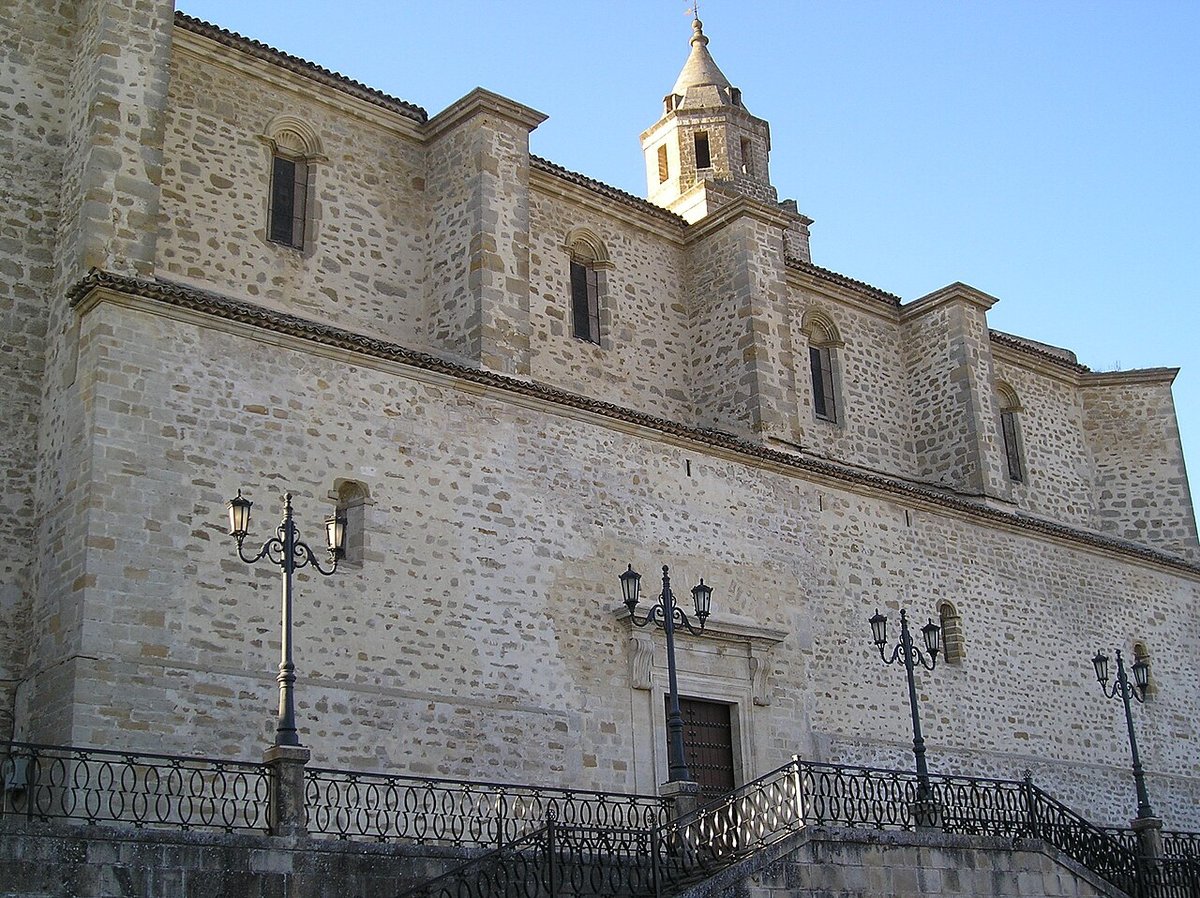
The centre is easy to explore on foot. Streets rise and fall, lined with whitewashed houses and the occasional square where conversations drift across benches and doorways. The Iglesia de Santa Ana stands out over the townscape. It is not a landmark visible from miles away, yet at close range it has more presence than photographs suggest.
There is also the bullring, known as La Perla del Sur, built in a neo-Mudéjar style. Even visitors with little interest in bullfighting often pause to look at the building itself, drawn by its architecture rather than the events traditionally associated with it.
Cervantes, Here on Business
Villanueva del Arzobispo appears in the biography of Miguel de Cervantes for reasons far removed from literary fame. For a period, he worked as a tax collector linked to grain, travelling through various towns in the province of Jaén.
It is easy to picture him on dusty roads, ledger in hand, listening to the complaints of farmers while calculating accounts. It was hardly a glamorous role, yet such jobs were a regular part of his life before recognition arrived through his writing.
Today, this episode is remembered locally as a historical curiosity rather than a major attraction. It adds a layer to the town’s past without dominating it.
Gateway to the Sierra de Las Villas
The steady movement in Villanueva del Arzobispo is partly explained by its proximity to the natural park. Many travellers pass through before heading further up into the mountainous areas of Las Villas.
Within a short drive, the scenery changes noticeably. Olive groves stretch across the lower slopes. As the road climbs, pine forest and denser woodland take over. The shift is quick and striking.
Several walking routes and paths cross the area. Some follow old tracks once used by shepherds and local residents moving between cortijos and small hamlets. They trace practical routes that predate modern roads.
One of the best-known trails has a name that sounds dramatic: Senda de los Muertos. The reality is calmer than the title suggests. It is usually walked on foot and passes through quiet stretches of sierra. The name comes from old stories about epidemics and the transfer of the deceased between villages, tales that have been told in this part of the province for generations.
Villanueva’s role as a base for exploring the sierra gives it a dual rhythm. Part of the town looks towards the fields and the olive harvest, part towards the higher ground and its footpaths.
Solid Cooking from the Sierra
The cooking in Villanueva del Arzobispo is what might be expected in this part of Jaén. Dishes are designed to sustain long hours of agricultural work.
Migas here are not a light snack. They are served with panceta and chorizo, and depending on the season, fruit such as grapes or melon. It is the sort of meal that leaves little room for anything else, closer to home cooking than a quick bite on the move.
Another dish closely associated with the town is ajo-harina. At first glance it appears simple, even modest, yet it proves far more filling than expected. Many families continue to prepare it in the traditional way, passing the recipe down without much alteration.
In the realm of sweets, blanquillas are a familiar sight at celebrations and local festivities. They are part of the rhythm of the year, appearing when the calendar calls for gathering and marking an occasion.
Olive Oil at the Centre
If one element defines the local economy, it is olive oil. Olive groves surround the town in every direction, and much of the agricultural year revolves around the olive harvest.
Several cooperatives and almazaras operate in and around Villanueva, producing extra virgin olive oil. Conversations about oil can sound almost like discussions about wine. People talk about whether it has more bite, whether it is smoother, whether the olives were picked early or later in the season.
There is also a simple ritual that sums up the local approach: bread with freshly opened oil, nothing more. In Villanueva del Arzobispo, that alone can count as half a meal.
The scent noticed on arrival, that mix of countryside and crushed olives, is not incidental. It reflects the work that sustains the town and shapes its identity.
When the Town Feels Different
Certain times of year bring a visible change in atmosphere. Semana Santa, or Holy Week, is widely observed in Villanueva del Arzobispo. During those days there are more people in the streets, increased evening activity and a strong focus on processions, a tradition common across Andalucía.
In May, the Cruces are celebrated, a distinctly Andalusian festival that is enthusiastically embraced here. The mood shifts again, with the streets playing a central role in the festivities.
At these moments, the town’s everyday rhythm expands. The agricultural routines remain in the background, yet public spaces take on a new prominence.
Villanueva del Arzobispo does not rely on grand monuments or dramatic claims. Its appeal lies in a combination of working life, mountain access and deep-rooted food traditions. It stands between olive groves and pine forest, carrying the scent of both.