Full Article
about Garrucha
A top fishing and leisure harbor, known for its red shrimp and seafront promenade.
Hide article Read full article
Red prawns set the rhythm in Garrucha. When the boats reach port and activity begins at the fish market, the town revolves around it. If that side of things appeals, head down to the harbour in the afternoon and ask what time the boats are due to unload that day. Arrive too late and it will already be over.
The Port Comes First
Garrucha is not a large place. The port carries more weight than the town itself. People come and go to work here. Boats unload, the catch is auctioned, and then everyone moves on with their day. The red prawn, known as Gamba Roja de Garrucha, is what sustains the town’s reputation. Everything else sits in the background.
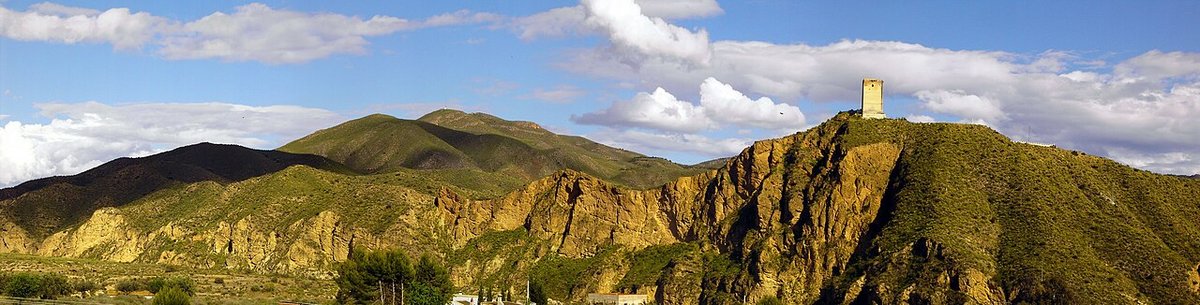
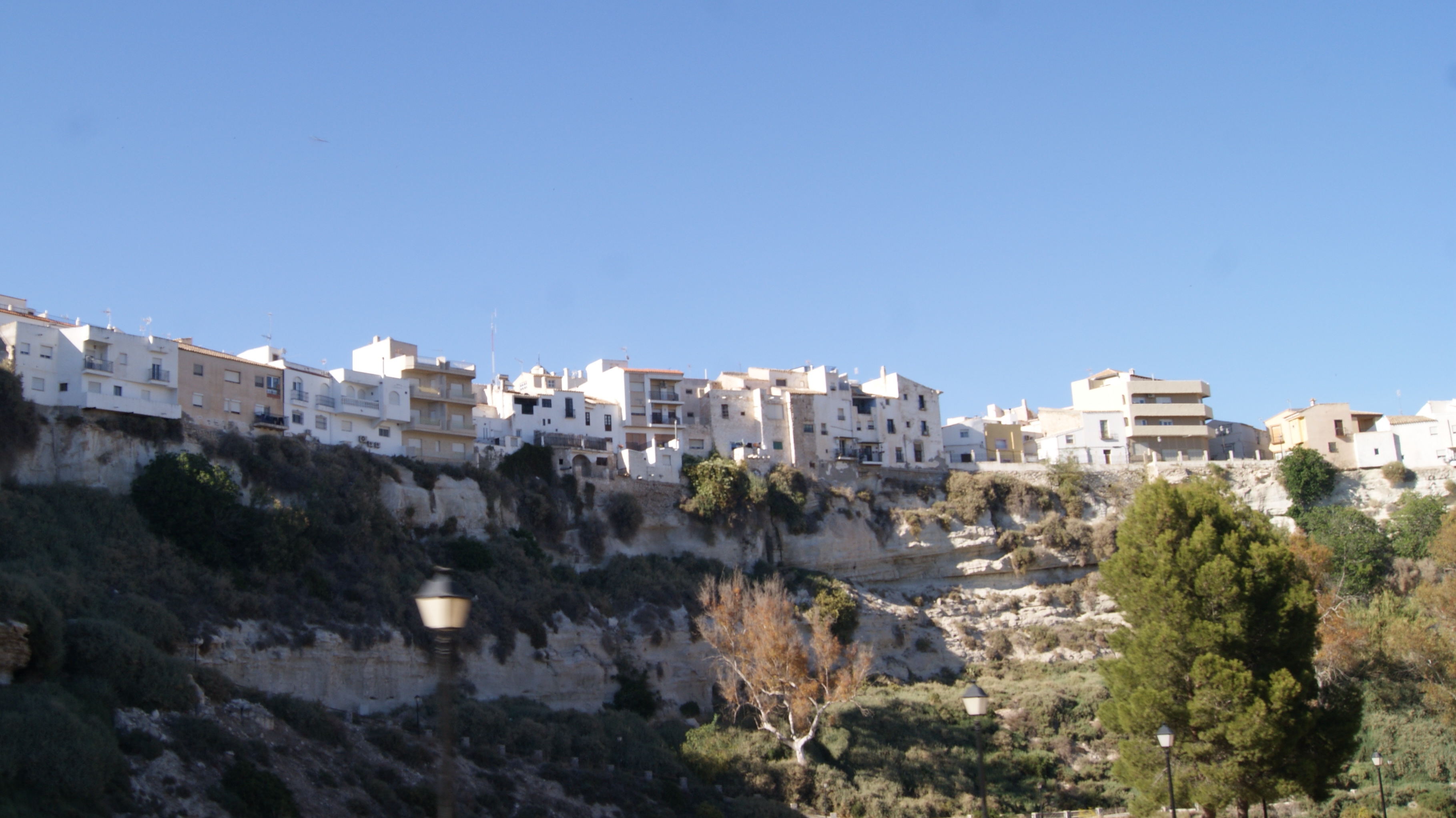
Parking near the harbour becomes tricky as the morning goes on, especially in summer. Many visitors leave their car up by the castle and walk down instead. It is only a few minutes downhill and saves driving round in circles.
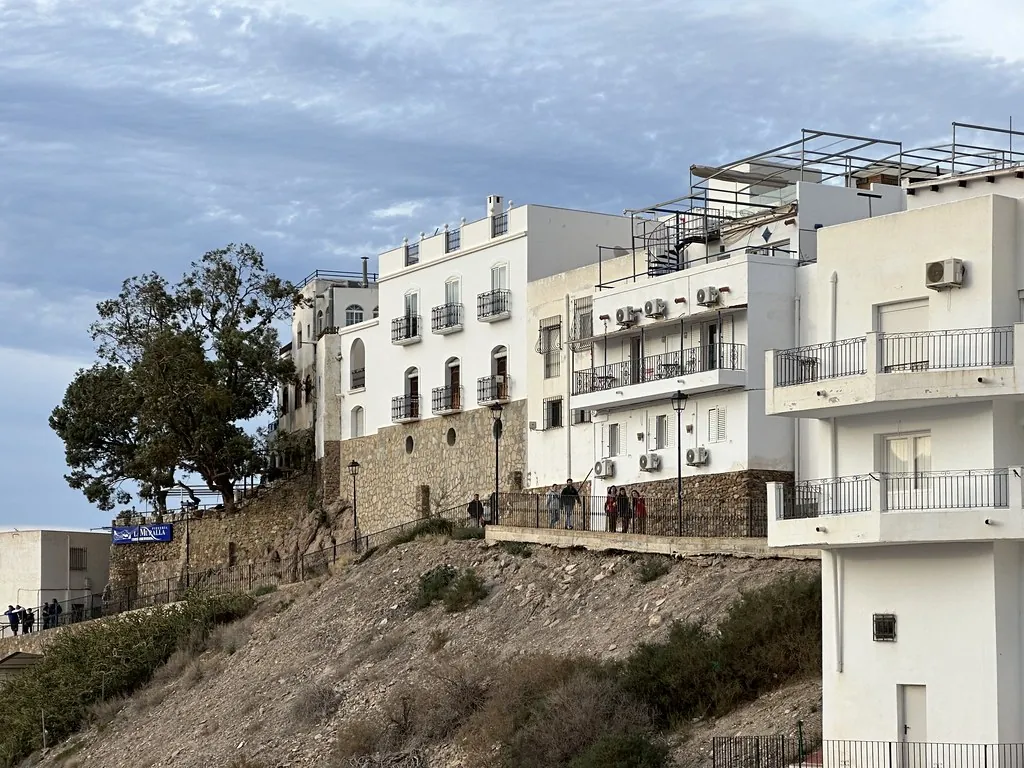
The Castillo de Jesús Nazareno was built in the 18th century to watch over the coast against pirate attacks. Today it houses a small exhibition about local fishing. It does not take long to see, but it helps explain why this town turns so firmly towards the sea.
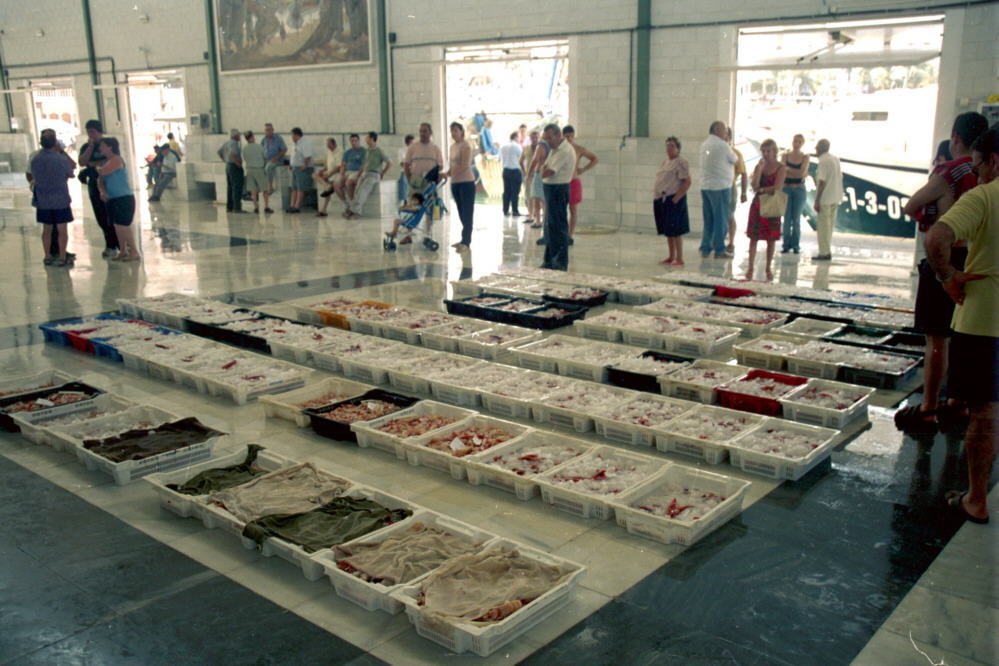
Down at the port, the fish market, or lonja, is where the catch is auctioned after landing. This is a working space rather than a staged attraction. If there is movement and noise, you are seeing Garrucha at its most authentic. If not, it means the day’s business is done.
Sea and Marble
Garrucha’s beach is long and fairly open. The sand is coarse rather than fine, and the water is usually clean because the harbour is separated by a breakwater. It is not a particularly striking beach, but it does the job for a morning by the sea.
Running alongside it is a promenade paved with white marble from Macael, a town in Almería province known for its quarries. Under strong sun the surface reflects a lot of light, so sunglasses are useful and it is worth watching your step. Late in the afternoon the paseo fills with local residents walking from one end to the other. In the morning there tend to be more visitors than neighbours.
The atmosphere shifts with the time of day. Early hours feel practical, with people getting on with errands. As the light softens, the town slows down and the promenade becomes a place to stroll rather than to hurry through.
Eating Without Fuss
In Garrucha, the red prawn is served in two main ways: boiled or grilled. Little else is added. Salt, and that is about it. When the product is good, it does not need embellishment.
It is not always cheap. The price depends heavily on the day and on how the fishing has gone. If it feels excessive, order a smaller portion. That is common practice and avoids overcomplicating things.
Another local dish is caldero garruchero, a rice cooked with rock fish and ñora, a small dried red pepper typical in south-eastern Spain. It is solid and straightforward. Sopa de maimones is also sometimes mentioned. This soup is made with garlic, bread and fish stock, though it does not appear on every menu.
It is worth paying attention to how prawns are described. The name “Gamba Roja de Garrucha” is controlled by the local fishermen’s guild. If that designation is not specified, the prawns are usually from elsewhere. The distinction matters here, as the town’s identity is closely tied to its catch.
Restaurants tend to keep things simple. The focus is on the ingredient rather than presentation. The harbour and the kitchen are closely linked, and that connection shapes the way food is prepared and served.
When to Go, What to Expect
In high summer the promenade and harbour become crowded, and the heat builds from mid-morning onwards. If there is flexibility, spring or early autumn are more manageable. Temperatures are softer and there is more room to move.
At some point during the year, Garrucha hosts a gastronomic fair dedicated to the red prawn. Stalls are set up in the port area and portions are prepared for the public. Dates vary, so it is sensible to check in advance if planning a visit around it.
Winter is much quieter. There are fewer people in the streets and some establishments close for a few months. It is a calm time for a walk, though the town feels noticeably slower. The port continues to function, but the overall pace drops.
Season changes the tone rather than the essence. Whether busy or subdued, Garrucha remains anchored to the same routine: boats out, boats back, fish auctioned, plates served.
A Straightforward Plan
There is no need to overthink a visit. Park up near the castle and walk down to the harbour. Take a look at the lonja if there is activity. Walk along the marble promenade and head to the end of the pier.
That is enough to form a clear impression of Garrucha. It is a town defined by its port and by the Gamba Roja de Garrucha. Everything else follows from that.