Full Article
about Sorbas
Cliff-top village; known for its Gypsum Karst and pottery tradition
Ocultar artículo Leer artículo completo
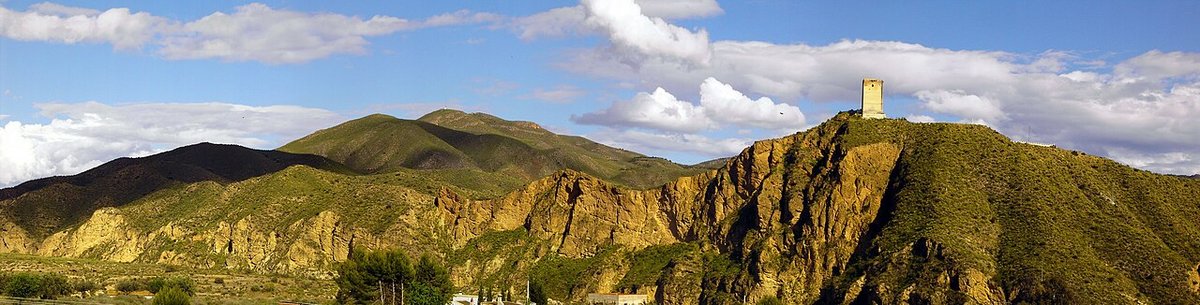
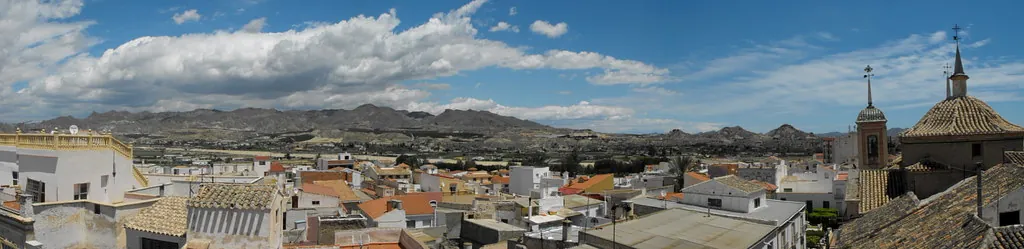
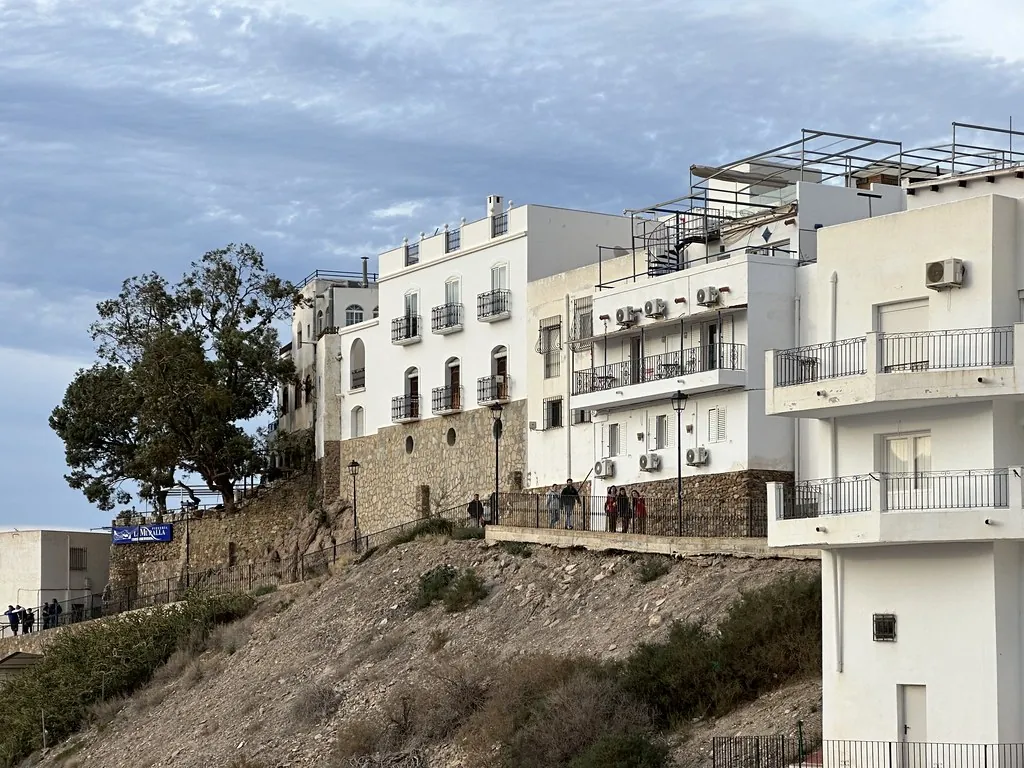
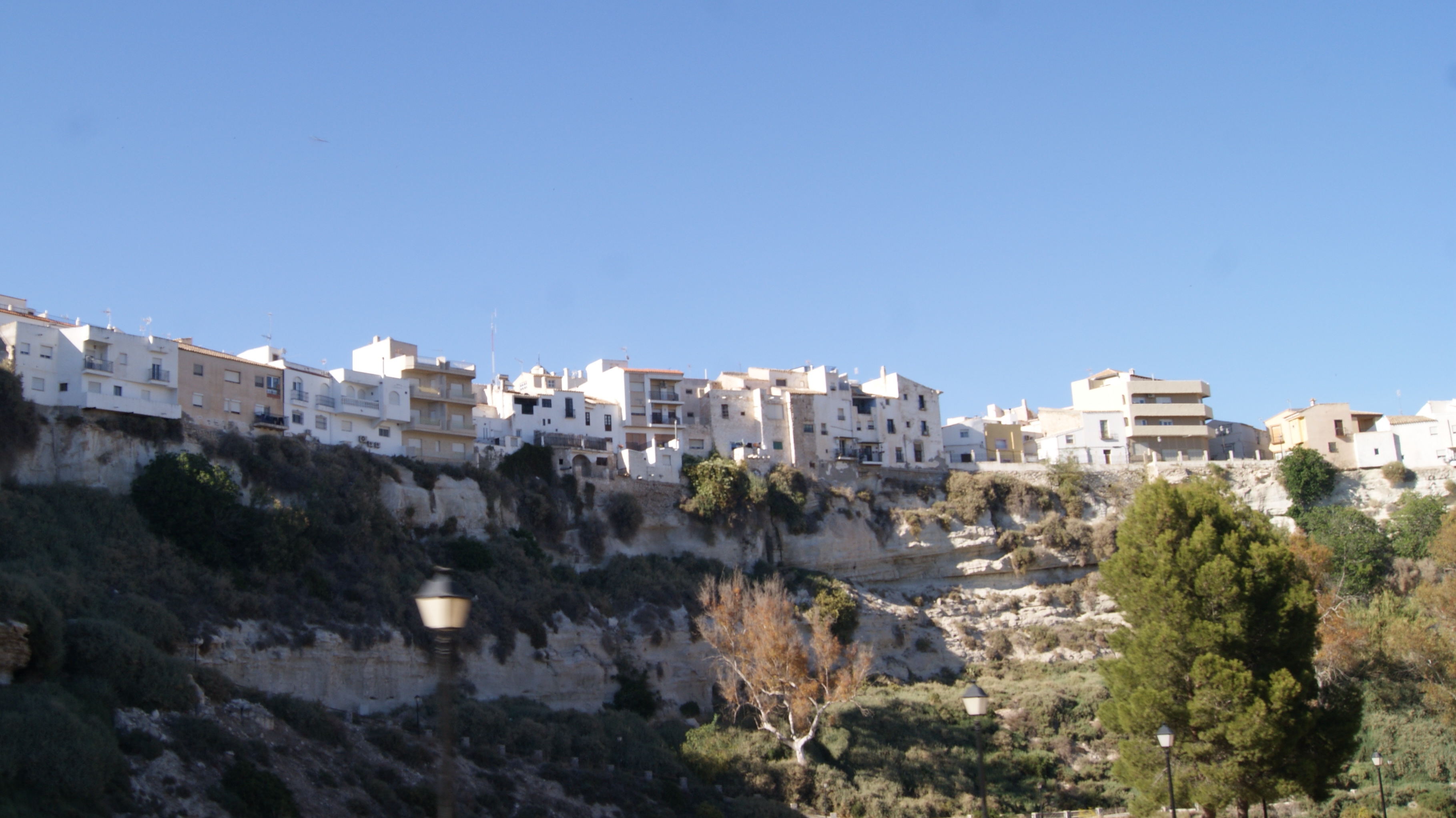
At 409 m above sea level, Sorbas sits high enough for the air to feel thinner than on the nearby Costa de Almería, yet low enough for the midday sun to still rattle off the white walls like a mirror. From the mirador above the Río Aguas chasm, the village looks as though someone has glued matchboxes to the edge of a cliff and then rolled whitewash down the sides. The effect is deliberate: houses are built right to the lip, their back walls doubling as the gorge’s parapet. Lean over (there is no railing) and you stare straight into 150 m of stratified earth, banded like a Neapolitan slice of beige, rust and chalk.
A village that hangs rather than sits
The old centre is a five-minute stroll from one end to the other, but the gradient makes it feel longer. Streets taper into staircases without warning; residents leave plant pots on the treads because there is nowhere else for them. Calle Carrera, the closest thing to a main drag, is barely two arm-spans wide and still manages to host the weekly Saturday market: three stalls selling peppers, rope-soled espadrilles and plastic toys that squeak. The 16th-century Santa María church squats at the top, its tower clock forever six minutes slow. Locals claim it has been six minutes slow since 1936 and see no reason to hurry the hands now.
Below the church, a lattice of alleyways funnels visitors towards the Casas-Cuevas district, a row of former troglodyte dwellings that once doubled as human fridges. One has been restored as a mini-museum (free, key from the pottery shop opposite). Inside, the temperature drops ten degrees; the bedroom is a cavity clawed into gypsum, whitewashed and candle-blackened. Children usually volunteer to shut themselves in the grain store cupboard, then emerge wide-eyed and pleased with their own bravery—a useful rehearsal for the bigger holes under the town.
Down where the head-torch is mandatory
Those bigger holes are the Cuevas de Sorbas, a lattice of 1,000-plus gypsum caverns that begins literally underneath the municipal car park. A yellow sign points to the Centro de Visitantes, but the real ticket office is a Portakabin that smells of bats and wet plaster. British visitors tend to arrive clutching the print-out that says “book the day before or risk disappointment”; Spaniards simply turn up and argue until a place is found. Both methods work outside July and August, when morning tours sell out by 09:30.
Guides hand out helmets, bump hats for the under-eights, and a lamp that looks like a 1990s cycling light. Then you descend a metal ladder through a manhole no wider than a dinner table. What follows is two hours of stooping, duck-walking and, at one point, commando-crawling across a floor of powdered gypsum that will later reappear in your ears. The basic Ruta Fácil (€18, 2 h) is marketed as family-friendly, yet several parents underestimate the clamber over the Paso del Estrecho, a slit only 35 cm high. One Cheltenham father was heard apologising to his ten-year-old for “Daddy’s slight miscalculation of width”.
More ambitious visitors can opt for the Ruta Aventura (€35, 3½ h) which adds abseils, a 15 m chimney and a final squeeze called the Mouse-hole. Helmets cameras are banned—gypsum crystals scratch glass—so the bragging must be done verbally over lunch. Guides switch between English and Spanish on the fly; when the group is mixed, commentary slows to half-speed, so a 90-minute geological lecture becomes a 180-minute bilingual duet. Nobody complains: the information is solid, the puns are awful, and the echo makes even the shyest teenager giggle.
Mud, almonds and the afternoon slump
Back on the surface, daylight feels almost violent. The café attached to the centre does a roaring trade in toasted sandwiches and industrial-strength coffee, but the local choice is leche merengada, a cinnamon-spiked milkshake that tastes like liquid rice pudding. Across the road, the Museo de Alfarería La Tinaja occupies a former olive mill. Inside, a retired potter called José sits at a kick-wheel shaping cántaros—the bulbous water jars distinctive to Almería. He lets visitors ruin a lump of clay free of charge, then patiently re-centres it while recounting how British troops requisitioned his grandfather’s pots during the Civil War because they held exactly one wine ration. The attached shop sells the real thing: a 5-litre tinaja costs €45, fits in a Ryan-air-sized suitcase and survives baggage handlers better than you’d think.
By 14:00 the village enters siesta lockdown. Metal shutters roll down with the finality of a shop closing for good; even the dogs stop barking. The only movement is in Sol de Andalucía, a first-floor restaurant whose menú del día (€12) is aimed at cave guides and the occasional Guardia Civil patrol. Expect choto al ajillo—kid goat flash-fried with garlic—followed by chips, chips or chips. Vegetarians get a plate of migas (fried breadcrumbs with grapes) which the kitchen will swap for more chips if asked politely. Pudding is arroz con leche thick enough to stand a spoon in; the cinnamon is freshly grated, a detail that somehow makes up for the Formica tables.
Walking off the crumbs
Once the mercury drops below 30 °C, the Los Molinos del Río Aguas trail becomes tolerable. The path starts 3 km south of the village down a stony track passable to a Ford Fiesta driven slowly. In 25 minutes you reach a string of ruined water-mills, their millstones still in situ, shaded by tamarisks and the only running water for miles. The river disappears underground shortly after, re-emerging only when winter storms punch new sinkholes. Butterflies—striped swallowtails and scarlet admirals—use the damp sand as a nightclub. The round trip takes 90 unhurried minutes; bring the water bottle you were told to carry underground and forgot.
Serious walkers can continue along the Cañada de Carmona, a medieval drove road that links Sorbas to Lucainena de las Torres 17 km away. The route climbs gradually through esparto grass and stands of palmitos—the dwarf fan palm that tastes of coconut if you’re desperate. In May the hillside is polka-dotted with pinks and wild garlic; by late June the colour has been bleached out and the scent is of hot resin and thyme. Give the farmers’ dogs a wide berth: they sleep in the shade of holm oaks and wake up cranky.
When to come, when to stay away
Spring and autumn are the sweet spots. March brings almond blossom that drifts across the streets like confetti; October is warm enough to sit outside at 20:00 without a jumper. Winter nights can drop to 3 °C—houses lack central heating, so hostals plug in electric blankets and hope you won’t notice the bathroom window doesn’t shut. Summer is a trade-off: mornings are crystal-clear, afternoons furnace-hot. Cave tours run at 08:30 and 16:00 to dodge the 38 °C peak; if you book the midday slot by mistake, consider it penance.
Bank-holiday weekends see an influx of murcianos who treat the village as their personal patio. Streets fill with portable speakers and the smell of churros; accommodation doubles in price and triples in decibels. Conversely, weekdays in January feel post-apocalyptic: one bar open, one pension, and a howling wind that whips the gypsum dust into ghost columns. Choose according to tolerance for either noise or solitude.
Leaving with white footprints
Sorbas will not change your life, but it may leave pale footprints across the footwell of your hire car. The dust is magnesium-white and refuses to vacuum out; months later you will still find it in the hem of your rucksack. By then the memory of squeezing through a tunnel called the Birth Canal—emerging covered in what looks like cocaine, to the horror of passing Guardia—will have become a dinner-party anecdote rather than a mild panic attack. The village itself will have retreated back onto its ledge, six minutes behind the rest of Spain, quietly waiting for the next batch of helmets to appear at the manhole.