Full Article
about Moclín
Historic fortified town with an imposing castle; known for the Cristo del Paño pilgrimage and the Gollizno trail.
Hide article Read full article
First impressions on the climb
Arriving in Moclín is straightforward until it suddenly isn’t. As you enter the part of the village gathered around the castle, it’s best to park in the first open area you find. The streets quickly narrow and many slope upwards. From the lower part to the fortress, allow about fifteen minutes on foot along cobbled lanes. It can be done in sandals, but it’s not a great idea. The descent is harder on your feet than the climb.
What’s here, and what isn’t
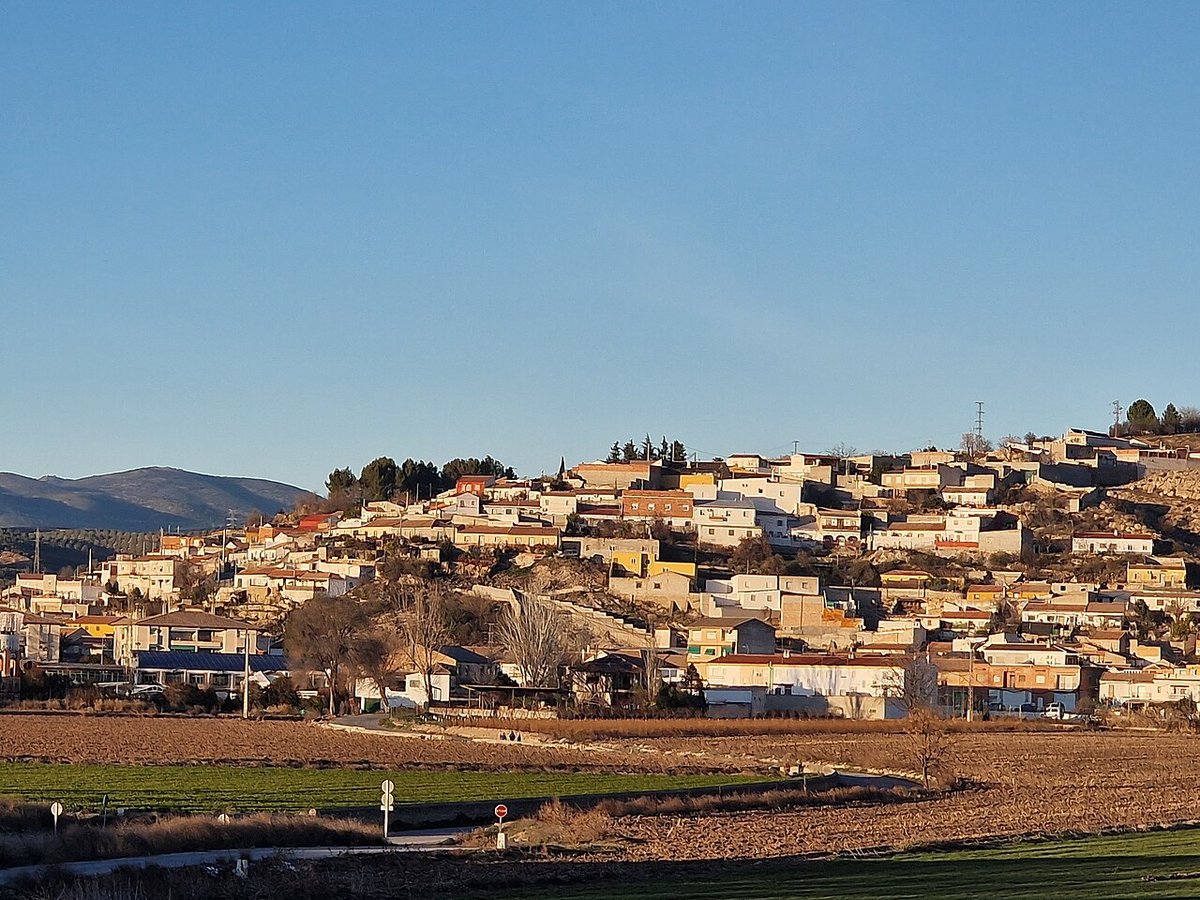
Moclín is a municipality of just over 3,500 people, though the village clustered around the castle is much smaller. White houses cling to the hillside, streets are short, and during the week there is little movement. The main square does its job without much fuss.
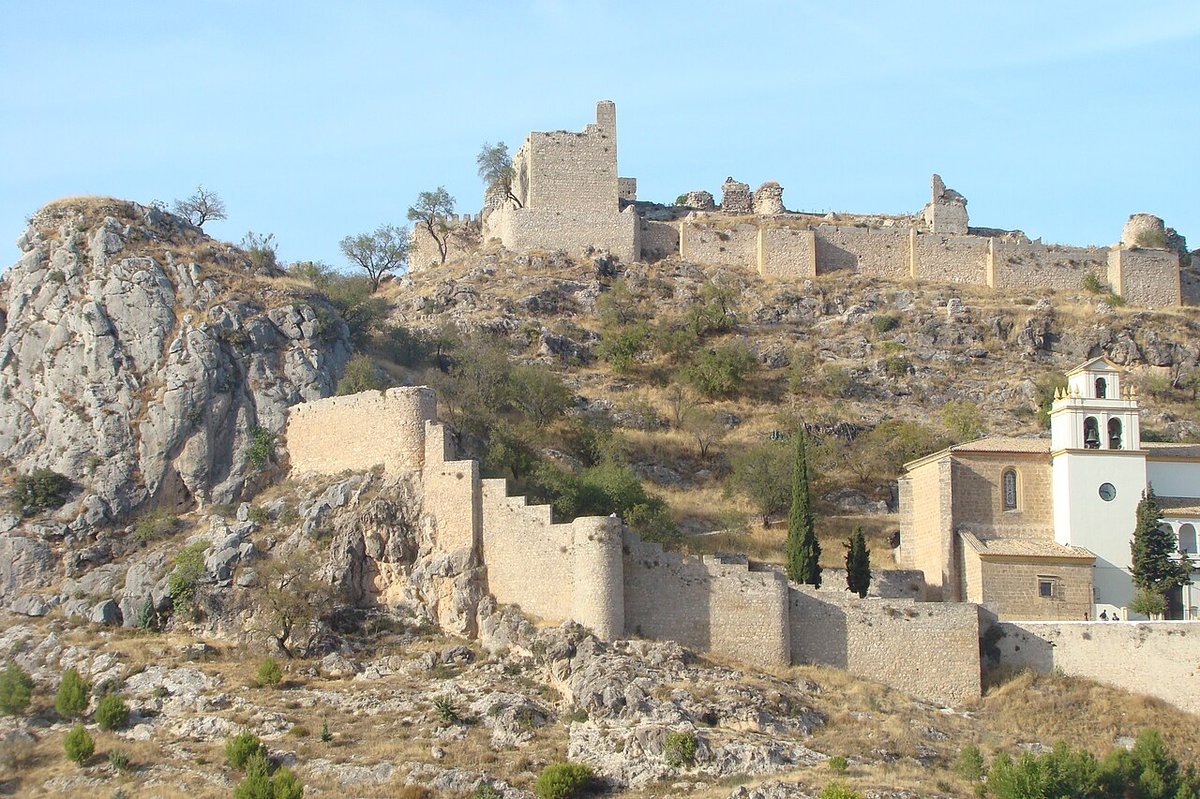
The castle dominates everything. Part of it has been consolidated, part remains in ruins. There is no extensive visitor centre or detailed explanation. Usually there is a simple panel outlining the history of the site and the final campaigns of the Nasrid kingdom in this area at the end of the 15th century. What really stands out are the views. One side opens onto the Vega de Granada, a wide fertile plain. On the other, the land rises towards the sierras that already look towards the province of Jaén. Beyond that, olive groves stretch in every direction.
Within the municipality there are several smaller settlements. Puerto Lope has the most everyday life, with a supermarket, a pharmacy and a few bars where locals gather. Tózar and Tiena are quieter. Near Tiena there are remains of an Iberian settlement. It is protected and signposted, but what you see are low walls and little else. If you happen to visit in February, when the almond trees are in bloom, the walk is more rewarding for the landscape than for the ruins themselves.
Walks that are simple, and sometimes striking
The best-known route is the Gollizno trail. It runs for about 8 kilometres and descends into a gorge where the terrain narrows and the path follows the course of the water. There are not many places to refill along the way, and in summer the heat lingers between the canyon walls. Halfway along there is a rock shelter with prehistoric cave paintings, protected behind a metal grille. The markings are simple red lines. Their interest lies more in their context than in what you actually see.
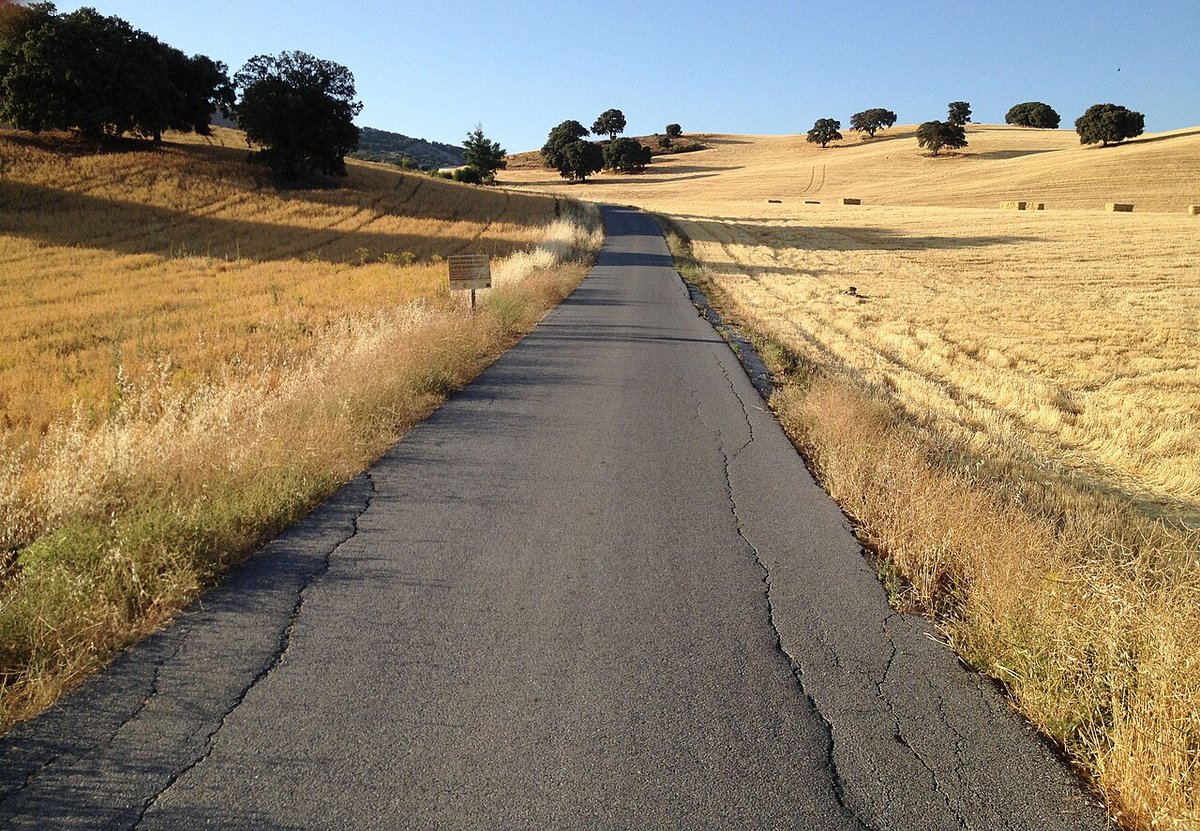
Another option is the Atalayas route, linking several medieval watchtowers that once controlled the passage between the plain and the mountains. The path crosses extensive olive groves and passes the occasional abandoned cortijo, a traditional rural farmhouse. You will come across farm gates that need to be opened and closed behind you. Shade is scarce. One of the clearest views of the whole area comes from the Atalaya de la Solana: the Bermejales reservoir in the distance and the village perched on its rocky outcrop.
Local festivals that keep their scale
Festivities here still feel closely tied to the people who live in the area. In mid-August, the image of the Cristo del Paño is carried from the church up to a nearby hill. This romería, a traditional pilgrimage, is the best-known celebration in the municipality. It is mainly attended by local residents and families who return for those days. It does not draw large crowds.
That same weekend, Puerto Lope holds its fair. There is music in the square, simple marquees and short firework displays. The atmosphere reflects a small village: neighbours who know each other and children staying out late.
In Tózar, towards the end of April, San Marcos is celebrated. The day includes a mass, a shared picnic and homemade sweets prepared by residents. There is usually no formal programme. You find out what is happening by asking around or by noticing activity in the square.
Food that follows tradition
Food here is straightforward and rooted in local habits. Migas appear often at weekends. They are made from stale bread, cooked with chorizo, bacon and peppers, and served hot. They are best eaten quickly.
Rabbit stew is another common dish, prepared with tomato, white wine and plenty of garlic. Choto al ajillo, goat cooked with garlic, also appears on some menus in the area. It is worth asking exactly which meat is being used.
For something sweet, gachas dulces are still prepared for breakfasts and festive occasions. Made with milk, flour, sugar and cinnamon, they are thick and filling.
A practical note before you go
Spring or early autumn are the best times to visit. In January, frost is common, and in summer the heat can be intense.
Park below and walk up to the castle. Trying to drive through the narrow streets is not worth the effort. Plan your visit with daylight in mind, as access to the fortress is usually closed at dusk.
Moclín is not a staged attraction or an open-air museum. It is a working rural village that depends largely on agriculture. If that is what you are looking for, the stop makes sense.