Full Article
about Dehesas de Guadix
Small town north of Guadix; transitional landscape between the basin and the hills with olive groves and farmland.
Hide article Read full article
A Village You Understand at First Glance
Some places take time to figure out. Others make sense almost as soon as you arrive. Dehesas de Guadix belongs to the second group. Not because it is simplistic, but because everything is in plain view. Short streets, low houses, open countryside all around, and the particular quiet that comes with a population of just a few hundred people whose daily life revolves largely around farming.
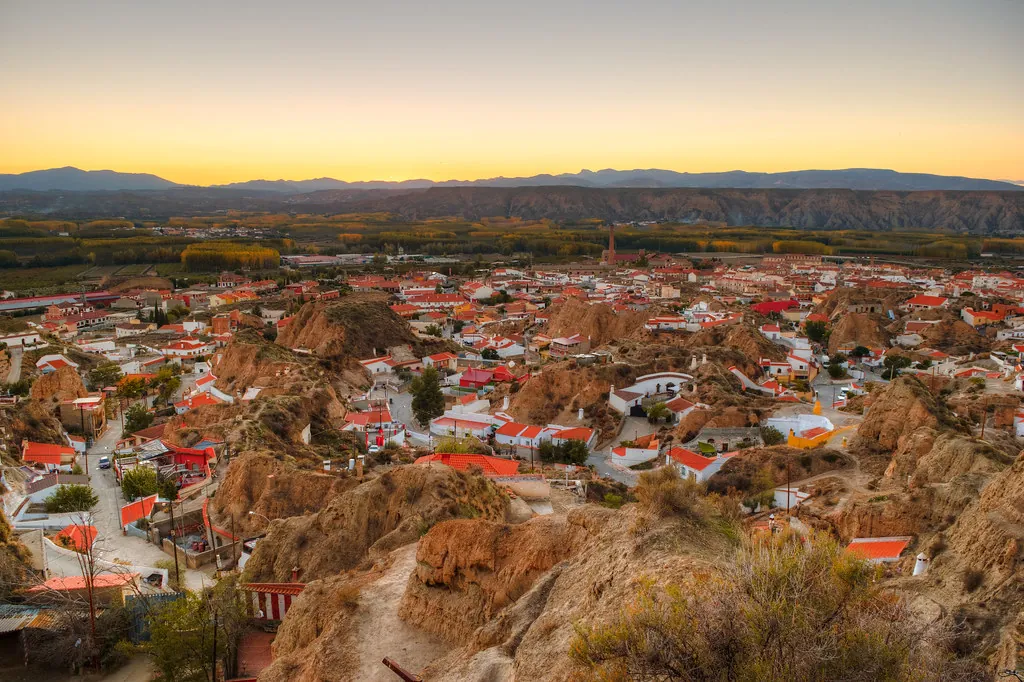
Dehesas de Guadix lies about 15 kilometres from Guadix, surrounded by olive groves and cultivated land. Around 380 people live here. There are no major monuments and no historic quarter that forces you to check a map every few minutes. What you find instead is a small village that continues to operate at a pace quite different from the city.
It is the kind of place where daily routines are visible. The rhythm of work, the use of space, even the way houses are built all point to an agricultural way of life that still shapes the community.
Short Streets, Traditional Houses
A walk through the centre does not take long. In ten or fifteen minutes you will have formed a clear impression of the place. The houses are typical of many farming villages in the province of Granada: whitewashed walls, wrought iron bars on the windows, curved clay roof tiles and interior courtyards that become the most liveable part of the home during the heat of summer.
The parish church, dedicated to the Inmaculada Concepción, stands in the most visible part of the village. It is not a monumental building, far from it, but it marks the point where the main streets usually meet and where there is often a little more activity.
What draws attention is not a single building, but the overall setting. Large wooden gates hint at spaces once used to store tools and equipment. There are courtyards where harvests would have been laid out to dry. Facades show few signs of change over the decades. The village retains a practical layout shaped by work rather than by tourism or urban development.
Nothing feels staged. The built environment reflects everyday needs, and that gives the place a sense of continuity.
Open Fields and Olive Groves
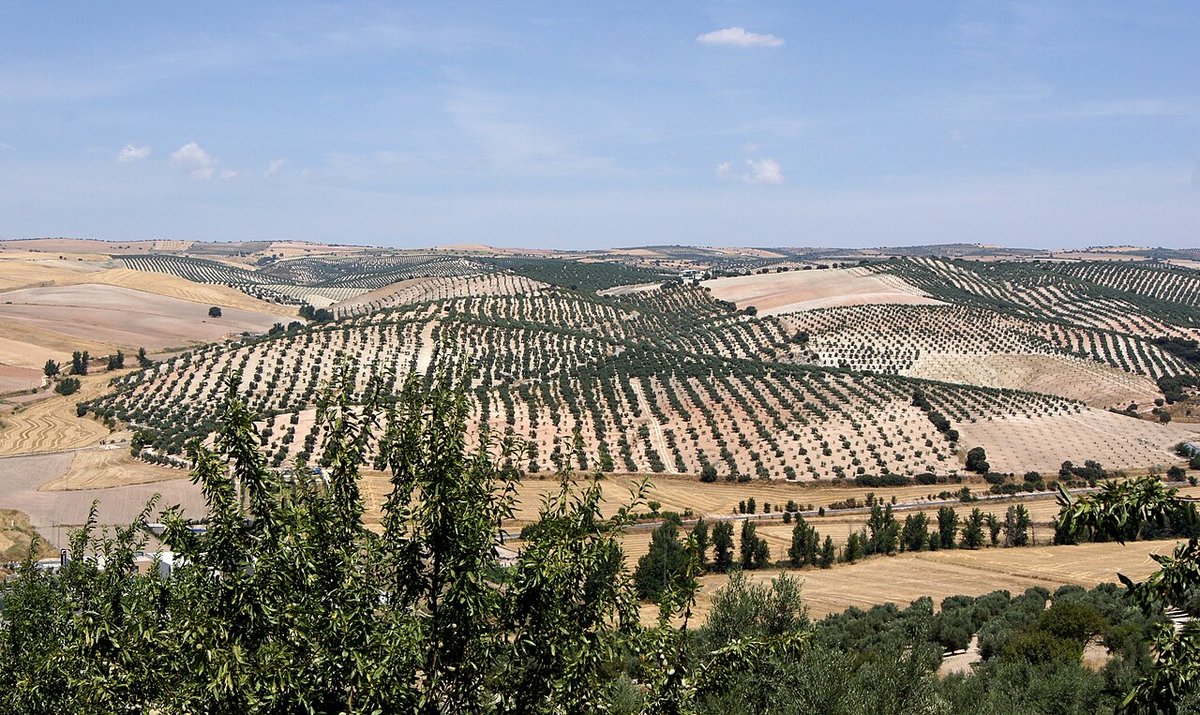
Beyond the last houses, the countryside takes over. Cereal fields and olive groves spread out in every direction, with agricultural tracks leading away from the village like the spokes of a wheel. There are no signposted walking routes in the style of a natural park. Instead, it is enough to follow one of these tracks for a gentle walk among the crops.
If it has rained, expect mud. In summer, setting out early is wise. Once the sun climbs, the heat is intense.
Walking here is less about dramatic scenery and more about paying attention to small details. The marks left by tractor tyres in the soil. The shifting colours of the fields as the seasons change. A bird gliding above the sown land. It is not a spectacular landscape, yet it carries the calm atmosphere of agricultural areas where everything depends on the farming calendar.
The sense of space is clear. There are no dense forests or steep mountain paths, just open land shaped and reshaped year after year by cultivation.
Food Rooted in the Land
The cooking in Dehesas de Guadix is what you would expect in an inland village of Granada: substantial dishes closely tied to local produce.
Migas are common when the weather turns cooler. This traditional dish, made from breadcrumbs fried and typically served with meat or cured sausages, is filling and designed for long working days. Slow-cooked legume stews also feature regularly, simmered over a low heat. Simple salads appear with tomato, olive oil and whatever is in season.
In summer, cold soups such as gazpacho are more appealing in the heat. In many homes, traditional sweets are still prepared using recipes passed down through generations. Roscos, tortas and different kinds of fried dough remain part of the culinary routine, especially around celebrations.
There is nothing elaborate about the food. It is practical, satisfying and rooted in a context where meals were designed to sustain physical labour in the fields.
Village Celebrations
Festivities here are closely linked to the religious calendar and to family gatherings.
The feast of the Inmaculada Concepción is one of the key dates in the year. Semana Santa, or Holy Week, is also observed, though on a small scale. Short processions move through the village streets, with strong participation from local residents.
Summer usually brings more activity. Many people who now live elsewhere return for a few days, and the atmosphere shifts. There may be music in the square, long evening gatherings and a sense of reunion that only appears when those who left to work in the city come back home for a visit.
These are not celebrations designed to attract outside visitors. They serve as an opportunity for the village itself to come together.
When to Visit and What to Expect
From Guadix, the drive takes around fifteen minutes. The final stretch runs along local roads between cultivated fields, so it is worth paying attention to turnings.
Spring and autumn are generally the most pleasant seasons for walking in the surrounding countryside. Summer can be very hot from midday onwards. In winter, the cold is noticeable, especially when the wind picks up.
Anyone coming to Dehesas de Guadix should bring comfortable footwear and take things slowly. There is no long checklist of sights. Instead, this is a place for an unhurried walk, a look at the landscape and a chance to see how many small villages in inland Granada continue to function.
Dehesas de Guadix does not try to impress. It simply carries on with its routines, shaped by the fields that surround it and by a community small enough for daily life to remain visible. For those interested in understanding rural Andalucía beyond its better-known towns, that in itself can be reason enough to spend some time here.