Full Article
about Domingo Pérez de Granada
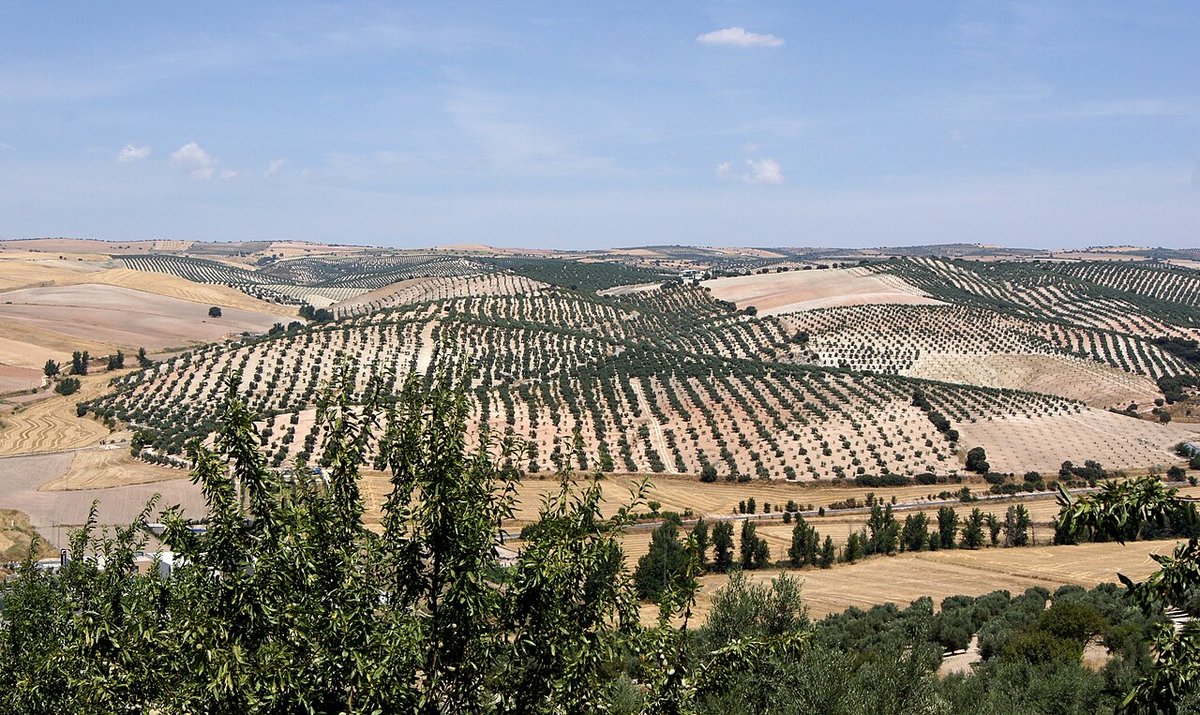
A recently separated municipality from Iznalloz; quiet farming area focused on olive and cereal cultivation.
Ocultar artículo Leer artículo completo
The Village That Forgot to Rush
The morning tractor rattles past at half-eight, pulling a trailer of hand-picked olives. Nobody looks up. The driver lifts one finger from the wheel—Domingo Pérez de Granada’s entire rush-hour greeting—and carries on up the hill. At 900 m, the air is thin enough to make the diesel clatter carry, yet nobody closes a window. They simply wait for the engine note to fade, then return to their coffee and cards.
This is Los Montes, the high, dry ridge that separates Granada city from the empty western plateau. The village sits 45 km north-west of the Alhambra, but the journey feels longer: first the A-92, then the GR-NE-340, a switch-back mountain lane that corkscrews through olive groves until the road levels out on a breezy saddle. Mobile signal drops out around kilometre 35; by kilometre 40 you have surrendered to the rhythm of the place. Total driving time from central Granada is 55 minutes—unless you meet an olive truck, in which case add twenty.
White Walls, Red Roofs and a Bell That Marks the Day
The houses tumble down two gentle slopes, white cubes with terracotta roofs that glow rust-colour after rain. There is no monumental centre, just a lattice of lanes barely wide enough for a donkey and cart. Iron balconies hold geraniums; stone doorways still bear the hand-chiselled numbers of the 1920s land registry. The only building that demands attention is the parish church of San Pedro, its squat tower a hybrid of sixteenth-century mudéjar brickwork and seventeenth-century Renaissance stone. Inside, the nave is cool and faintly smoky from centuries of candle wax; the priest unlocks it ten minutes before Mass, locks it again afterwards, and nobody thinks this odd.
Walk east for five minutes and the streets simply stop. One moment you are beside a whitewashed wall, the next you are among olives, almonds and the occasional sunflower patch. The boundary between village and campo is porous: farmers push wheelbarrows of pruned branches along the same lanes children use to reach the playground. In July the sunflower heads turn in unison, a yellow army facing the Sierra Nevada which, on very clear afternoons, shows its snow line 60 km away. Bring binoculars; haze often disguises the peaks as cloud.
What You Can (and Can’t) Eat
There is no restaurant in Domingo Pérez itself. The single bar, on Plaza de la Constitución, opens at seven for workers’ breakfast and closes when the last customer leaves. A tostada con tomate costs €1.80, coffee another €1.20; the butter is Spanish, unsalted, and arrives in foil sachets. Mid-morning, the owner’s wife might produce a plate of migas—fried breadcrumbs laced with garlic and pancetta—if she feels like cooking. Payment is cash only; the nearest ATM is 15 minutes away in Iznalloz, so fill your wallet before you leave Granada.
For a sit-down meal you drive ten minutes to Campotéjar and Casa Curro, where grilled chicken and chips keeps children happy, or to Guadahortuna’s Venta de Aires for choto al ajillo, slow-cooked kid that tastes like mild Welsh lamb. If you are self-catering, the village mini-market stocks UHT milk, tinned tomatoes and excellent local olive oil, but fresh fish is non-existent and the fruit selection runs to oranges, apples, or nothing. The shop shuts 14:00-17:00 without exception; forget to buy water at 13:55 and you will go thirsty until siesta ends.
Walking Without Waymarks
Domingo Pérez is a gateway, not a destination, for hikers. No National-Park style boards point the way; instead, agricultural tracks fan out into 200 km² of olive groves and wheat fields. The GR-7 long-distance footpath passes 3 km south of the village, but locals prefer their own unmarked loops. A gentle two-hour circuit heads west past the ruined cortijo of Los Llanos, dips into a shallow rambla where oleander grows wild, then climbs back through almond terraces. Spring brings poppies and wild marjoram; autumn smells of wet thyme and wood-smoke. Stout shoes are essential after rain: the clay sticks like brick mortar and triples the weight of your boots.
Summer walks start at dawn. By 10 a.m. the thermometer nudges 32 °C despite the altitude; by noon the wind can feel like a hair-dryer. In winter the same trails turn slick with frost and the mercury dips to –2 °C at night. Snow is rare but not impossible—if it falls, the access road is gritted within an hour, proof that even here the twenty-first century has a foothold.
Fiestas: Earplugs Optional
The calendar revolves around three bursts of noise. Semana Santa processions are modest—one float, thirty hooded bearers, a trumpet and drum—but the narrow streets amplify every note. Late June honours San Pedro with a weekend of brass bands, paella for 500, and a foam party in the municipal pool. August fiestas add late-night fireworks that echo off the surrounding hills until 03:00; book accommodation early or bring silicone earplugs. The quietest festival is La Candelaria on 2 February: families carry candles to the church, afterwards sharing dulce de membrillo (quince jelly) sold in unlabelled jars for €3. It tastes like a cross between apple cheese and marmalade, and keeps for months in a camper-van fridge.
Staying the Night
Rural houses are the only option; there is no hotel. Three cottages have been restored inside the village, all with wood-burning stoves and roof terraces that overlook olive sea to the west. Expect stone floors, patchy 4G, and absolute darkness after 11 p.m. Prices hover around €70 per night for two, linen and firewood included. Bring slippers: traditional tiles are cold underfoot even in May. Outside August you can usually turn up unannounced and knock on doors until you find a key-holder, but this is poor etiquette. Email ahead; the English spoken is limited, yet the willingness to try is unlimited.
When to Come, When to Stay Away
April and May are golden: daytime 22 °C, night-time 8 °C, wildflowers in the field margins, and the olives showing their first pea-sized fruit. September repeats the trick, adding grape harvest scent from the valley. July is photogenic—sunflowers line the road like theatre curtains—but temperatures hit 38 °C and mosquitoes rise from the river at dusk. December and January are crisp, bright and silent; perfect if you want solitude, less so if you expect entertainment. During the August fiestas the population triples; parking becomes a puzzle and the village bar runs out of beer by Sunday night. Choose your mood, then choose your month.
The Bottom Line
Domingo Pérez de Granada offers no souvenir shops, no guided tours, no curated experiences. It delivers instead the sound of a single tractor, the smell of wood-smoke on cold mornings, and the sight of an entire village greeting one another by name. If you need nightlife, Michelin stars, or Instagram moments every five metres, keep driving. If you can cope with limited menus, cash-only bars and the occasional donkey blocking the lane, you will find a pocket of Spain that still measures time by church bells and olive harvests. Bring good shoes, a sense of rhythm, and an empty water bottle—then fill it at the plaza fountain like everyone else.