Full Article
about Pedro Martínez
Municipality in the eastern mountains, steppe country; total quiet and clear skies perfect for stargazing
Hide article Read full article
A village above the plain
At around a thousand metres above sea level, the wind that crosses the vega of Granada arrives sharper here. In Pedro Martínez, the air often carries the scent of dry rosemary and freshly turned earth, especially after tractors have passed through the nearby fields. From the main square, where an old elm provides almost the only patch of shade at midday, the sierra rises like a brown wall. It seems to protect the village, although at times it can feel as though it cuts it off.
The streets climb steeply. Whitewashed houses cling to the hillside, their façades catching the hard light. Everything sits close together, shaped by the terrain and by a way of building that responds to heat, wind and long, dry seasons.
The hour when dogs sleep
At three in the afternoon in May, the village falls into a kind of silence that feels physical. Shutters stay closed. Dogs lie asleep in doorways. Somewhere far off, a tractor can be heard making its way up the track towards the Chimeneilla. Light pours down so directly that the walls seem almost fluorescent.
This is when Pedro Martínez pauses. Just over a thousand residents live here according to the latest census, and most of them retreat indoors until the sun begins to drop. The change happens quickly once the heat loosens its grip. Chairs appear outside front doors. A window opens. A radio plays songs that echo the 1990s. Within half an hour, the village shifts into a different rhythm, quieter than a city but no longer still.
Stones, tombs and a watchful tower
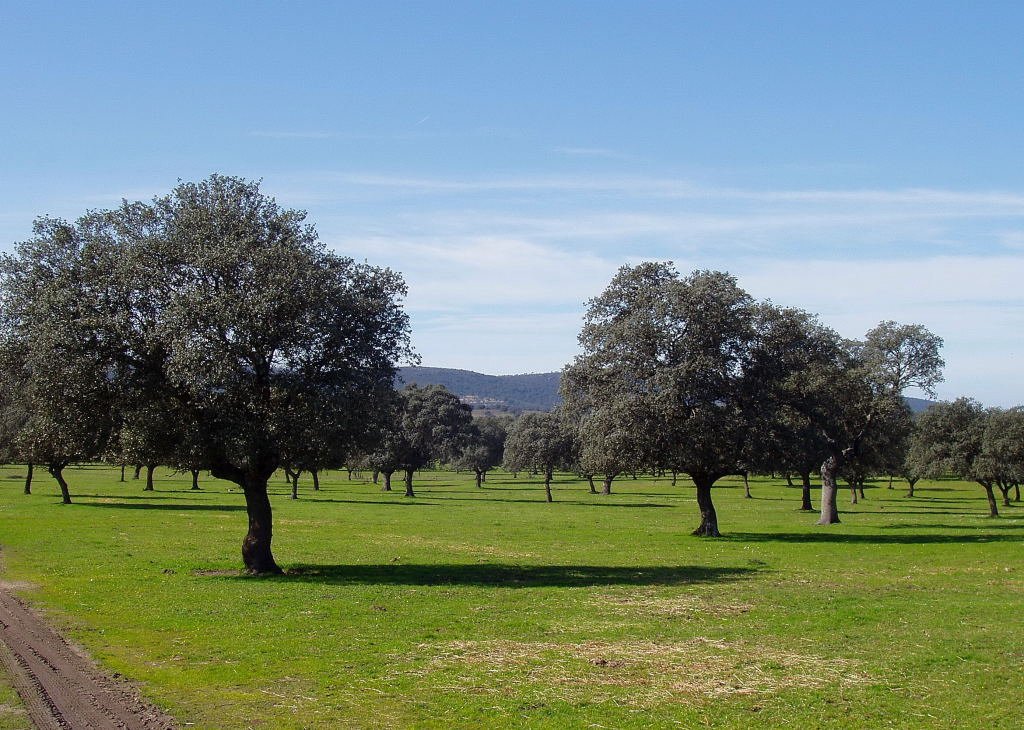
Roughly two kilometres from the centre, the plateau breaks apart into a group of dolmens scattered across the land. They look like stones left behind by something enormous. There are no elaborate facilities or large information boards. A weathered wooden post marked “Tumbas Megalíticas” stands near a reddish dirt path that winds through low holm oaks.
The names of some of these structures, such as la Meseta and la Campana, still circulate locally. Walking among them brings a clear sense that this area was inhabited thousands of years before any idea of rural tourism existed. The concentration of burial sites is striking. The local council often points out that this municipality has one of the highest densities of megalithic tombs in the province. That becomes evident on the return walk, when another slab half hidden among rockrose and rosemary suddenly comes into view, unnoticed before.
From the same rise, the Chimeneilla comes into sight. This albarrana tower, built as a detached defensive structure, stands at about eight metres tall. It has watched over the valley since medieval times. A marked path leads up to it, crossing olive groves that are partly abandoned. Underfoot, limestone crunches with each step.
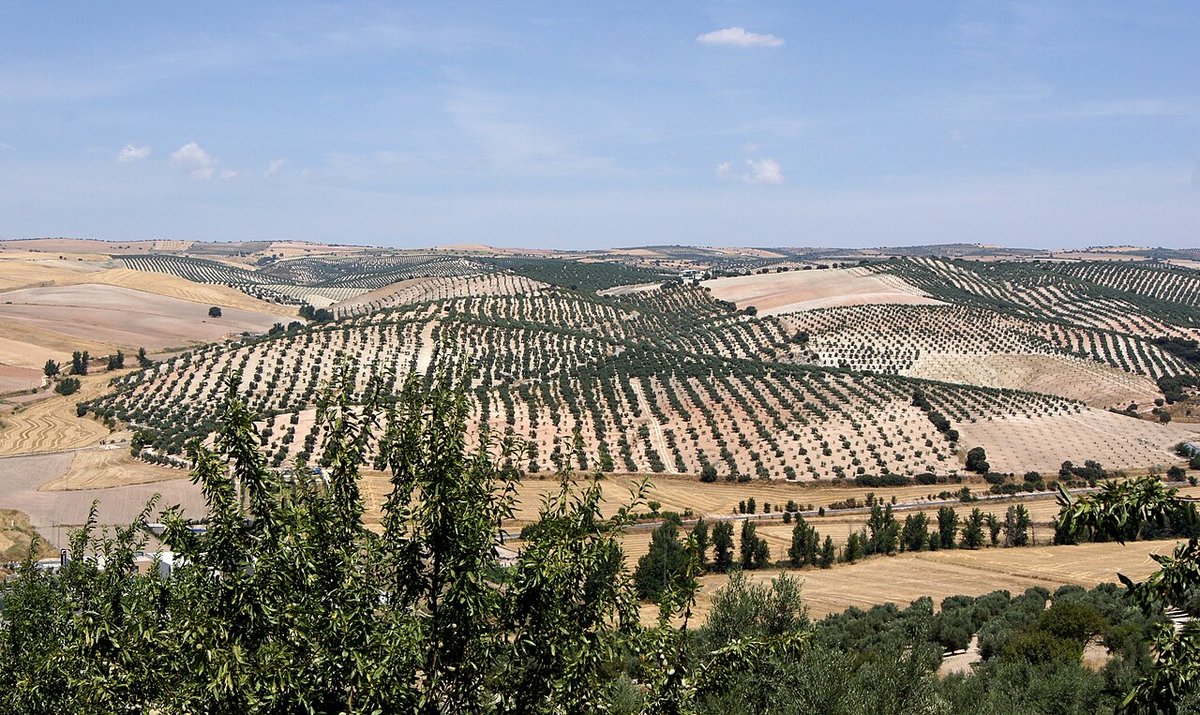
At the top, the wind strengthens. The vega spreads out below like a dry map. Lines of olive trees form patterns across the land. White tracks twist through the terrain. In the distance, a village appears reduced to a handful of pale cubes. Fires were once lit here to signal movement across the territory. Now the tower stands open to the sky. After dark, the view turns upward: the night remains deeply black in this area, and the stars appear with unusual clarity.
Kitchen traditions and shared customs
Winter brings a different atmosphere. Fog often settles between the ravines, and many kitchens fill with the smell of holm oak firewood and pork fat. This is when gachas are prepared. The dish is thick, made from toasted wheat flour, and served with pieces of longaniza and oil from the most recent harvest.
Migas also appear regularly. They often include uva pasá and paprika, and they require patience. The mixture is stirred for quite some time until it begins to sound like dry sand against the pan. Recipes come with opinions. Ask around and it is likely that someone will say their mother made the best version. The phrase repeats itself often here, half serious, half affectionate.
Towards the end of autumn, Pedro Martínez holds its traditional matanza, the communal slaughter and preparation of pork. Over the course of a weekend, chorizos, morcillas with onion, and salchichones are made. Afterwards they are left to cure in cool rooms or attics. The event is not treated as a spectacle but as a shared custom. Visitors who arrive at the right moment may be offered a piece of torta de chicharrones while it is still warm, its crust crisp and its surface slightly oily to the touch.
Timing a visit and practical notes
Spring tends to be the most agreeable time to explore the surrounding paths. The countryside still holds some green, and the dust of summer has not yet taken over every step. Even then, evenings cool quickly. A light jacket is useful despite warm daytime temperatures.
Around San Juan, the village celebrates its patron festivities. Lights and music fill the square, and the streets take on a more animated tone. During those days, leaving a car at the entrance and continuing on foot makes sense, as several streets narrow to the point of becoming almost stair-like. August brings another period of activity for San Roque. Heat becomes more intense, with afternoons that easily climb into the mid-thirties Celsius. Nights offer some relief. Skies tend to stay clear, and stars are easy to see.
Those in search of quiet may want to avoid certain weekends in September. Hunting activity begins early in nearby areas, and the sound of gunfire carries across the landscape.
A slower pace suits this place. Bus connections to other villages exist but run only a few times a day, and some local services operate on variable schedules depending on the season. Water is essential for nearby walks. The río Pedro, like many waterways in the region, often dries up during summer months. Sun protection is also worth considering throughout the year. The altitude has a stronger effect than it might first appear.