Full Article
about Píñar
Famous for the visitable and accessible Cueva de las Ventanas; a mountain village crowned by an Arab castle.
Ocultar artículo Leer artículo completo
The morning mist clings to the olive terraces at 950 metres, revealing a village that climbs its own hillside like a staircase. Píñar doesn't announce itself with grand gates or tourist offices. Instead, locals emerge from whitewashed houses to check whether the overnight frost has nipped their almond blossoms, while the church bell strikes seven with the casual indifference of somewhere that's been doing this since the 16th century.
Between Field and Frontier
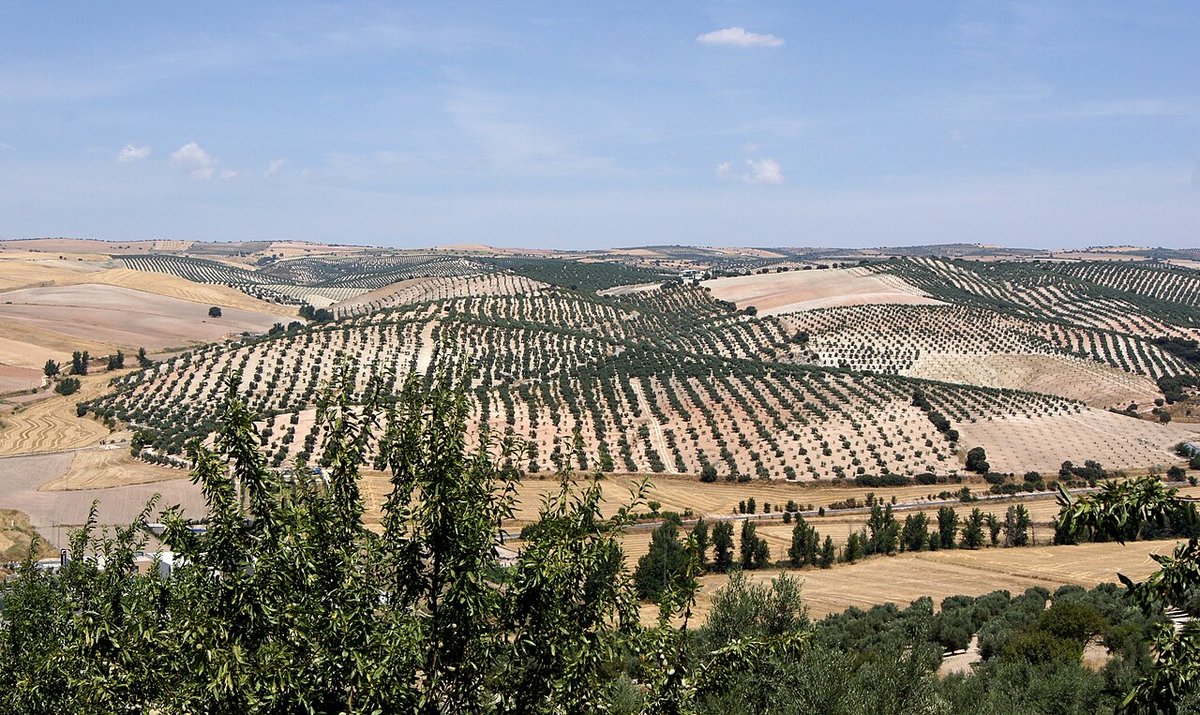
This is farming country, not a manicured showcase. The 1,098 inhabitants work 3,000 hectares of dry-ground olives, almonds and cereal patches that quilt the slopes of the Sierra Nevada foothills. At this altitude, the air carries a sharp edge even in April; winter nights drop below zero, yet summer afternoons can hit 35 °C before the sun slips behind the ridge. That swing gives the olive oil its peppery kick and explains why villagers still harvest firewood alongside their crops.
The road up from Granada – 70 km, mostly on the A-92 and then the A-325 – climbs 700 metres in the final 25 minutes. First-time drivers often arrive with ears popping and clutch foot aching from the switchbacks. Hire cars cope fine, but bring something small; the streets inside the village were laid out for mules, not SUVs, and a three-point turn on a 15 % gradient is nobody's idea of relaxation.
Once parked, the only way is up. Calle Real tilts at angles that would trouble a San Francisco tram, stone channels running beside the pavement to carry away sudden cloudbursts. The gradient rewards the curious: every twenty metres the view opens another notch, until the rooftops spill below like white dice and the olive sea stretches south to the hazy Guadix basin.
Stone, Lime and Living Memory
There isn't a single "must-see" monument. What Píñar offers is continuity. The Iglesia de la Encarnación squats at the top of the hill, its Renaissance portal grafted onto a 17th-century tower after the Moors had been marched out. Inside, the cedar-wood pulpit still carries the original iron hooks where penitents once chained themselves during plague years. Restoration funds arrive in dribs and drabs; one year the roof, the next the frescoes, so the building wears a patchwork of fresh plaster and faded paint that feels honest rather than neglected.
Beside the church, the old threshing floor has been swept clean but not converted into a gift shop. On windy afternoons local lads use it to fly kites made from agricultural plastic, the modern equivalent of winnowing grain by tossing it into the same breeze.
Walk another hundred metres and you reach the cemetery, where terraced graves are planted with roses and the mountain drops away so sharply that mourners get both prayer and panorama. British visitors often remark on the informality: no manicured lawn, just gravel paths and the smell of wild thyme crushed underfoot.
Paths that Remember the Moors
Píñar sits on the southern edge of the old Moorish frontier, and the tracks radiating outwards pre-date the Reconquista. The signed "Ruta de los Olivares Milenarios" is an undemanding 7 km loop that leaves the village past irrigation ponds now colonised by frogs, then threads between olive giants whose trunks resemble melted wax. Some were planted when Nelson was losing an arm at Tenerife; locals will point out which tree belongs to which family as though discussing distant cousins.
For something stiffer, follow the GR-7 long-distance footpath south-east towards Huéneja. The trail climbs 400 metres onto a limestone ridge where griffon vultures ride the thermals and the only sound is the wind rattling Esparto grass. After two hours you reach an abandoned shepherd's hut with views back to the snowy Sierra Nevada crest – bring a sandwich and a windproof, because the temperature can fall ten degrees in minutes once the sun tracks west.
Summer hikers should start early; by 11 a.m. the shade vanishes and the stone radiates heat like a storage heater. In January the same paths can be blocked by snow for a day or two, though the village rarely stays cut off longer than it takes a farmer to attach chains to his tractor.
What Arrives on the Back of a Pick-up
There is no supermarket, only a family-run ultramarinos that opens 8-12 and 5-8, shutters down for siesta in between. Fresh fish appears once a week when a van from the coast parks in the square at eleven on Thursday; housewives check the gills and gossip while the driver keeps boxes shaded with wet sacking. Bread is baked 100 metres away in a basement workshop – follow the smell of yeast at dawn and knock on the side door.
Eating out means Bar El Cortijo, open weekends year-round and most evenings in summer. Expect plastic chairs, a television muttering football, and plates that weigh down the paper tablecloth. Try the gazpacho de los Montes, a thick game-and-bread stew that has nothing to do with the chilled tomato soup sold further west. A bowl, half a roast chicken, wine from the Lecrín valley and change from €15 – no card machine, cash only.
For pudding, track down tarta de almendra at the bakery behind the church. British visitors often describe it as "Bakewell without jam"; locals simply call it "the cake" and buy it by weight for Sunday visits to relatives' graves.
When the Village Remembers It Has Visitors
Mid-September brings the fiestas de la Virgen de la Encarnación, three days when the population doubles. Brass bands march up streets too narrow for them to turn round, processions pause so bearers can refuel with small glasses of brandy, and the olive-oil competition ends in good-natured arguments about whether last year's drought improved or ruined the flavour. Accommodation is impossible to find unless you booked in June or have cousins in the pueblo – plan accordingly.
May's Cruces festival is gentler: neighbours open their patios to display flower-decked crosses, children offer glasses of sweet vermouth to strangers, and someone inevitably insists on demonstrating an English phrase learned from a 1980s textbook. These are the moments when language barriers feel irrelevant; a shared appreciation of shade and homemade churros translates itself.
Practical Notes Slipped into the Pocket
The nearest cash machine is 17 km away in Diezma; fill your wallet before you leave the A-92. Mobile coverage improves every year, but EE and Vodafone still drop to emergency-only in the deepest part of the Tablate gorge – download offline maps before setting out.
If you need a pool, the municipal one opens July-mid-September (€2, locals free). Water comes straight off the mountain, so it's fresh enough to make a Brit gasp even at midday.
Accommodation ranges from one rural guesthouse with four rooms (€60-€70 B&B) to self-catering cottages scattered among the olives. Owners leave keys under flowerpots and trust you to switch the water heater on arrival; this is not Marbella reception style.
Leaving Without a Souvenir Shop
Píñar won't suit travellers who want life organised into ticketed attractions and gift-wrapped memories. The village offers instead a calibration of scale: how small a community can be and still sustain a choir, an olive-oil cooperative, a doctor twice a week and a sense that the mountain, not the motorway, sets the timetable.
Drive away at dusk and the houses glow briefly pink in the last light, then merge back into the limestone as though they'd never been there. What lingers is the smell of woodsmoke and new oil, the memory of a place that carries on regardless of who's watching.