Full Article
about Alcaracejos
Crossroads in the Valle de los Pedroches with a strong mining tradition and a dehesa landscape perfect for rural tourism and relaxation.
Hide article Read full article
At three in the afternoon, the smell of burning holm oak reaches you before the village does. You are on the road climbing up from Córdoba, between rolling wheat fields, and then it appears: white houses like strokes of lime against a sea of green. Alcaracejos lies in the north of the province, within the comarca of Los Pedroches, rising gently on a low hill from which the dehesa stretches out in every direction.
This is cattle and oak country, wide horizons and scattered farmsteads. The landscape feels open and unhurried, shaped as much by farming as by time.
When Time Seems to Fold
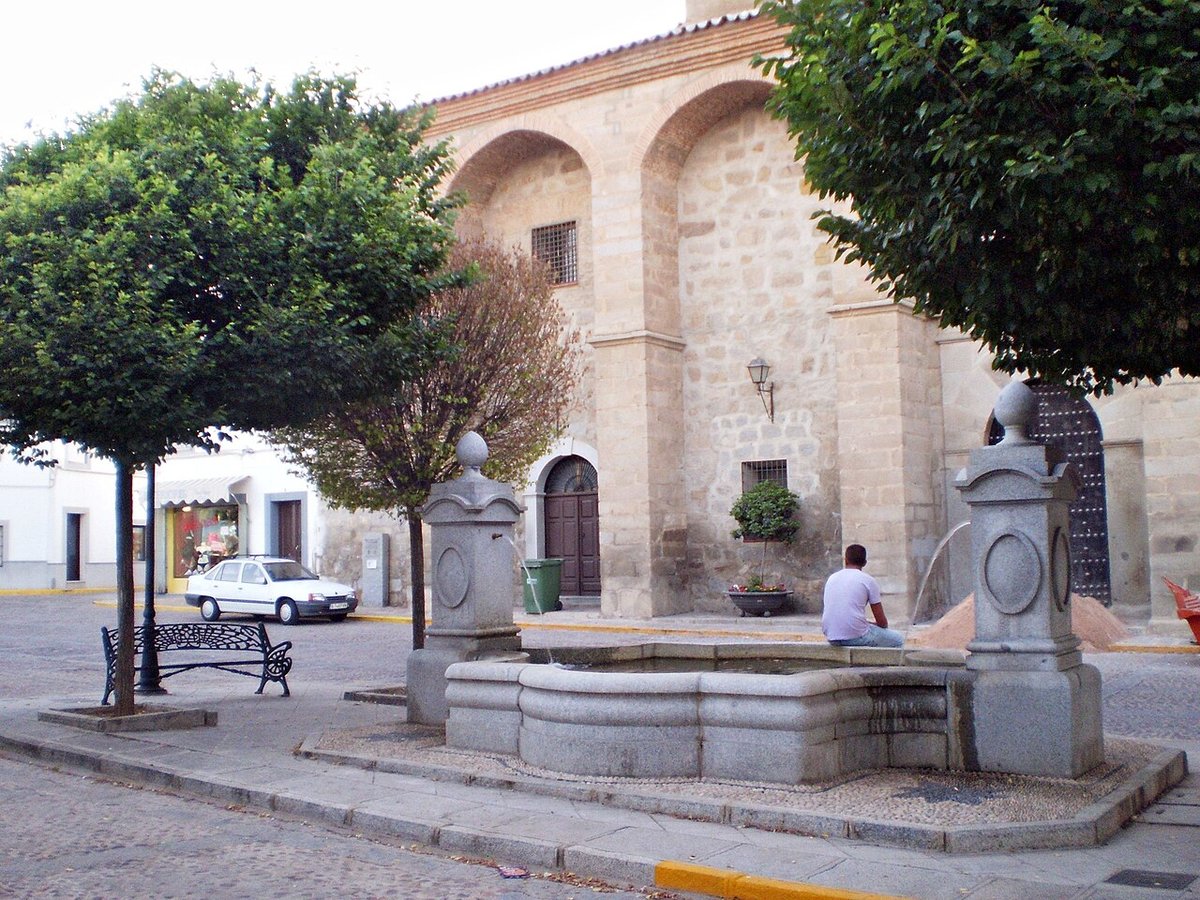
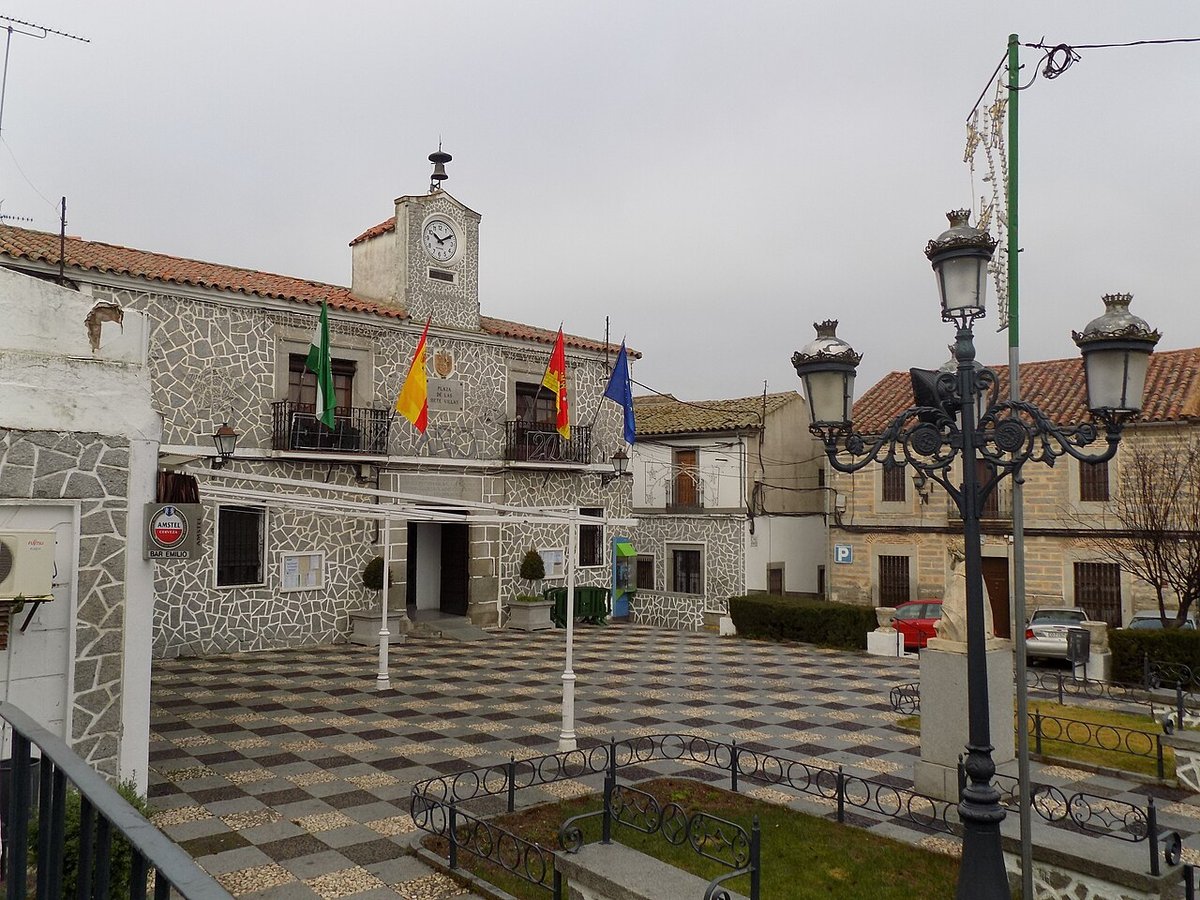
Plaza de España carries the scent of freshly baked bread and soap from a recent wash. In mid-afternoon there are still chairs set out by front doors, conversations drifting from one pavement to the other without raised voices. Life unfolds at street level.
The present church, the one that defines the square today, replaced an older building that was badly damaged during the war. Its bell tower is simple, pale against the sky, with no elaborate decoration to distract from the clean lines.
From the edges of the village, the view pulls northwards. Olive groves stand in neat rows, as though the land had been combed into order. Beyond them lie dehesas, where holm oaks cast rounded shadows on the ground. Further still, patches of Mediterranean scrub release the scent of thyme and dry rosemary in September, especially when the soil is still warm.
In summer, this is the hour when Alcaracejos exhales. At midday the sun falls straight down and the streets empty. Later, as the light softens, doors open again and the village returns to its quiet rhythm.
Four Landscapes in One Municipality
Within the boundaries of Alcaracejos, several distinct landscapes of Los Pedroches meet: cereal fields, olive groves, dehesa and Mediterranean woodland. The transitions are easy to spot if you follow one of the rural tracks out into the countryside, for instance in the direction of Pozo de la Benita.
First come the wheat fields, where the wind moves through with a low sound, like paper being rubbed together. Then the terrain shifts. Holm oaks stand apart from one another, thick trunks and dark pools of shade at their base. Further on, the landscape closes in slightly and the path slopes down towards the surroundings of the river Cuzna.
In this area there are remains of old flour mills that operated well into the twentieth century. Today they are half-open stone walls, with brambles and nettles growing inside. Towards evening, the sound of water running between stones becomes more noticeable, steady and continuous as it follows the course of the valley.
The dehesa here is not a forest in the dense sense but a managed landscape, with trees spaced widely enough to allow grazing. That balance between cultivation and woodland gives Los Pedroches its distinctive character, and Alcaracejos sits right at its centre.
The Flavour of Winter Slaughter Days
In many villages across Los Pedroches, January still smells of chimney smoke and pork. In Alcaracejos, the domestic matanza has for generations been an important part of winter. Cold days bring braziers lit indoors and tables covered with meat to be minced and seasoned.
From these kitchens come dishes that ask for bread and patience. Migas with garlic and olive oil appear on cold mornings. Some recipes are usually prepared for festivals or family gatherings; each household makes them in its own way.
The matanza is less a spectacle for visitors than a domestic ritual. Doors stand half open, smoke rises from chimneys, and work is shared among relatives and neighbours. It marks the winter calendar as clearly as any official celebration.
Food here is closely tied to land you can see from any high point: dehesa for livestock, olive groves for oil, cereal fields for grain.
Under a Starlight Sky
Nightfall brings a different kind of presence: darkness. Step outside onto any country track and within minutes your eyes adjust to an almost complete black. This part of Los Pedroches has low light pollution; it forms part of a Starlight reserve recognised across several municipalities.
Near Pozo de la Benita there is a small astronomical viewpoint with information panels and a wooden railing. It’s just an open clearing beneath the sky. That is enough. Lie back for ten minutes and your vision fills with stars; after twenty, you begin to see structure in that pale band stretching overhead.
In August during peak meteor activity you might see locals arriving with blankets or folding chairs around midnight. Nothing elaborate is required—just something to lie on while you watch for streaks of light against that deep black canvas.
The sense of space that defines daytime here seems even stronger at night; what feels like openness under sun becomes infinite depth under stars.
The Mojinos and Arrival
People from Alcaracejos are called mojinos—a nickname linked to mojones (boundary stones), those markers that once defined limits between properties among scattered cortijos set among oaks.
Although most people now live within village limits rather than out on farms (cortijos), that feeling remains: approaching by car from Pozoblanco takes about twenty minutes but reveals nothing all at once—first come holm oaks then glimpses through them until finally streets appear gradually like someone drawing back curtains slowly rather than throwing them open wide all together suddenly which would feel wrong here where everything unfolds quietly whether it’s smell from winter kitchens or sweep across fields toward horizon line always visible somewhere beyond last white house at edge town where pavement ends giving way directly onto earth itself dry-scented especially dusk when cowbells drift up from valley below reminding you this place lives by rhythms older than tourism seasons could ever impose upon it anyway so best come midweek outside summer heat if possible walk without hurry let light lower listen let air carry what it will—oak smoke thyme distant bell—and understand why mojino means rooted both stone soil sky above all three meeting point called home