Full Article
about Belalcázar
Monumental town home to the castle with the tallest keep on the peninsula and a convent complex that bears witness to its historic importance in northern Córdoba.
Hide article Read full article
At four in the afternoon, the sun falls straight onto the stone of the castle of Belalcázar. The keep, vast and upright, casts a long shadow that stretches towards the village. From above, the dehesa of Los Pedroches opens out like an uneven carpet of holm oaks, their rounded crowns scattered over pale earth, with twisted trunks between them. At that hour there is hardly any sound. A door closing somewhere along a street, wind moving across the hill, and if you stand still for a moment, the distant bells of grazing livestock.
A castle over the whole valley
The tower seems to rise directly from the rock and finishes well above the rooftops below. The castle complex covers the entire hilltop, and from the base it is difficult to grasp its scale. Closer up, its size becomes clearer. It was built in the 15th century by the Sotomayor family, at a time when this area faced the Portuguese border.
The ascent follows a cobbled path worn smooth over the years. In some stretches the stone can be slippery, especially after rain, so it is worth taking it slowly. At the top there is usually wind, even on otherwise calm days.
The view makes the climb worthwhile. On one side lies Belalcázar, with curved roof tiles, streets that rise and dip without much order, and the tower of the church of Santiago standing out above the houses. On the other side, the dehesa stretches out for kilometres, a landscape shaped by scattered holm oaks where fenced plots, dirt tracks and the occasional farm building appear in the distance.
Summer changes the experience. Early morning or late afternoon are the best moments to go up. There is little shade at the top and the stone holds the heat.
Streets with the scent of slow curing
Walking down the Cuesta de Don Pedro leads gradually into the historic centre of Belalcázar. The buildings are tall and whitewashed, with stone coats of arms above some doorways. Many are worn by time, their inscriptions more guessed at than read.
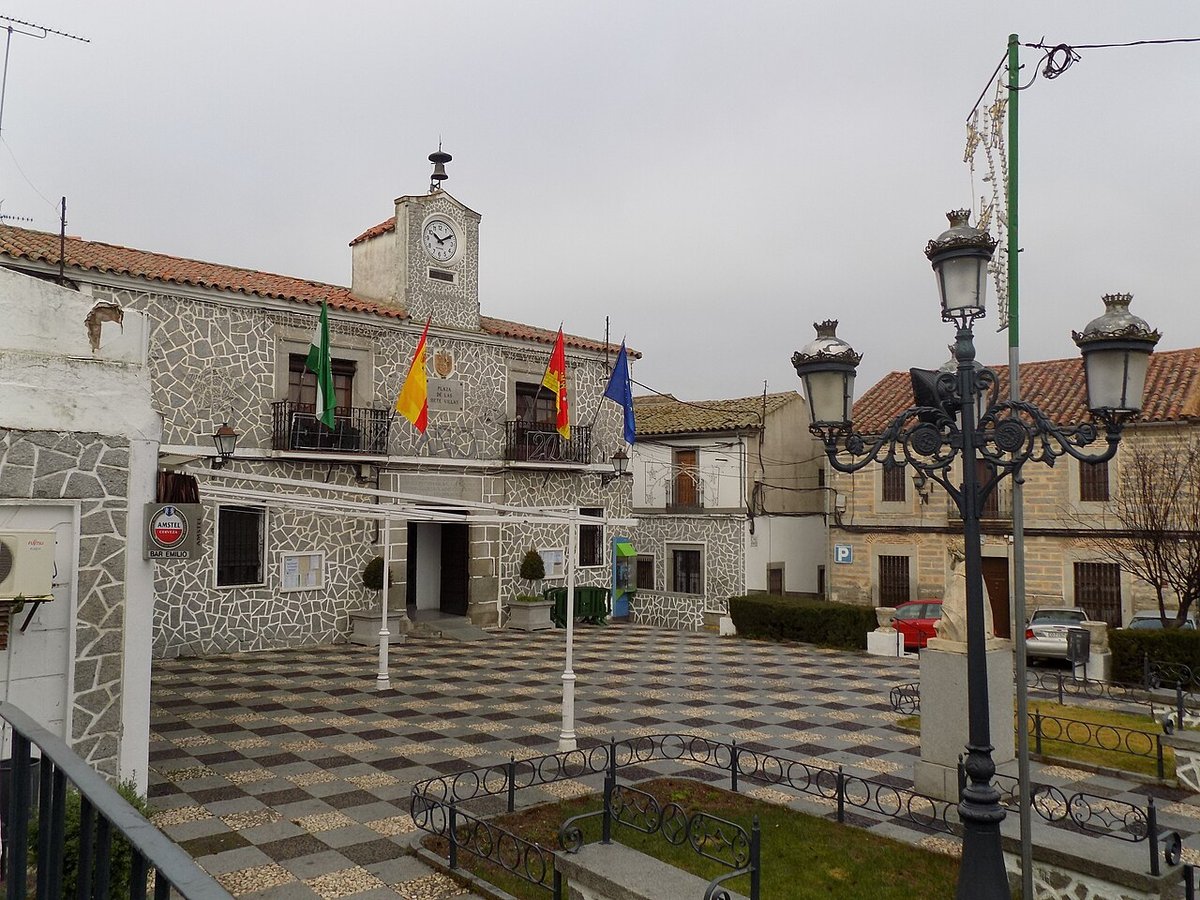
Under the arcades of the main square, the air often carries the smell of ham being cured. It is not something staged for visitors. In this part of Andalusia, Iberian ham is part of daily life, and it shows in everyday conversations. By mid-morning it is common to see locals leaning on the bar, discussing how the montanera has gone, the season when pigs feed on acorns, or whether the grass has lasted longer than expected this year.
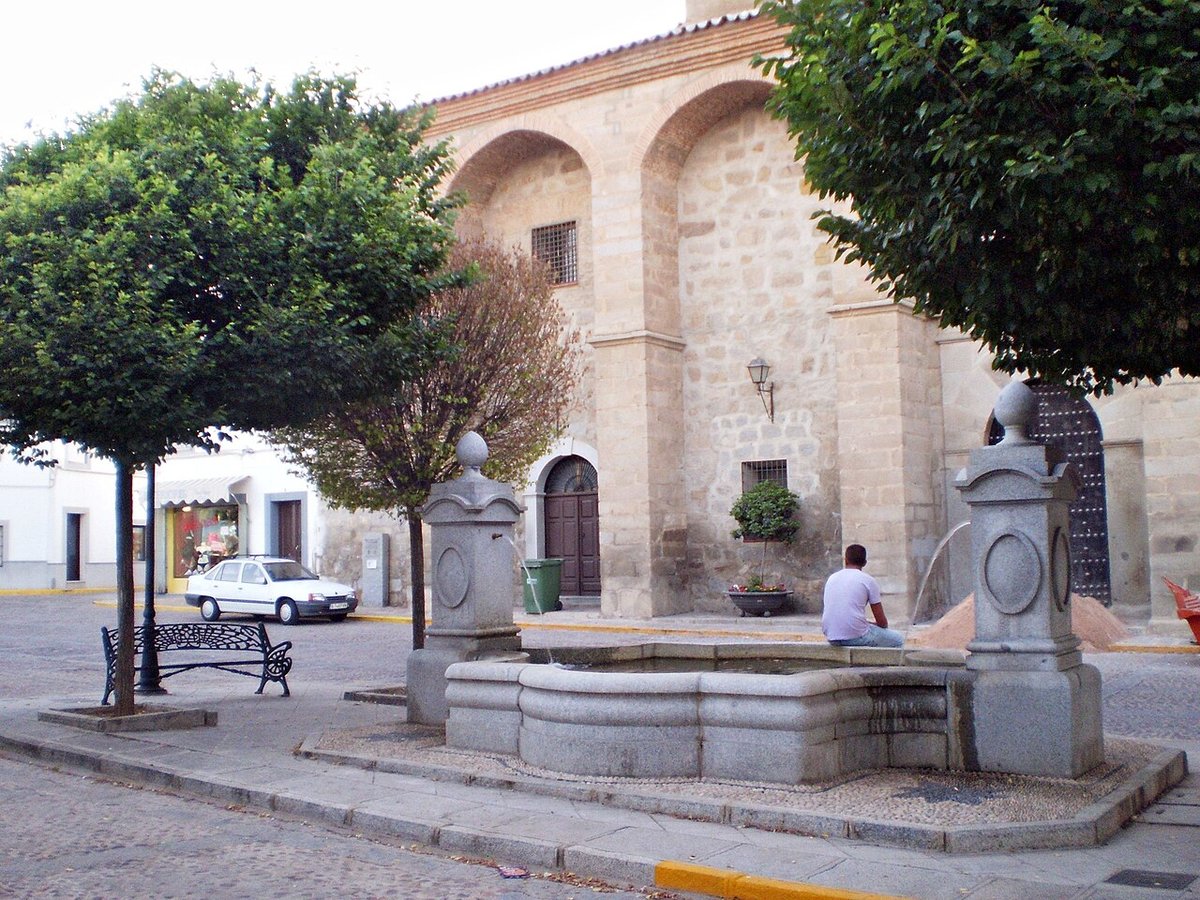
The historic centre is easy to explore on foot without a plan. Streets are short. Some open onto small squares, others end in slopes that climb back towards the castle. Through half-open doorways, glimpses of inner courtyards appear, sometimes with a well and an orange tree. At a stone fountain, a neighbour may still be filling large bottles with water or rinsing vegetables.
Light shifts noticeably over the course of the day. In the morning it comes in low and turns the walls almost golden. Later, the tones deepen, and the whitewash reflects the sun so strongly that the streets seem lit from within.
The hermitage on the hill of La Alcantarilla
A couple of kilometres outside the village, along a track that leads into the countryside, stands the hermitage of the Virgen de Gracia de la Alcantarilla. It is small, with stone walls and a simple bell gable that barely rises above the roofline.
The site carries traces of earlier times. There is talk of ancient remains on the hill and of different uses over the years. Today it serves mainly as a meeting point for the people of Belalcázar. Each spring, the romería of the Virgen is usually held here, a traditional pilgrimage day when the track fills with cars, trailers, horses and groups bringing food to spend the day together.
From the open ground beside the hermitage, the view once again stretches across the dehesa. Outside the days of the festival, the setting is quiet. Wind moves through the trees, a large holm oak might offer shade, and little else breaks the stillness.
When to take it slowly
Spring is often the most pleasant time to visit Belalcázar. The dehesa turns green, the holm oaks show new growth, and the afternoons allow for walking without the stronger heat that arrives later in the year.
In high summer, the rhythm shifts. By mid-afternoon the streets fall empty, and daily life moves into the night. Anyone visiting in July or August will find it better to head up to the castle early and leave wandering the village until the sun drops.
Before leaving, there is one simple thing worth doing. Look again at the castle from below. At sunset, the stone darkens and the tower stands out against the sky while the first lights appear in the village. In that moment, the setting becomes clear: a hill, a vast castle, and all around it the dehesa stretching as far as the eye can see.