Full Article
about Fuente la Lancha
The smallest municipality in the province, once a haven for bandits, now a quiet spot in the heart of Los Pedroches.
Hide article Read full article
By mid-morning, when sunlight begins to slip through the holm oaks, the dirt tracks around Fuente la Lancha turn a dusty brown with a reddish tint. The air carries the smell of dry earth and crushed grass. Cars are rare. At that hour the village is mostly silent, broken only by the creak of a door or the sharp metallic rattle of a shutter being raised.
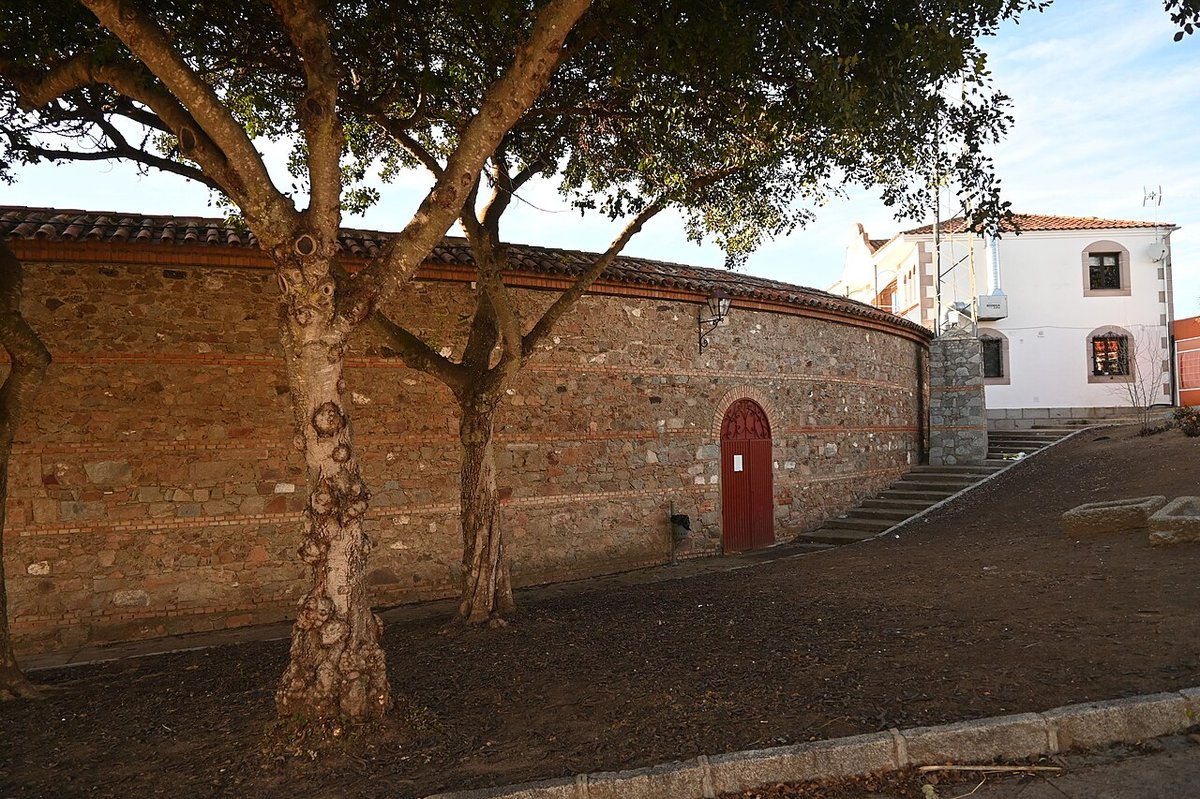
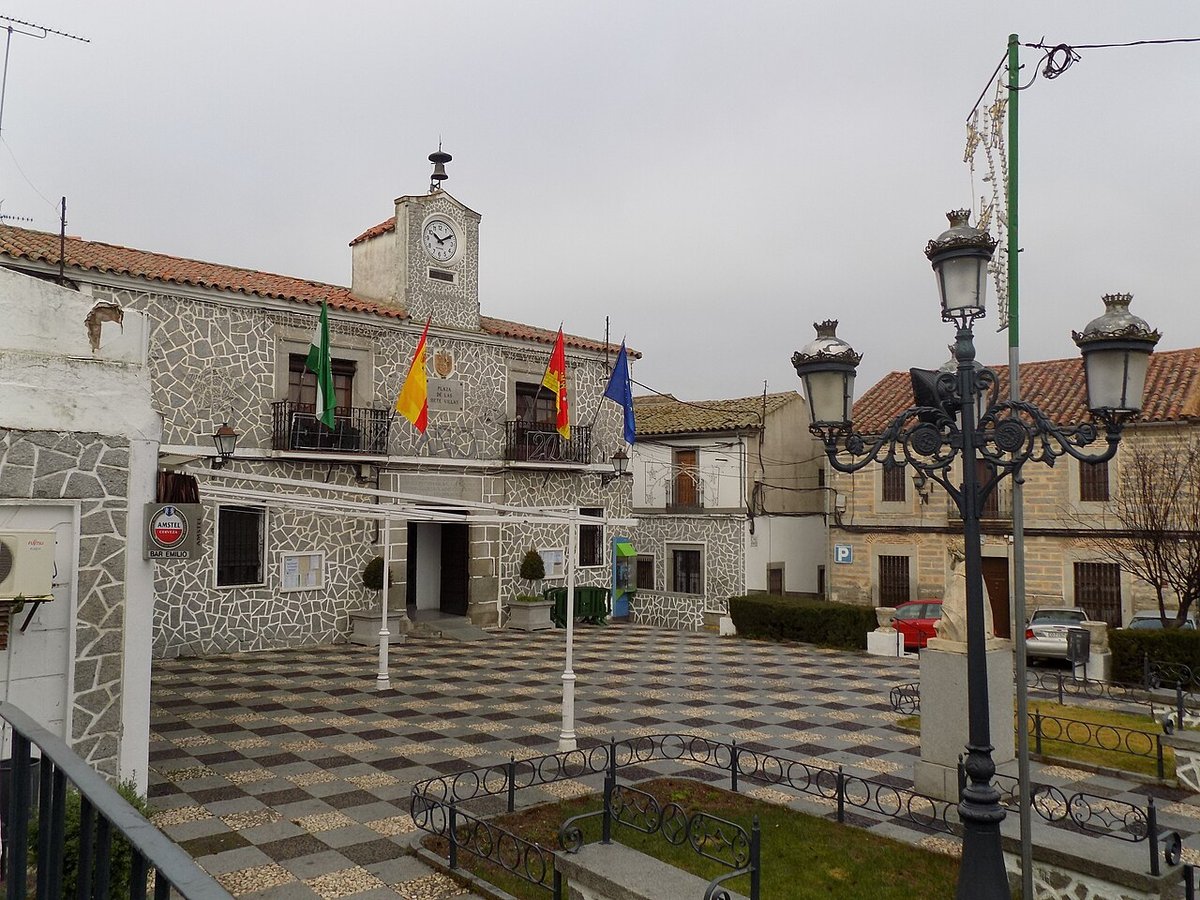
Fuente la Lancha, in the comarca of Los Pedroches in northern Córdoba province, has just over three hundred registered residents. Its urban centre is small, made up of a handful of streets, whitewashed houses and the church tower marking the middle. There are no grand monuments or expansive squares. The scale is domestic, almost private.
Among the holm oaks of Los Pedroches
The name Fuente la Lancha points to water, and that is no coincidence. In the surrounding countryside there are several springs and traditional fountains that for centuries supplied both the village and its livestock.
The defining feature of the landscape, though, is the dehesa. This is a traditional Iberian system of open woodland, where holm oaks grow spaced apart rather than in dense forest. Their wide canopies cast rounded patches of shade on the ground. The bark is dark and rough, and up close it often carries the scent of damp soil and acorns when autumn arrives.
Summer brings intense heat. During the middle of the day the countryside falls quiet, with little movement. Life shifts to the early morning and late afternoon, when the sun lowers and the light softens across the tree trunks.
A small centre with simple forms
Walking through Fuente la Lancha does not take long, but it rewards a slow pace. Many houses still have thick whitewashed masonry walls and small windows designed to keep out the heat. Some retain old wooden gates or inner courtyards paved with stone, barely visible from the street.
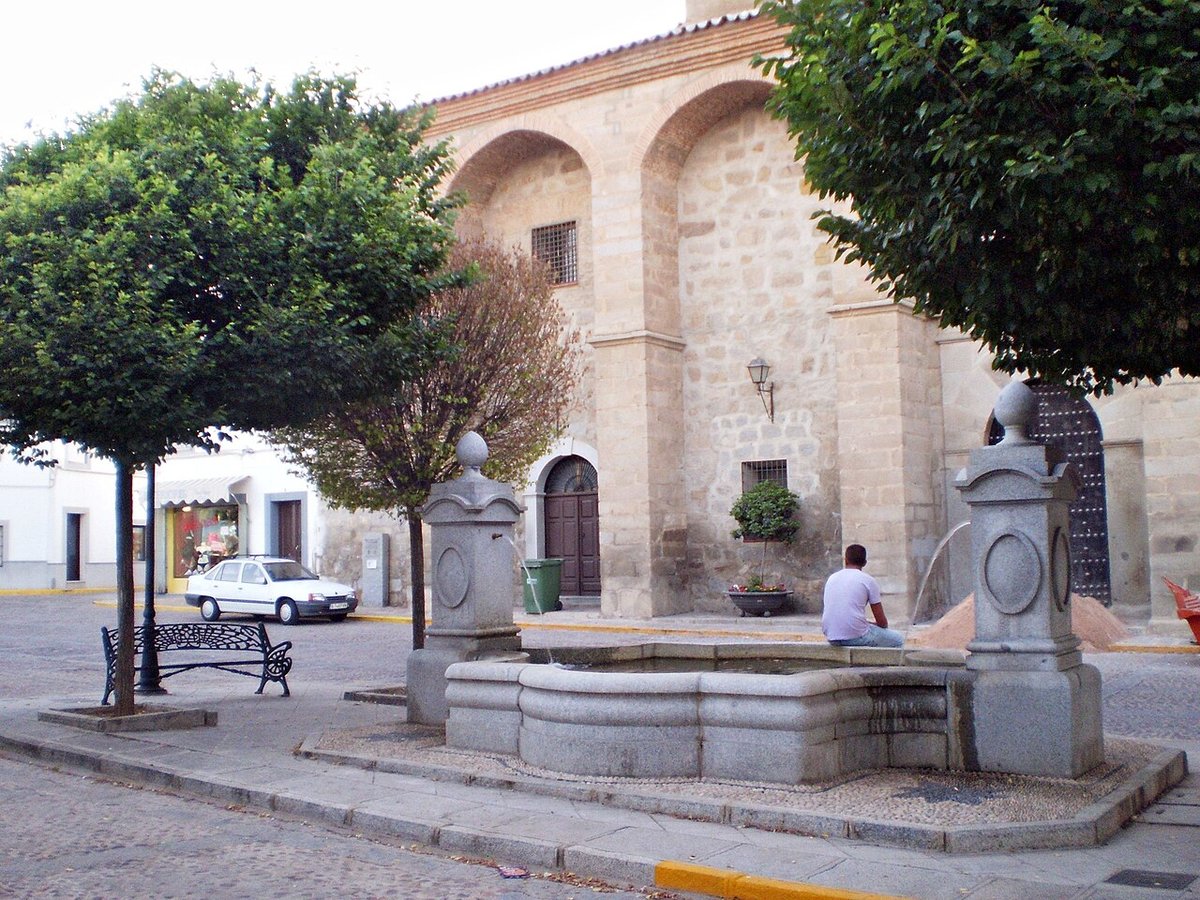
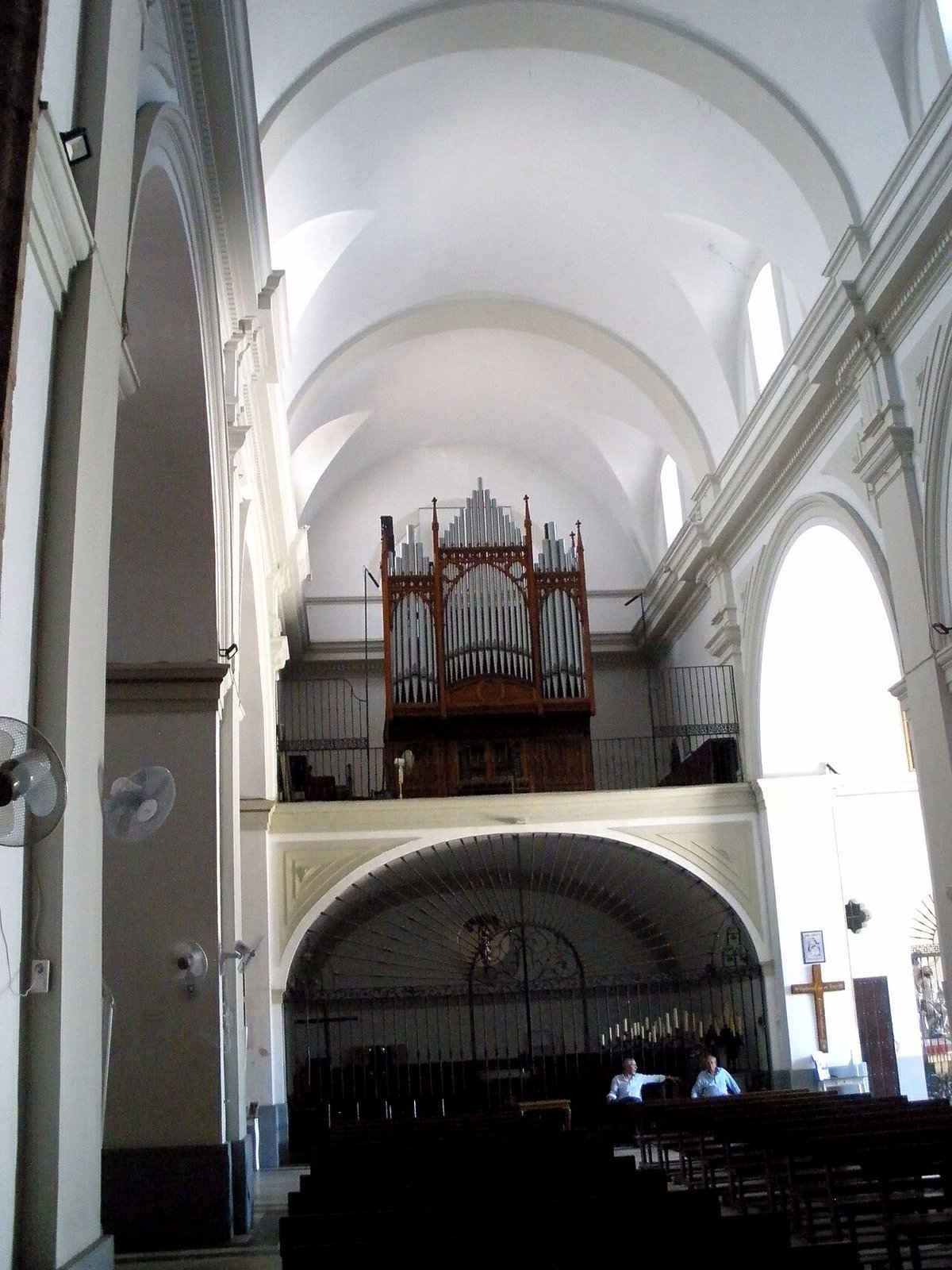
The church of Santa Catalina stands at the centre. It is a sober building in pale stone with simple lines. Its tower is visible from most points in the village and acts as a reference when moving through the streets.
At certain times of day, especially after lunch, the village becomes almost completely quiet. It is common to pass only a few people, if any at all.
Walking out into the dehesa
Step beyond the built-up area and the landscape opens immediately. Farm tracks and dirt paths run through dehesa estates where sheep, cattle or Iberian pigs graze depending on the season.
There is no marked network of walking routes as found in more developed destinations. People tend to follow public tracks that connect farms and plots of land. Gates should be treated with care, and private property always respected.
With a bit of patience, typical birdlife of the dehesa comes into view. Kites circle high above, azure-winged magpies move between the oaks, and hoopoes search the ground for insects. Towards evening, the most noticeable sounds are the bells of grazing animals and the wind moving through the branches.
The springs behind the name
Some of the traditional fountains in the area still flow. They are usually simple structures: a spout, a small stone basin and a patch of shade where the ground remains damp even in summer.
These are not developed picnic spots or formal visitor areas. They are modest corners of the countryside. Passing one in August, the contrast between the heat of the track and the coolness from the water is particularly noticeable.
Eating and planning your time
Life in Fuente la Lancha is quiet, and the options for eating or having a drink are limited. This is common across many villages in Los Pedroches, where bars are small, opening hours can vary and the atmosphere is strongly local. Those looking for more activity or services often head by car to larger towns in the comarca.
As for timing, spring and autumn are generally the most comfortable seasons for walking in the dehesa. In summer the heat can become strong by mid-morning, so it makes sense to head out early and carry water.
Village rhythm
Local festivals and religious celebrations continue to mark key moments in the year. Summer tends to gather much of the social life: people return for a few days, streets feel livelier in the evenings, and family gatherings stretch late into the night.
For the rest of the year, the pace returns to its usual rhythm. It is slow, rural and closely tied to fieldwork and livestock. In Fuente la Lancha, time seems to follow the seasons more than the clock. When evening falls and the light turns golden over the dehesa, that sense becomes even clearer.