Full Article
about Hinojosa del Duque
Monumental town known for its striking church, the Catedral de la Sierra, and its traditional cuisine on the border with Extremadura.
Hide article Read full article
A Saturday That Starts Early
Saturdays in Hinojosa del Duque begin before most places have even woken up. Well before eight, the market hall is already alive with the smell of jamón and freshly baked bread. Under a roof lined with plasterboard panels, local women pick out partridges while butchers work steadily with wide-bladed knives.
Outside, on the pavement, a man sells perrunas. These are round, golden biscuits that sound hollow when tapped, wrapped in simple brown paper. They do not last long. If you arrive late, there is nothing left and no second batch appears. That small detail says a lot about the pace here. Things happen when they happen, and once they are gone, they are gone.
Getting There Without Fuss
The most straightforward route from Córdoba follows the A-4 to Villanueva de Córdoba, then continues along the CO-660. It is a little over one hundred kilometres in total. Parking is easy enough on Avenida de la Feria, and from there the centre is flat and compact, so it takes only a few minutes to get around on foot.
Traffic changes during the weekend of the romería, a traditional pilgrimage. The road known as la Antigua often fills up, with cars double-parked and progress slowing right down. At those times, patience matters more than planning.
The Town’s Oversized Church
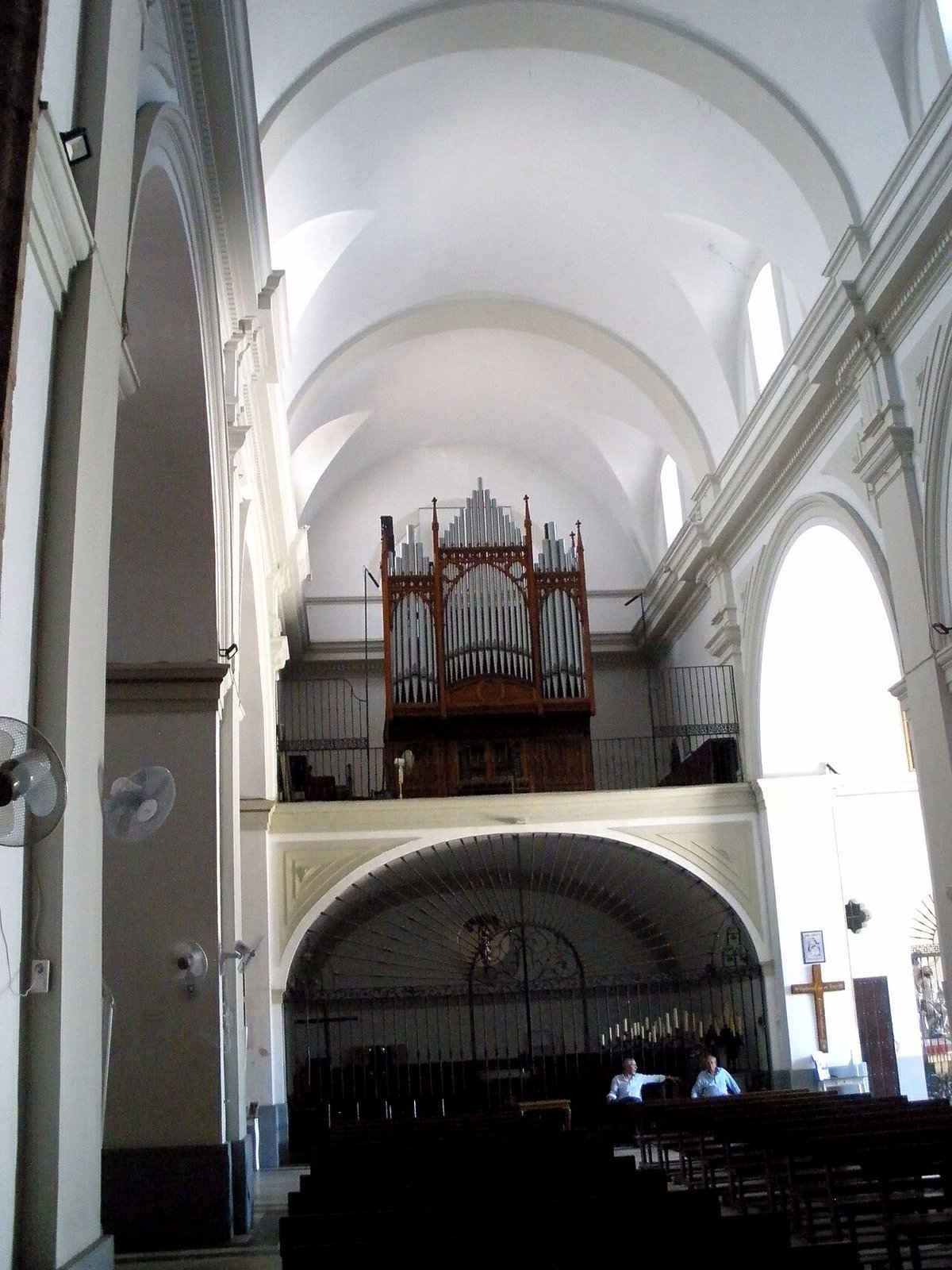
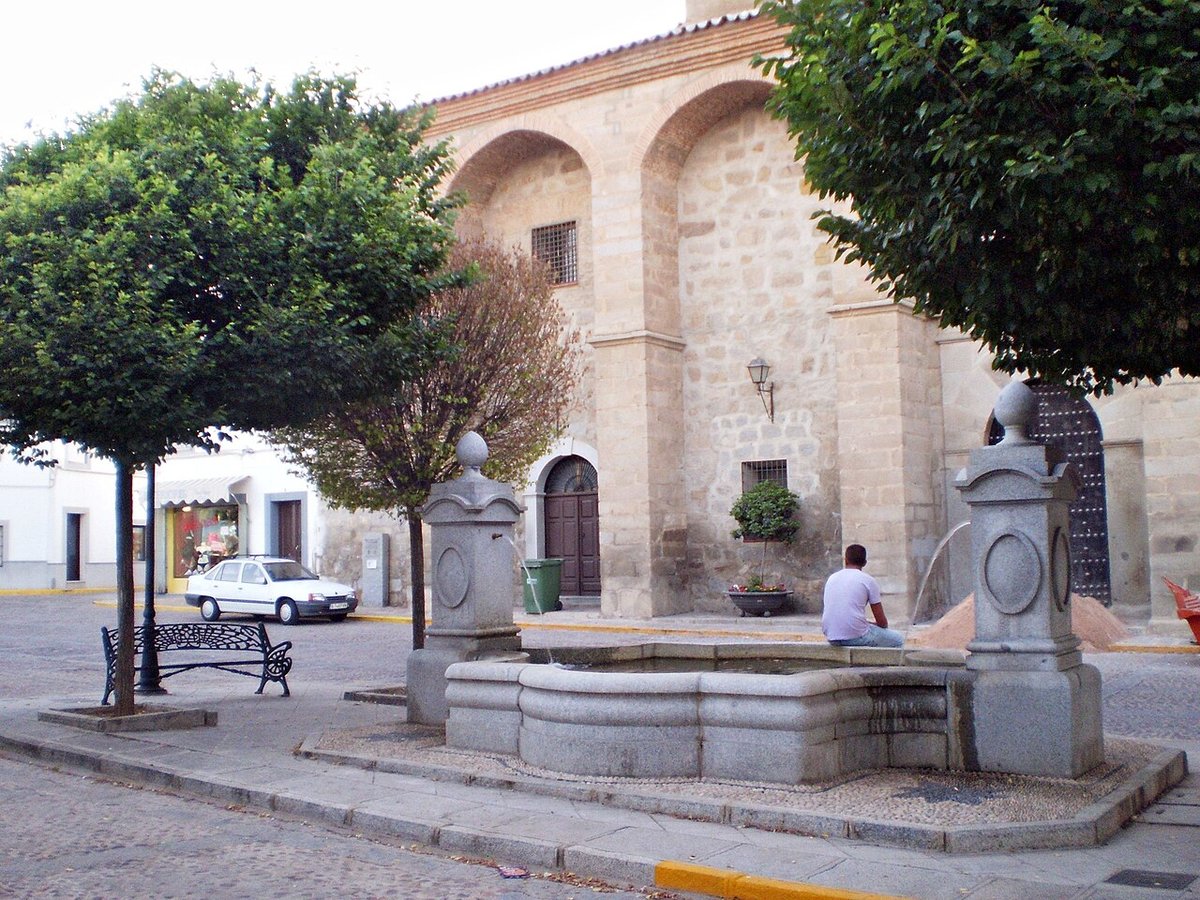
Locals call the church of San Juan Bautista the Catedral de la Sierra. The name may sound ambitious, yet the building does stand out for its size. Construction began in the fifteenth century, and its scale still shapes the skyline.
The tower is Gothic and fairly plain, but it gained an unexpected role later on. It served as a reference point for the tower of the Mezquita of Córdoba a few years after it was built. That connection gives it a quiet significance beyond the town itself.
Inside, the details are uneven. Some altarpieces stand out more than others, and the baptismal font shows thick layers of lime that have built up over time. A wooden ceiling spans the space, carefully worked, and there is a clear scent of wax in the air. Opening times are not fixed in any strict sense. The church usually opens in the morning and again towards the end of the afternoon, although that depends largely on whoever happens to hold the key.
Museum, Hermitages and Open Land
The Museo Etnológico sits in an eighteenth-century manor house. Its courtyard has columns worn down by time, which gives the place a slightly faded feel. Inside, two floors display farming tools, old clothing and a few religious objects that once belonged to hermitages in the surrounding area. It does not take long to see everything, but it offers a direct look at how the area functioned in the past.
Several of those hermitages still exist across the municipality. Their condition varies. Some are well maintained, others remain closed or partially in ruins. The hermitage of Santa Ana keeps a pointed arch and has a large olive tree at its entrance. The one dedicated to San Isidro tends to open only on the saint’s day.
About fourteen kilometres from the town lies the peri-urban park Fuente la Zarza. The lack of nearby lighting makes the night sky particularly dark. During the months between autumn and winter, flocks of cranes pass through the area. You usually hear them before you see them. Then, if you look up, the formation crosses the dehesa, the open landscape of pasture and scattered trees that defines much of this part of Andalucía.
Eating in the Centre
A street that climbs towards the church holds a couple of long-established bars. They are the sort of places that follow familiar routines rather than trends. One of them prepares olla de carnaval in colder weather. This is a hearty dish made with chickpeas, black pudding and pork fat. Another serves rin-ran, a local mixture of cod, potato and orange that appears frequently on menus in the area.
Other options depend on timing and a bit of asking around. Calderetas and lamb dishes often appear if arranged in advance. Bread is usually charged separately, a small detail that can catch visitors by surprise.
Festivals and Livestock
Semana Santa, or Holy Week, has deep roots in Hinojosa del Duque. Several processions take place, each with its own following. The procession of the Cristo de las Injurias tends to draw the largest crowds and takes place at night, which changes the atmosphere completely.
At the end of June, the feria de San Juan arrives with a marquee and music that continues late into the night. The tone shifts again in September, when the livestock fair is held near the Fuente del Pilar. Traders gather, veterinarians inspect animals, and conversations unfold around the pens. The setting is practical rather than decorative. If you go around midday, it is worth remembering that the open ground offers very little shade.
A Place That Moves Slowly
The most direct advice is simple: arrive early and walk. The market, the church and the museum sit close together, and the town does not demand much planning. If the surrounding countryside appeals, a short drive takes you out into the dehesa, where the landscape opens up.
Hinojosa del Duque does not revolve around major monuments or headline attractions. It feels more like a large, quiet town where daily life carries on at its own pace. Things unfold slowly, and that rhythm shapes the experience as much as any building or event.