Full Article
about Pedroche
Historic capital of the region, with a Renaissance parish tower that is the beacon of Los Pedroches and an old quarter steeped in medieval history.
Hide article Read full article
The pale stone of the tower of El Salvador comes into view before you reach the first houses. Early in the morning, while the sun is still low, the tower gathers the light and throws it back across the white rooftops. The air often carries the scent of open countryside. Holm oak and dry earth, especially if it has not rained for days.
Tourism in Pedroche is less about ticking off sights and more about walking slowly. This is a small town in the comarca of Los Pedroches, in the north of the province of Córdoba, where distances are measured in minutes and the landscape begins almost as soon as you pass the last house.
The Tower of El Salvador and the Heart of the Town
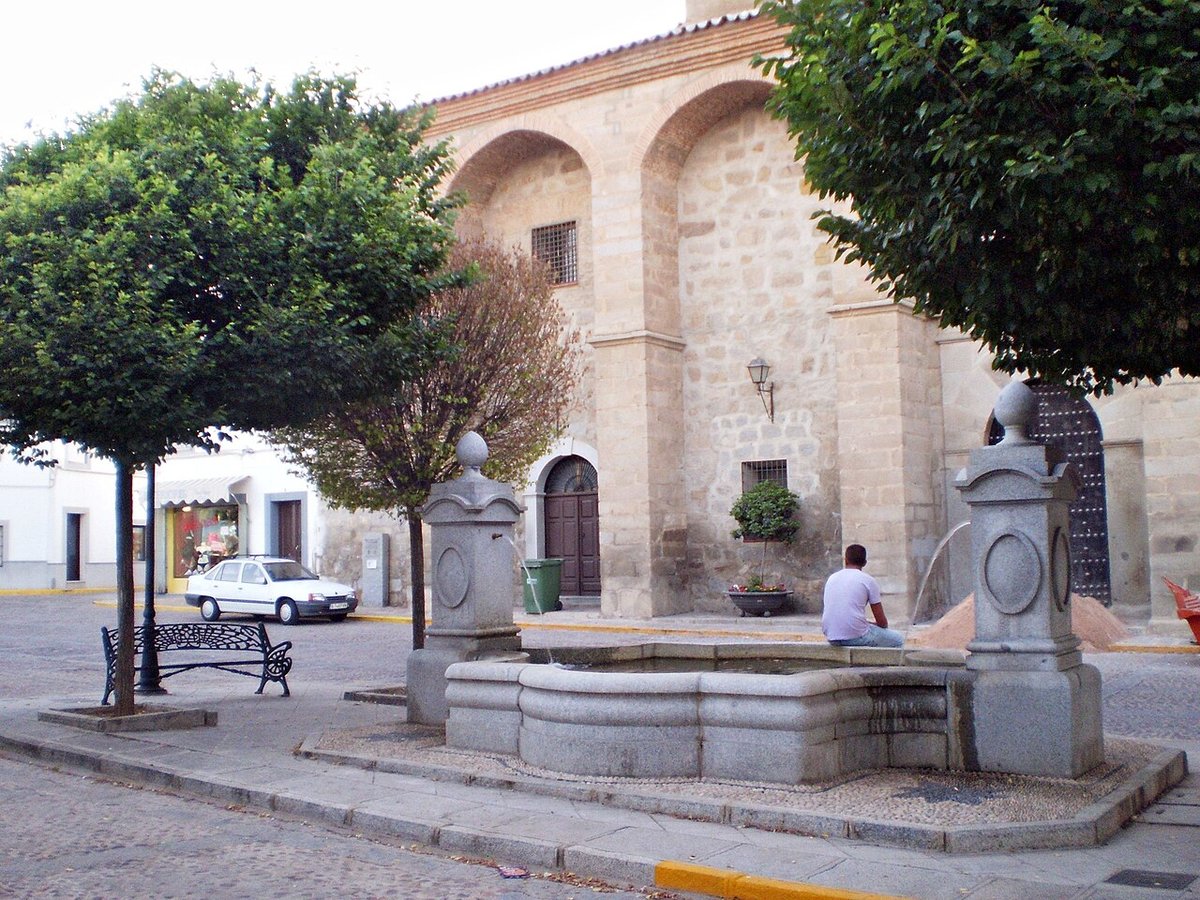
At the centre stands the church of El Salvador, its stone tower rising above the clustered houses. It is easy to find your bearings here, as many streets seem to end with a view of that tower.
The squares are modest and open, with stone benches and the occasional fountain that continues to murmur even in the quietest hours of the day. Whitewashed façades reflect the fierce midday light, so in summer the narrow strips of shade cast by the streets are welcome.
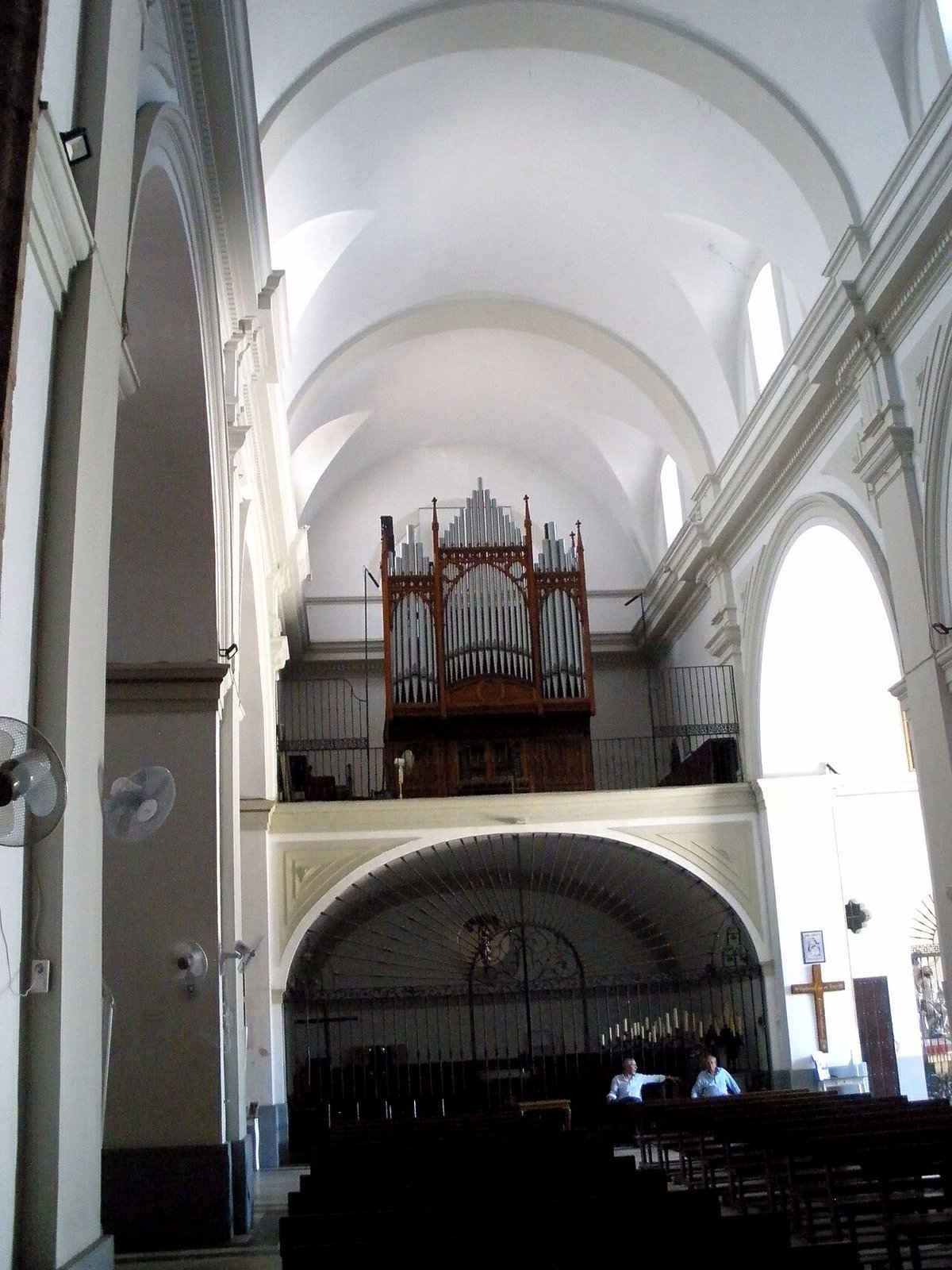
Inside the church, Baroque elements are preserved along with several religious images closely linked to local life. These are not museum pieces. Throughout the year they are still used in celebrations and processions that form part of the town’s routine. Faith and daily life remain closely connected, and the calendar continues to revolve around these moments.
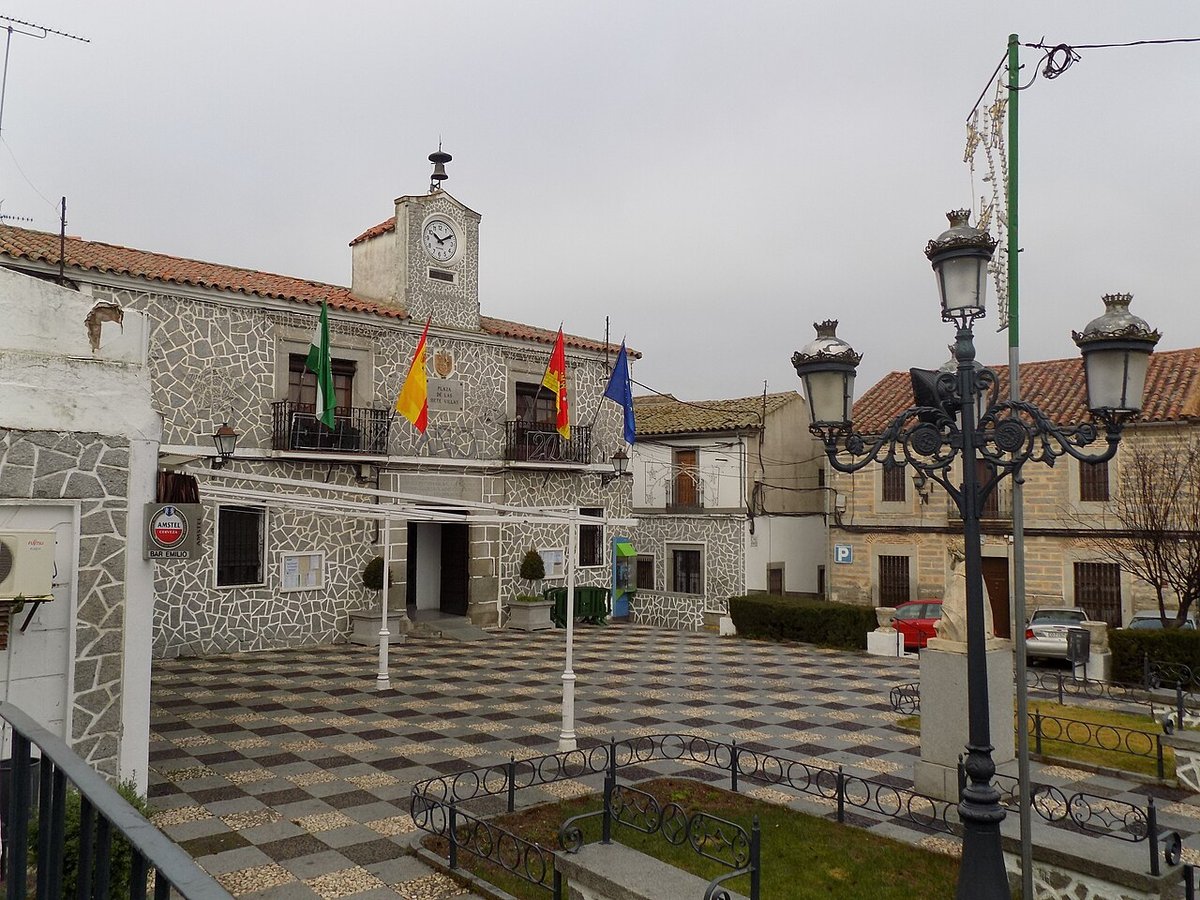
Pedroche does not overwhelm with monuments. Instead, it invites unhurried wandering. A short walk is enough to cross from one end of the centre to the other, passing sloping streets, low houses and quiet corners where little seems to change from one day to the next.
Climbing to the Old Castle
At the highest point are the remains of the old castle. There are no vast walls or complete structures, yet the position makes clear why it was built there.
The climb follows inclined streets and stretches of cobbled paving. Comfortable footwear is advisable, as some stones have been worn smooth over the years and can be slippery if damp. The ascent is steady rather than dramatic, and the town gradually falls away behind you.
At the top there is usually more of a breeze. From this vantage point, the dehesas surrounding the municipality open up into view. The dehesa is a traditional landscape of southern Spain, a working countryside where holm oaks stand well apart over wide pasture. Here, the trees are scattered, the meadows broad, and tracks stretch towards the horizon.
The scene explains much about Pedroche and the wider comarca of Los Pedroches. The town is shaped as much by this open landscape as by its streets and buildings.
Dehesa Paths and the Ermita de Piedrasantas
Step beyond the edge of the urban area and the landscape that defines the entire comarca begins. The dehesa here is not decorative countryside. It is working land, with livestock moving slowly between widely spaced holm oaks.
Some paths allow for walks of several kilometres with hardly any traffic. Early morning and late afternoon are when the greatest sense of life can be felt. Storks perch on posts, kites circle in wide arcs overhead and, if there is silence, a quick movement may catch the eye between the trees.
One of these routes leads to the ermita de Nuestra Señora de Piedrasantas. The walk alternates between dirt tracks and areas used for grazing. There are no major climbs, though taking water is sensible when the heat intensifies.
The ermita appears in the middle of the countryside, surrounded by old holm oaks. It is closely tied to local tradition and to the romería dedicated to Piedrasantas, held in some years in spring. A romería is a rural pilgrimage and celebration, combining religious devotion with a day spent outdoors. In Pedroche, it is one of those occasions that brings the whole town together.
The connection between town and countryside is constant. Paths are not separate from daily life but an extension of it, linking homes, farmland and places of worship.
Country Cooking and Iberian Pork
Local cooking is closely linked to the Iberian pig raised in these dehesas. From this livestock come hams and cured sausages, matured slowly in the dry air of the sierra.
In many homes, substantial dishes are still prepared: migas, made from fried breadcrumbs; stews with game meat when the season allows; hot soups in winter. These are recipes designed for long days working outdoors. The ingredients reflect the surrounding land, and the flavours are shaped by what the dehesa provides.
Food here is not presented as spectacle. It follows the rhythm of the seasons and the needs of rural life, with dishes that warm in cold months and sustain through demanding work.
Seasons, Celebrations and Atmosphere
Spring and autumn are usually the most pleasant times for walking in the surrounding countryside. The fields shift in colour and temperatures make it possible to spend hours outdoors without excessive heat.
In winter, frost at dawn is common. On some mornings the landscape wakes under a white coating, and the air feels sharper than it first appears.
The town’s calendar includes several celebrations linked to the church and to the rural year. The patron saint festivities are usually held in summer and draw back many residents who live elsewhere and return for those days. The romería of Piedrasantas also forms part of the events that mobilise the entire community.
Those seeking quiet may prefer to avoid August weekends, when the return of families and the summer atmosphere make the town busier.
Pedroche does not promise constant activity. Its appeal lies in stillness, in the way light shifts across white façades, in the steady presence of the tower of El Salvador and in the open horizon of the dehesa. It is a place where a walk to the edge of town becomes a walk into working countryside within minutes.
Getting to Pedroche
Pedroche is located in the north of the province of Córdoba, within the comarca of Los Pedroches. From the city of Córdoba, the journey usually follows the A‑4 towards the area of Montoro and then continues along roads that cross the dehesa towards Villanueva de Córdoba.
The final stretch already reveals the typical landscape of the comarca: scattered holm oaks, livestock enclosures and long straight roads where the sky occupies almost everything. Parking in the centre is not usually difficult, although the oldest streets are narrow and it is best to drive in calmly.
By the time the tower of El Salvador comes back into view, catching the light once again, the character of Pedroche is clear. Stone, white walls and open countryside set the tone, and the pace rarely shifts from unhurried.