Full Article
about Pozoblanco
Economic capital of northern Córdoba, known for its bullring where Paquirri died and for its thriving trade and livestock industries.
Hide article Read full article
At eight in the morning, before the sun has burned the grass of the dehesa, Iberian pigs move among the holm oaks like pale shadows. In Pozoblanco, this is earlier than almost anything else. Bars are still closed, and even the bells of the church of Santiago have not yet marked the hour. The air carries a mix of damp earth and curing ham from nearby drying houses. For a brief stretch of time, the town smells exactly like what it is: a place shaped by bread, wine and pork.
A working town, announced by its scent
Approaching from the A‑4, Pozoblanco appears suddenly, a spread of white rooftops set among olive groves and holm oaks. The smell reaches you first. The aroma of jamón de Los Pedroches hangs on the outskirts like a quiet announcement. After that come the grain silos, livestock buildings and signs for cooperatives linked to the sector. This is not a sleepy place. It functions as one of the commercial and livestock centres of the Valle de los Pedroches, and that character is visible from the start.
The pavements are broad and there is movement early in the day. The municipal market, a practical building from the mid-20th century, still holds a distinctive atmosphere. Inside, the scent blends fresh meat with damp sawdust and the steady rhythm of conversation across counters. People talk about feed, about rains that arrive late, about how the montanera season is shaping up.
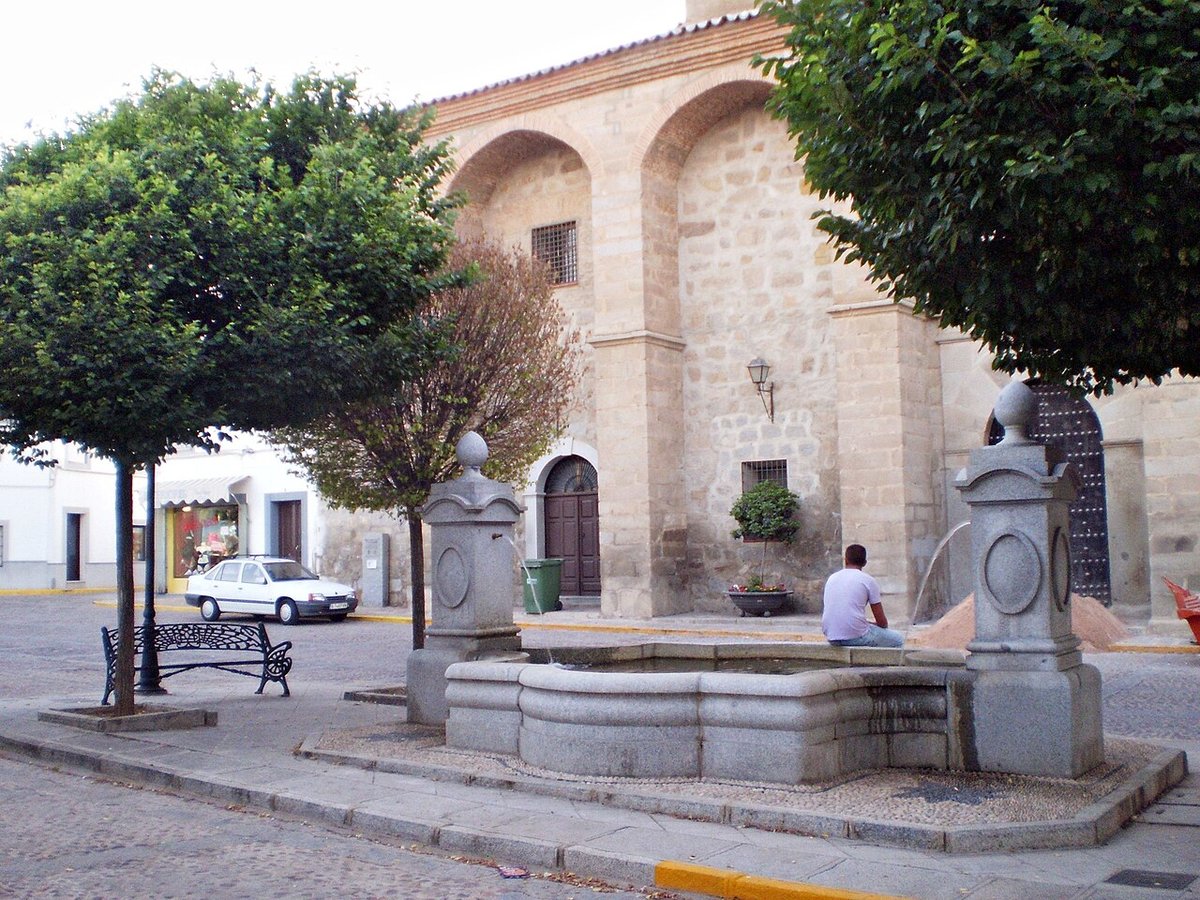
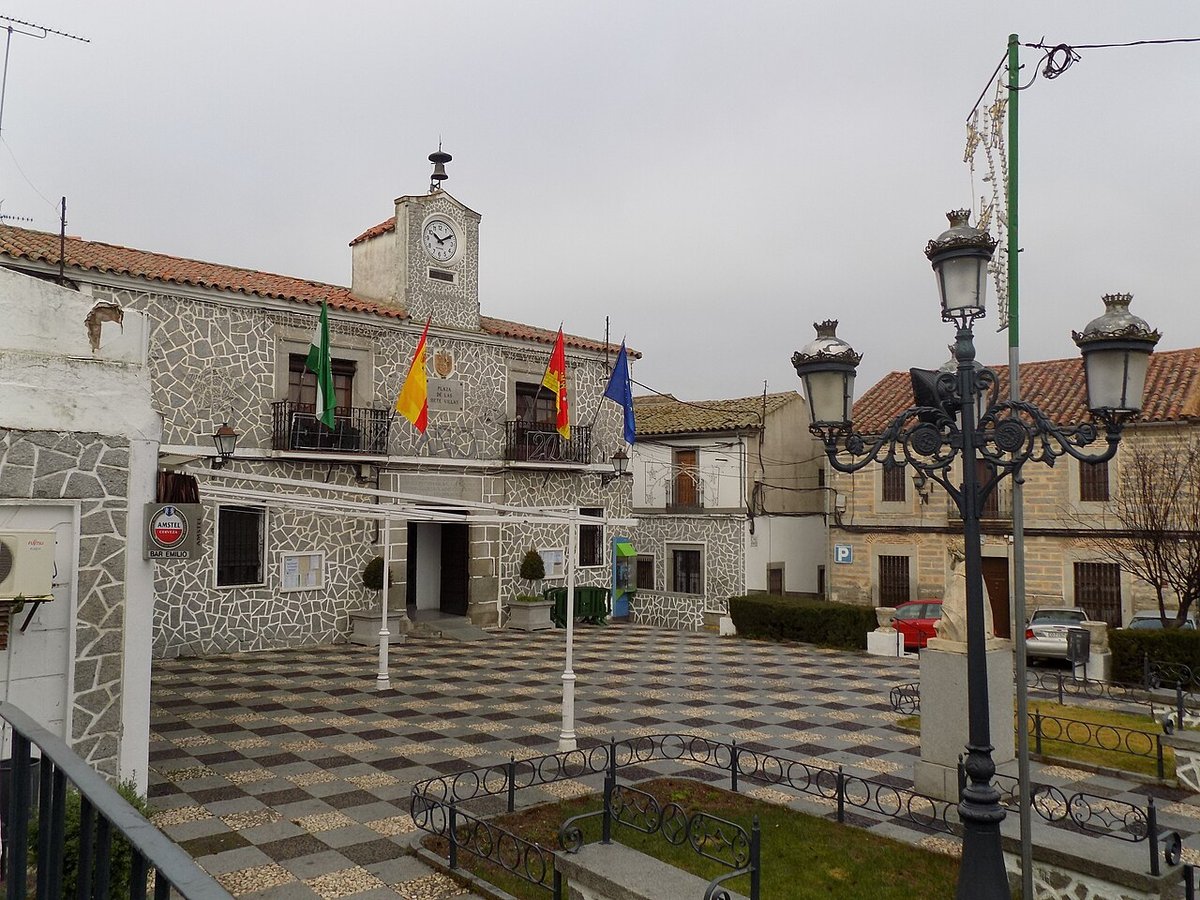
In the centre, Plaza de España works almost like an extension of the market itself. By mid-morning, tables are already occupied with long breakfasts. Toast, short coffee, newspapers folded over marble tops. Time here is often marked by bells: those of the town hall, of Santiago, and of the Pozo Viejo.
The well and the ring
The Pozo Viejo stands quietly, faced with pale stone that turns yellowish at sunset. It is not large. Just a few metres across, covered with an iron lid, its rim worn by years of use. Children sit on its edge eating sunflower seeds; older residents pass by without much attention. It’s a quiet spot to sit for five minutes before moving on.
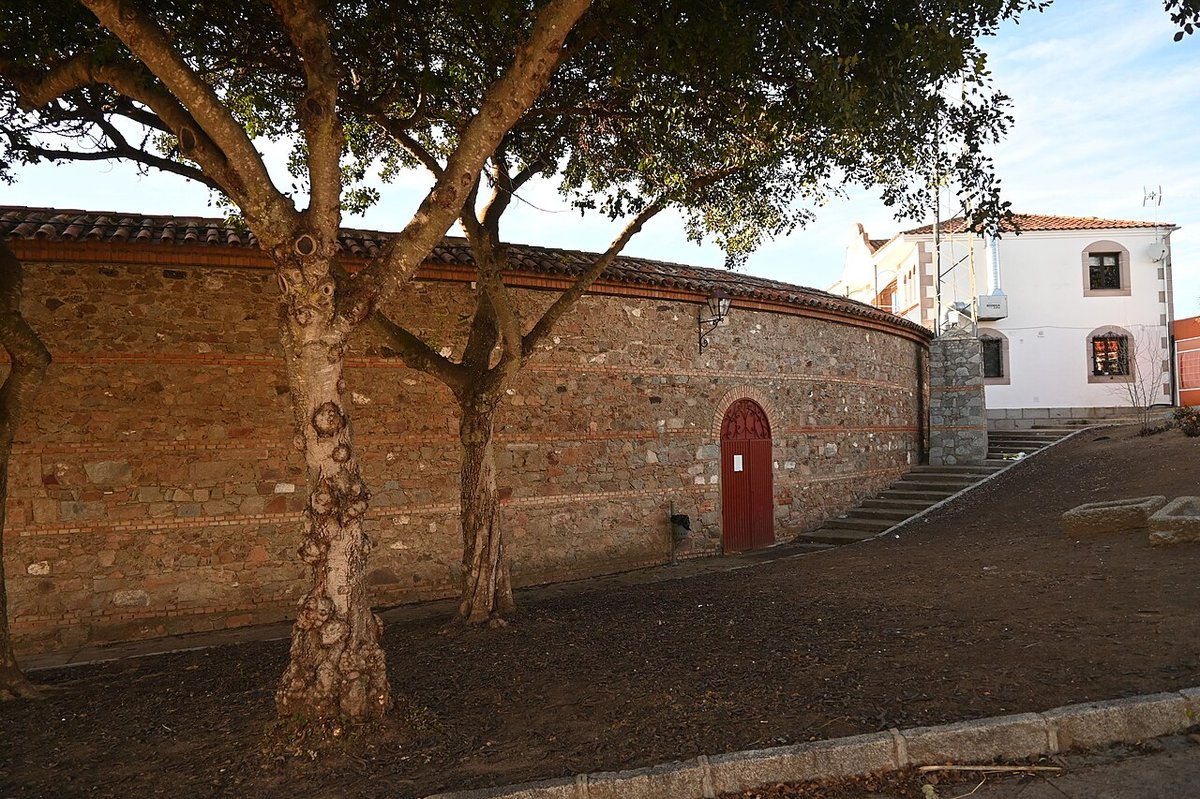
A short walk away lies the Coso de Los Llanos. From the outside, it resembles a large, practical structure rather than an ornate one. It is one of the biggest bullrings in the province and carries a heavy history. In 1984, a bullfight here ended with the death of a very famous matador after a serious goring in the ring. The episode still surfaces in conversation when people speak about the arena.
When festivals or concerts take place, especially at night, artificial light reshapes the sand into something flat and bright, and the space takes on the feel of an indoor venue.
The road to Luna
Leaving town along the road to the Virgen de Luna, the landscape shifts quickly. The last houses fall away, replaced by holm oaks, cork oaks and fenced grazing land. Within a few kilometres stands the sanctuary of the Virgen de Luna, set in the middle of the dehesa.
The route changes depending on the time of year. In summer, dust rises behind passing cars and coats your ankles if you’re walking. In winter, after rain, puddles and mud take over sections of the track. Even so, there are almost always people around. Cyclists pass through with a nod, others walk with dogs off lead, and families come to spend an afternoon under specific oaks they’ve claimed for years.
The hermitage itself is simple, with whitewashed walls that glare in full sun and a low roof tiled in terracotta. When the wind drops in late afternoon, there is little to hear beyond your own footsteps on gravel and the soft hum of bees around rosemary bushes.
In spring—usually late April—the main pilgrimage connected to the Virgen takes place. On that day alone, everything changes: carts rattle down tracks usually walked in silence; horses stand tethered to trees; groups set up long tables beneath branches heavy with new leaves. The scent of rosemary mixes with hot food and red wine poured into plastic cups.
When to go
Autumn is when you should come. With the first rains—usually in October or November—the dehesa turns green again under a softer light. Plan your trip around one of two events: either for Feria del Jamón Ibérico y del Toro de Lidia or for Agroganadera Pedrocheña livestock fair—check which one is on before you book anything.
During Semana Santa, especially at night when processions move through narrow streets near Plaza de España or Calle Isaac Peral you can hear drums echoing against pale stone façades for hours; it’s a sound that gets into your chest.
August brings a different reality. The dry heat in Los Pedroches can be intense; at midday it becomes difficult to find shade away from arcades or parks like El Coso or Paseo Marcos Redondo where old trees offer some relief until late afternoon when people start appearing again outside bars looking for breeze rather than just beer