Full Article
about Santa Eufemia
Historic town with remains of an unassailable castle and walls overlooking the northern valley, still carrying a medieval feel and deep-rooted traditions.
Hide article Read full article
A Village That Carries On
There is a moment just outside Santa Eufemia when the road begins to climb and, without warning, the dehesa opens up in front of you like a green carpet stretching to the horizon. That is when it makes sense that this place, with just over six hundred inhabitants, is still here. Someone has to stay and look after all this.
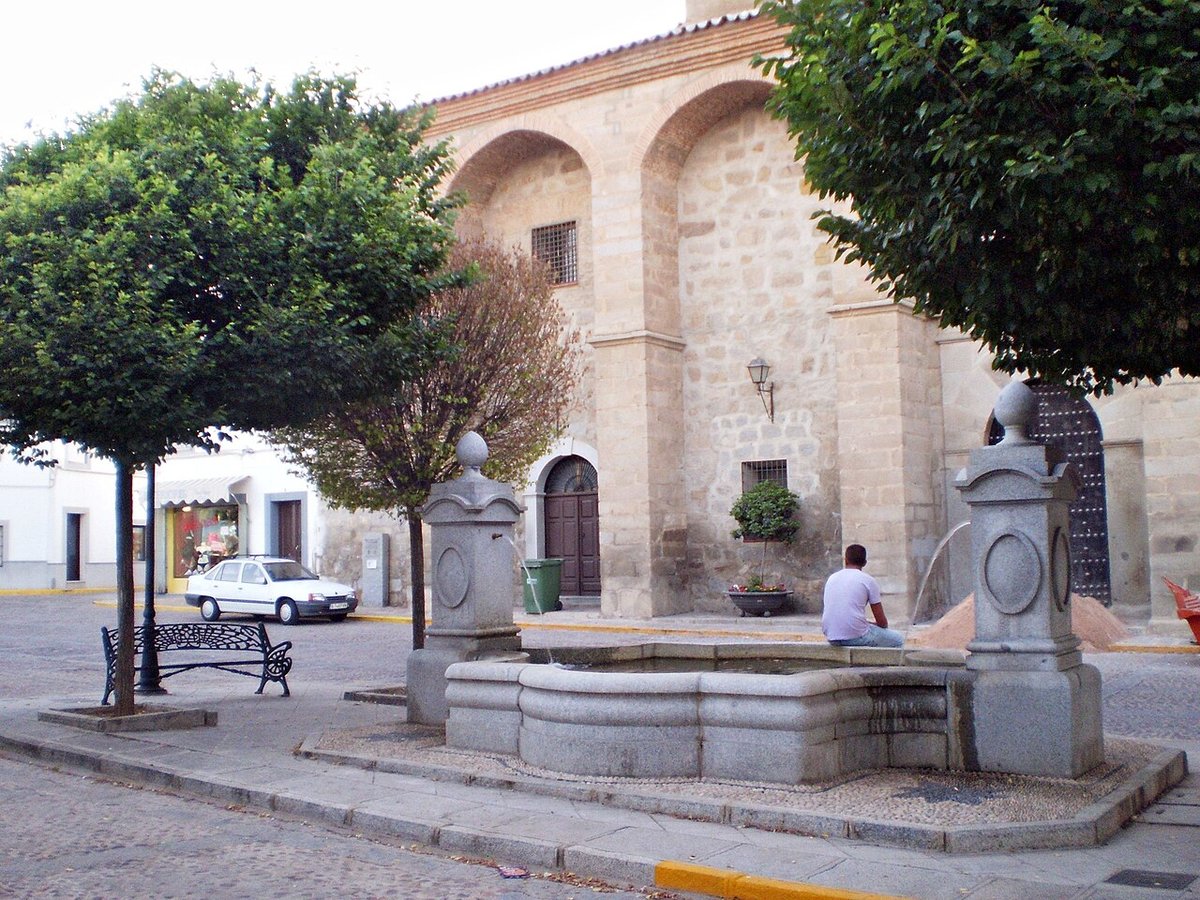
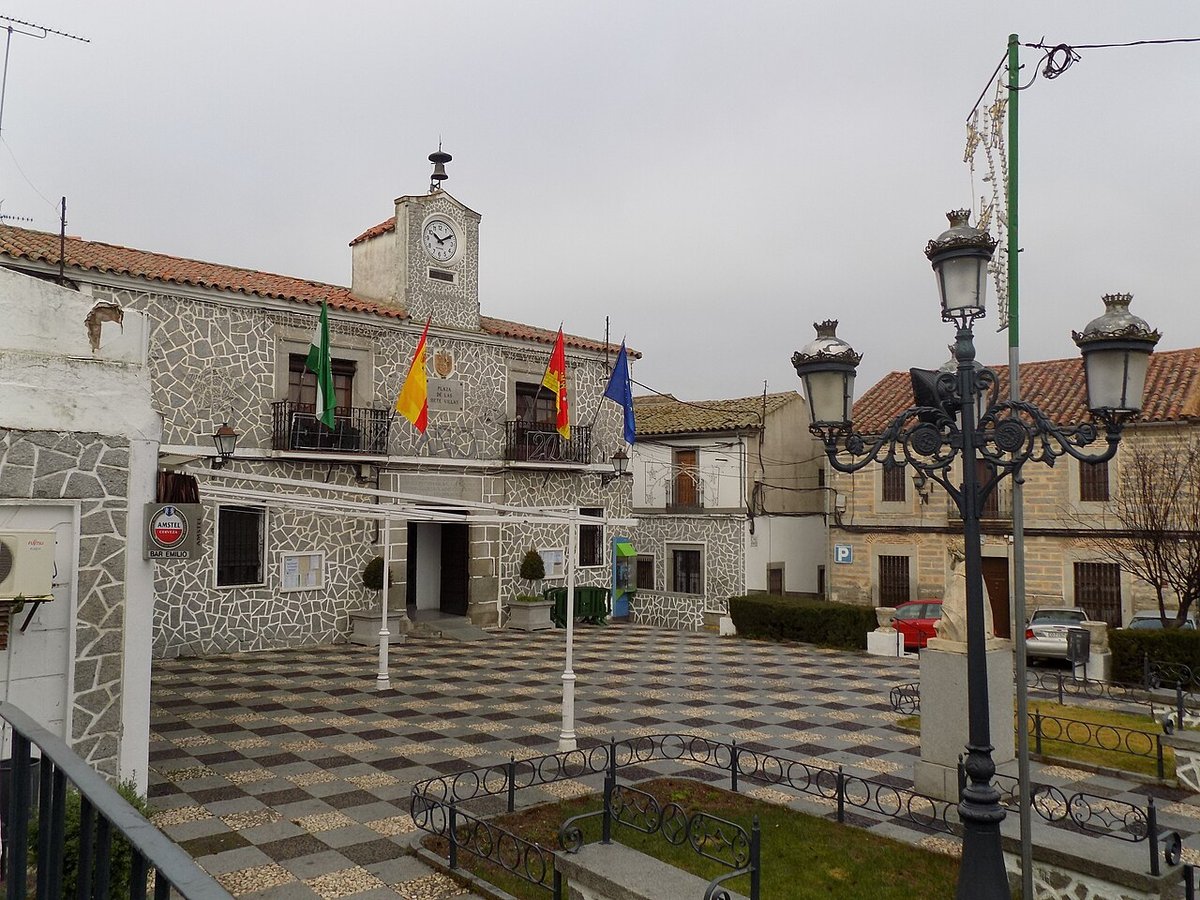
Santa Eufemia sits in the comarca of Los Pedroches, in northern Andalucía. It does not try to catch the eye. The Plaza Mayor is watched over by the Castillo de la Mota, known locally as the Mota, an earthen castle that looks less like a medieval fortress and more like a vast sandcastle rising above the white houses. That is part of its appeal. There are no ticket offices, no audio guides, no staged re-enactments. Just the mound of earth, the church tower marking the hours and the everyday rhythm of a small town.
It feels like one of those places that does not need to explain itself. There are no souvenir shops lining the square, no sense that anything has been arranged for an audience. Life happens at its own pace, whether anyone is watching or not.
Stories circulate, as they do in towns where time is not in short supply. One local anecdote concerns the surname Román, common here, which apparently appears on stamps in Burkina Faso because of a missionary born in Santa Eufemia. It is hard to verify in full, but it is the sort of tale that surfaces over a plate of migas, the traditional dish of fried breadcrumbs often served with bits of meat. In places like this, such stories are part of the fabric of daily conversation.
The Dehesa and the Iberian Pigs
The road into Santa Eufemia cuts through what locals jokingly call the “ham factory”. For kilometres, the dehesa unfolds: open pasture dotted with holm oaks, where Iberian pigs wander at an unhurried pace. The dehesa is a distinctive landscape of southern Spain, shaped by centuries of grazing and tree management. Here, animals have room to roam, moving through grass and acorns beneath the trees.
This setting defines much of the local identity. The region of Los Pedroches is known for its produce, and that becomes especially clear during the patron saint festivities, usually held at the end of summer. For a few days, the tempo shifts. Houses and bars bring out substantial dishes: flamenquín, a deep-fried roll of ham wrapped in pork loin, local embutidos and slow-cooked stews that demand bread on the side.
Sheep’s cheese from Los Pedroches often carries a firm, intense flavour that makes you pause after the first bite. Honey from the sierra tends to taste of rosemary and dry countryside after rain. These are not elaborately presented creations, just straightforward food shaped by the land around the village.
Walking Out from the Square
Several marked walking routes begin in Santa Eufemia, leading straight from the edge of the village into open country.
One of the best known is the Sendero de los Negrillos, around eight kilometres long. It climbs towards a hilltop with wide views across the dehesa in every direction. From up there, the village appears small against the surrounding expanse. It is a useful reminder of how much landscape there is compared to the handful of streets gathered around the square.
Another route bears the striking name of Ahogaborricos, literally “Donkey-Drowner”. It passes a series of old wine cellars dug into the earth, generally dated to around the 17th century. These are small caves carved into the ground where wine or food was once stored. Today, what remains are hollows in the rock and the need for a bit of imagination to picture how they were used.
Ask a few times for further suggestions and locals often mention the Cuerda de la Sierra. It does not always appear clearly signposted in every guide, but it is described as a long walk along the ridge, with open views for much of the way. Water is advisable, and mobile coverage can be unreliable. Out here, the signal comes and goes.
These routes do not come with interpretation panels at every turn. They are simply paths that have been used and maintained, linking the village to its surroundings.
When Night Really Falls
Los Pedroches frequently appears on maps of astronomical observation areas because light pollution is minimal. Put simply, when night falls, it falls properly. On many clear evenings the Milky Way is visible to the naked eye, something that has all but disappeared in large cities.
Looking up becomes part of the experience. The absence of artificial glow changes your sense of scale. The sky feels larger, closer, more detailed.
In May, the romería of the patron saint takes place. The image is carried to the Ermita del Cristo de la Vera Cruz, a few kilometres away. The journey unfolds with singing, shared food and wine along the way. It does not resemble a staged spectacle. It is closer to a community repeating what it has long done, marking the calendar in the same way year after year.
During Semana Santa, Holy Week, Santa Eufemia maintains a traditional way of singing the Passion, documented since the early 20th century. It is not something arranged for visitors. It continues because the people of the village consider it their own.
Simple Expectations, Open Horizons
Anyone arriving in Santa Eufemia should come with modest expectations. There are no streets packed with shops, no Michelin-starred dining rooms. The plan here is different.
A slow circuit of the Plaza Mayor is a good starting point. Climb the Mota for a view back over the rooftops and out towards the dehesa. Head beyond the last houses and walk for a while under the holm oaks. If the sunset is clear, the landscape settles into a silence that is difficult to describe without sounding sentimental.
Then wait for darkness. In a world of constant light and noise, there is something quietly striking about a place where the sky still appears vast. In Santa Eufemia, that remains an everyday occurrence rather than a special event. Sometimes travelling is simply about finding a corner where the horizon feels wide again. Here, that is still possible.