Full Article
about Villanueva del Duque
A municipality with mining and farming roots that has beautified its streets and corners, becoming a benchmark for rural tourism in the area.
Hide article Read full article
Morning light over Los Pedroches
Early in the day, when the sun is still low and the holm oaks cast long shadows across the reddish soil, the countryside around Villanueva del Duque carries the smell of damp grass and fine dust. A car passes now and then on its way to the farms. From further off comes the rattle of a trailer or a dog barking behind a gate. Tourism here begins in that wide, quiet stretch of Los Pedroches. It is not staged or curated. It is simply the pace of rural life.
Villanueva del Duque has around 1,400 residents and sits in the north of the province of Córdoba, within the comarca of Los Pedroches. The dehesa, a traditional landscape of scattered oak trees and grazing land, is not something viewed from a lookout point. It is where people work, where livestock graze, and where many families still organise part of their daily lives.
Streets of stone, lime and shade
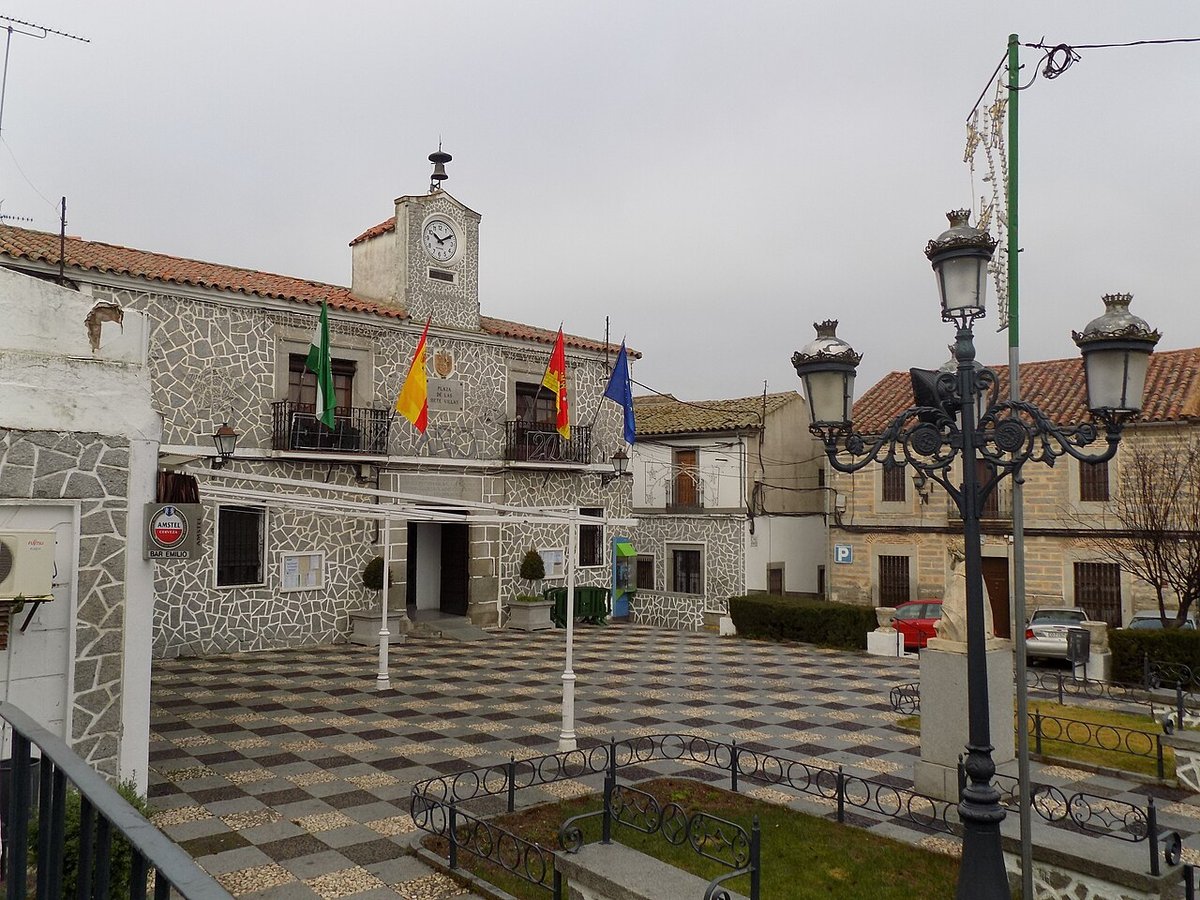
The village invites an unhurried walk. Streets in the centre are short, some with a gentle slope, and many houses keep their whitewashed façades, dark base trims and iron window grilles. At midday, when the sun falls directly, those grilles cast sharp shadows across the walls.
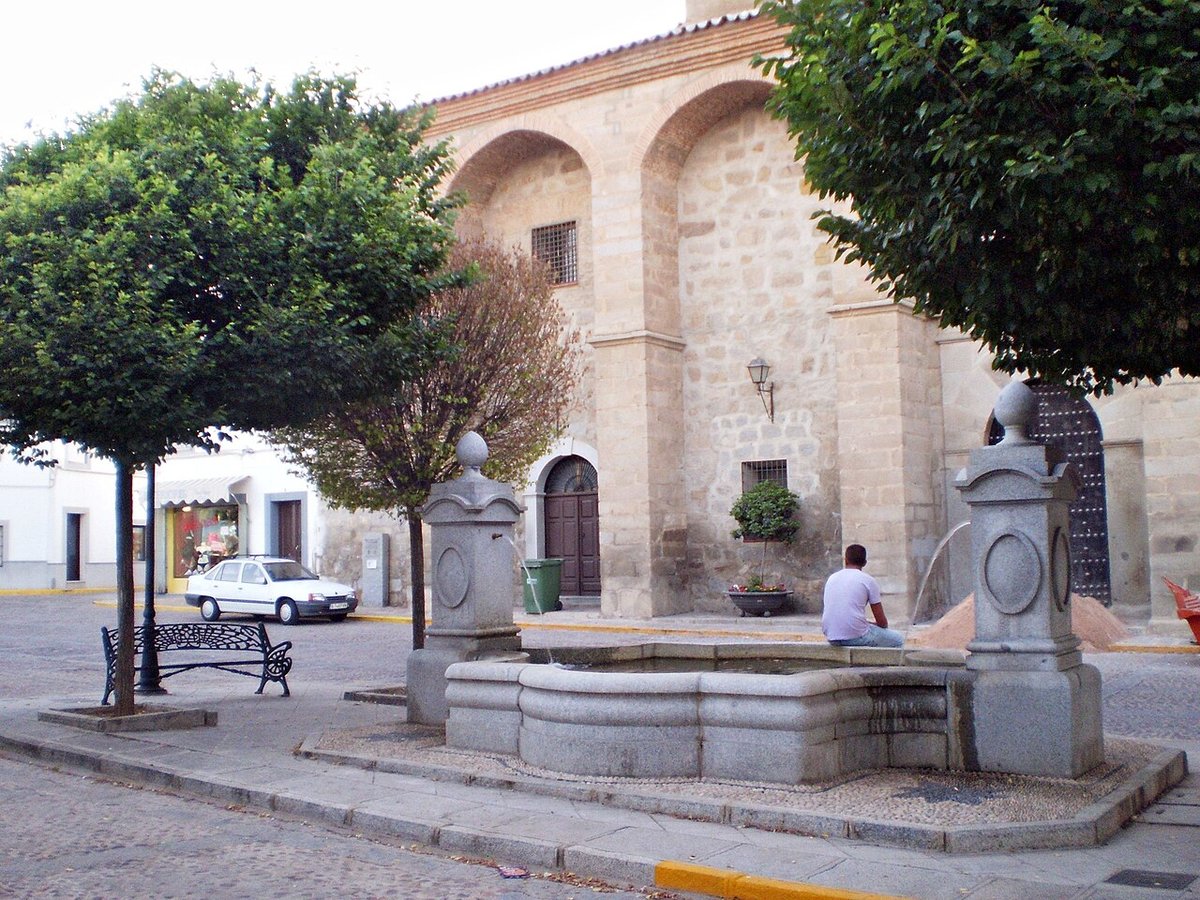
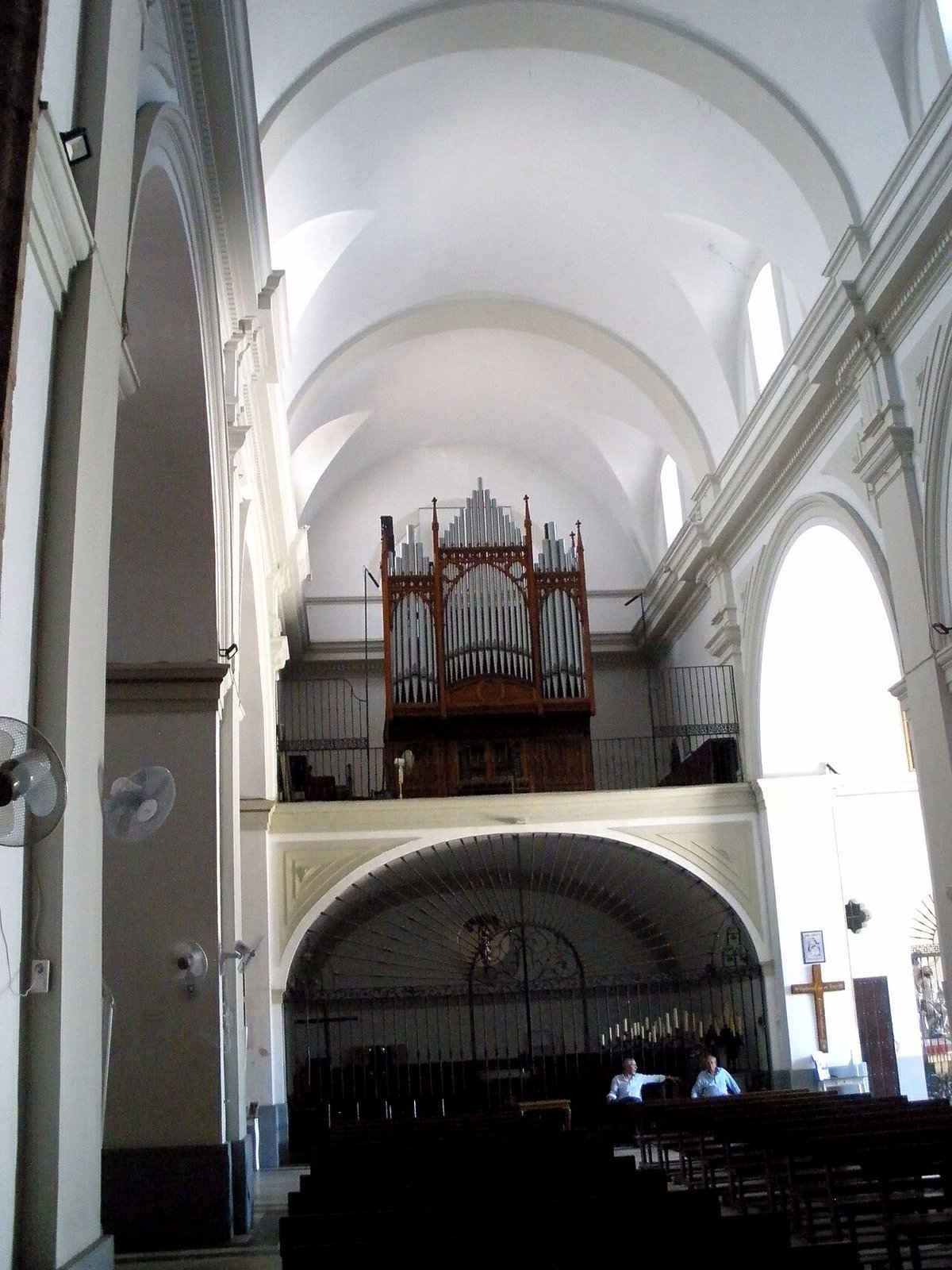
The Iglesia Parroquial de la Inmaculada Concepción stands at the most visible point in the town. Its square tower can be seen from several nearby streets and works as a useful reference when finding your way around. The current building dates back several centuries, as is common in this area, with later alterations and additions. Inside, wooden altarpieces remain, and there is a cool atmosphere even on the hottest summer days.
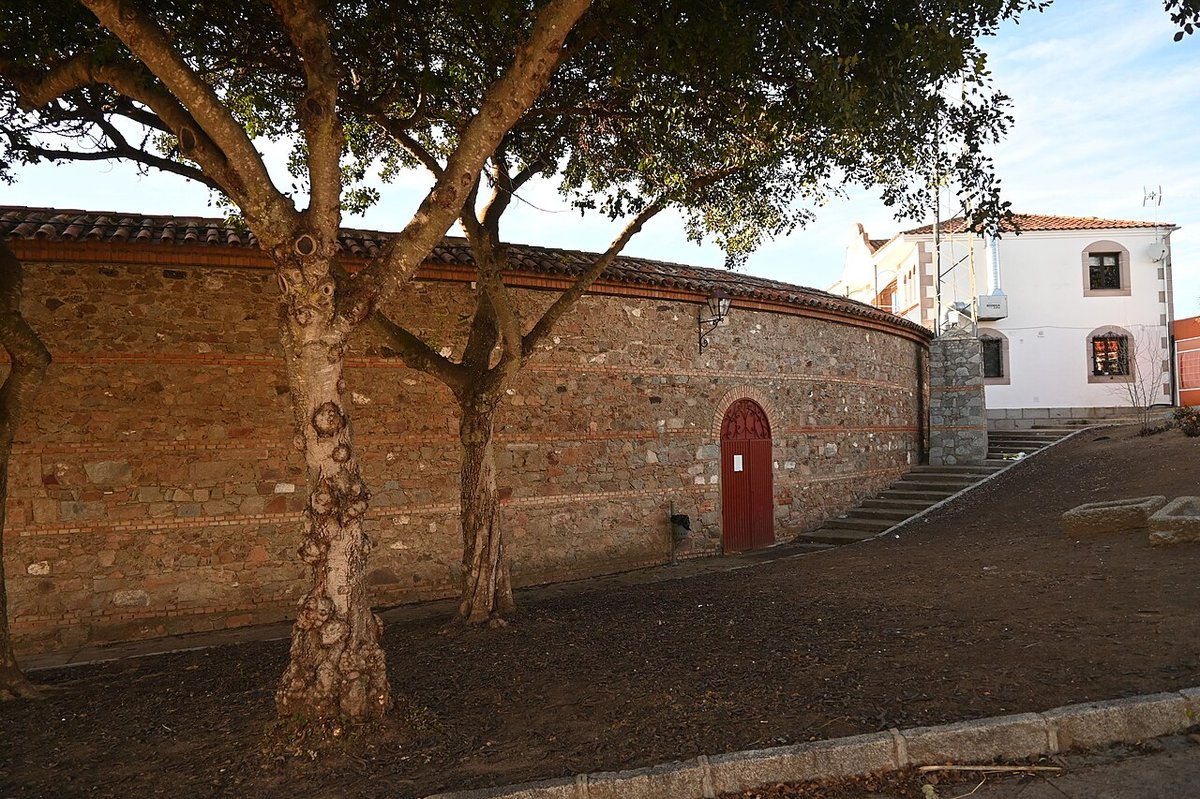
Around the main square and nearby streets, there are well-crafted stone doorways and older houses with thick walls. At certain times of day, especially late afternoon, the limewash reflects a soft light that gives the whole village a brief golden tone.
The working landscape of the dehesa
A short walk or drive from the village leads straight into the dehesa of Los Pedroches. Holm oaks are spaced across the land, with dark trunks and rounded canopies that let light filter through. In winter the ground is often green with grass. In summer, dry straw colours take over.
Many farms raise livestock, particularly linked to the Iberian pig, which is a strong presence across the comarca. It is common to see animals moving slowly between the trees or to hear cowbells in the distance when there is a light breeze.
There are rural tracks that can be explored on foot or by bicycle, although many are still used for agricultural work. If travelling by car, it is best to go slowly. Tractors, livestock and farm gates are part of everyday movement here, and any gate should be left as it was found.
Long walks and open skies
The landscape has a distinctly horizontal feel. From certain points, especially small rises around the village, the dehesa stretches for kilometres with very few interruptions. On clear days, the sky appears vast. This is most noticeable at sunset, when the holm oaks stand in dark silhouette against an orange light.
Autumn brings a different kind of activity. After the first rains, mushrooms appear in various parts of the comarca, and some people head out early to look for them. It is important to be well informed before collecting anything. Not all species are edible, and in some areas there are rules about gathering them.
Traditions that shape the year
Life in Villanueva del Duque still revolves to a large extent around its festivities and shared traditions. Semana Santa, the week leading up to Easter, is marked by processions that move through the main streets. They tend to be sober in style, accompanied by neighbours who have known each other for years.
Summer brings the most lively celebrations. Many people who have moved away return for a few days, and the population briefly swells. In the evenings, squares fill with music, chairs set out into the street, and conversations that stretch late into the night as the heat eases.
There are also festivities linked to the town’s patron saint, combining religious events with activities organised by the municipality and local associations.
When to go, and how to take it in
Summer in Los Pedroches can be very hot from midday onwards. A visit in July or August is more comfortable early in the morning or later in the day, when a bit of air returns and the streets begin to fill again.
Spring and autumn are usually the most pleasant seasons for walking in the surrounding countryside. The light is softer, and the dehesa shifts in colour almost week by week.
Villanueva del Duque is not a place for tight schedules or packed itineraries. It works best with time to spare: park near the centre, walk without a fixed route, and let the nearby countryside set the rhythm of the day. Sometimes that is enough to understand how life moves in this part of Los Pedroches.