Full Article
about Chirivel
Gateway to the Vélez region; land of almond groves and major Roman sites.
Hide article Read full article
Dawn in Los Vélez
Early in the morning, before the sun clears the ridgelines, Chirivel smells of damp earth and last night’s cooling firewood. On the edges of the village there are cockerels, the scrape of a metal door opening, and the brief ignition of a car heading out towards the fields. The main square is still half empty. At that hour, tourism in Chirivel has little to do with maps or lists. It is closer to walking slowly and watching daylight spread across the crops that surround the settlement.
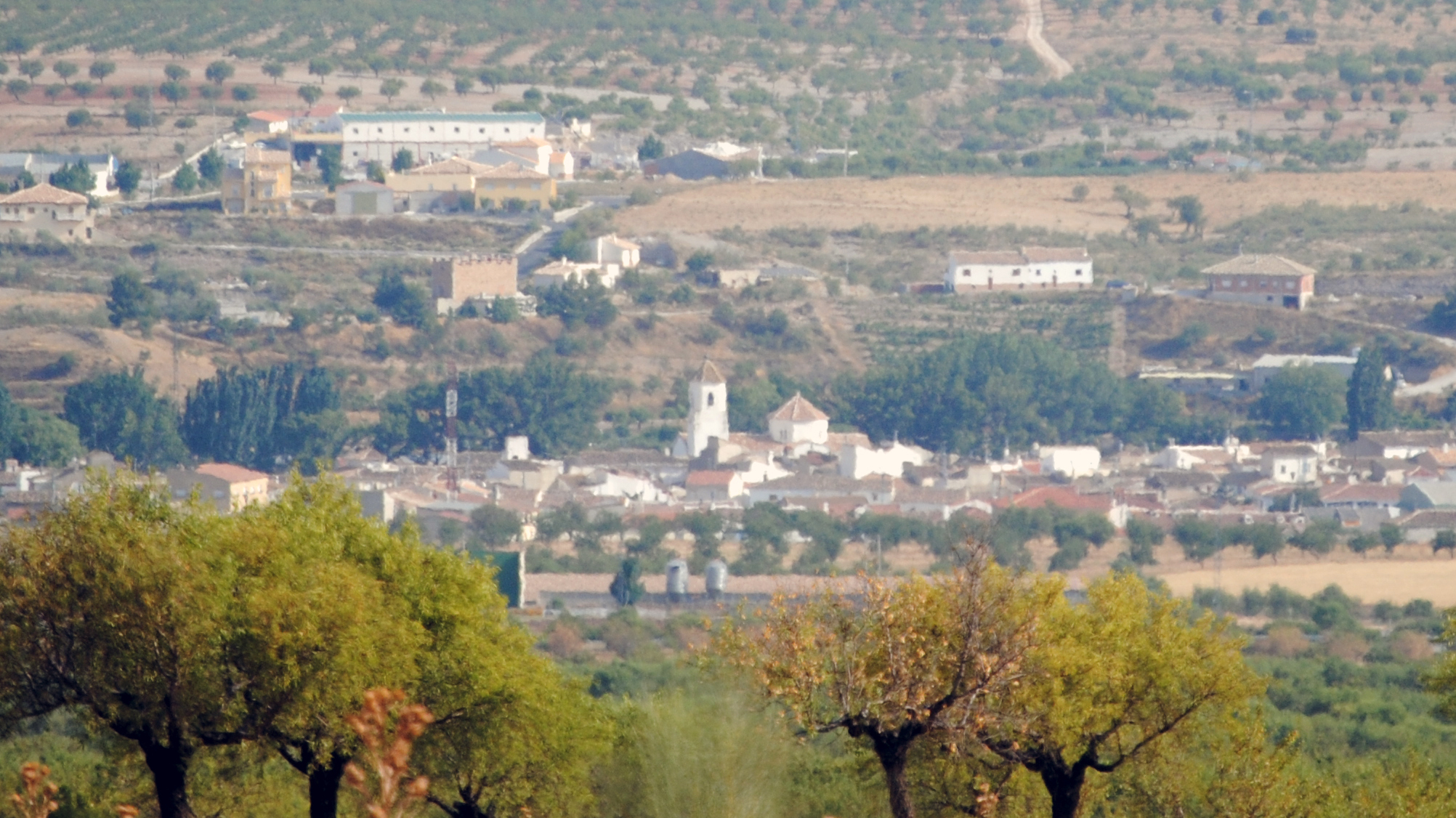
Chirivel has just over 1,500 inhabitants and sits in the comarca of Los Vélez, in the north of the province of Almería. It stands higher than many expect when they think of Andalucía. The air is often cooler than in other parts of the province, and winter nights can bring frost. Around the village, the landscape mixes cereal fields, almond trees and patches of pine on the slopes of nearby sierras.
A Village Gathered Around Its Square
The centre of Chirivel is compact and easy to explore on foot. At its heart is the parish church of Nuestra Señora del Rosario, a restrained building that likely dates back to the 16th century, though it has been altered over time. From the square, short streets branch out, some with a gentle incline. Whitewashed houses alternate with wooden gates and dark iron grilles that cast sharp shadows across the façades in the afternoon.
This is not a monumental historic quarter. It has the practical feel of an agricultural village: homes designed for daily life, inner courtyards, open garages where a trailer or farm tools might be visible. It is a place shaped by routine rather than display.
Wandering without a fixed route, it is possible to cross most of the centre in under an hour. Even so, there is a case for slowing down. In some corners, worn stone at the base of walls still shows years of use, and a few old doors remain studded with large iron nails.
Fields, Almond Trees and Open Horizons
A few streets out from the centre, the village gives way abruptly to the countryside. There are no built viewpoints. The agricultural tracks that run between plots are enough. From these paths, the logic of the land becomes clear: wide fields, long lines of cultivation, and, in the distance, the sierras closing the horizon.
Towards the end of winter, usually between February and March if the season is mild, the almond trees come into bloom. For a few weeks the fields shift in tone as white and pale pink appear against the ochre soil and the muted green of young cereals.
Summer brings a drier, brighter landscape. Light falls hard from midday onwards, so walking along the tracks is more comfortable early in the day or as the sun begins to drop. The openness of the terrain leaves little shade, and the sense of space becomes more pronounced under the stronger light.
Hills All Around
Chirivel is encircled by mountainous relief. Several sierras from the Los Vélez area rise along the horizon, and on clear days their outlines seem to layer one behind another in bluish tones. The effect changes with the light, sometimes sharp, sometimes softened by distance.
Rural tracks lead directly out of the village. Some pass between cultivated fields, others climb gently towards higher ground. They are primarily used for agricultural work or to reach scattered cortijos, traditional rural dwellings, but they can also be followed on foot or by bicycle if machinery and livestock are given priority.
Do not expect carefully prepared trails or constant signposting. What you find here are wide dirt tracks, stretches of loose gravel and the occasional incline that slows the pace. It is straightforward terrain, though not always easy underfoot.
A simple piece of advice applies even to short outings: carry water. Wind and sun can dry the air more than expected, particularly in late spring and summer.
Cooking from the Interior
The local cooking reflects cold winters and physical work in the fields. It is built around hearty dishes, slow stews and recipes meant to satisfy.
Migas, a traditional dish made from breadcrumbs, appear frequently in colder months, often accompanied by cured meats, fried peppers or whatever is available that day. Stews with game are also common when the season allows, alongside products from the matanza, the traditional home slaughter, and goat’s cheeses made in small batches across the comarca.
This is not light or elaborate cooking. It is direct and filling, closely tied to the rhythm of the place and its climate.
Seasons and Everyday Life
Chirivel changes noticeably with the time of year. In winter, the cold is felt, especially towards evening, and wind can move through the open streets. In summer, days are bright and dry, though the altitude tends to soften the heat compared with other parts of Almería.
The patron saint festivities are traditionally held around October. During those days the village becomes busier than usual, with religious events and popular activities bringing more people into the streets.
For a quieter impression, a weekday morning shows the village at its natural pace: people going in and out of shops, cars passing on their way to the fields, and conversations that stretch a little longer than expected. It is in those ordinary moments, rather than in landmarks, that Chirivel is best understood.