Full Article
about María
High-mountain town in the Sierra de María Natural Park; known for its cured sausages and snow.
Hide article Read full article
A Village Shaped by Altitude
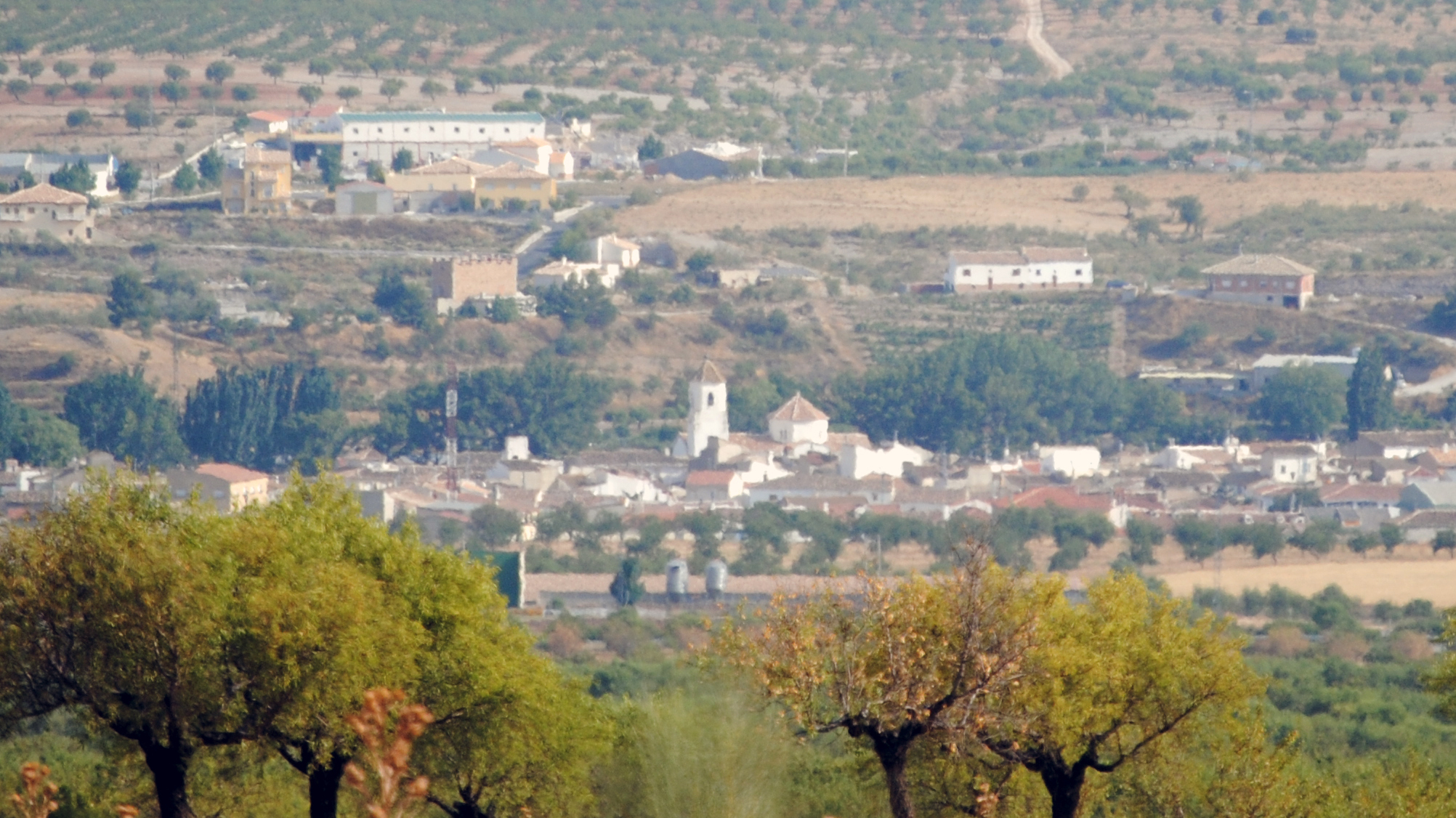
At 1,194 metres above sea level, María sits deep in the interior of Almería province, and everything about it is tied to that elevation. This is a place defined by the Sierra de María‑Los Vélez, where daily life still follows patterns set by the land. Just over a thousand people live here, in a comarca long associated with livestock, cereal crops and almond groves.
The setting often surprises visitors who expect Almería to be uniformly dry. Around María, the landscape shifts. Extensive pine forests, especially pino laricio, cover the slopes, and small hollows collect water that emerges as springs or seasonal streams. The contrast with nearby, more arid areas is clear. The terrain here holds onto moisture, softening the heat of summer, while winters tend to be cold.
Streets, Slopes and a Parish Church
María’s layout follows the logic of mountain settlements. Streets rise and fall with the slope, and whitewashed houses cluster together in compact rows, built with cold weather in mind. It is not a monumental town, but it feels consistent with its history and surroundings.
At the centre stands the Iglesia parroquial de la Encarnación, built in the 16th century after the reorganisation of the territory that followed the Castilian conquest. Like many churches in the region, it has been altered over time. Inside are altarpieces and devotional works in the Baroque tradition, linked to the artistic influence of Granada, which for centuries shaped much of northern Almería.
The Plaza de la Constitución acts as the town’s meeting point. From here, several streets lead outwards towards the edges of the village, where paths begin to climb into the sierra. The transition from built space to open landscape is immediate.
Into the Sierra de María‑Los Vélez
Just beyond the last houses lies the Parque Natural Sierra de María‑Los Vélez, one of the most distinctive mountainous areas in this part of Almería. High slopes are covered with pino laricio forests, mixed with holm oak and open pasture.
A network of marked footpaths runs through the park, making it possible to walk into the forest or reach natural viewpoints overlooking the comarca. Along the way, springs and water sources appear, places traditionally used by local people for drinking water or for livestock. These are not dramatic waterfalls or grand mountain scenes in the usual sense, but something quieter. The landscape reveals how closely the village and the sierra have always been connected.
Wildlife and a Quiet Balance
Wildlife in the park is present but not always obvious. Signs of wild boar are common, and birds of prey can often be heard overhead. With patience, especially at dawn or towards evening, large birds can be seen gliding above the ravines.
Human presence remains limited in many parts of the park, which has helped preserve this balance. The result is an environment where activity is subtle rather than constant, and where movement often goes unnoticed unless you slow down.
Food from a Mountain Tradition
Local cooking reflects both the climate and the livestock traditions of the comarca. In winter, migas are still prepared, typically accompanied by products from the matanza, the traditional pig slaughter that supplies cured meats. Segureño lamb, a local breed, appears regularly at family gatherings and celebrations.
Certain dates in the calendar bring sweet dishes such as gachas dulces. Beyond prepared meals, there are products tied closely to the local economy: mountain honey, olive oil and small-scale cured meats. These are not part of large commercial circuits. They tend to circulate within the village itself or in nearby markets.
Festivities Through the Year
The local calendar combines religious events with community traditions. In spring, the romería de San Marcos brings residents together for a day in the countryside, walking up to a nearby hermitage. Around the same time, festivities dedicated to the Virgen de la Cabeza take place, with processions and events organised by local associations.
Summer shifts the focus to more informal street celebrations. As temperatures drop in the evening, the village fills again with people returning for the holidays, and public spaces become the centre of activity.
Reaching María and Moving Around
María lies in the north of Almería province, close to the borders with Granada and Murcia. The usual route from the provincial capital follows the A‑92 towards the area of Baza, then continues along smaller roads that cross the sierra.
Spring and early autumn are generally the most comfortable times to explore the area. Winter brings lower temperatures, and in some years snow appears on the higher parts of the natural park. The village itself is small and easy to walk around. The real interest lies beyond it, along the paths that lead into the surrounding mountains.