Full Article
about Níjar
Large municipality covering the Cabo de Gata Natural Park; known for its pottery and jarapas.
Hide article Read full article
A Town That Appears All at Once
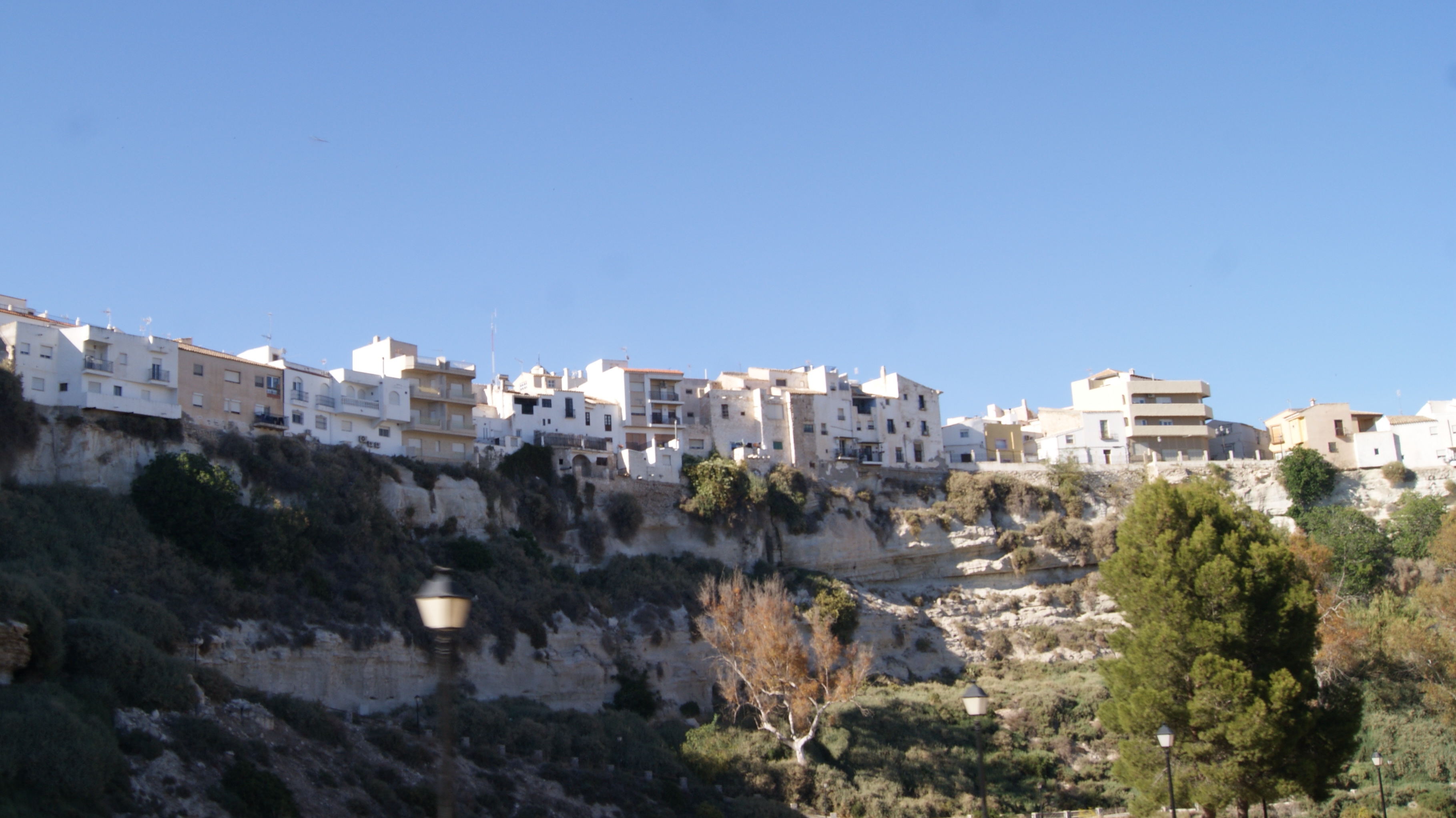
The GPS tends to lose its sense of direction on the way to Níjar. The road stretches on through a landscape of greenhouses that reflect the Almería sun like sheets of glass, with little sign of where it might lead. Then, almost without warning, the town appears.
Níjar does not gather itself into a neat centre. Houses seem to have been placed across the hillside one by one, until they gradually formed what now counts as the urban core. First impressions can feel quiet, even sparse. That changes quickly once you step out of the car. There is more life here than it first suggests.
A Municipality That Spills Across the Map
Níjar is vast. The municipality covers around 600 square kilometres, which places it among the largest in Spain. It is larger than some small Mediterranean islands, yet only just over 30,000 people live here. They are spread across a wide network of smaller settlements.
People do not simply say they live in Níjar. They live in San Isidro, Campohermoso, Huebro or Rodalquilar. Each of these places works almost like its own village, with its own rhythm and daily routines.
The historic centre of Níjar itself is compact. A short walk takes in its sloping streets, a couple of squares and several ceramic workshops. There used to be more of them, but the craft has not disappeared. The smell of kilns and damp clay still drifts out onto the street, a quiet sign that the trade continues.
Inside, the atmosphere remains unpolished. Someone is usually at work, often with a radio playing in the background. There are no staged demonstrations or prepared speeches. It feels like a working space rather than a performance.
Where Volcano Meets the Sea
Níjar as a town is only part of the story. The wider area carries much of the interest.
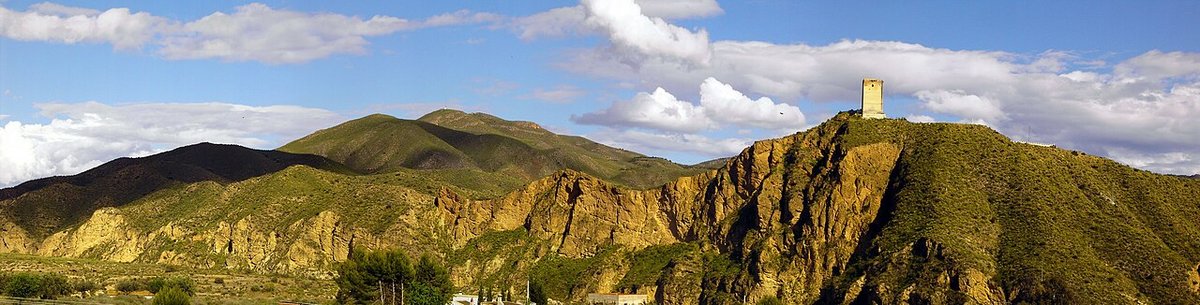
A large section of the municipality lies within the Cabo de Gata-Níjar Natural Park. The landscape here can feel unexpected if the usual image of Andalucía comes to mind. Dark hills rise above the Mediterranean, and the terrain carries a volcanic origin that dates back millions of years. There are no smoking craters, but the geology shapes everything: the contours of the mountains, the textures of the ground and the colours of the rock.
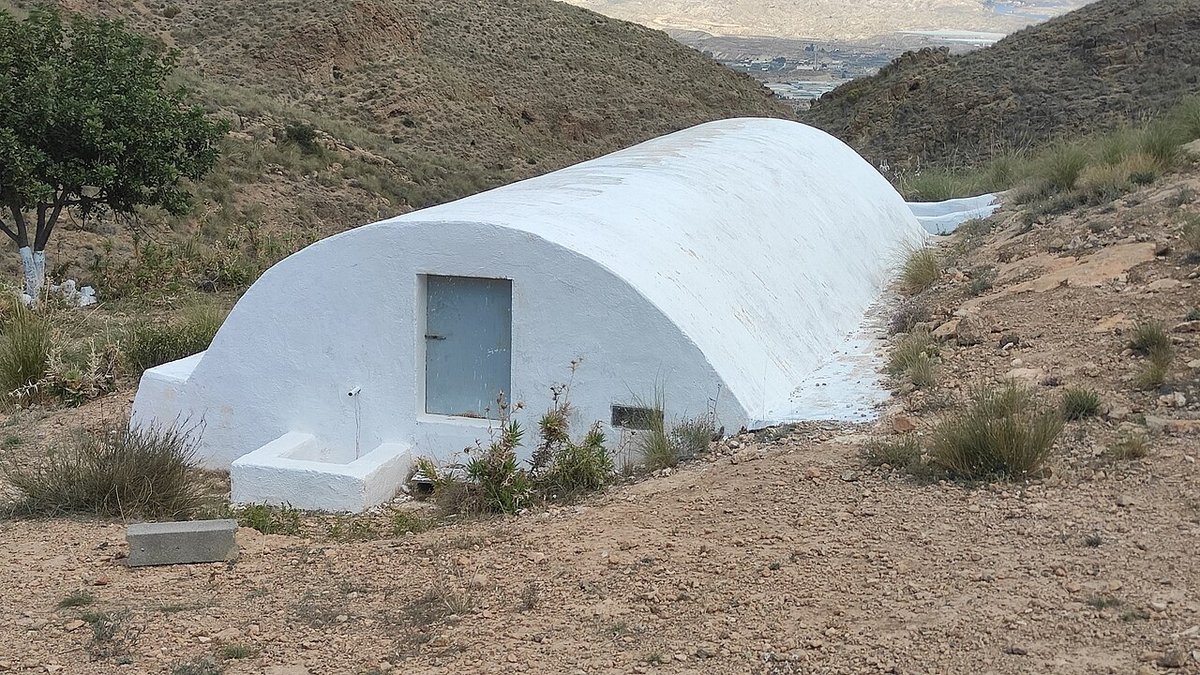
One of the best-known walks in the area follows the mills of the Huebro ravine. The path traces the course of water past old hydraulic mills that once used every available drop to grind grain. Many of them now stand in ruins, while others are barely visible among the vegetation. The walk offers a clear sense of how people managed in a place where water has always mattered.
Another point of interest is the water wheel in Pozo de los Frailes. The traditional system still stands: a wheel powered by an animal that drew water from underground. When it turns, with its steady wooden and iron rhythm, it shows how agriculture functioned before machinery took over.
Straightforward Food with Depth
Food in Níjar keeps things simple, but it carries plenty of substance.
Gurullos with caldo colorao appear frequently across the area. Gurullos are small pieces of handmade pasta, cooked in a rich stew that usually includes meat and dried pepper. The result is filling and direct.
Sopa de Almería also turns up on many tables. It combines fish broth, bread and egg in a way that seems basic at first glance. The flavour says otherwise once tasted, with more depth than expected.
Migas hold their place as well. In this part of south-east Spain, they are prepared with bread or semolina, olive oil and garlic, then slowly worked in the pan. They tend to appear on rainy days, which remain relatively rare here.
There is also the rosca de pan de aceite, a ring-shaped bread that sits somewhere between savoury and sweet. It has traditionally been made at home on weekends or special occasions.
The Value of Taking a Detour
Níjar rewards those who leave the main road behind.
A drive towards San José might lead to a small side track that cuts into a valley filled with greenhouses. Traffic becomes scarce. Workers sometimes move through the area by bicycle along dirt paths. The setting feels unusual. This is one of Europe’s key agricultural zones, yet much of the activity unfolds in near silence.
Other turns bring you to very small settlements where daily life follows its own pace. A simple café might serve coffee in a way that feels unchanged over time, without fuss or ceremony.
The coastline adds another layer. Some routes end at small coves where only a handful of cars are parked. Someone might be fishing from the rocks, and little else interrupts the scene.
A Festival That Explains the Place
One moment in the year helps make sense of Níjar as a whole: the romería del Huebro, usually held in early October.
People make their way up to the sanctuary on foot from the town and surrounding areas. The distance is not short, but the atmosphere feels more like a shared outing than a formal pilgrimage. Families walk with backpacks, older residents arrive by car, and groups of friends stop along the way to eat together.
By the time they reach the top, the sense of community becomes clear. Níjar may be spread out across a large territory, divided into many smaller centres, yet occasions like this draw everything back together.