Full Article
about Pechina
Ancient Bayyana and historic capital; gateway to Sierra Alhamilla and film location
Hide article Read full article
Morning light over the vega
By eight in the morning, the sun is already strong over the greenhouses that fill the vega, the fertile plain around Pechina. From the road coming from Almería, the first impression is a wide stretch of white plastic. When the light hits it, the surface almost looks like water. It is a striking entrance, but it shifts quickly once you turn towards the centre of the village.
Inside, the pace changes. The streets are quiet, lined with low houses whose window grilles are often painted green or blue. Near the square, the smell of freshly baked bread drifts out from a bakery while the streets are still nearly empty. There is little movement at that hour, just the sense of a place easing into the day.
Pechina lies only a few kilometres from Almería city, in the valley of the Andarax River, and that closeness shapes daily life. Many residents work in the capital or in the surrounding greenhouses. Even so, the rhythm here remains distinct. Mornings feel unhurried, while the village becomes more animated later, around coffee time.
Traces of Bayyana
Around the area of San Nicolás, the layout of the streets becomes less regular. The route twists and rises gently, as if the village grew in stages rather than following a strict plan. In some walls, older bricks sit alongside more recent repairs. Now and then, an arch or a fragment of masonry appears, hinting that this was once more than a small agricultural settlement.
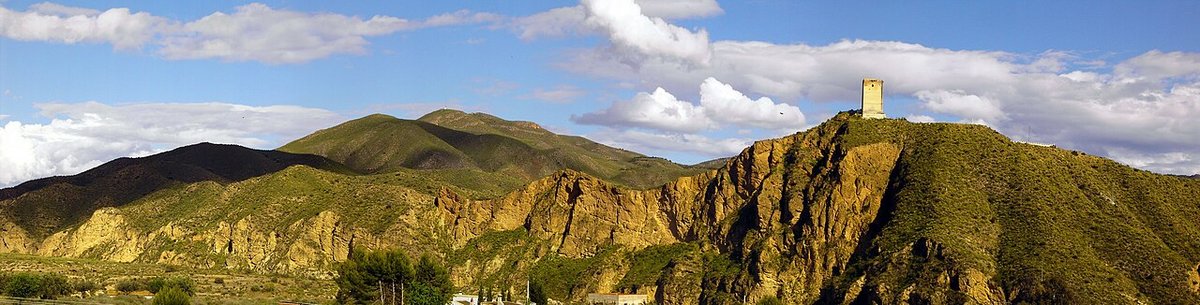
Pechina is historically linked to Bayyana, an important Andalusi city during the early centuries of Al‑Ándalus. Today, archaeological remains can be found on the outskirts of the urban area. This is not a monumental site in the usual sense. There are no grand structures or restored buildings. Instead, what remains are traces: outlines of streets, low walls, and fragments of structures that help piece together how the settlement once functioned.
Bayyana was connected to trade and to the nearby port of Almería. Walking through the site, it takes some imagination to picture that past. The remains are modest, but they suggest a place that once had a broader role in the region.
Access is generally straightforward, though there is not always visible signage or staff on site. It helps to arrive with patience and without expecting a curated or museum-like experience. What stands out instead is the atmosphere. There is a quietness, broken only by the wind moving through esparto grass, and the reddish tones of the soil typical of the Bajo Andarax.
Along the water’s path
Several dirt tracks lead out from the village down towards the river valley. One of them passes through small plots of land, with kitchen gardens, prickly pear cacti and patches where orange and lemon trees still grow. In season, by mid-morning, the air fills with the scent of orange blossom.
This area was once known for its thermal waters and small bathhouses, recognised locally for their sulphur smell. Some of these facilities have been closed for a long time, but there are still spots where warm water emerges from the ground. It leaves a mineral trace on the stones, a visible reminder of what lies beneath.
The terrain near these points can be uneven. The ground is often damp and slippery, and paths are not always clearly marked. It is not a developed spa environment. Instead, it feels like a corner of the valley that local people have visited over decades, drawn by the water and its peculiar qualities.
Walking here brings together different elements of the landscape. The cultivated plots sit alongside wilder stretches, and the presence of water shapes both. It is a place where the valley reveals itself slowly rather than all at once.
Cooking from the land
Food in Pechina remains closely tied to the surrounding countryside. At midday, especially on cooler days, one dish appears again and again in local kitchens: gurullos. These are small, irregular pieces of wheat dough, traditionally shaped by hand. They are cooked in a broth with tomato and meat, which might be game or farm-raised depending on the time of year.
Around one o’clock, the smell of paprika and fried garlic begins to spread through the streets. Kitchen windows are open, and the village moves between quick errands and the return from work in the fields. It is a moment when daily life becomes more visible, carried in the scent of cooking.
At certain times of year, homemade sweets also appear. Families continue to prepare recipes such as pestiños, roscos and other pastries, especially during festive periods or family gatherings. These are not tied to a single place but to the rhythm of the calendar and shared occasions.
Celebrations shaped by the countryside
The village calendar still reflects its agricultural and religious surroundings. One of the best known events in the area is San Marcos, held at the end of April. On that day, groups of neighbours head out towards the countryside or nearby hermitages to spend time together.
It does not always follow the format of a large organised pilgrimage. Often, it takes the form of family gatherings outdoors. People bring food, music emerges informally, and conversations stretch across long meals in the open air. The setting matters as much as the occasion itself.
April is also a time when the vega looks greener than usual, and temperatures remain relatively mild. The landscape feels more open and accessible, encouraging time spent outside.
When to go
Pechina’s proximity to Almería makes it easy to reach, and many people travel back and forth each day along the Andarax valley. That constant movement coexists with the quieter rhythm inside the village.
Spring is usually the most comfortable season. In March and April, orange trees are in bloom, and a sweet scent lingers even in the central streets. The intense summer heat has not yet arrived, making it easier to walk through the village or explore the surrounding paths.
Summer brings a different atmosphere. Temperatures can climb above 40 degrees, and during the hottest hours the streets fall silent. Shutters are closed, and activity pauses until later in the day.
If visiting the archaeological site or walking along the valley paths, early morning or late afternoon is the better choice. As the light softens, the vega changes colour. The plastic of the greenhouses takes on a golden tone, and a breeze rising from the sea offers some relief from the heat.
At that hour, sitting on a bench in the square, the sounds are simple: crickets, distant voices from nearby terraces, and the gradual winding down of the day.