Full Article
about Rioja
Town near the capital, ringed by citrus groves; shares its name with the wine region but has its own identity.
Hide article Read full article
Late Light in a Small Almería Village
By mid-afternoon, when the sun begins to dip towards the sierra and the light bounces off whitewashed façades, Rioja grows quiet. A car passes slowly. A shutter comes down with a dry thud. Beyond that, very little disturbs the air.
Rioja sits in the metropolitan area of Almería, just a few kilometres from the provincial capital. With a population of a little over 1,600 people, it remains a small village where the surrounding huerta, the traditional irrigated farmland, still shapes part of the daily rhythm. The pace is unhurried. Much of what happens here has long been tied to the land.
Set in the Andarax Valley between the city of Almería and the villages that climb towards the Alpujarra, Rioja is above all a calm stopping point along the way. Its streets are short. White houses stand shoulder to shoulder, many with black iron grilles across the windows and flowerpots perched above the pavement. Some interior courtyards reveal old tiles or floors worn smooth by decades of use. There is no need to search for landmarks. A slow walk is enough to sense how closely life has always been connected to the nearby fields.
The Church and the Old Heart
At the centre of the village rises the church of Nuestra Señora del Rosario. The bell tower is simple and rises above the rooftops, a clear point of reference when wandering through the small streets. At certain hours the bells carry across the valley, particularly when the air is still.
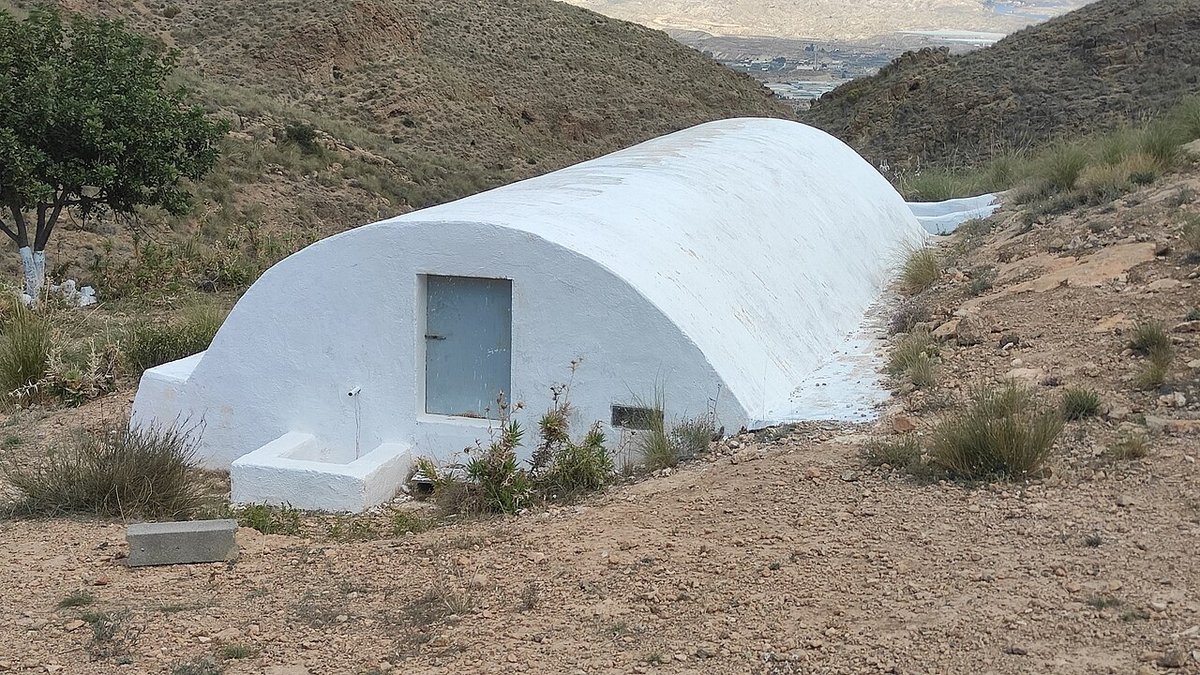
Around the church stand some of the older houses, with large gateways and interior patios. Many date from the 18th and 19th centuries, when agriculture in the surrounding area supported the local economy. Olive groves and small irrigated crops were central to village life. In some homes it is still possible to see aljibes, traditional underground water cisterns used to store rainwater, or cellars dug beneath the floor. They recall a time when grapes played a greater role in the area than they do today.
The layout of the centre reflects that agricultural past. Houses were built for practical needs as much as comfort, with storage spaces and thick walls to soften the heat. Even now, daily life unfolds close to the street. Doors open directly onto narrow lanes, and neighbours remain within easy calling distance.
The Landscape of the Andarax Valley
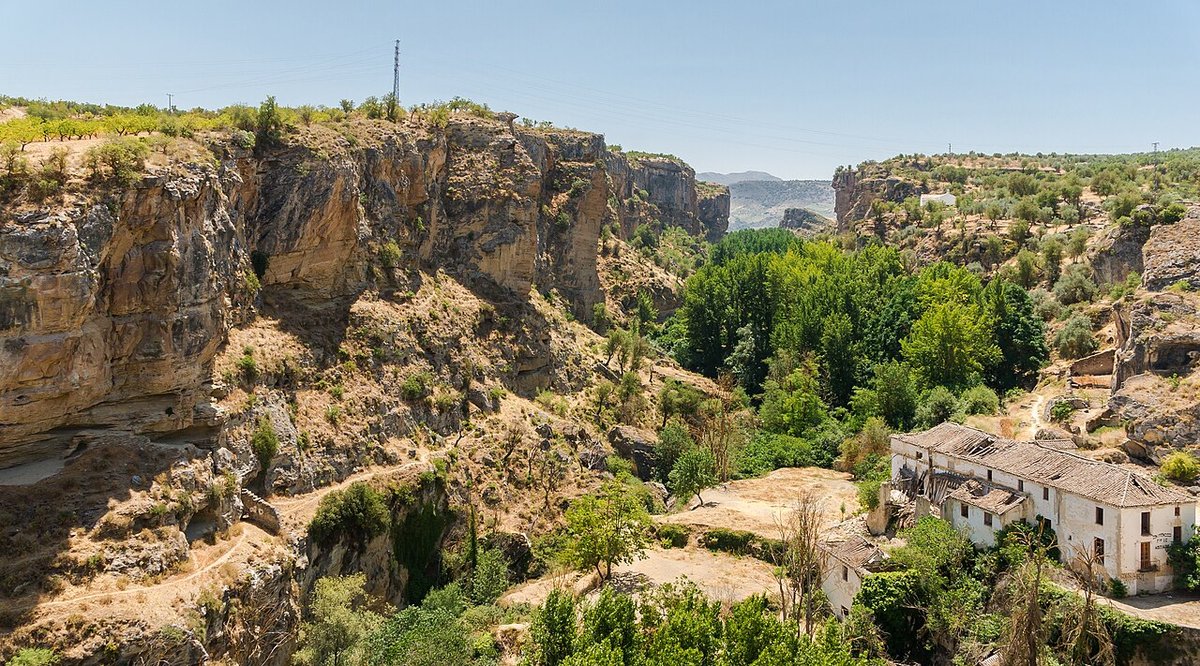
Step beyond the last houses and the landscape opens up quickly. The Andarax Valley combines cultivated plots with drier hillsides. Olive trees cover much of the terrain, and their colour shifts with the seasons. In winter the green is muted. Under the strong summer sun the leaves flash a bright silver.
Wide, pale channels cut across the land. These are ramblas, dry riverbeds that remain empty for much of the year yet clearly shape the terrain. Between the stones grow palmitos, the European fan palm native to southern Spain, along with oleander and low thyme bushes. When the heat intensifies, the thyme releases a sharp scent that lingers in the air.
On clear days the light is hard and intensely white. Shade is scarce once outside the village streets. A hat is useful even in spring. The sun defines the valley as much as the crops do, bleaching surfaces and sharpening outlines.
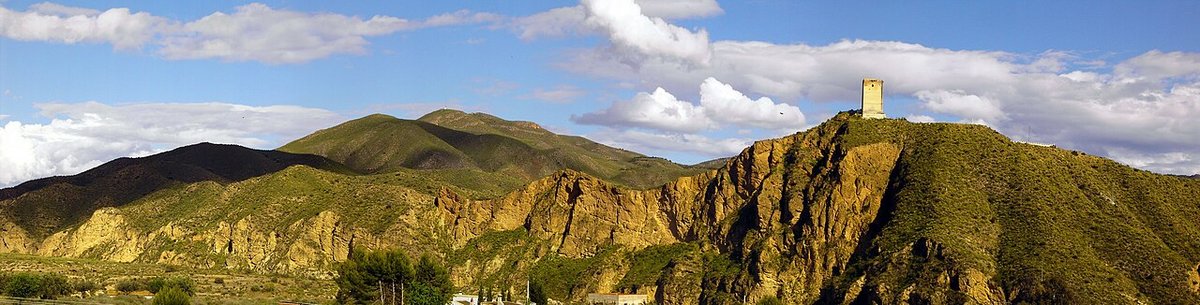
The sierra appears in the distance at intervals, its outline rising behind the fields. In the opposite direction, on a clear day, the land can be seen descending towards Almería. The sense of openness is immediate. The village itself feels compact, almost sheltered, compared with the wide agricultural plain around it.
Paths Through Huertas and Olive Groves
Several rural tracks leave Rioja and connect with other villages in the valley or with older cultivation areas. These are not mountain routes in the strict sense, but simple paths and farm tracks running between terraces.
A couple of hours are enough for an easy walk among olive trees, almond trees and small huertas that make use of the valley’s water. The terrain is generally gentle. Dry stone edges mark the boundaries of plots, and from time to time the line of the sierra comes back into view.
The heat defines how and when to walk here. In summer it builds quickly after midday, and there is very little shade beyond the built-up area. Early morning is the most sensible time to set out. Later in the day, as the light softens, the landscape changes tone and the white houses of Rioja reflect a warmer glow.
The routes are less about reaching a specific viewpoint and more about observing how the land is organised. Terraces follow the contours. Irrigation channels guide water to small cultivated patches. Everything reflects a long habit of adapting to a dry climate.
Food Shaped by the Fields
Cooking in this part of Almería remains straightforward and filling, the kind of food designed to sustain long days outdoors. In the village bars, plates such as migas, gachas and gazpacho almeriense often appear. Migas, made with breadcrumbs or semolina cooked with oil and garlic, are typical of many rural areas in southern Spain. Gachas are a thick savoury dish based on flour. Gazpacho almeriense differs from the better-known chilled tomato soup found elsewhere in Spain, as it is thicker and more substantial than many expect.
Olive oil from the surrounding groves features heavily in local cooking. These recipes grew out of agricultural life, relying on simple ingredients that could be prepared without fuss and eaten in generous portions. They reflect the same practical approach visible in the houses and fields.
There is little ceremony involved. The emphasis lies on nourishment and continuity, on dishes that have accompanied work in the countryside for generations.
When to Go and How to Read the Village
Spring and autumn are usually the most pleasant times to walk around Rioja. During these weeks the valley shows more colour, and temperatures make it easier to explore without constantly seeking shade. The difference is noticeable in the fields, where the tones feel less stark than in high summer.
Summer brings dry, intense heat. Moving early in the day or towards evening is the most comfortable approach. As the sun lowers, the light becomes softer and the whitewashed walls reflect a gentler brightness. The stillness of late afternoon returns, and the village gradually quietens again.
Rioja does not require much time to cover on foot. In a little over an hour it is possible to walk almost all its streets. The interest lies in small details rather than major sights: a bougainvillea spilling over a wall, a wooden door darkened by years of sun, the low sound of wind passing through olive branches in the valley.
They are modest elements, yet when the village settles into silence at the end of the day, they become more apparent. In that calm, Rioja reveals its character as a small Andalusian community shaped by agriculture, light and the steady presence of the Andarax Valley.