Full Article
about Santa Fe de Mondújar
Site of the important Los Millares settlement; birthplace of Europe’s Copper Age
Ocultar artículo Leer artículo completo
The 09:04 to Almería thunders straight through Santa Fe de Mondujar every morning, whistle blowing, carriages swaying, nobody boarding. The station platform is now someone’s front garden, geraniums where suitcases once waited. Most passengers on the A-92 speed past too, eyes fixed on the desert sets of Tabernas or the nearest beach. That is the village in a sentence: close enough to be useful, quiet enough to be overlooked.
A white grid on a brown hill
Santa Fe sits 25 km north-west of Almería city on the last ripple of land before the Sierra Alhamilla turns properly mountainous. The houses are cuboid, one or two storeys, whitewashed annually so the glare hits you long before you park. From the mirador at the top of Calle Real the streets drop in a neat lattice towards the dry riverbed, each roof terrace sprouting TV aerials and the occasional sun-faded Spanish flag. There is no historic quarter, no baroque façade to photograph—just a working grid designed for shade and breeze.
The church of Santa Fe occupies the physical centre and the social timetable. Mass at 11:00 on Sunday is followed by sherry in the bar next door; the priest locks up, the baker unlocks, and the village moves from holy to hungry without crossing the square. Inside, the building is plain stone, no gold leaf, but the pews are full because grandmothers still keep count of attendance.
Bridges, grapes and a Nasrid lookout
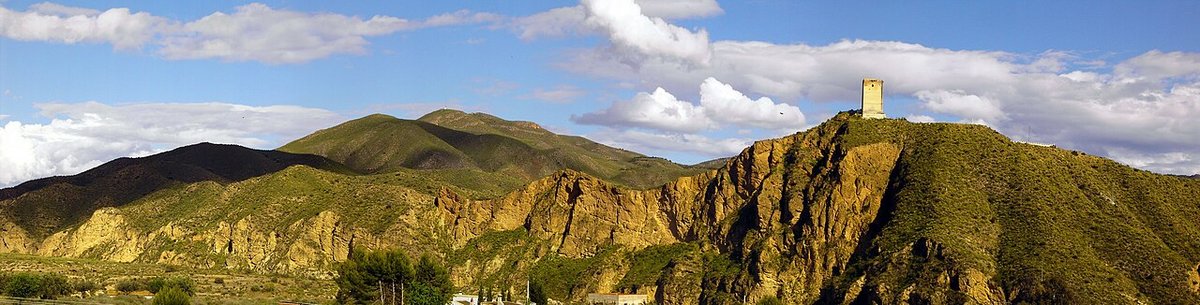
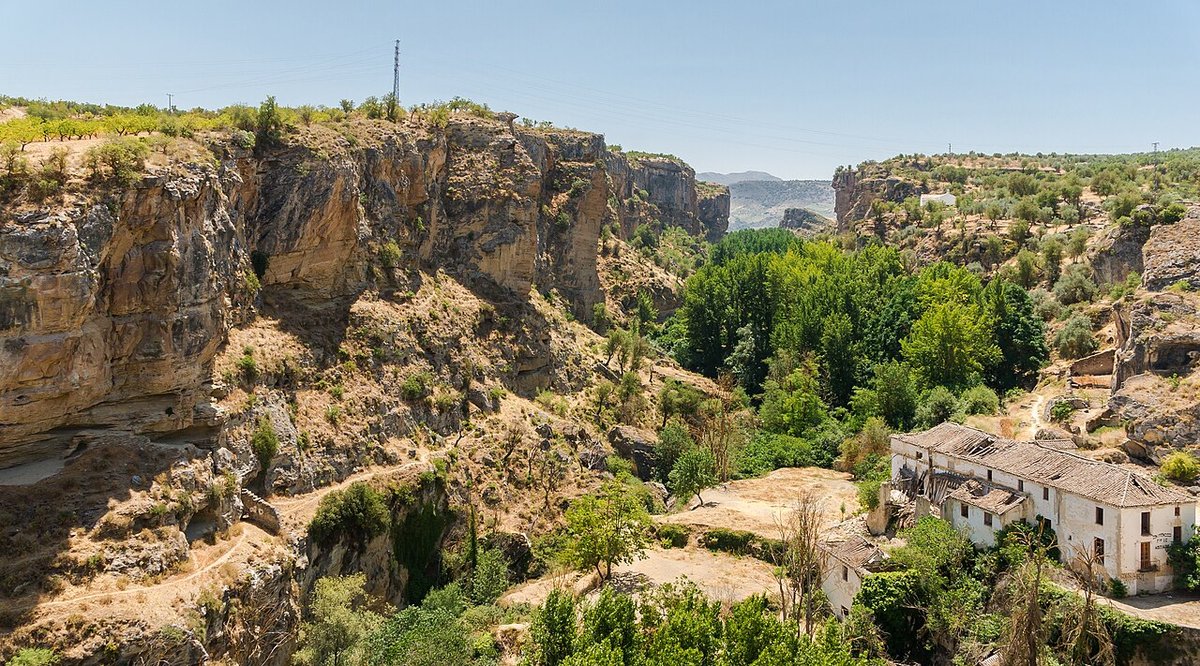
Two things make drivers pull over. First, the iron bridge south of the village, built in 1890 by students of Eiffel and painted the same red as the Parisian original. It carries nothing more than a farm track these days, but the lattice work photographs well at sunset when the steel glows against the ochre cliffs. Second, the lonely torre vigía on the ridge above—one of the last Moorish watchtowers in the province, reachable in twenty minutes if you follow the goat path behind the cemetery. The climb is steep, the reward a 360-degree view: plastic-greenhouses to the south, empty hills to the north, and the sea a silver blade on the horizon.
Below the tower the vineyards begin. Santa Fe shares the same hot, windy climate as the more famous Laujar valley, but here the grapes are Moscatel, destined for sweet table fruit rather than wine. From late August the air smells like fermenting raisins; farmers offer 2-kilo bags from car boots for three euros. Seedless versions are labelled sin pepitas—worth knowing if you dislike spitting on the pavement.
What passes for lunch
Food is dictated by the day of the week rather than a menu. Bar la Plaza on Plaza de la Constitución serves a single plato del día at 14:00 sharp; arrive late and you get what’s left, usually pork in almond sauce, chips and a side salad dressed with local olive oil. The owner keeps a jar of Colman’s mustard behind the counter for British regulars who complain everything tastes of garlic. Monday is always closed, as is Bar El Puerto, so stock up on pan de Santa Fe—an aniseed loaf that stays moist for three days—at the bakery beside the church before 13:00.
Vegetarians should lower expectations: even the ensalada arrives topped with flakes of ventresca tuna. If you need falafel, drive the eight kilometres back to Huércal de Almería where the supermarket has a chilled section. Santa Fe does not apologise; it simply never promised anything else.
Walking without signing in
There are no ticket offices, no way-marked trails, no car parks that charge by the hour. Park opposite the church on Calle San Roque (free, except Wednesday when the fruit van blocks half the street) and head uphill past the last lamppost. Within ten minutes the tarmac gives way to a stone track that climbs between almond terraces. Another fifteen and you are on the ridge, buzzards overhead, the Mediterranean glinting 25 km away. The loop back drops into the riverbed and follows an irrigation channel built in Moorish times; allow ninety minutes, take two litres of water per person between May and October, and do not rely on phone coverage.
Winter is gentler—temperatures hover round 14 °C—but the same wind that cools the coast can whistle down the valley at 40 km/h. Locals wear padded jackets and still sit outside; copy them and the bar owner will bring café con leche without asking.
When the village remembers it has neighbours
Fiestas are small, financed by a bingo night and the proceeds of last year’s raffle. The main event is the 15 August feria, when a travelling funfair sets up next to the football pitch and the council hires a band that plays Queen covers until 03:00. Visitors are welcome but there is no programme in English; follow the smell of churros and the sound of children screaming on the dodgems. Semana Santa is even lower key—one procession, about sixty people, statues of Mary and Christ carried on parallel routes that meet in the square for a single firework. It starts at 21:00, finishes by 22:30, and everyone goes home for soup.
Getting here, getting out
Santa Fe is not on the tourist bus circuit. From Almería airport take the A-92 towards Guadix, exit at 7, follow signs for Santa Fe/ Los Millares. The final six kilometres wind through greenhouse plantations; keep windows closed or the smell of fertiliser will stay in the air-conditioning for days. Car hire is essential—public transport is a school bus at 07:30 and a return at 16:00, nothing on weekends. If you must use a taxi, reckon on €35 each way and agree the price before the driver releases the meter.
There is no cash machine. The nearest 24-hour ATM is beside the Repsol station in Huércal de Almería, eight kilometres south. Cards are accepted in the bars, but the bakery and the fruit van prefer notes no larger than twenty.
Leave before you need a pharmacy
Santa Fe de Mondujar suits travellers who have already seen the Alcazaba, already posed beside a spaghetti-western set, and now want the audio track of Spain without the soundtrack of tourism. Stay longer than two days and you will know everyone’s cousin’s surname. Stay shorter and you leave with the memory of coffee brewed properly, grapes warm from the vine, and a train that refuses to stop. Sometimes that is exactly enough.