2018 Andalusian parliamentary election Ballot - Huelva - Andalucía por Sí (AxSÍ).jpg
Andalucía · Passion & Soul

Huelva

The odour hits first. Not fish, not salt, but something metallic riding the Atlantic breeze. It's the ghost of five centuries of copper ore, freigh...

143,215 inhabitants · INE 2025
54m Altitude
Coast Mediterráneo

Why Visit

Coast & beaches Cathedral of La Merced Columbus Sites Route

Best Time to Visit

year-round

Columbus Festivities (August) agosto

Things to See & Do
in Huelva

Heritage

  • Cathedral of La Merced
  • Tinto Wharf
  • Reina Victoria Working-Class District

Activities

  • Columbus Sites Route
  • Riverside Walk
  • Market cuisine

Festivals
& & Traditions

Fecha agosto

Fiestas Colombinas (agosto), Semana Santa (marzo/abril)

Las fiestas locales son el momento perfecto para vivir la autenticidad de Huelva.

Full Article
about Huelva

Provincial capital tied to the discovery of America and the estuary; an industrial and service city with a strong English and archaeological heritage.

Ocultar artículo Leer artículo completo

The odour hits first. Not fish, not salt, but something metallic riding the Atlantic breeze. It's the ghost of five centuries of copper ore, freight trains and departing galleons, and it tells you immediately that Huelva is not another pretty Andalusian postcard. The city sits barely above sea level, sprawled between the tawny estuaries of the Río Tinto and the Odiel, and the first thing it does is contradict expectations.

Low-Rise, High Stakes

Forget the usual Moorish maze. After the 1755 Lisbon earthquake levelled what little medieval fabric existed, planners laid out a rational grid of two-storey houses painted in sun-bleached salmon and ochre. The streets are wide enough for ox-carts loaded with pyrites; shade is scarce, so the city keeps to the sidewalks after 14:00 when the thermometer edges past 36 °C in July. Come January, on the other hand, Atlantic fronts sweep in and you will see locals wearing quilted coats at 12 °C—proof that all things are relative on this corner of the Iberian plate.

Start at the Plaza de las Monjas, a rectangle of cafés where office workers drink diminutive cortados at the counter, no seats required. The late-Baroque Catedral de la Merced faces the square with a brick façade the colour of a rugby ball; inside, the single nave feels almost Presbyterian until you notice the gilded altarpiece glittering in the gloom. Entrance is free outside service times, but drop a euro in the box—roof tiles corrode quickly in the salt-laden air.

Two blocks east the architecture switches register. Suddenly there are gabled roofs, sash windows and front gardens fenced with privet: the Barrio Reina Victoria, thrown up in 1916 for British engineers from the Rio Tinto copper company. The houses are doll-sized—two bedrooms, one coal fireplace, a single tap in the scullery. Some have been converted into orthodontists' surgeries or flats for Erasmus students; others remain unmistakably English, right down to the letterbox slots. Walking these quiet lanes at dusk, while swifts wheel overhead, produces a mild form of vertigo: is this Andalucía or a Surrey suburb transplanted by mischievous aliens?

Working Waterfront

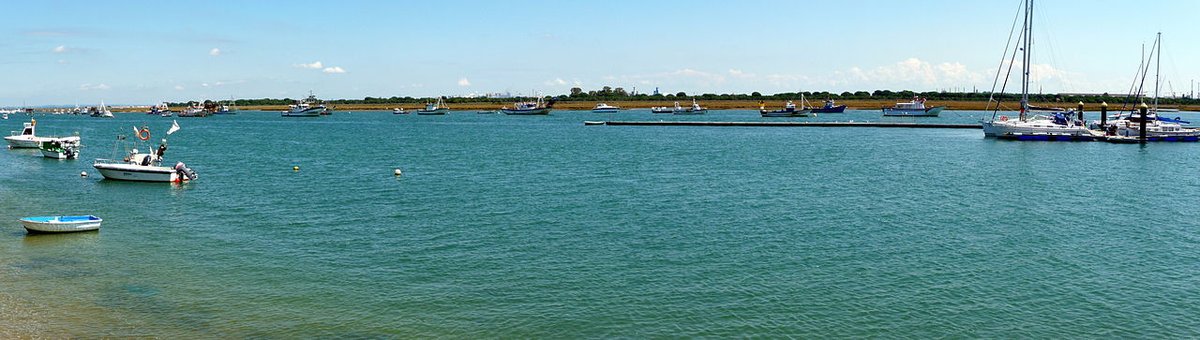
Huelva's port is among Spain's busiest, yet the city keeps its maritime muscle at arm's length. Follow Calle Puerto Rico for ten minutes and you reach the Muelle del Tinto, an iron pier built in 1876 so steamers could load copper straight from railway wagons. The trains have gone, but the 1.2 km structure still juts into the estuary like a rusty knitting needle. Locals jog here at sunset, passing elderly couples who bring camping chairs and a portable radio to watch the sky bruise over the salt marsh. Flamingos—yes, the real thing—feed 200 m away, their pink turning neon in the last light. No ticket office, no souvenir stall, just the clank of halyards and the smell of diesel drifting across from the container terminal.

If you need context, the Casa Colón exhibition centre back in town explains how the port bankrolled Columbus. Admission to the ground-floor interpretation room costs €3; temporary shows range from vintage railway posters to drone photography of the province's cork oak forests. The centre doubles as the city's main convention hall, so you may find yourself inspecting Iberian ham while suited delegates queue for coffee at the next-door kiosk.

Marsh Currency

Across the Odiel estuary lies one of Europe's most under-rated wetlands. The Marismas del Odiel cover 7,200 ha of intertidal mud, samphire and glasswort, and UNESCO liked them enough to declare a biosphere reserve in 1983. From the city centre it's a fifteen-minute drive to the visitor hub at Calatilla, where a boardwalk leads past cordoned-off tern colonies. Bring binoculars: spoonbills, ospreys and black-winged stilts turn up year-round, while the flamingo count peaks at 2,000 in late summer when adolescents blush from sugar-plum to high-vis jacket.

Entry is free, but the park gates close at 19:00 (21:00 in July). There are no buses on Sundays or public holidays—either hire a car or join the Saturday morning eco-taxi (€15 return) that departs from the tourist office at 10:00 sharp. If you prefer water-level views, Kayak Odiel runs three-hour paddles at €30 pp, including dry-bag and juice stop on a sandbank. The tide rules everything, so book ahead rather than turning up hopeful.

What Arrives on Ice

Spanish food writers make much of inland jamón, but Huelva faces the other way: towards the Atlantic. Breakfast like a stevedore at the Mercado del Carmen, where stall-holders unload prawns so fresh their legs still twitch. Ask for gambas blancas de Huelva: they are smaller than their Carlingford cousins, almost translucent, and taste of sea grass rather than pure brine. Price fluctuates daily; expect €28–€35 a kilo, more on the eve of a holiday. If you're self-catering, buy half a dozen and flash-fry them in olive oil with a single flaked guindilla—anything fancier feels like dressing a Labrador in a tuxedo.

Restaurants around the port ply a similar trade. El Viejo Chico on Calle Sor Gregoria looks like a 1970s social club, all Formica and lace curtains, but the clams come doused in fino sherry and the choco (cuttlefish) is grilled over holm-oak coals until the edges blacken. Three dishes, bread and a quarter-litre of dry white rarely tops €25 a head. The catch? They don't take cards, and they close on Monday with the finality of a provincial bank.

Should you tire of seafood, order cachopo: two veal escalopes welded together with serrano ham and cheese, breadcrumbed and fried until the size of a hardback dictionary. One portion feeds two hungry teenagers; the calorie count is nobody's business.

Sierra on the Doorstep

North of the city the road climbs sharply. Within 35 minutes you have left the estuary's brackish haze and entered the Sierra de Aracena, a quartzite massif where chestnut woods replace salt marsh. The village of Alájar sits 560 m above sea level, its white houses clinging to a granite outcrop like gulls on a cliff. Park by the football pitch and follow the signed 8 km circuit to the Ermita de los Santos; the path threads through abandoned smallholdings where persimmon trees drop unpicked fruit onto the trail. In late October the air smells of mushroom and wood smoke, and you can walk for two hours without meeting anyone except a shepherd on a Honda mule.

Temperatures here are five degrees lower than on the coast—welcome from May onwards, but potentially bleak in January when Atlantic fronts deposit horizontal rain. The tourist office publishes a free hiking sheet (Spanish only) that grades routes from stroller-friendly to calf-burning; pick it up before you leave town because mobile coverage is patchy once you dip into the valleys.

Getting In, Getting Out

Most British visitors arrive via Faro. The A22 motorway across Portugal's Algarve is toll-free again, and the border at Ayamonte consists of two speed bumps and a defunct customs hut. Allow 55 minutes from Faro airport to central Huelva—quicker than the transfer from some UK terminals to central London. Seville is an alternative, but car hire queues can be glacial, and the AP-4 toll adds €18 return.

Trains leave Seville-Santa Justa twice daily, taking 1 h 40 min and costing €12.75 each way. The station in Huelva is a 15-minute walk from the old centre, but services thin out on Sundays, so check Renfe's website before you commit. ALSA buses are faster (1 h 20 min) and run hourly; book the "Supra" service for extra legroom and Wi-Fi that actually works.

Parking in town is refreshingly simple. Blue-zone bays charge €1 an hour from 09:00–14:00 and 17:00–20:00, but side streets south of Avenida Martín Alonso Pinzón are unrestricted and safe. Petty theft is rare; still, don't leave that pair of binoculars on the passenger seat, if only for the insurance premium.

When to Jump

Carnival in February is lively, but the weather lottery can throw anything from 12 °C drizzle to 24 °C sunshine. Holy Week brings solemn processions and full hotels; book early or arrive the week after when hotels halve their rates. The Colombinas fiesta (first week of August) turns the centre into an open-air karaoke bar—great if you fancy foam parties at 03:00, less so if you prefer birdsong.

September is the sweet spot: daylight temperatures hover around 27 °C, the marshes glow amber, and beach bars still serve chilled mantecados (shortbread) with coffee. British half-term crowds haven't discovered the province yet, so you can spread a towel on Playa de Punta Umbría without paying for a sun-lounger or tripping over a pedal-boat.

Worth It?

Huelva will never win Spain's beauty contest. The industrial skyline intrudes, English is patchy, and you will be asked "¿Por qué Huelva?" at least once a day. Yet the city repays curiosity. Between the flamingo-haunted estuary, the British-built suburb and the seafood that tastes of deep water rather than freezer, it offers something rarer than postcard perfection: a working Spanish port still figuring out its own story. Come with binoculars, an appetite and low expectations of Renaissance charm. You will leave with a full stomach, a memory card of pink wings against copper water, and the odd satisfaction of having been somewhere that guidebooks haven't yet decided how to sell.

Key Facts

Region
Andalucía
District
Metropolitana
INE Code
21041
Coast
Yes
Mountain
No
Season
year-round

Livability & Services

Key data for living or remote work

2024
ConnectivityFiber + 5G
TransportTrain station
HealthcareHealth center
EducationHigh school & elementary
Housing~6€/m² rent · Affordable
CoastBeach nearby
Sources: INE, CNMC, Ministry of Health, AEMET

Official Data

Institutional records and open data (when available).

  • Casa Colón
    bic Edificio Civil ~0.5 km
  • Museo de Huelva
    bic Monumento ~0.7 km
  • Estación de Sevilla
    bic Monumento ~0.6 km
  • Santuario de Nuestra Señora de la Cinta
    bic Monumento ~2.2 km
  • Muelle de la compañía Tharsis, Sulphur and Copper en Huelva
    bic Monumento ~1.6 km
  • Capilla de Santiago y Nuestra Señora de la Soledad
    bic Monumento ~0.2 km
Ver más (49)
  • Convento de Santa María de Gracia o Convento de Madres Agustinas
    bic Monumento
  • Iglesia de Nuestra Señora Estrella del Mar
    bic Edificio Religioso
  • Cine Rábida
    bic Monumento
  • Edificios de la Autoridad Portuaria
    bic Monumento
  • Chalet Clauss
    bic Monumento
  • Barriada Huerta de Mena y La Esperanza
    bic Monumento
  • Viviendas y Palacio del Cine
    bic Edificio Civil
  • Escuela Formación Profesional
    bic Monumento
  • Viviendas
    bic Monumento
  • Biblioteca Pública Provincial de Huelva
    bic Monumento

Planning Your Visit?

Discover more villages in the Metropolitana.

View full region →

Day trips near Huelva

Doñana, playas vírgenes, minas de Riotinto y …

Villages near Huelva →

More villages in Metropolitana

Traveler Reviews