Full Article
about Punta Umbría
Top-tier beach resort on a sand-and-pine peninsula; miles of beaches and seafaring tradition beside the Ría de Huelva.
Hide article Read full article
You reach Punta Umbría by crossing a bridge, and for a few minutes the view is almost empty: marshland on both sides, still water, distant birds like white dots. Then the town appears all at once. Low houses, cars circling for a space, the smell of frying oil mixed with sea air.
Tourism here has revolved around the same thing for more than a century: the beach. In the early 20th century, British workers from the Riotinto mines were already coming to spend the summer. If you walk around slowly, there are still traces of that period. These days, though, most people are here for something simpler: shellfish, a long stretch of sand and days of sun that seem to go on forever.
Where the beach sets the pace
From the city of Huelva it takes about twenty minutes by car, and the change of atmosphere is immediate. Punta Umbría has a very long strip of sand, more than ten kilometres, stretching west with few interruptions. There is development, of course, but a large part of the municipality is protected, which leaves plenty of open space.
The beach is wide, with fine sand and an Atlantic tide that sometimes means a fair walk before you reach the water. In summer it fills up, but because everything is so spread out you can usually find a spot.
Then there is what comes out of the sea. The fishing port and the fish market are still active, and much of what is eaten in town comes straight from there: gamba blanca, coquina, choco and the well known chirlas.
Chirlas are small clams with a strong flavour. The difference is not always obvious at first, but it becomes clearer the more you try them. They are smaller than standard clams and noticeably more intense.
Throughout the year there are usually fairs or food events centred on local seafood and fish. The format is simple: long tables, hot plates working non-stop, and the whole town eating standing up.
Pine woods, sand paths and wetlands
After a few days on the beach, shade starts to feel appealing. That is where the Paraje Natural de Los Enebrales comes in.
This natural area runs along the coast, with pine woods, sandy paths and juniper trees shaped by the wind. Walking here feels like an easy excursion. There are no steep climbs or technical routes, just a steady walk among pines with the sound of the sea in the background. Eventually, the path leads to a quieter stretch of beach than the ones near the town centre.
There are said to be several kilometres without buildings. Whether or not you measure it, the sense of space is clear, even in the height of summer.
On the other side of Punta Umbría lies a very different landscape: the Marismas del Odiel. These wetlands are among the most important on the Iberian Peninsula. A short stop at any viewpoint is enough to understand why. Water stretches in every direction, channels shift with the tides, and flocks of flamingos move together in a way that feels almost arranged.
In the area of the old salt pans there are bird observatories and information panels. Binoculars help, but even without them there is plenty to see.
When everything gets louder
Punta Umbría feels more like a summer town than a year-round tourist city. In winter it is quiet. In July and August, it changes completely.
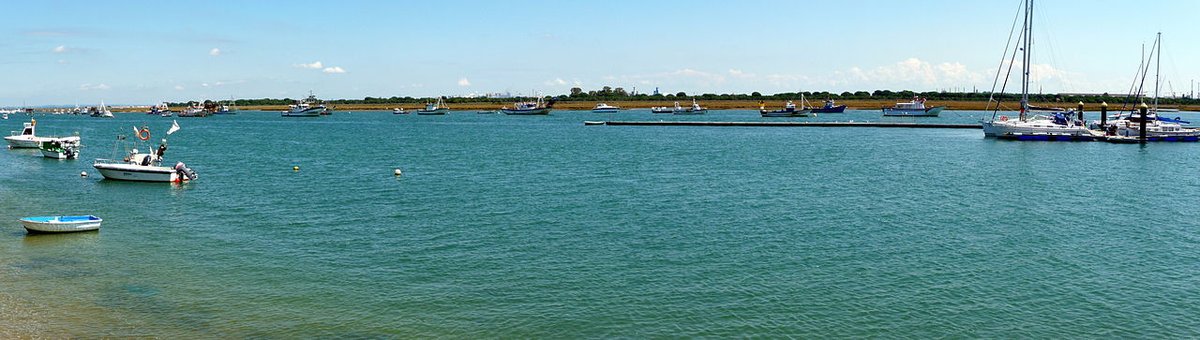
One of the most striking moments of the summer is the maritime procession of the Virgen del Carmen, the patron saint of fishermen. The statue is taken out on a boat, and dozens of other boats gather around it as it moves through the estuary. From the shore, crowds line up to watch.
In August, the town fair takes place near the estuary. Rides, temporary structures known as casetas, music and a slightly chaotic energy that is typical of Andalusian fairs.
Carnival also brings a lively atmosphere. It is smaller in scale than Cádiz, but that is part of its character. It feels closer, less like a staged event.
There is also the romería de la Cruz, traditionally held in spring in a nearby pine forest. Decorated carts, sevillanas music, outdoor food and, if the weather is dry, plenty of dust along the way.
More than just sand, if you look at it right
Here is the honest part: Punta Umbría is not a place people come to for monuments. The centre can be covered quickly. The church of Nuestra Señora de Lourdes, built during the time of the British mining company, stands out because it looks almost like an English house with a bell tower.
That is not really a problem. This place works better as a summer base than as a historic city.
A simple plan fits the rhythm. Start the day a bit early, head towards the area of La Bota if you want more space on the beach, return to town for something from the fish market, and later take a walk along the pier at sunset, when some of the boats come back in.
Punta Umbría does not try to be more than it is. It revolves around the sea, the food that comes from it, and a pace that shifts with the seasons. For many visitors, that is exactly the point.