Full Article
about Guarromán
A New Settlements town known for its puff-pastry cakes and its strategic location.
Hide article Read full article
Some places seem designed to make you double-check the map. Guarromán is one of them. The name sounds so unusual that it has generated its own story: this is where the Asociación Internacional de Pueblos con Nombres Feos, Raros y Peculiares, the International Association of Towns with Ugly, Strange and Peculiar Names, is based. That alone gives the town a certain character.
Arrive, though, and the first thing that catches the eye is not the name but the landscape. An expanse of olive trees stretches as far as the horizon. Row after row fills the view. In the end, the name may be the only thing that feels out of the ordinary.
A Town Founded by Central European Settlers
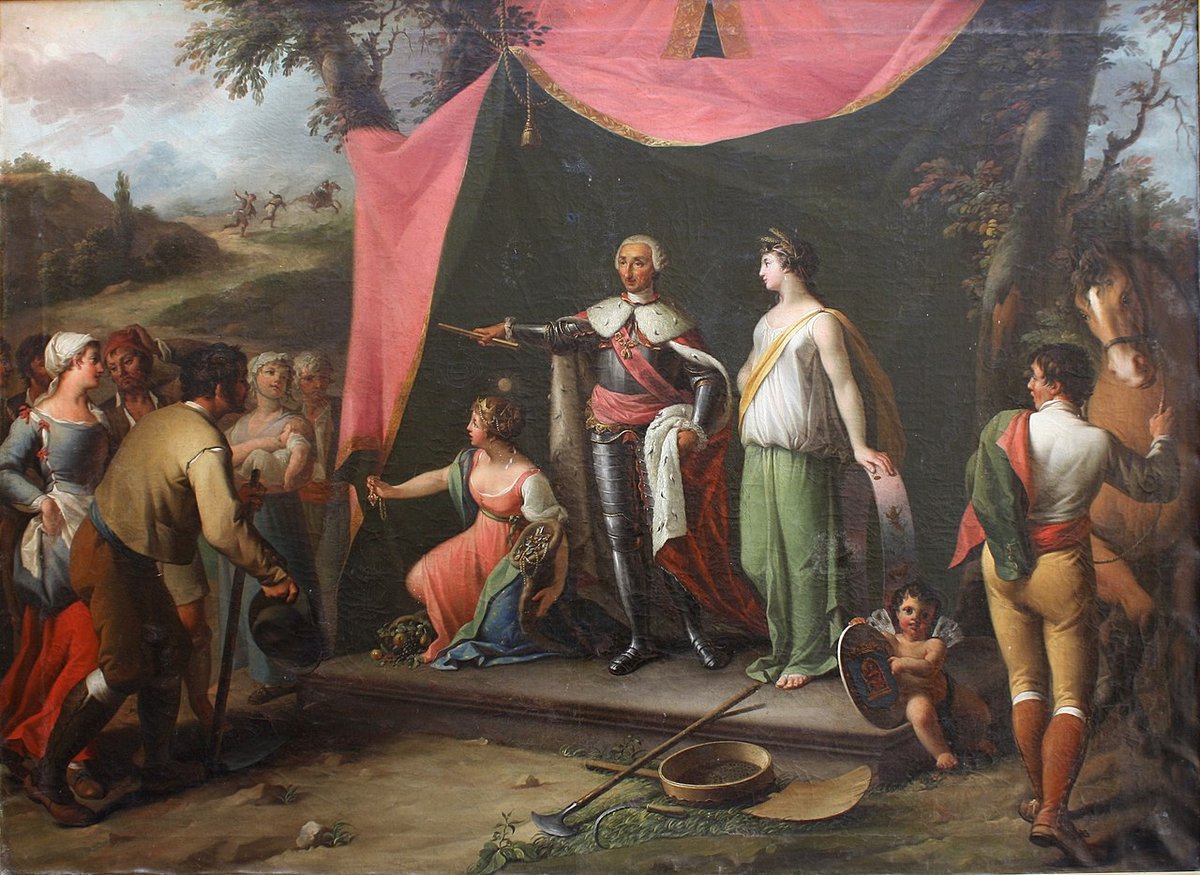
At the end of the 18th century this was little more than a roadside inn along the route through Sierra Morena. King Carlos III promoted the repopulation of this part of Andalusia and brought in settlers from various parts of Europe, mainly Germans and Belgians. They could have given the settlement a completely new name, but instead they kept the one already in use, inherited from Arabic: wadi al-román, meaning something like river or valley of the pomegranates.
The first colonists arrived with their tools and customs, ready to start again from scratch. What they built was a fairly orderly town for its time, part of the wider project known as the Nuevas Poblaciones, the New Settlements intended to bring life and security to this stretch of road.
The Iglesia de la Inmaculada was one of the first churches constructed under that scheme. It is large and very white, with the solid, practical feel of a building put up quickly but meant to last. Next door stands the Pósito de Labradores. With its brick arches and tiled roof, it has served a range of purposes over the years: grain store, barracks, prison, school. In many small towns there is a building that ends up being used for everything at some point, and this is Guarromán’s version.
The French General in the Sacristy
One of the town’s most curious stories sounds unlikely until you look into it: a French general is buried inside the church.
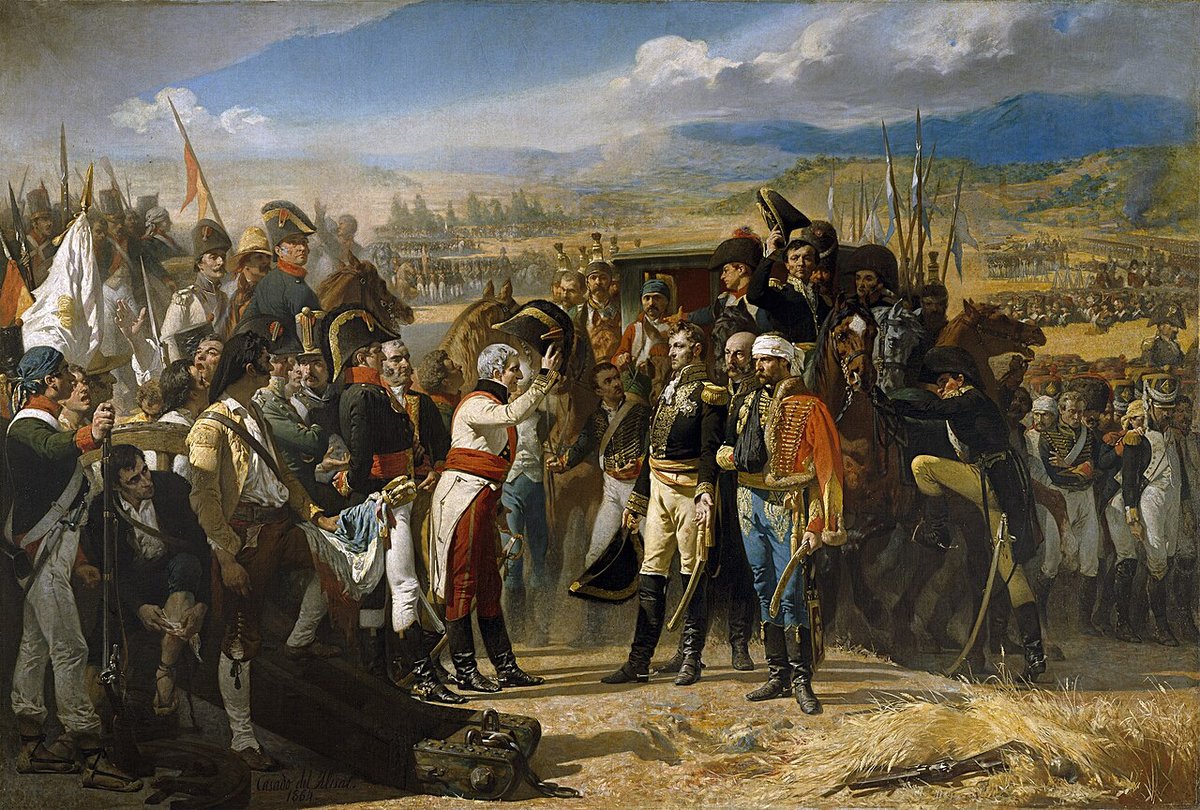
His name was Jacobo Gobert, and he fell at the Battle of Bailén in 1808 during the Peninsular War. At that time Guarromán did not yet have a cemetery, so he was buried beneath the sacristy of the Iglesia de la Inmaculada. He remains there.
The image is striking. A Napoleonic general resting under the floor of a parish church in a small town in the province of Jaén, while above him mass is celebrated as on any ordinary Sunday. It is the sort of detail that gives Guarromán an unexpected historical footnote, tied to one of the most significant battles fought on Spanish soil during the war against Napoleon.
A Landscape of Olives and Old Mines
Life in Guarromán revolves largely around the olive groves. Leave the town centre and the rows of trees begin almost immediately, occupying much of the municipal area. This is the typical scenery of northern Jaén: old olive trees, some twisted with age, and in the distance the ridges of Sierra Morena marking the skyline.
For generations, olive oil has shaped both the economy and the look of the land here. The pattern of planting is so regular that it becomes almost hypnotic when seen from a distance.
Yet agriculture has not been the only source of work. For a long time there was also mining activity in the area. Hundreds of shafts connected to the extraction of lead and silver have been recorded in the surrounding countryside.
Some walking routes pass near these remains. Do not expect vast industrial complexes. What survives tends to be the mouths of old shafts, stone walls and cuts in the earth. Moving through this terrain gives a sense of how, for decades, people earned their living by pulling metal from beneath their feet. It adds another layer to a place that at first glance appears defined solely by olives.
Sweet Pastry and Hearty Cooking
Ask for something sweet in Guarromán and the answer will likely be the town’s hojaldre. It is one of those pastries that looks modest in the display case but proves hard to stop at just one. Thin layers of pastry made with Iberian pork lard come together in a simple, traditional sweet.
There is no need for grand shopfronts. Often it is found in long-established bakeries that continue to operate much as they did decades ago. The hojaldre has become a small local point of pride, something visitors are encouraged to try before moving on.
On the savoury side, the cooking is rooted in the countryside. Expect stews, dishes made with game when the season allows, and hearty spoon meals that are especially welcome when cold air sweeps down from Sierra Morena and fog settles along the nearby A‑4 motorway. This is food designed to warm and sustain rather than to impress.
Traditions That Rarely Make the Guidebooks
In June the town celebrates the Sagrado Corazón with a procession through the streets. It is one of the key religious dates in the local calendar.
Another tradition takes place on the night of San Juan. Some residents head down to Fuente Taza to wash their faces with the water from the spring. It is a simple act, almost one of those old superstitions that linger quietly over time.
In September many people make their way to the ermita of the Virgen de Zocueca, set out in the countryside. On that day it can feel as if the whole town has temporarily relocated to the surroundings of the chapel.
And from time to time, representatives of towns with unusual names gather here as part of the Asociación Internacional de Pueblos con Nombres Feos, Raros y Peculiares. The list of places that attend is enough to keep anyone entertained with a map for a good while.
A Worthwhile Detour
Guarromán does not compete with Andalusia’s monumental cities. There is no alcázar and no major museum. It is a town of just over two thousand inhabitants, set beside the A‑4 and surrounded by olive groves.
Yet for those travelling towards Jaén, Bailén or Andújar, leaving the motorway for a short while can be rewarding. A stroll through the centre, a look inside the Iglesia de la Inmaculada, where the French general still lies beneath the sacristy, and a taste of the local hojaldre offer a brief but distinctive pause in the journey.