Full Article
about Berja
Historic town at the foot of the Sierra de Gádor, known for its springs and stately homes.
Hide article Read full article
The scent of damp stone and orange blossom hangs in the air before the sun crests the Sierra de Gádor. In Berja, you notice the sound first—a quiet, persistent trickle of water running beneath grates and along narrow acequias beside the pavement. It feels like a quiet defiance in Almería, Spain’s driest province.
This murmur of water is the town’s true rhythm. It is not a feature for visitors but the backdrop to everything, a sound so woven into daily life that most locals no longer hear it. To walk these streets is to follow that sound from one shaded plaza to the next.
Following the thread of water
They call Berja the city of a thousand fountains. The exact number doesn’t matter; what does is their purpose. Some are grand, tiled affairs in small squares like La Glorieta, where the older men gather on benches in the late afternoon shade. Others are simple stone basins set into walls, their edges worn smooth by centuries of use.
The Fuente del Pilar, broad and functional, once served as the communal washhouse. Even now, you might see someone filling a large plastic bottle there, trusting its cold flow more than any tap. The water tastes of the mountain.
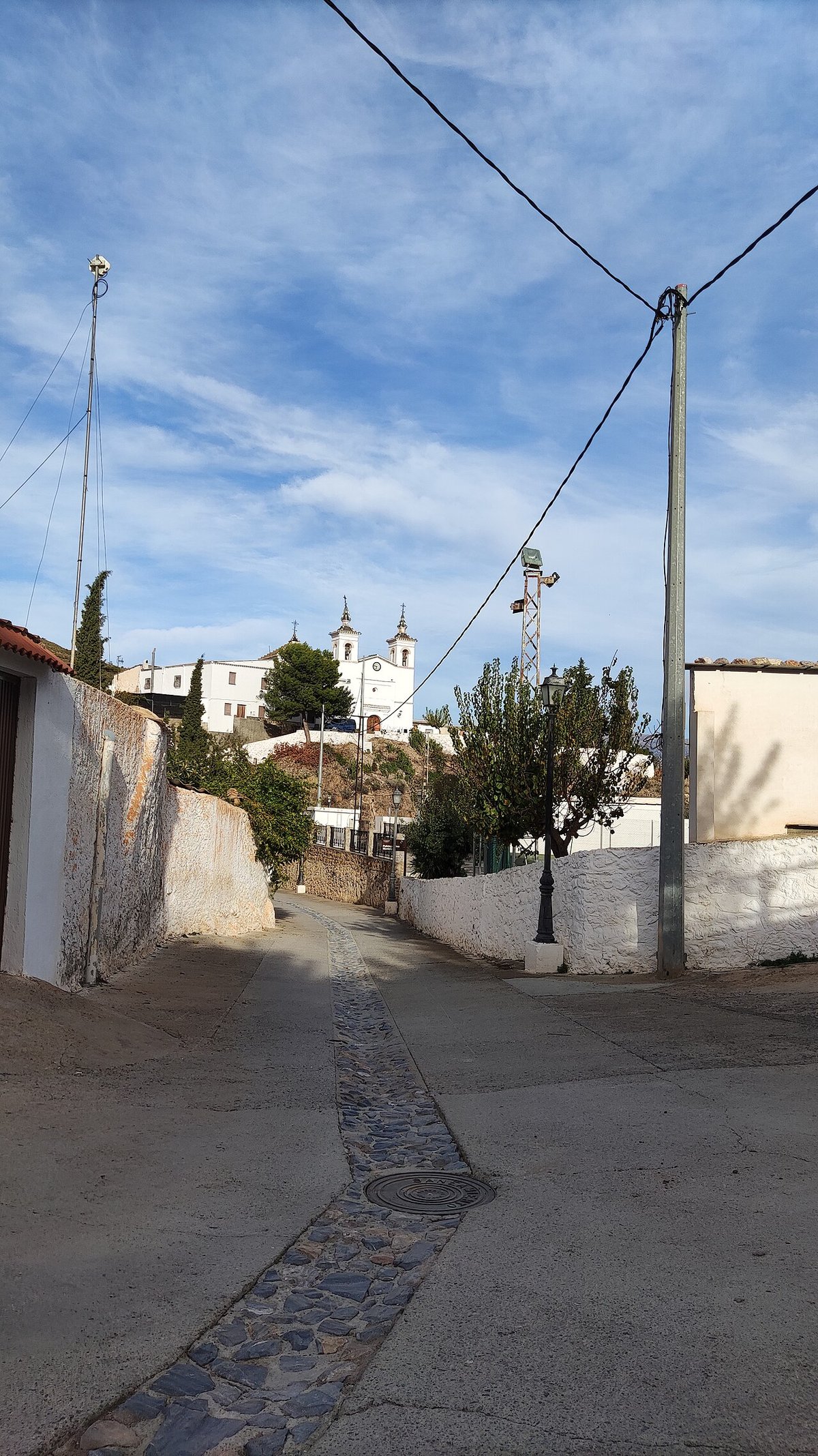
To understand the town, follow Calle Real down towards Plaza Vieja. Listen for the water. You’ll see it channeled through gutters beside the street, disappearing under buildings and reappearing further down. This is the old irrigation network made visible, the same system that fed the orchards and powered mills. It explains the unexpected pockets of green—a lemon tree in a courtyard, vines shading a doorway.
A view of two landscapes
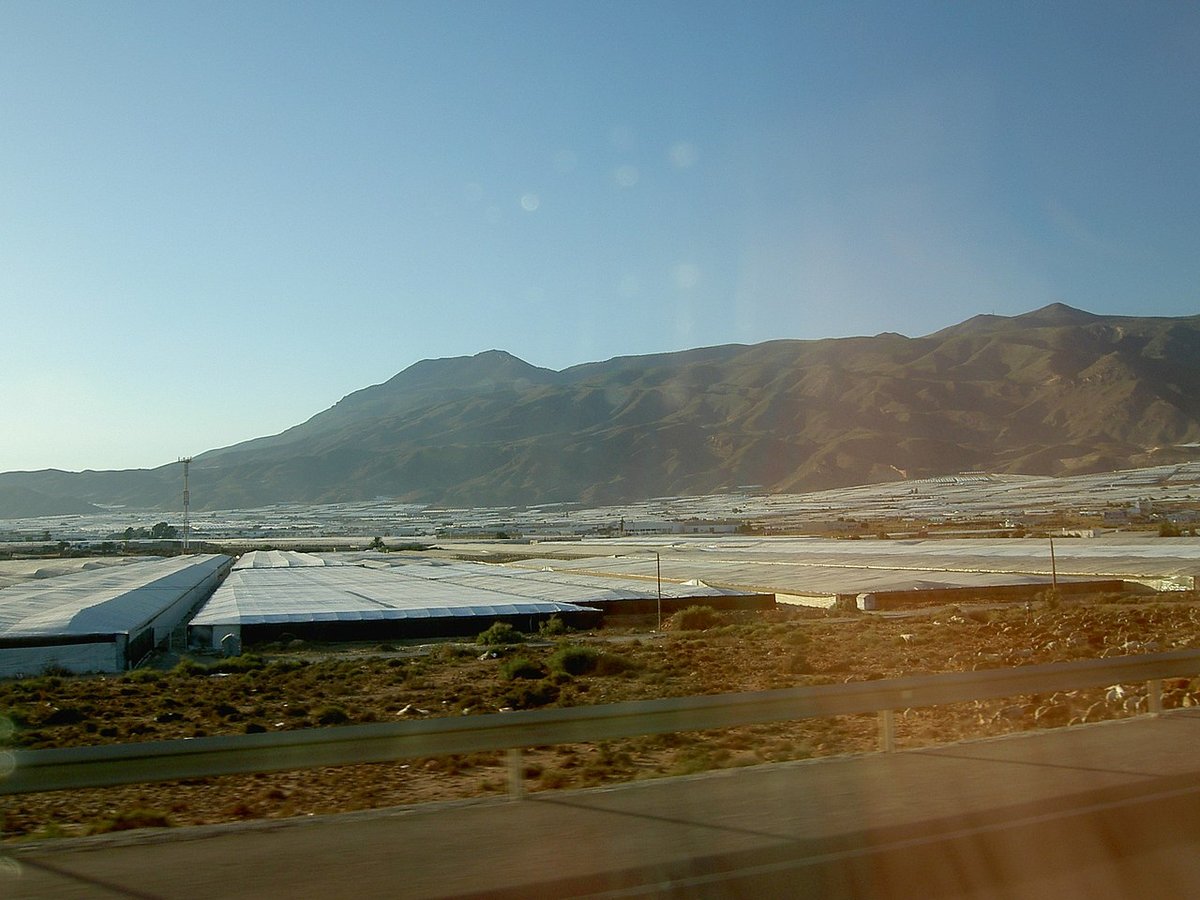
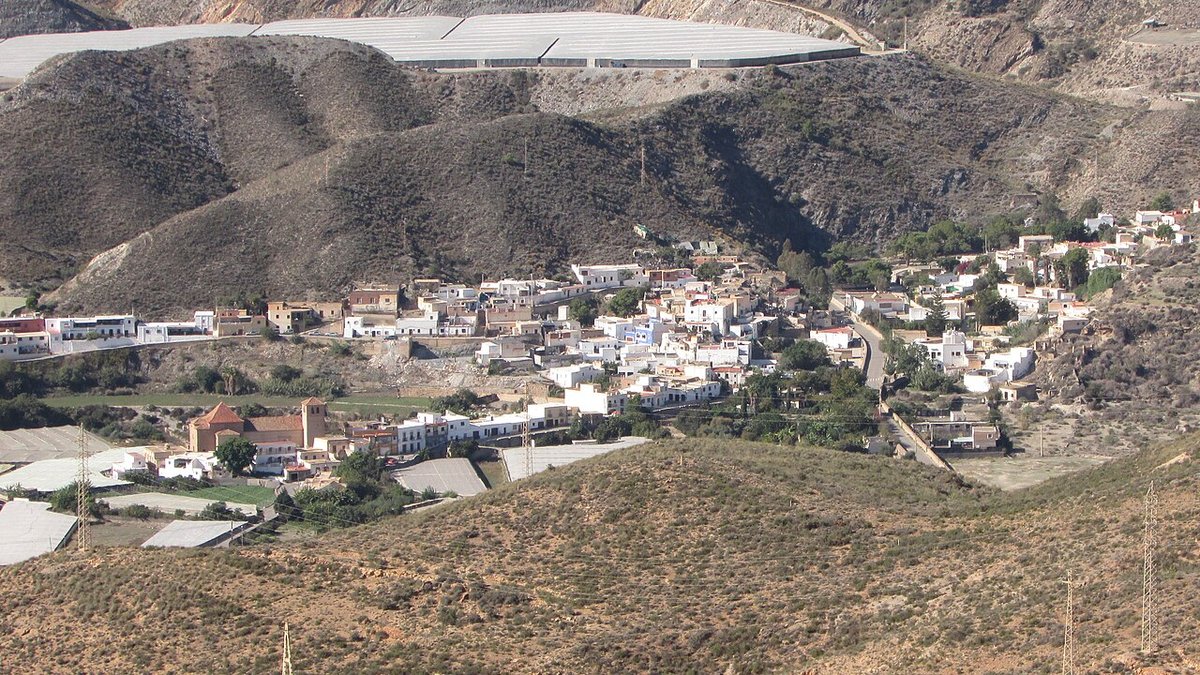
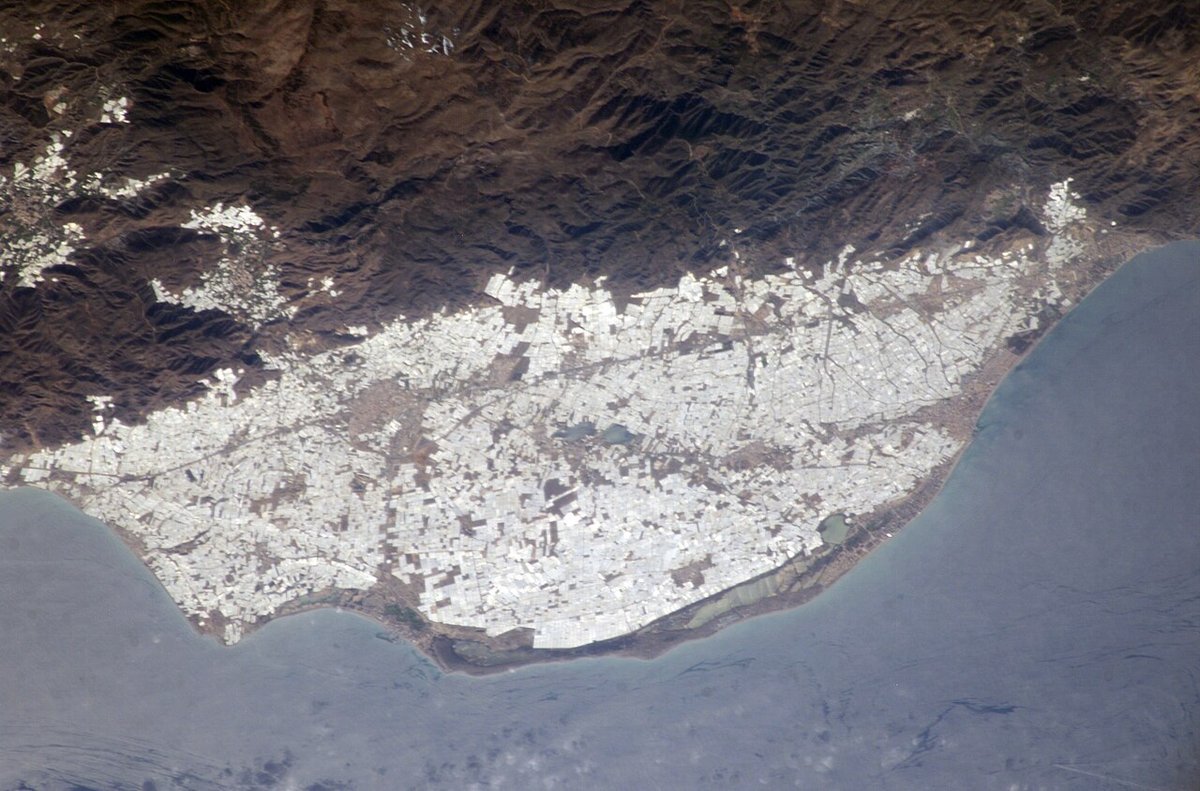
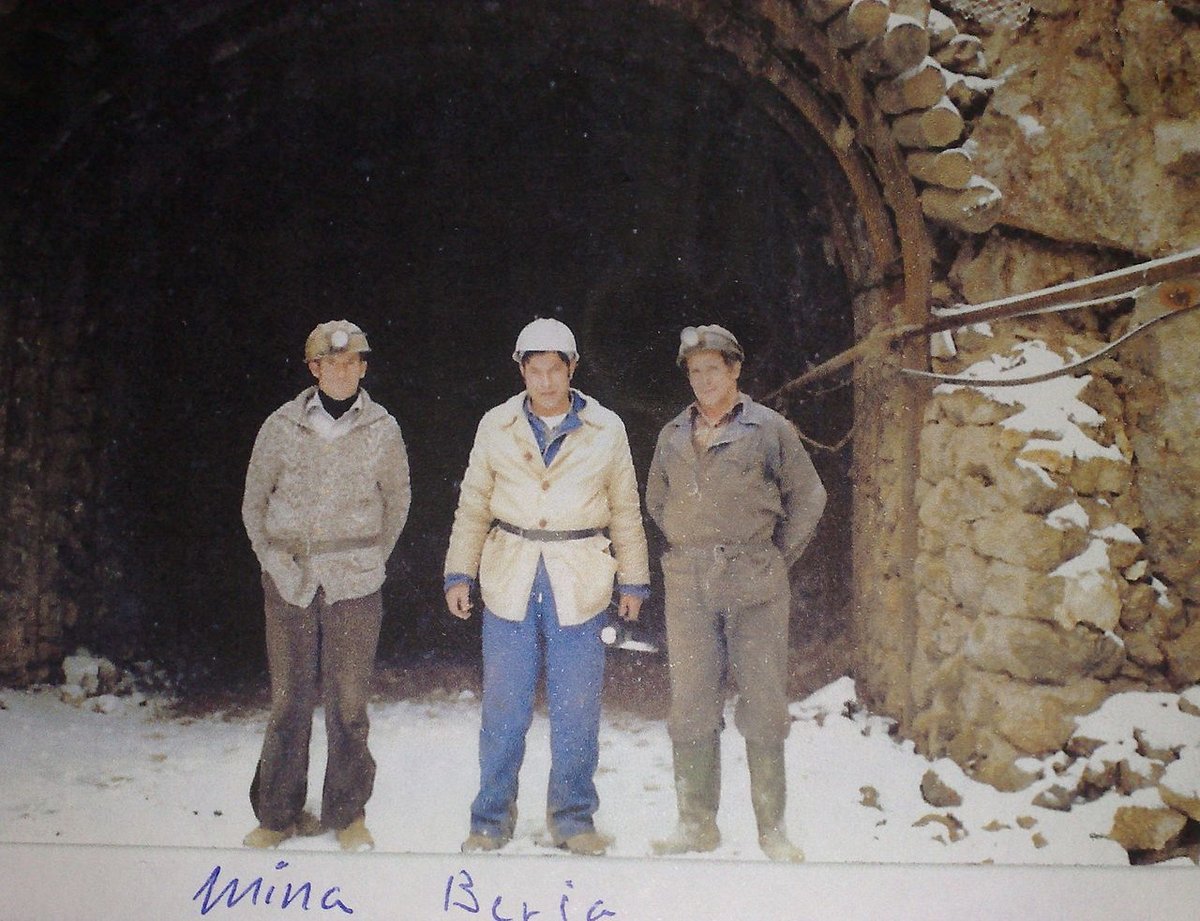
From any high point in town, your gaze is split. Behind you, the sierra rises steeply, a dry landscape of rock and low pine where old mining tracks fade into the heat haze. In front, just a few kilometres downhill, the world turns white. The vast greenhouse sea of the Poniente begins, a blinding geometric plain that stretches to the coast.
On very clear days, you can see the Mediterranean as a thin blue line beyond the plastic. The contrast is absolute: behind, austere mountain; ahead, a manufactured agricultural ocean. The road to Balanegra beach is quick, which is why so many berjanos head there when the summer afternoon becomes heavy.
If you walk into the sierra, go early. By ten in summer, the sun is punishing and shade is scarce. The paths are rocky and exposed, better suited to a slow pace and plenty of water.
A market day and migas
The food here speaks of an inland Almería that has little to do with coast. Migas are essential when the levante wind blows or on a cold morning—stale bread fried with garlic and paprika until it resembles golden gravel, often served with grapes or salted sardines. It’s a humble, satisfying dish that makes sense once you’ve felt that dry wind.
Market days change the town’s frequency. The streets near the main square fill with stalls of ripe fruit, spices, and work clothes. The air smells of frying dough and earth. People come from outlying cortijos, and conversations overlap in a steady hum that feels entirely local, not staged.
The local wine, often from small vineyards in the sierra’s foothills, tends to be robust and straightforward. Some say they detect a saline touch, carried inland from the sea by the wind.
The shift of seasons
Come in September if you can. The heat begins to soften and the fiestas for the Virgen de Gádor take over with processions and a crowded, familial energy that lasts into the night. It’s when the town feels most itself.
August is a test. The heat pools in the streets by mid-afternoon, radiating from white walls and asphalt. The air grows still. Many businesses shorten their hours, life retreats indoors until evening.
Winter has its own clarity. Cold air slides down from the sierra at dawn, bringing the smell of wood smoke. The orange trees in plazas glow against whitewashed walls, and the fountain water is so cold it hurts your teeth.
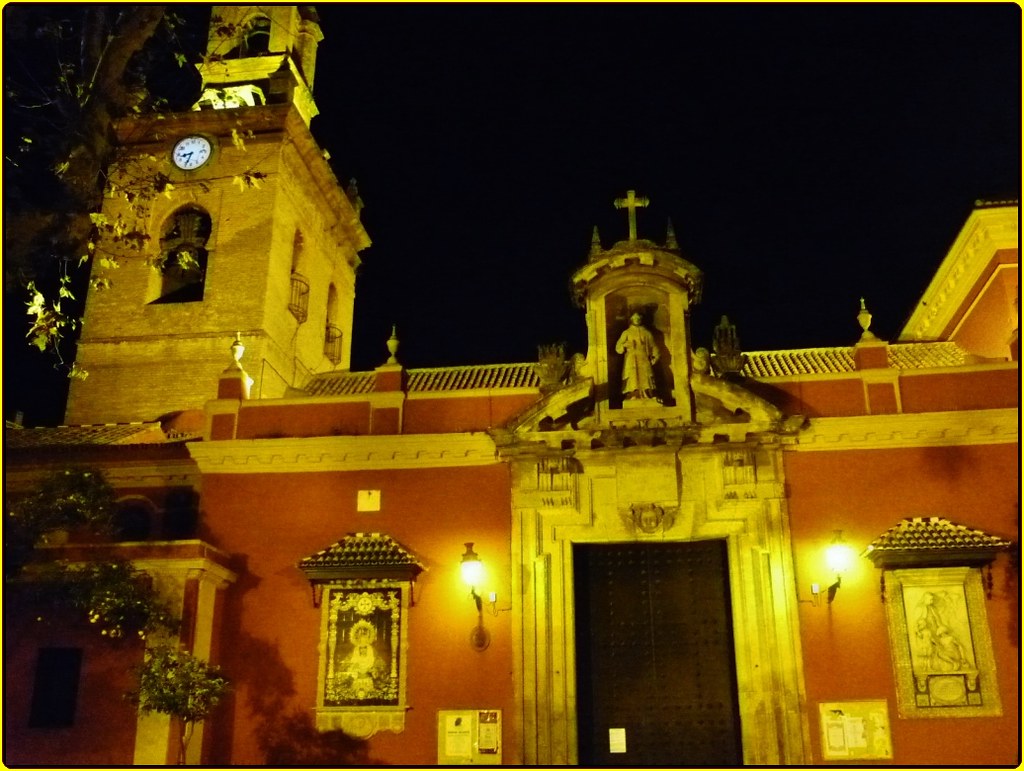
After dark, look towards the plain. The greenhouses emit a strange, diffuse glow that drowns the stars on that side of town. Yet back in the historic centre, under old street lamps, the water still runs with the same sound it has made for hundreds of years. Berja doesn’t offer itself up easily. You have to sit awhile beside one of its basins and listen.