Full Article
about El Ejido
Agricultural engine of the province known as the sea of plastic; it has a coastal tourist area in Almerimar.
Hide article Read full article
The Landscape Everyone Talks About
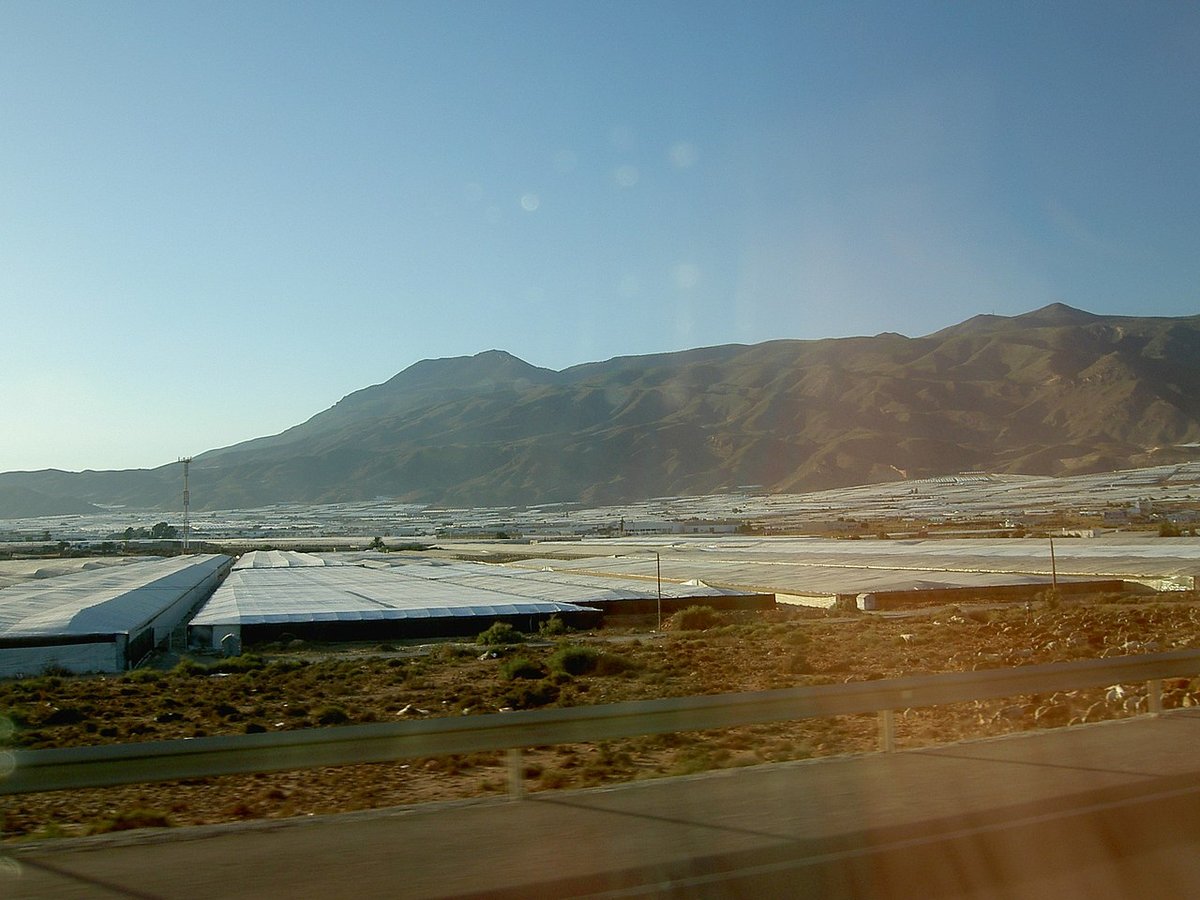
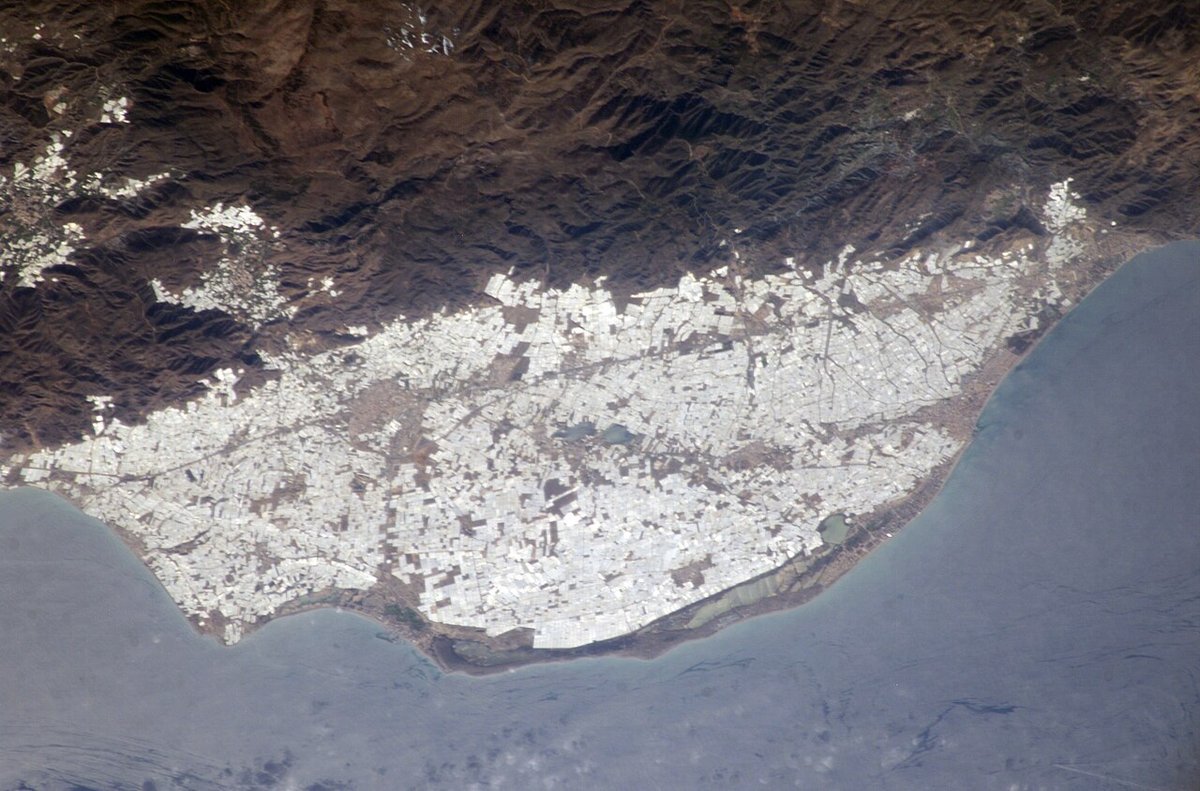
Mention tourism in El Ejido and the same image tends to appear: a vast sea of plastic stretching to the horizon. Locals sometimes sum it up with a simple phrase, calling it “the greenhouse of Europe”. It sounds exaggerated until the road leads you in and the landscape turns white. Not from snow, but from thousands of hectares of plastic sheeting reflecting the Andalusian sun, as if the whole comarca had been covered with enormous sheets of transparent film.
The effect is striking. From a distance it feels almost industrial, slightly otherworldly. Yet this is the engine of the area. Beneath each plastic roof is a carefully calibrated system that produces a large share of the vegetables sold in supermarkets across much of Europe.
Drive along the secondary roads at sunset and something shifts. The low light stains the plastic orange and the ground seems to bounce the glow back into the sky. What first felt strange begins to make its own kind of sense. This is not a decorative landscape, but it is a purposeful one.
A Town That Grew at Speed
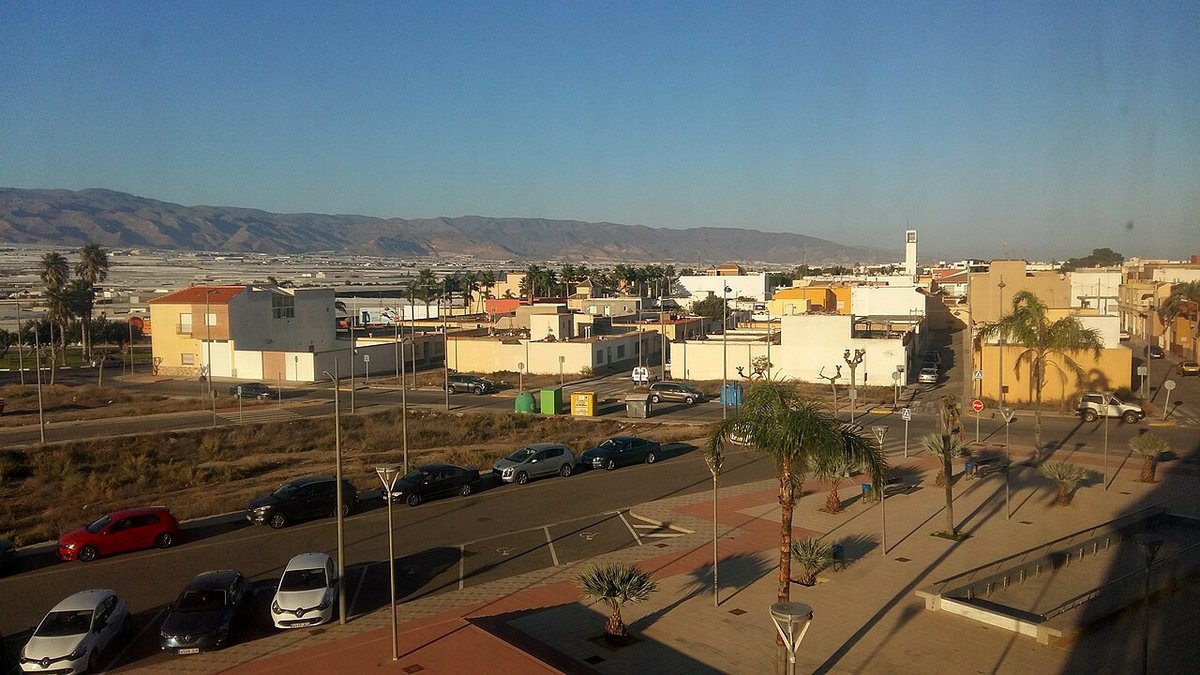
El Ejido does not fit the postcard image of an Andalusian village. There are no whitewashed houses with geraniums spilling from balconies, no cobbled lanes leading to a sleepy square. If Andalusian towns were a family, this would be the youngest sibling, the one that shot up almost overnight.
Four decades ago it barely existed in its current form. Today the population is close to ninety thousand and the atmosphere is unmistakably that of a young, expanding place. Streets feel lived in and practical rather than ornamental. New neighbourhoods sit alongside busy commercial areas. There is a sense of movement.
Walk through the centre and the soundtrack tells its own story. Accents from Eastern Europe, North Africa and Latin America mix with the familiar tones of Andalusia. It can feel like a large transport hub, though with sunshine for most of the year. Many people arrived to work in agriculture and ended up setting up their own businesses or bringing over their families. That trajectory is common here and has shaped the town’s character.
El Ejido does not lean on centuries of visible history at every corner. Its identity is more recent and still evolving. That is part of its particular energy.
From Plastic to Wetlands
One of the most surprising aspects of El Ejido is how abruptly the scenery changes. Leave the maze of greenhouses and within minutes you can reach the Salinas de Punta Entinas. The transformation is immediate. Still water replaces the bright glare of plastic. Birds move slowly through the shallows. The noise fades.
Flamingos appear among low dunes and long beaches stretch out with little interruption. Sometimes the only human presence is a lone fisherman with a rod. It feels like a pocket of nature deliberately left intact in the middle of the white expanse inland.
The contrast defines the area. On one side, intensive agriculture organised with precision. On the other, wetlands and coastline that invite a slower pace. Few places place such different landscapes so close together.
Food of Field and Coast
The cuisine of the Poniente almeriense is direct and filling, shaped by long working days outdoors. These are dishes created to sustain people rather than to impress.
Migas appear as soon as the temperature drops slightly. In this part of Spain they are typically served with pieces of sausage and whatever else is at hand, hearty and uncomplicated. Gurullos con conejo is another staple, a comforting dish of small pasta-like grains cooked with rabbit that leaves little need for anything else that afternoon.
Then there is caldo quemao. It is a robust mixture flavoured with paprika and fennel, finished with a splash of aguardiente, a strong spirit common in rural Spain. It clears the head more effectively than coffee and carries a sense of older culinary traditions.
This is not food designed for display. It is food served in deep plates, with bread alongside and conversation flowing around the table.
Guarding the Coast
On the shoreline stands the Castillo de Guardias Viejas, an eighteenth-century fortress built when these waters were far more turbulent than they appear today. Like many points along the Andalusian coast, the area once dealt with pirate raids and the constant need for vigilance.
The castle remains in good condition and offers a view that sums up El Ejido’s dual identity. On one side lies the open Mediterranean. Inland, the white mosaic of greenhouses stretches as far as the eye can see. Two very different landscapes separated by only a few kilometres.
The building connects the present to a time when defence shaped the coastline. Yet even from its walls, the agricultural present is impossible to ignore.
Understanding El Ejido
El Ejido rarely appears on lists of Andalucía’s prettiest towns. Travellers searching for winding historic quarters and carefully preserved facades may find other destinations in the province more aligned with that expectation. Here, the interest lies elsewhere.
This is a place that feels under construction in the broadest sense. New businesses open. Families settle. Districts expand. The town does not trade on nostalgia. It reflects the realities of contemporary rural Spain, where global food supply chains meet local lives.
Approach it with patience and the picture becomes clearer. Look beyond the initial shock of plastic. Walk along the coast. Spend time in the Salinas de Punta Entinas. Listen to the mix of voices in the streets. The label “greenhouse of Europe” begins to make sense, not just for the scale of what is grown here, but for the number of people who have put down roots in a short span of time.
El Ejido functions as a vast agricultural motor beside the sea. Its beauty is not conventional, yet its story is unmistakable.