Full Article
about Posadas
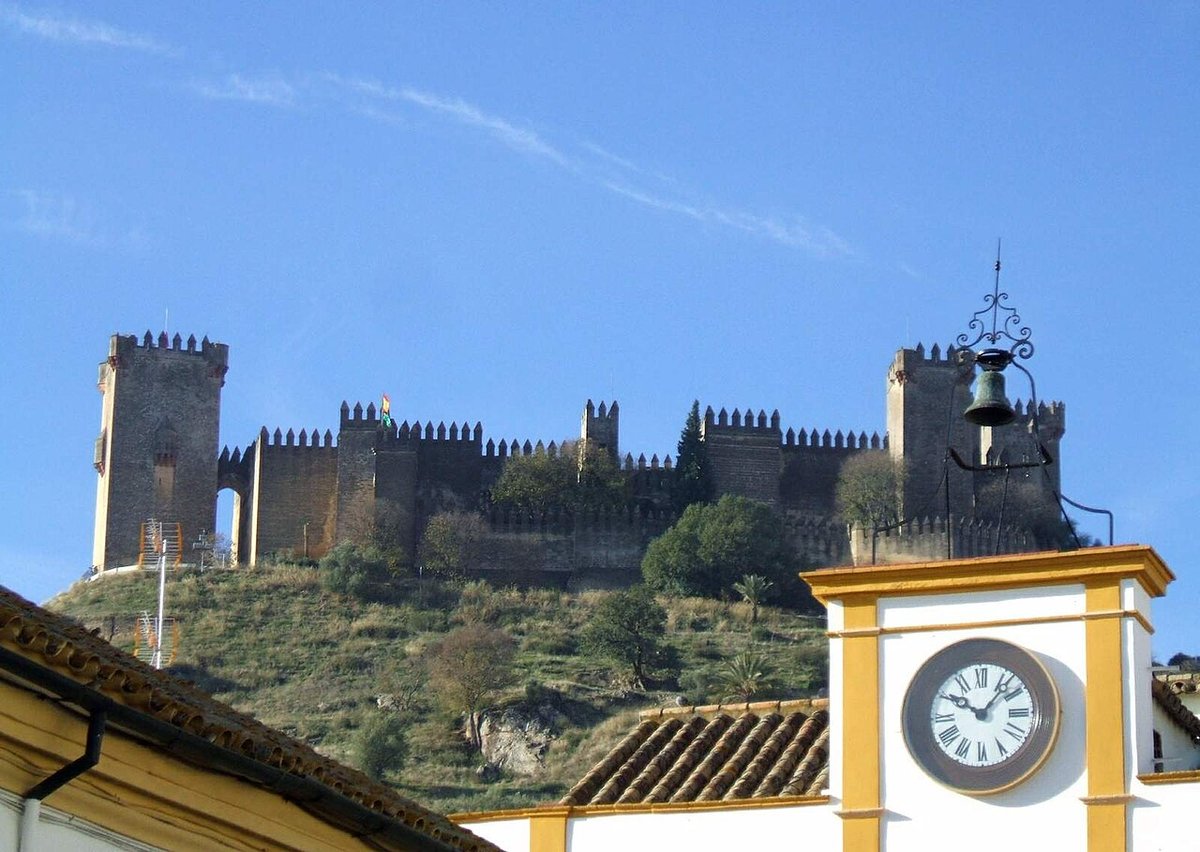
Gateway to the Sierra de Hornachuelos Natural Park, with a peri-urban park of high ecological value and prehistoric remains within its municipal limits.
Hide article Read full article
Arriving Between Olive Groves
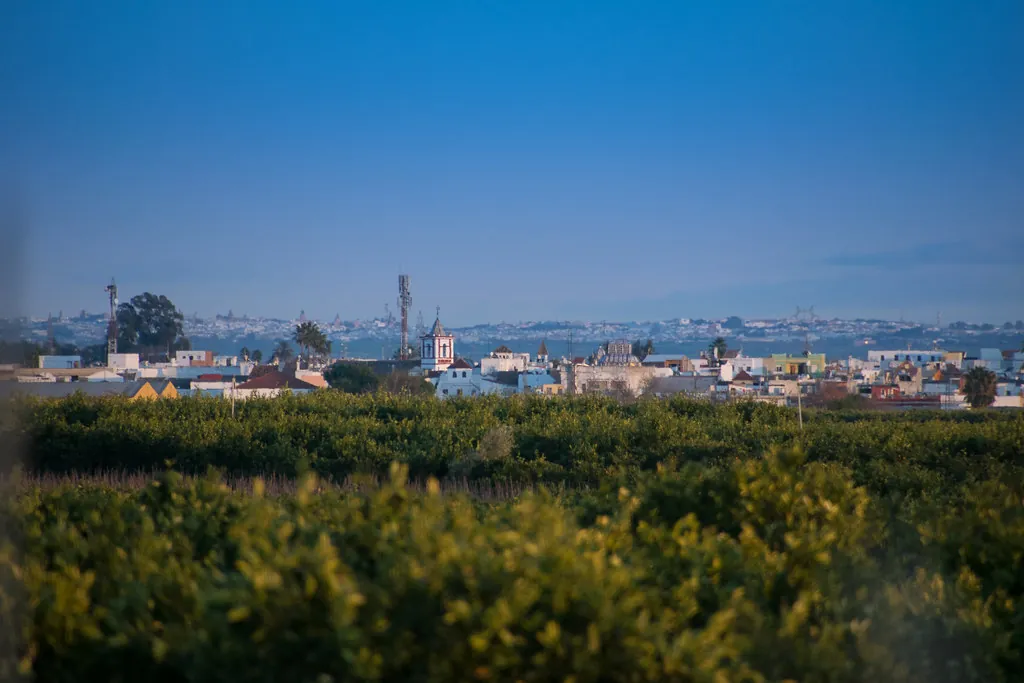
Some places feel familiar before you even get there. Posadas has that effect: a straight road, olive groves stretching out on either side, and the sense that life moves a little more slowly here. Then you enter the village and come across the Arquito, an old gateway that cuts across the street as if someone decided to frame the town itself. It is a small detail, but it tells you straight away that Posadas has a long past.
For centuries, this was a stopping point along the Vega del Guadalquivir, the fertile plain shaped by the Guadalquivir River. That role as a place of passage has left its mark. The layout, the buildings, even the pace of the streets seem to have grown around that steady flow of movement.
This is not a place of polished, postcard views. It feels more layered than that, like an old house where each wall carries a different story.
A Town That Keeps Its Feet on the Ground
Posadas has around seven thousand inhabitants and sits within reach of Córdoba, so it is not cut off. Even so, the centre keeps a distinctly local rhythm.
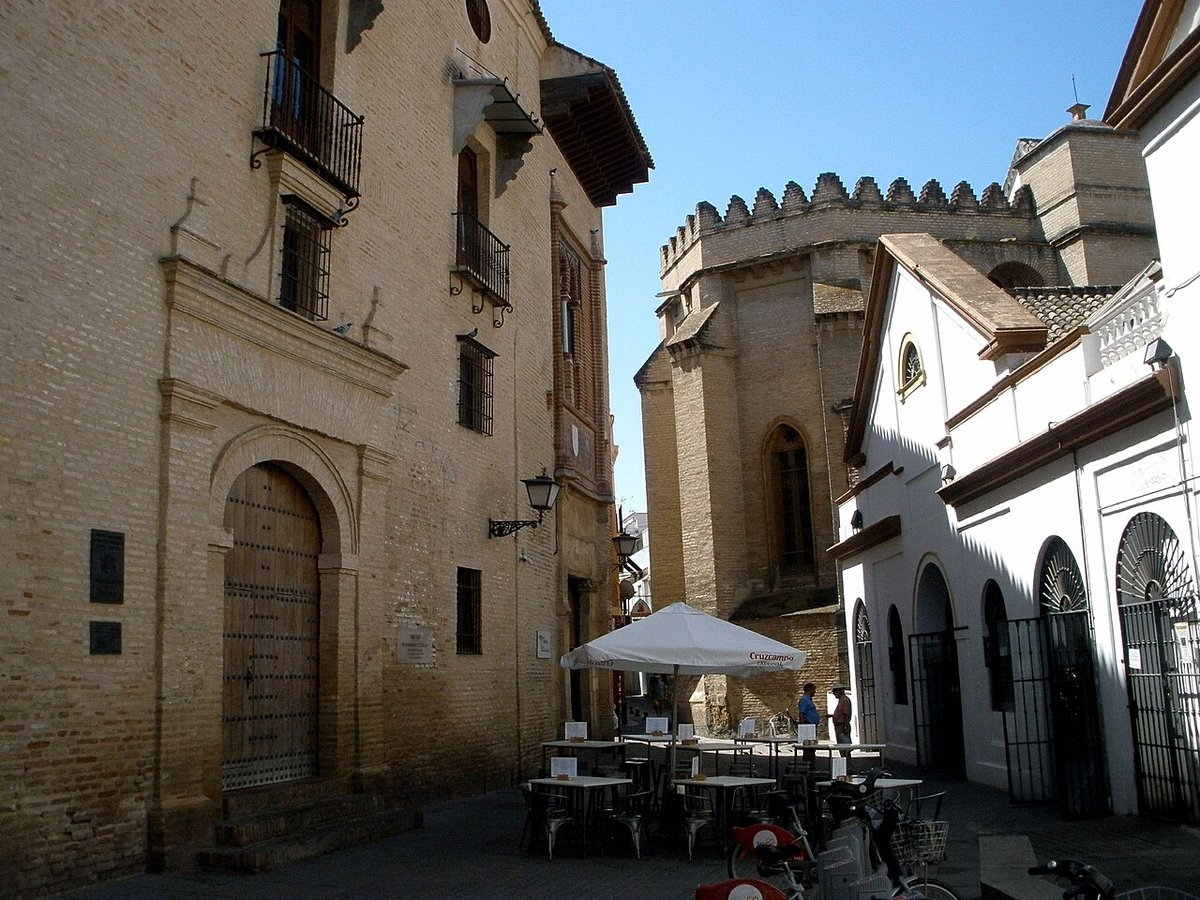
The old quarter is made up of narrow streets where cars have to move carefully. Whitewashed houses line the way, many with flowerpots fixed to their façades. In mid-afternoon, there is a particular quietness, broken only by the sound of shutters coming down or voices drifting from one balcony to another.
The Iglesia de Santa María de las Flores stands out across the town. Its tower has ancient origins and was once part of the local defences. From the square below, looking up, it has a certain weight to it.
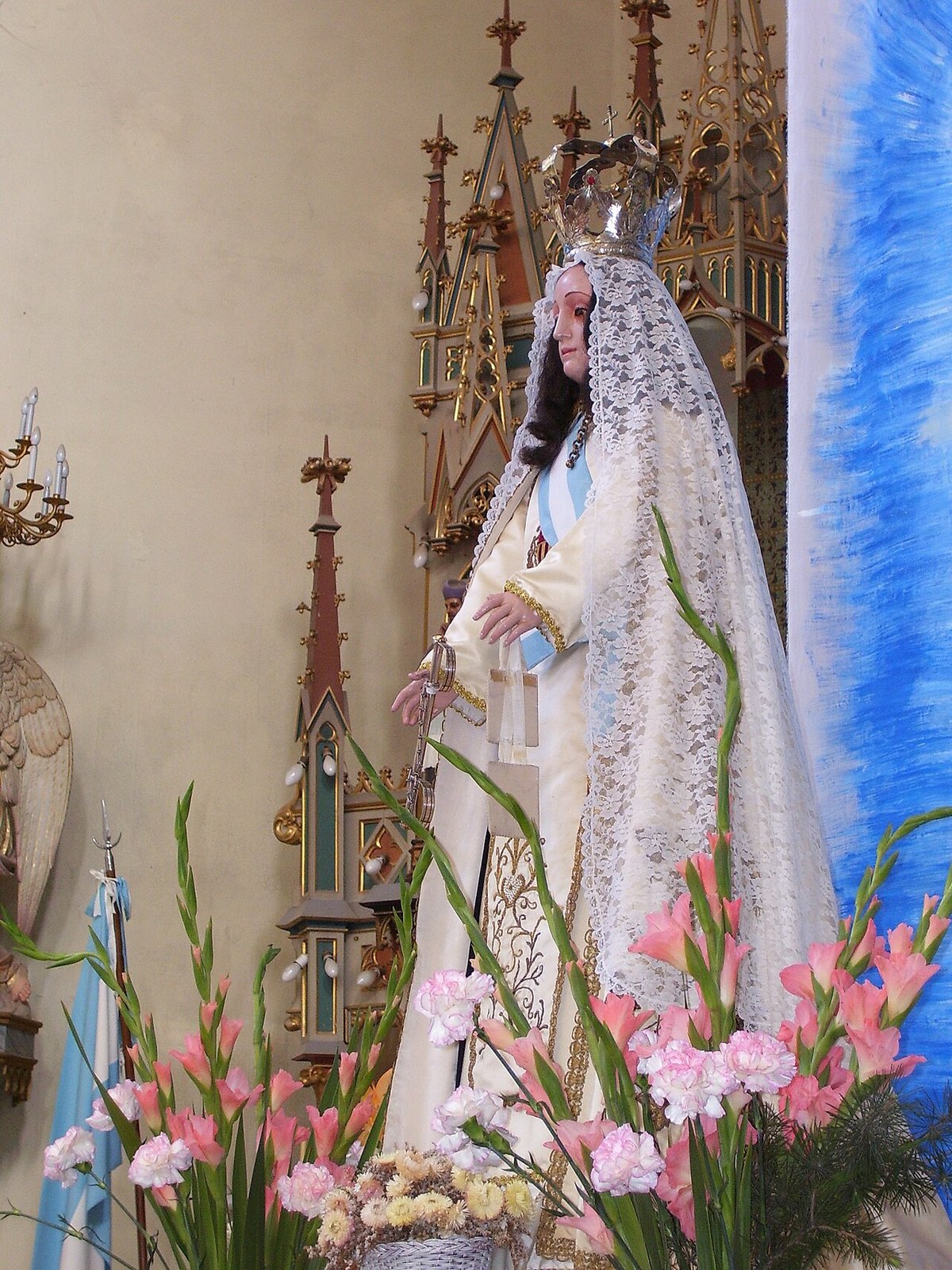
Inside, there are religious images that people in Posadas hold dear. Stories about them have circulated for decades, passed on as if they happened only yesterday. In places like this, the line between recorded history and oral tradition is never entirely clear.
La Sierrezuela: Stones and Open Ground
Just outside the town, the landscape shifts. La Sierrezuela rises gently, breaking the flat stretch of the vega. It is not dramatic terrain, but after kilometres of olive groves, any change in relief feels significant.
Scattered across this area are several prehistoric dolmens. At first glance, they might look like oddly arranged stones. That changes when you realise they have been there for thousands of years. These were simple burial structures, with low chambers and narrow entrances. When you bend down to look inside, there is a clear sense that someone designed this space a very long time ago.
Nearby, there are also remains of old Roman quarries. Stone extracted here was used to make millstones. In some sections of the rock, the marks left by that work are still visible. It does not take much imagination to picture people working there two thousand years ago.
The area is not only about what remains from the past. There are several walking paths used regularly by locals. They run across dirt tracks, through pines and low scrub, with wide views over the Vega del Guadalquivir. When the heat builds, it is noticeable, so it is best taken at an easy pace and with water.
Celebrations That Stay Local
Festivities in Posadas still feel rooted in the community. They do not seem designed with visitors in mind, and that may be why they retain their character.
La Candelaria, at the beginning of the year, centres on fire. Bonfires are lit in different parts of the town, and food is shared. Migas, a traditional dish made from breadcrumbs, always appear, and there is usually someone insisting theirs has been made “the proper way”.
Semana Santa, the week leading up to Easter, has its own particular tone here. Processions and traditions return each year, instantly recognisable to those who live in the town. It does not have the scale of larger Andalusian cities, which makes everything feel closer and more direct.
When the spring fair arrives, life gathers in the Paseo Pedro Vargas. This is an old garden with large trees that provide shade even on the hottest days. Families stroll, teenagers wander around, and older residents sit and talk. The scene repeats itself year after year without much change.
Rivero de Posadas and a More Recent Past
Not everything in Posadas belongs to distant history. In the mid-20th century, the settlement of Rivero de Posadas was built as part of an agricultural colonisation project. It was intended for families who came to work the surrounding land.
Its layout contrasts clearly with the old town. Streets are straight, houses follow similar designs, and there are shared spaces. The overall feel reflects a planned agricultural community from another era, and that identity is still easy to recognise.
Many families in Posadas today have links to that period. It forms part of the town’s more recent history and helps explain how life in the vega changed over the last century.
Taking It As It Comes
Posadas is not a place that demands a packed itinerary. It is better approached without hurry.
A walk through the centre, a visit out to La Sierrezuela, and some time spent sitting in the shade of the Paseo Pedro Vargas are enough to get a sense of it. The interest lies less in ticking off sights and more in observing how the town moves and pauses.
Spring tends to suit it well. The surrounding fields turn green, the air often carries the scent of orange blossom, and the vega opens out in full view.
And then something simple tends to happen, as it often does in places like this: you sit down for a while and let the rhythm of the town carry on around you.