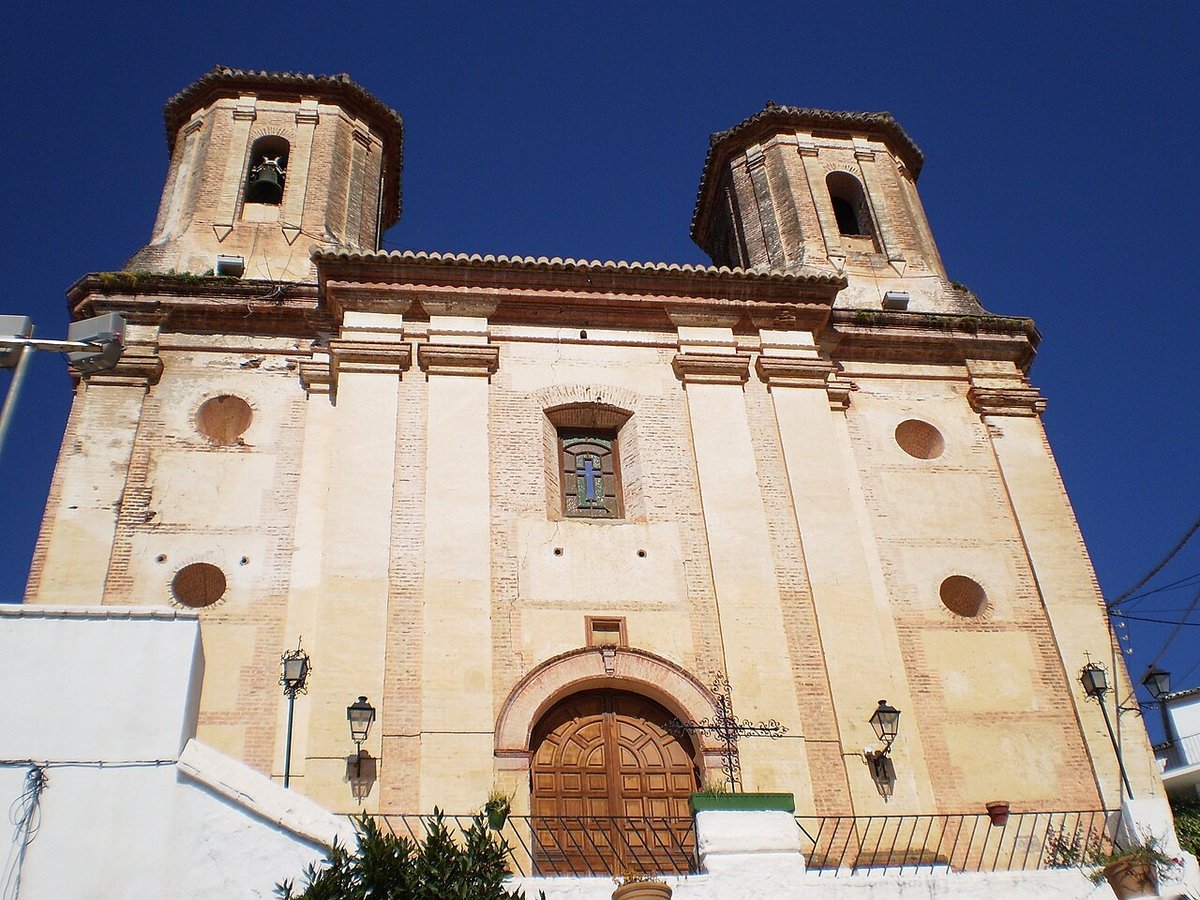
Iglesia San Antonio de Padua (Alpandeire).jpg
danielgarciadgb · Flickr 4
Andalucía · Passion & Soul

Alpandeire

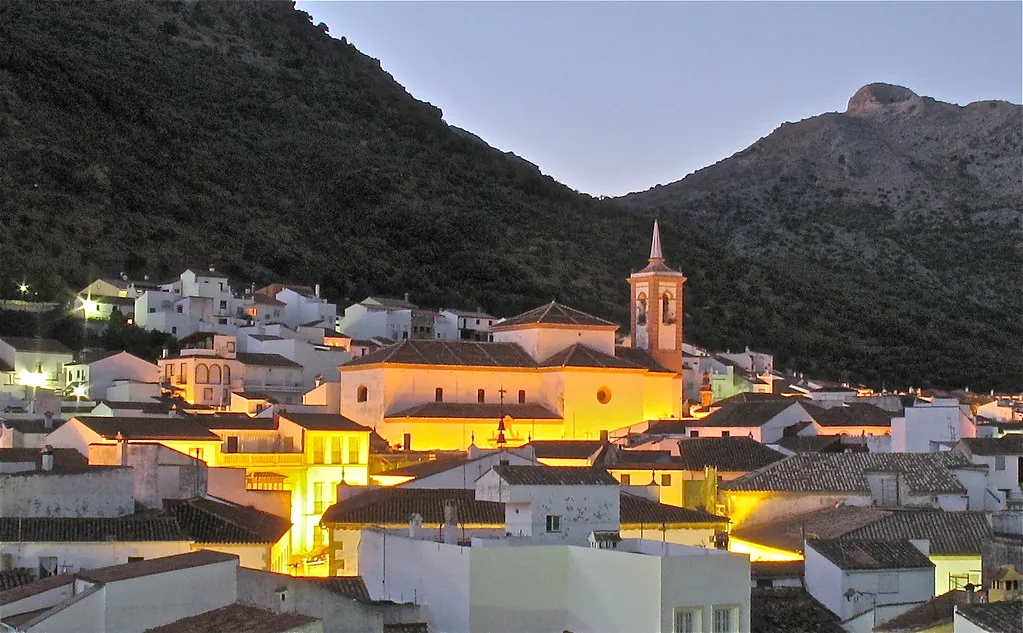
The church bells start at seven. In Alpandeire that's the only queue you'll need to join—standing beneath the twin towers of San Antonio de Padua w...

242 inhabitants · INE 2025
700m Altitude

Why Visit

Mountain Church of San Antonio de Padua Fray Leopoldo Route

Best Time to Visit

spring

San Roque Fair (August) Agosto y Junio

Things to See & Do
in Alpandeire

Heritage

  • Church of San Antonio de Padua
  • Birthplace of Fray Leopoldo
  • Dolmens of Encinas Borrachas

Activities

  • Fray Leopoldo Route
  • Caving
  • Hiking

Full Article
about Alpandeire

Birthplace of Fray Leopoldo, a small town with an oversized church known as the Cathedral of the Serranía.

Ocultar artículo Leer artículo completo

The church bells start at seven. In Alpandeire that's the only queue you'll need to join—standing beneath the twin towers of San Antonio de Padua while the bronze rings bounce off the limestone walls and down the Genal valley. With 261 souls on the register, this is one of the few places in Europe where the parish church can legitimately claim a bigger congregation than the village itself.

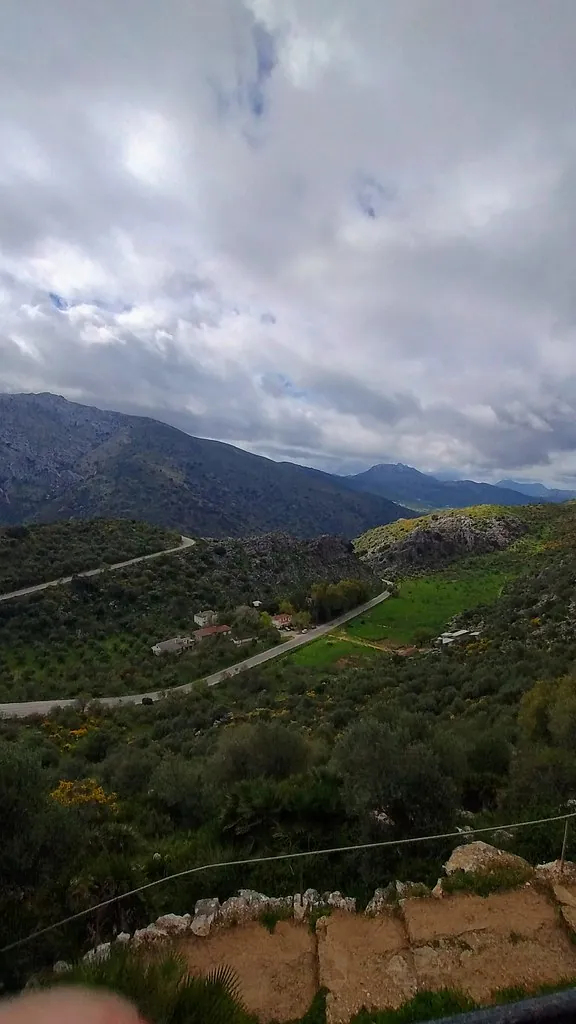
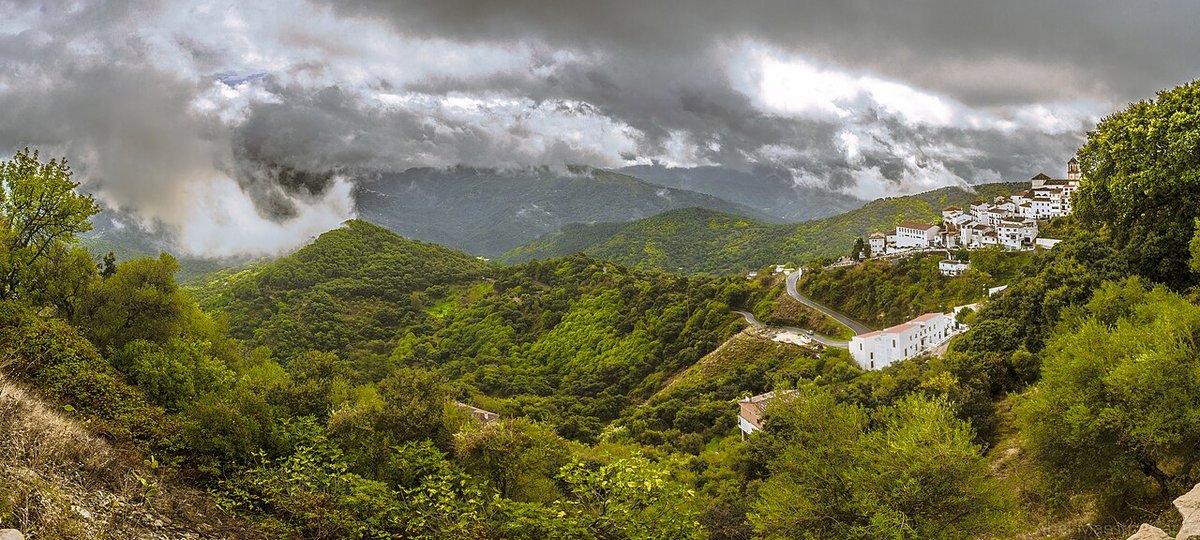
Seventeen twisting kilometres north-west of Ronda, the road drops through cork oak and sweet chestnut until white houses appear to sprout straight from the rock. At 700 m above sea level the air is thinner, cleaner and several degrees cooler than the Costa del Sol below; on hazy days you can sometimes make out the faint blue stripe of the Mediterranean thirty kilometres south, but most visitors come for what isn't there—traffic lights, chain stores, or anything resembling a souvenir stall.

A village that never learned to shout

Guidebooks tend to give Alpandeire half a paragraph, which suits the residents fine. The place makes its living from olives, chestnuts and the occasional windfall of remote-work euros spent in the lone bar. Morning business is conducted on the steps of the panadería: women in housecoats hand over exact coins for a 90-cent loaf, men discuss rainfall figures for June. Conversations pause whenever a foreign number plate edges past; the gradient reaches one in four in places and clutch smoke is the unofficial scent of high summer.

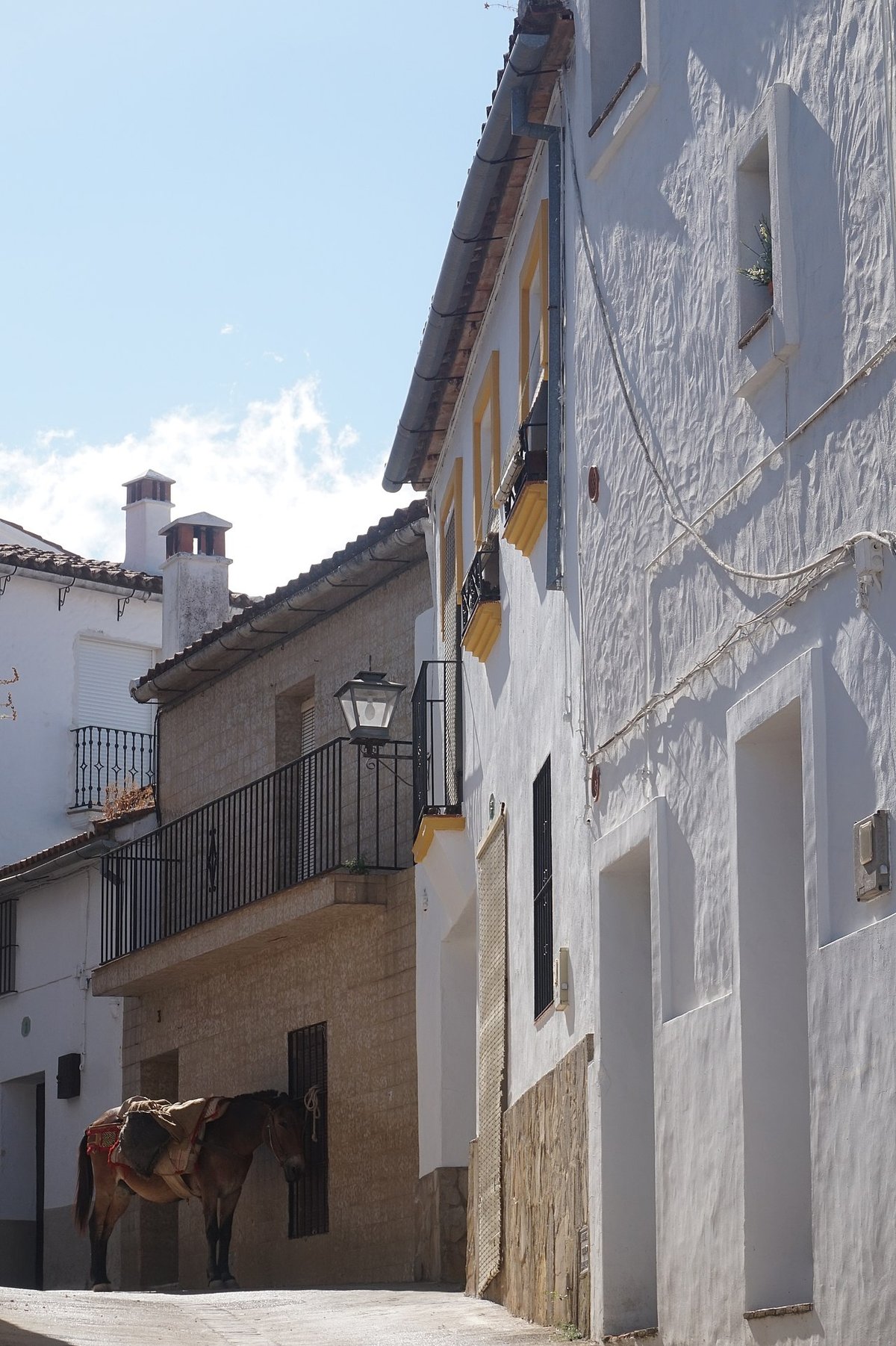
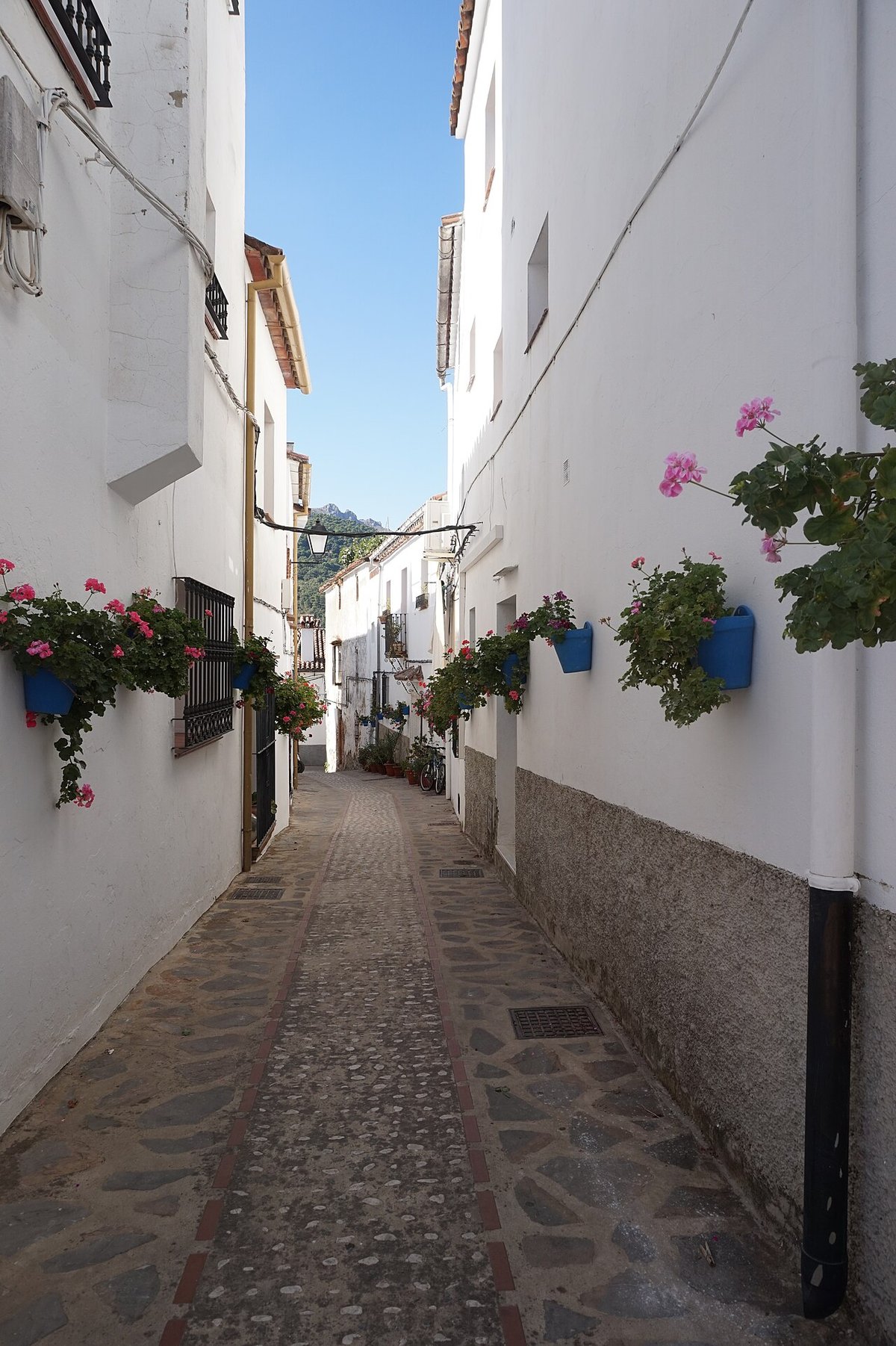
The historic core is microscopic—three parallel streets stitched together by stairways—but it carries the official title of Conjunto Histórico-Artístico. Translation: nothing may be ripped out and replaced with aluminium. Flowerpots are therefore iron, balconies are chestnut wood, and every front door has been re-painted the same shade of ox-blood red since the nineteenth century. Wandering takes twenty minutes; lingering takes longer, especially if you accept the invitation to peer into the Casa-Museo de Fray Leopoldo, birthplace of the Andalusian friar still credited with miracle cures. Expect candles, photocopied prayers and an elderly custodian who will kiss a relic before handing it over for inspection.

Walking tracks that remember the mule

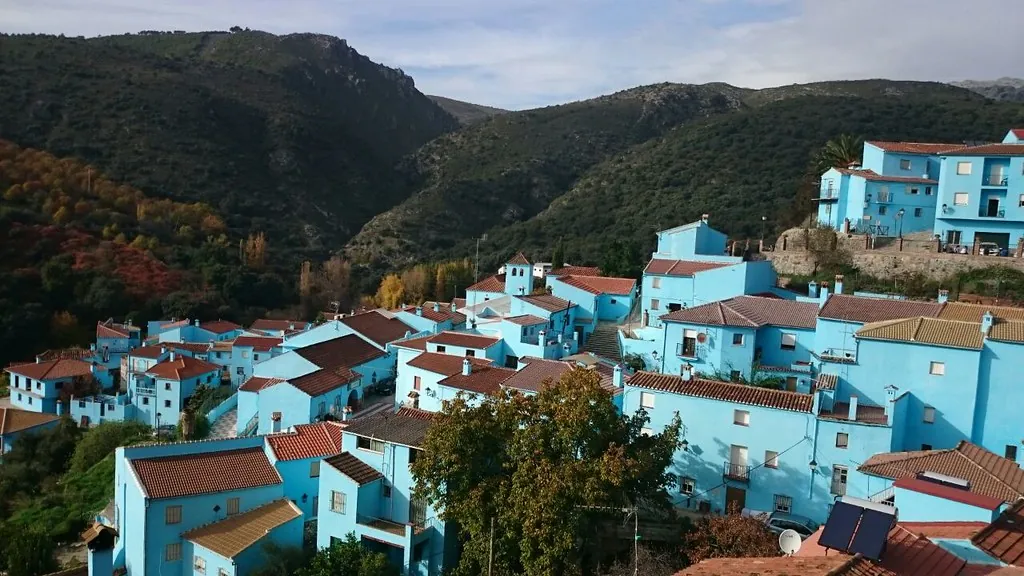
Paths fan out like spokes, following old drover routes along the valley sides. The signed circuit to Júzcar—famous locally as the "Smurf village" after a marketing stunt painted it blue—takes two and a half hours and drops 400 m to the river before clawing back up the opposite slope. Spring brings orchids and the smell of wild fennel; October turns the chestnut woods bronze and the ground into a carpet of spiky cases looking like medieval weaponry. Boots are non-negotiable: the stone is loose, the dust is slick and the occasional guard dog has no concept of public footpaths.

Shorter loops lead to abandoned threshing circles where eagles use the thermals overhead. Mobile signal dies within minutes of leaving the square; download an offline map or follow the cairns and the reassuring clank of goat bells. Farmers still move livestock along these lanes, so don't be surprised to meet a herd of chestnut-coloured pigs trotting uphill with no visible supervision.

Food built for altitude

Winter here bites harder than coastal visitors expect. Temperatures can dip below zero at night, which explains the menu: wild-boar stew thick with bay, kid goat slow-cooked in fino sherry, and migas—fried breadcrumbs—studded with chorizo and grapes. Lunch is a serious affair, served between 14:00 and 16:00; arrive at Bar Alpandeire at 14:45 and you may be turned away if the ragout has gone. The set menu costs €10 and includes a carafe of rough red that tastes better once the wood smoke has cleared your throat.

Sweet options are more portable. Roscós de leche—milky doughnuts—keep for days and travel well in a rucksack, while ganotes, an anise-flavoured pastry twist, provide instant calories on a cold trail. During the chestnut fiestas at the end of October the ayuntamiento hires a mobile fryer and churros appear for one morning only; queue early because when the oil runs dry the machine disappears for another year.

When to come, when to stay away

April and May deliver 22 °C afternoons and hillsides carpeted with poppies. The village wakes up: old women sell bunches of wild asparagus outside the church, and the evening paseo stretches to a full lap of the ring road. By July the thermometer can touch 38 °C; the streets empty after 11:00 and the bar re-opens at 20:00 when the walls stop radiating heat. August is simply too hot for comfortable walking—think Kent on its worst 2003 day, then add vultures.

Autumn brings cloud inversions: wake to a white sea lapping at the village rim while the hilltops float like islands. The chestnut harvest clogs the lanes with tractors, so allow an extra twenty minutes if you're driving on to Faraján or Cartajima. From December to February Atlantic storms sweep in; roads close, power fails, and the place turns atmospheric in the way that makes insurance companies nervous.

The practical stuff no one prints

Parking is free on the upper ring-road but spaces number fewer than thirty. Coaches can't enter, which keeps the peace but means you need your own wheels. Petrol is unavailable for 25 km in any direction—fill up in Ronda before you leave. Cash is king: the bakery, grocery and tabac all reject plastic, and the nearest ATM is back down the mountain in Pujerra. English is rarely spoken; a greeting in Spanish unlocks smiles, while pointing at the menu works for everything else.

Accommodation is limited to two small guesthouses and a handful of rural cottages booked through the Ronda tourist office. Prices hover around €70 a night for a double, breakfast included but served only after 09:00. Light sleepers should request a room at the rear—those church bells don't observe British summertime.

Leave the superlatives at home

Alpandeire will never top a "must-see" list, and that's precisely its appeal. The village offers a calibration point between the Spain sold in beach brochures and the one that persists when the marketers go home. Come for the chestnut walks, the valley silence and a church that still dwarfs its congregation; stay for the realisation that somewhere, the twentieth century forgot to call time on the nineteenth. Just remember to bring cash, keep an eye on the fuel gauge, and don't expect anyone to explain Fray Leopoldo in English—some stories travel better in Spanish anyway.

Key Facts

Region
Andalucía
District
Serranía de Ronda
INE Code
29014
Coast
No
Mountain
Yes
Season
spring

Livability & Services

Key data for living or remote work

2024
Connectivity5G available
TransportTrain nearby
HealthcareHospital 11 km away
Housing~5€/m² rent · Affordable
Sources: INE, CNMC, Ministry of Health, AEMET

Planning Your Visit?

Discover more villages in the Serranía de Ronda.

View full region →

More villages in Serranía de Ronda

Traveler Reviews