Full Article
about Atajate
The least-populated municipality in the province, set between the Genal and Guadiaro valleys, known for its mostos.
Hide article Read full article
A village shaped by its setting
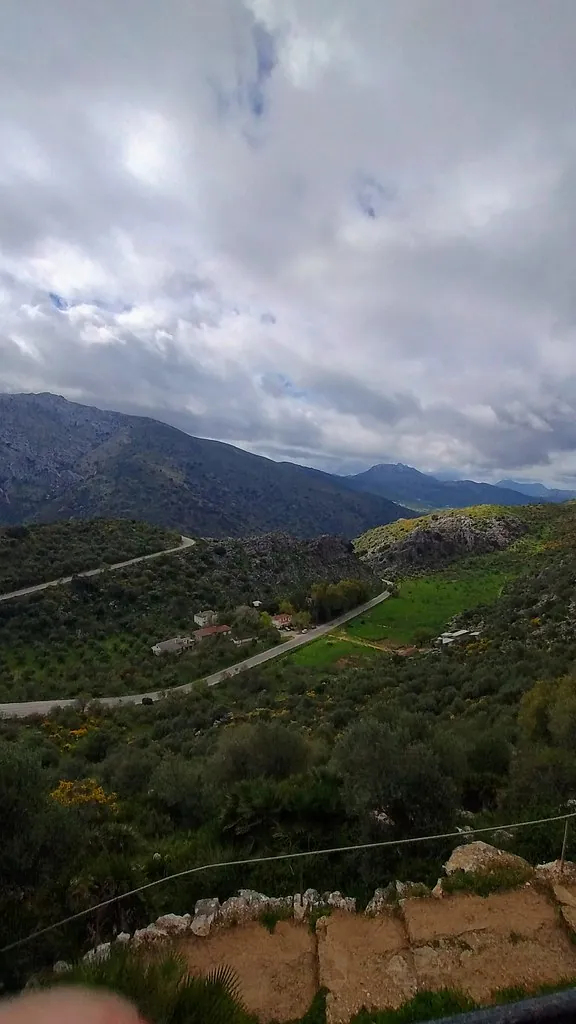
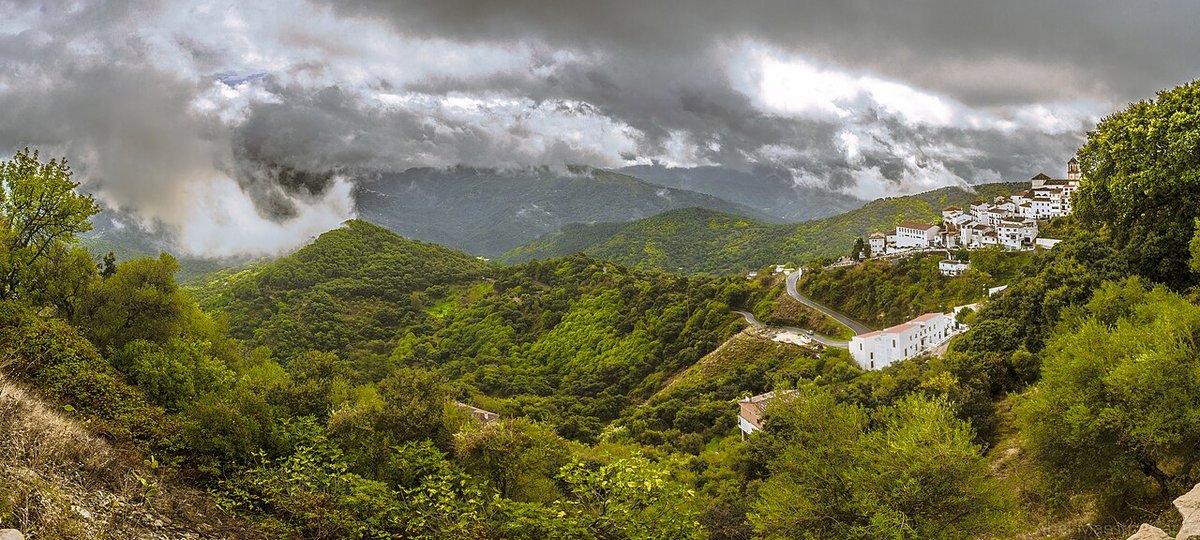
On the southern slopes of the Serranía de Ronda, Atajate is defined as much by its size as by its landscape. With around 168 inhabitants, it ranks among the smallest municipalities in the province of Málaga. It sits at roughly 750 metres above sea level, along the road that links Ronda with Gaucín, in a stretch of mountains where villages are separated by ravines and rolling hills covered with holm oaks and cork oaks.
For centuries, life here revolved around agriculture and livestock. Small terraces carved into the land, along with paths connecting plots and farmhouses, sustained that way of life. This older landscape still surrounds the village today. Dry stone walls mark boundaries, narrow parcels of land follow the contours of the hills, and footpaths descend towards seasonal streams.
The sense of scale remains consistent throughout. Atajate is not a place of expansion or grand gestures, but of continuity with its terrain and past.
The village and the church
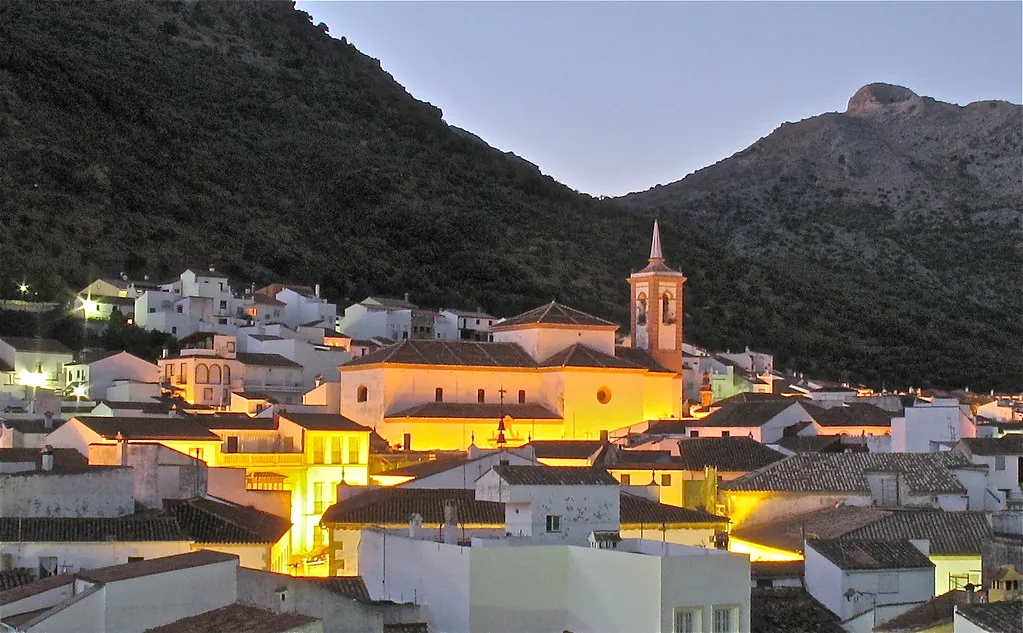
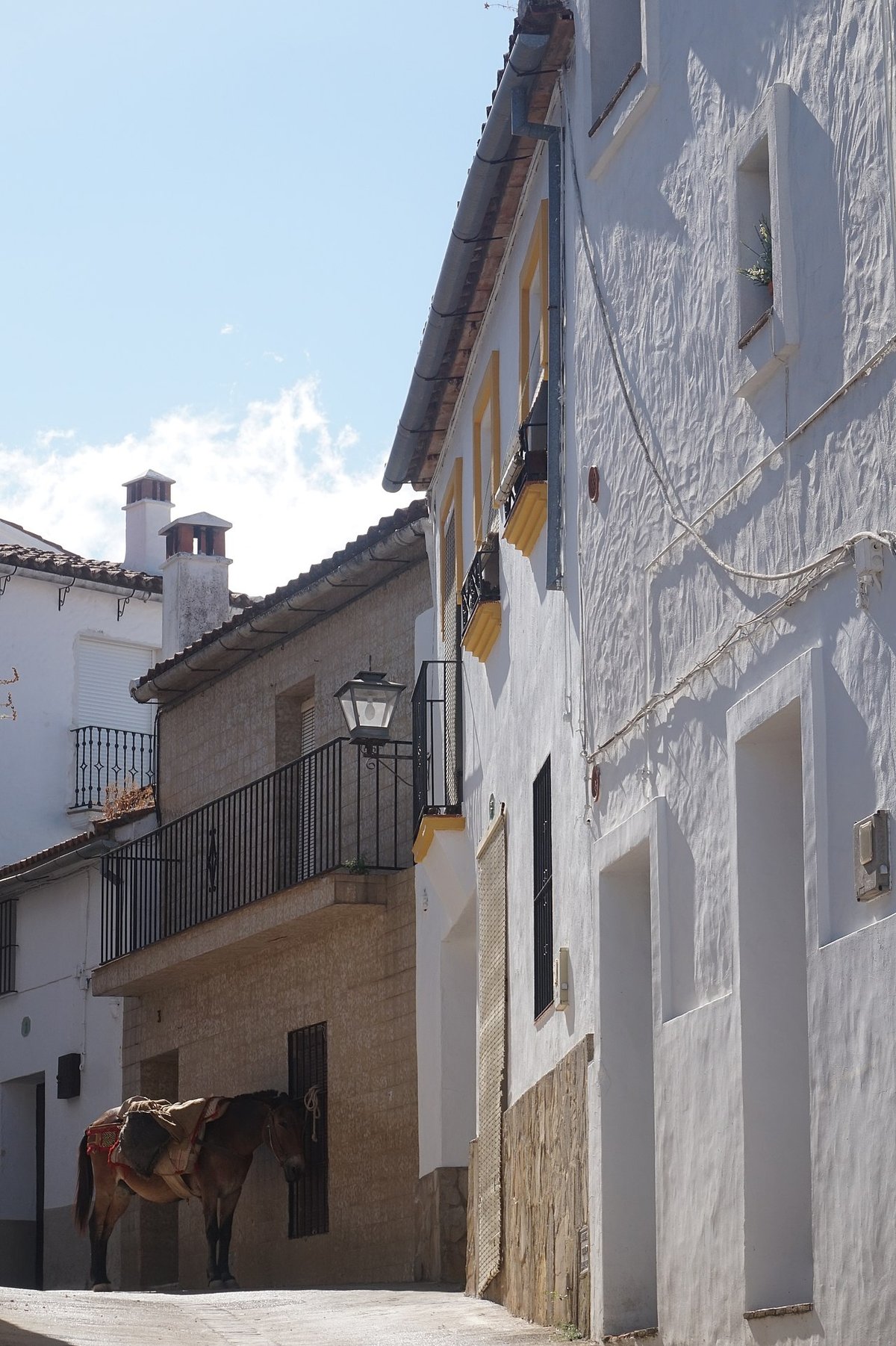
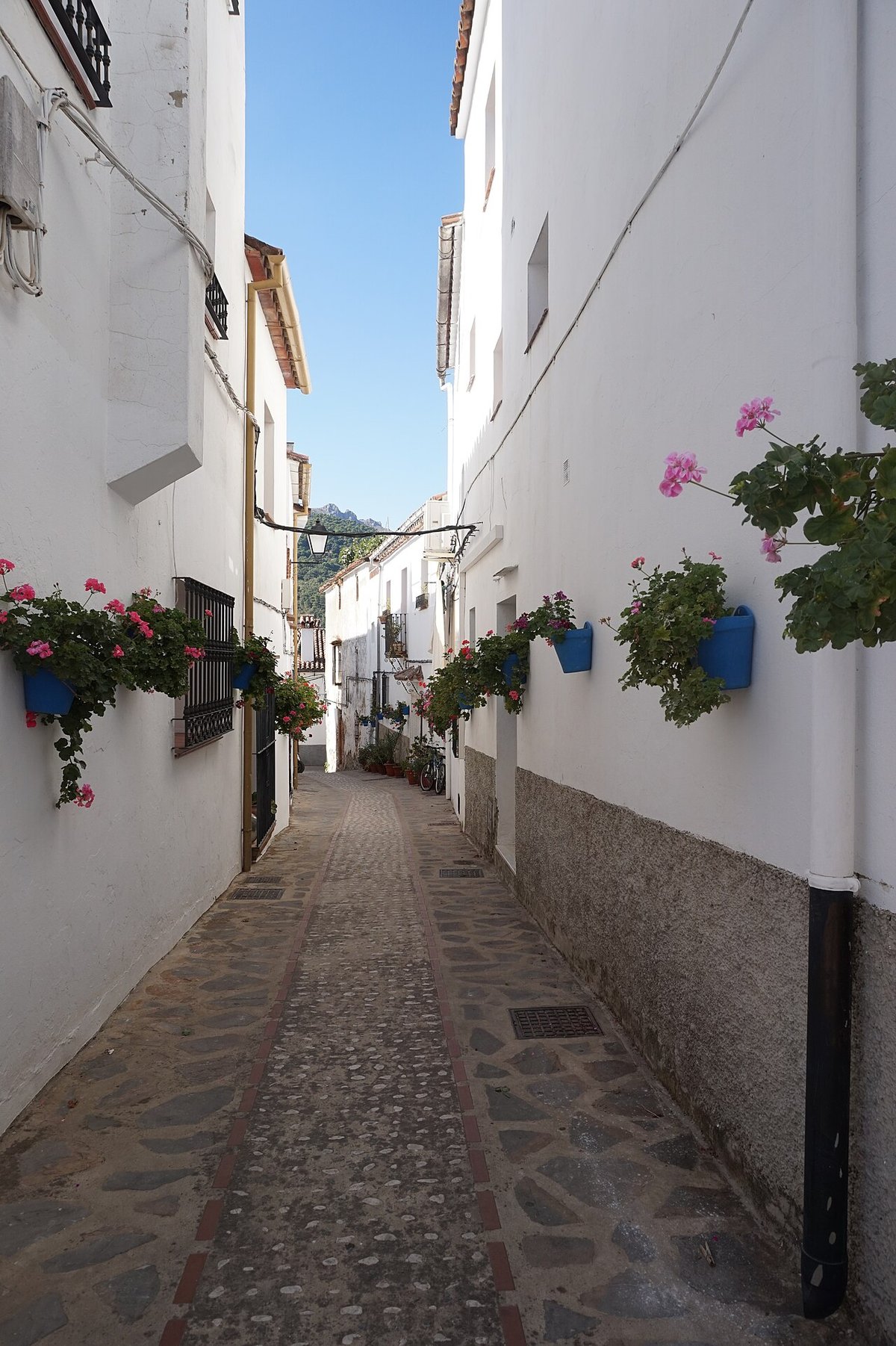
The built centre is compact and adjusted to the slope. Most houses are whitewashed and rise to two storeys, arranged along short streets where inner courtyards, iron window grilles and occasional old doorways appear. There are no large civic buildings or monumental squares. The atmosphere is domestic rather than formal.
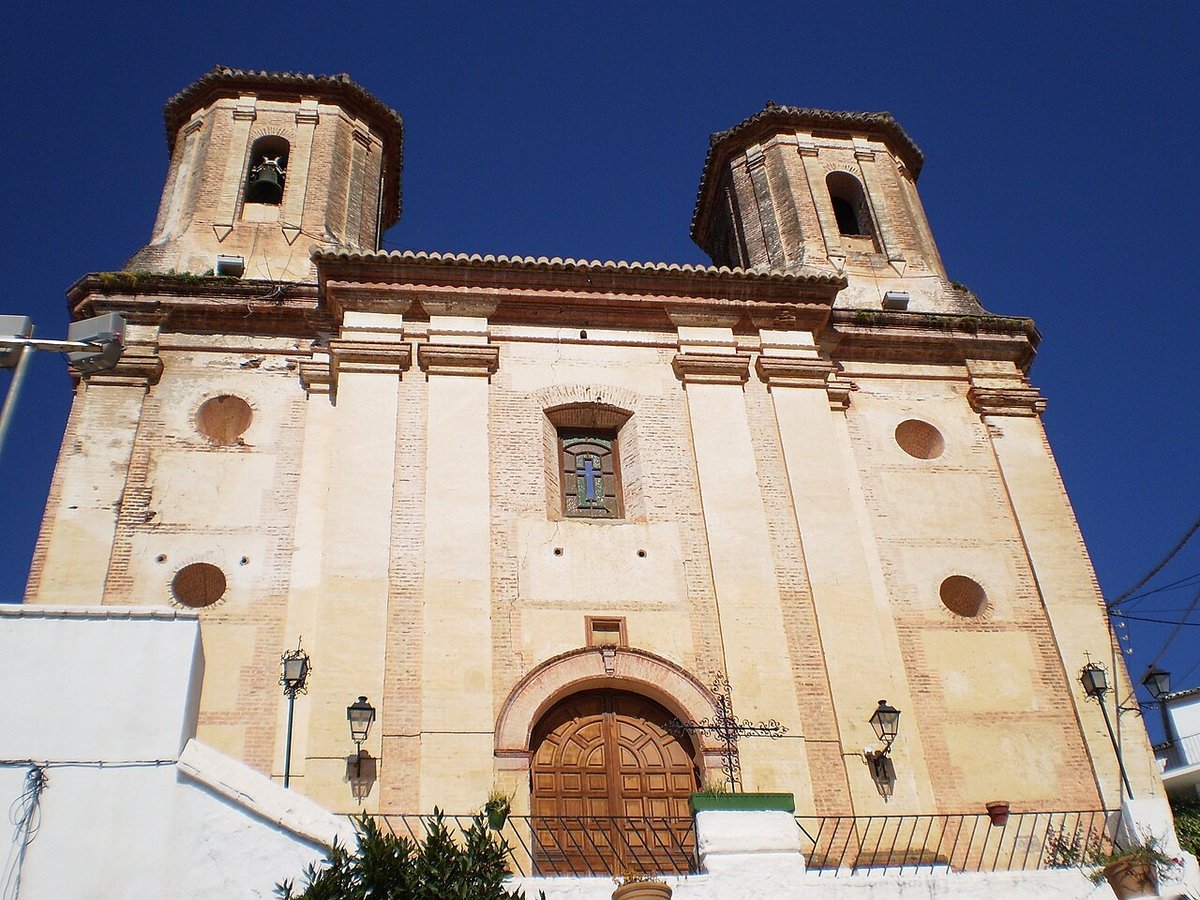
At the centre stands the 18th century church of San José. Like many churches in small mountain settlements, it is simple in design. Its white façade, modest tower and restrained interior reflect the scale of the village itself. Even so, it acts as a reference point. The main streets tend to lead towards it, and its presence organises the layout of the town.
Nearby lies the main square, small and unassuming, with a stone fountain and a few benches. It is one of the few open spaces in Atajate, used less as a grand plaza and more as a place for everyday encounters.
Terraces, oak woodland and old paths
The surroundings of Atajate combine Mediterranean woodland with traditional farmland. Holm oaks, cork oaks and gall oaks form patches of forest, interspersed with cleared areas where olive trees, almond trees and small kitchen gardens appear.
Many of the paths leading out of the village follow historic routes. They once connected cultivated plots or linked nearby villages at a time when roads were limited. Some of these routes are now signposted and used for walking.
The terrain is uneven but manageable. Walks often alternate between shaded woodland and open stretches where views extend across the hills of the serranía. The landscape shifts with the seasons. In summer, it becomes drier, dominated by earthy tones and low scrub. In winter and spring, greenery returns and temporary streams reappear.
Food from the mountains
Local cooking reflects both the climate and the traditional way of life. In winter, hearty dishes based on legumes and vegetables are common, often served as stews. During the appropriate season, game meats also feature.
Cured meats and home-based pig slaughter traditions have long been part of life in many villages of the serranía, and they still influence local recipes. Simple ingredients from small gardens are widely used, alongside nuts such as almonds, which appear in some homemade sweets.
This is food tied to availability and season rather than elaborate preparation, shaped by what the land provides.
Festivals and daily rhythms
The festive calendar centres on San José, the patron saint of Atajate, whose celebration usually takes place in March. These are small-scale festivities, combining religious observances with gatherings among residents.
In August, summer festivities bring a different rhythm. Many families with roots in the village return for a few days, increasing the population and bringing more activity to the streets.
Easter, or Semana Santa, is observed in a restrained manner. Processions are modest and rely heavily on the participation of local residents.
Getting there and moving around
The most common route from Málaga heads inland towards Ronda via the A‑357, then continues along the A‑369 in the direction of Gaucín. It is a long journey, with numerous bends as the road approaches the mountains.
Once in Atajate, everything can be covered on foot in a short time. Comfortable footwear is useful, as several streets are sloped and include cobbled sections. Seasonal conditions shape the experience. Winter mornings can be cold at this altitude, while summer brings strong midday heat, often followed by cooler evenings.
Atajate does not try to stand out through size or spectacle. Its character lies in how closely it remains tied to its surroundings, its history and its pace of life.