Full Article
about Cartajima
One of the highest villages in the Serranía, set in the Alto Genal with sweeping views of the limestone cliffs.
Hide article Read full article
A village shaped by the hillside
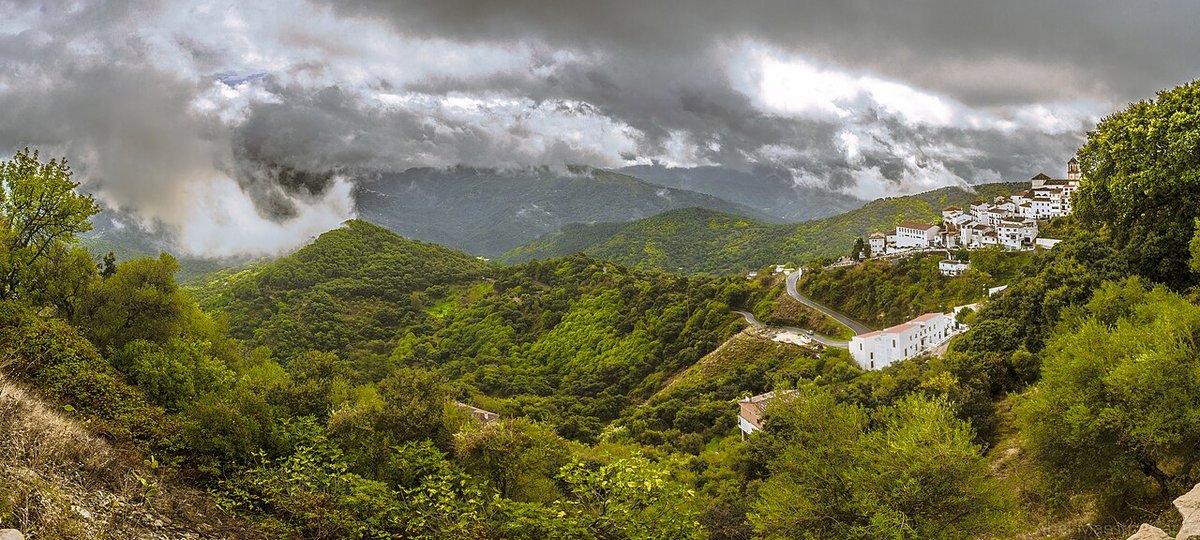
Tourism in Cartajima begins with geography. The village lies on the western side of the Serranía de Ronda, within the Genal Valley, set on a slope that determines almost everything about it. Streets rarely run flat. Most rise or fall, sometimes sharply, following the contours of the land. With just over two hundred residents, Cartajima has retained the outline given to it by centuries of mountain agriculture and livestock farming.
The surrounding landscape explains much of the settlement’s character. Chestnut woods spread across large parts of the Genal Valley, alongside holm oaks, cork oaks and quejigos, a type of oak native to these hills. On nearby rocky outcrops, griffon vultures often ride the thermal currents. Their presence is part of daily life rather than a spectacle.
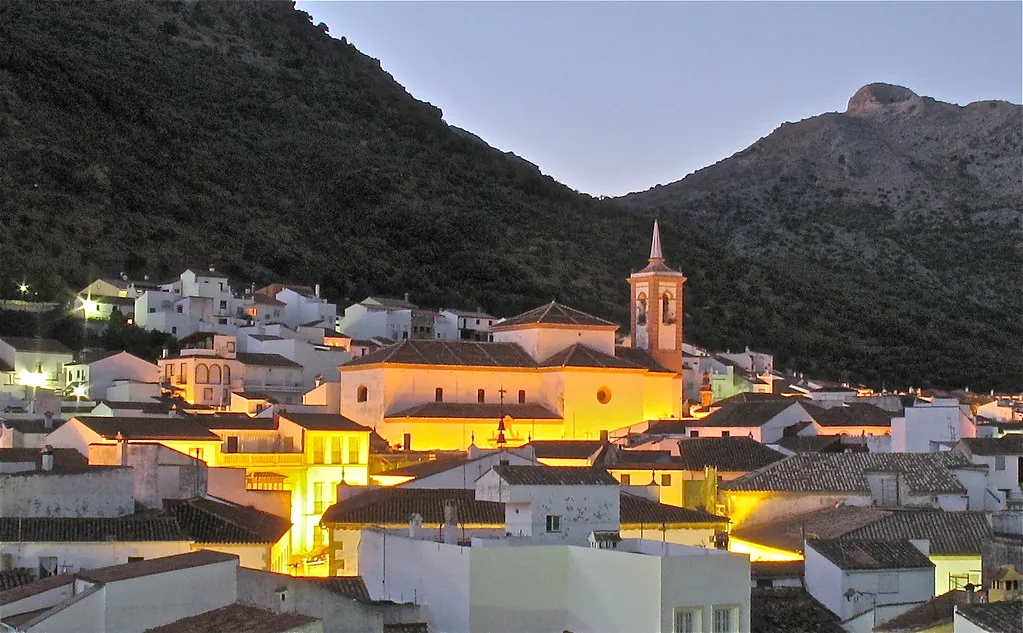
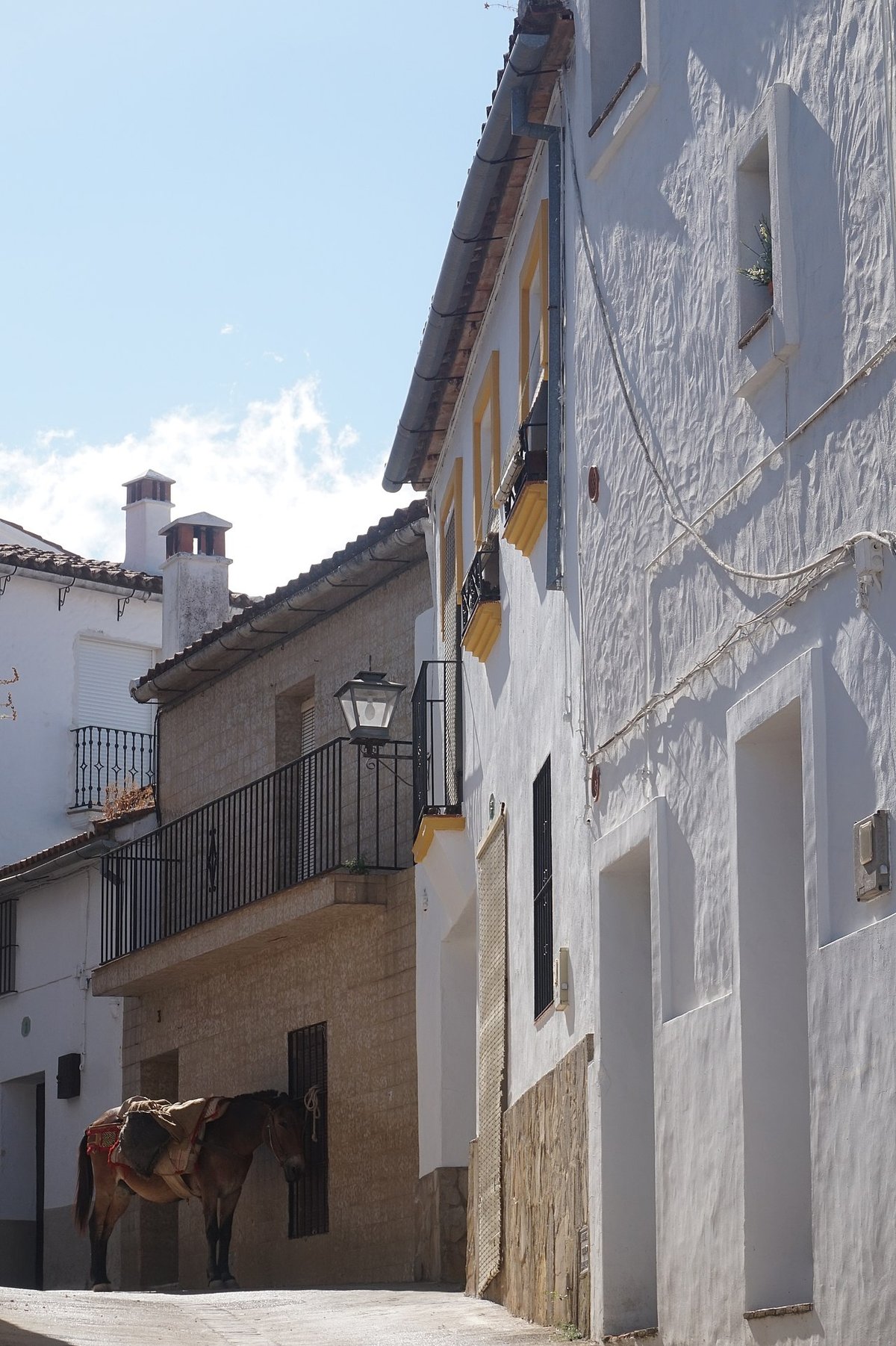
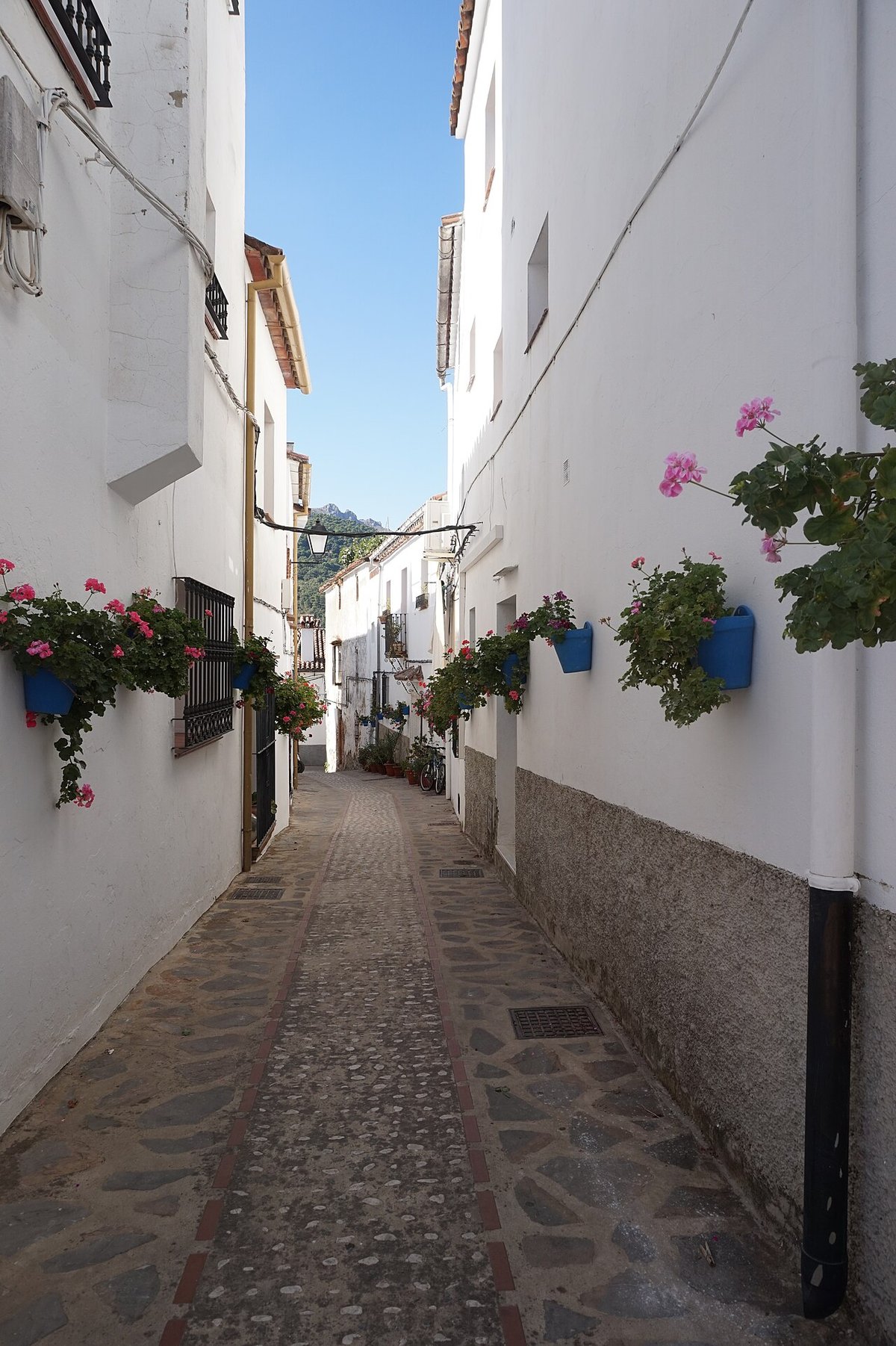
The architecture answers directly to the terrain. Whitewashed houses cluster along narrow lanes, small patios tucked behind simple façades. Iron window grilles appear frequently, and many stretches of street are paved in stone. Straight lines are rare. The layout bends and adapts to the slope, creating a compact urban fabric that has changed little in its essentials.
At the centre stands the church of San Pedro. The current building rises on a 16th-century structure, later modified. Its tower is visible from different points in the village and helps orientate anyone walking through the streets. In a place with few large buildings, that vertical element stands out.
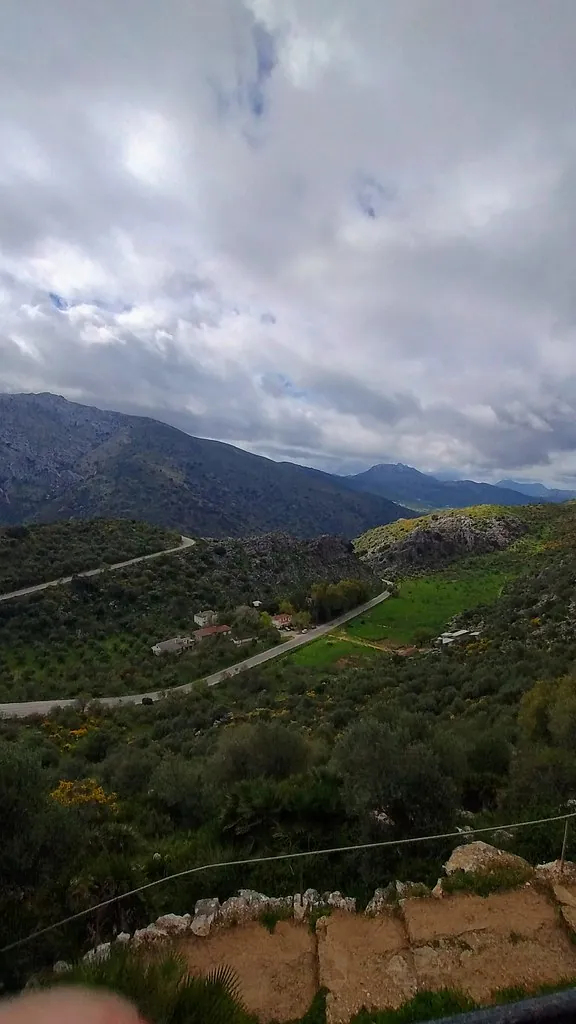
Open spaces are limited but purposeful. The main square gathers much of everyday life. From certain edges of the village, the land drops away and the Genal Valley comes into view, along with the sierras that frame it. Agricultural terraces can still be seen stepping down the hillside, a reminder of how generations organised cultivation on uneven ground. In autumn, the chestnut trees shift colour and the entire valley takes on a different tone.
Walking through history and daily life
The church of San Pedro holds the principal historical interest in Cartajima. Inside are modest examples of religious art typical of rural parishes in the Serranía. Rather than functioning as a monumental attraction, the church provides a focal point within the village layout and reflects the scale of the community it serves.
The old quarter remains largely intact. Streets are narrow, façades stand close together, and white walls catch the light at different hours of the day. Cobbled sections appear here and there, reinforcing the sense that the village has evolved gradually rather than according to a fixed plan.
Elements of everyday use still mark the urban landscape. Public washhouses and small fountains recall how water structured village life. There are also passages linking different levels of the hillside, practical solutions to a terrain that never quite settles into a single plane. These details offer insight into how people adapted to their environment over time.
Tourist signage is not especially developed in Cartajima. A formal itinerary is unnecessary. Walking without a fixed route is often enough to understand the place. The edges of the village are worth pausing at, particularly where the ground opens towards the valley. From there, the relationship between the compact settlement and the surrounding agricultural landscape becomes clearer.
Vegetation plays a central role in that relationship. Holm oaks, cork oaks and quejigos mix with extensive chestnut groves. In autumn, when the chestnut leaves turn, colour spreads across the slopes of the Genal Valley and draws visitors from elsewhere in the province.
Paths through the Genal Valley
Traditional paths still connect Cartajima with other villages in the valley, including Parauta and Pujerra. For centuries these routes linked farms, mills and grazing areas. Today they allow walkers to move through the landscape with a clear sense of how it was organised: terraces carved into hillsides, small streams cutting through lower ground, and patches of denser woodland.
Some sections pass through thick chestnut groves where the canopy filters the light. Others cross more open slopes that provide broad views over the Genal Valley. The condition of these paths can vary depending on the time of year, so it is sensible to ask locally before setting out.
Birdlife is another part of the setting. Birds of prey take advantage of the air currents that rise from the sierras. Griffon vultures are the most visible, although they are not the only species present. On clear nights, the sky can often be seen with notable clarity, something increasingly uncommon in urban areas.
Local cooking continues to reflect the rural calendar. Migas, a dish based on fried breadcrumbs, remain part of the repertoire. Potajes, slow-cooked stews often made with pulses, appear alongside game dishes when the season permits. Goat’s cheese produced in the area is also typical. In autumn, chestnuts move to the forefront, eaten roasted or incorporated into more elaborate preparations.
Festivities and shared customs
The festive calendar follows patterns common to villages in the Serranía. San Pedro, patron saint of Cartajima, is celebrated at the end of June. Religious events take place, and neighbours gather in and around the square. The focus remains on community rather than spectacle.
August usually brings the main summer festivities. During those days many residents who live elsewhere return, and the population temporarily increases. The rhythm of the village shifts for a short period, with more activity in the streets and square.
New Year’s Eve is marked in a simple way. It is common for neighbours to meet in the square to see out the year together. There are no large stages or elaborate set-ups, just a shared moment in a familiar setting.
When the valley changes colour
Spring and autumn are the times when the surroundings are most easily appreciated on foot. In spring, the valley appears intensely green and the paths are generally more manageable. Autumn places the emphasis on the chestnut groves that cover much of the Genal’s slopes, transforming the colour of the landscape.
Summer is usually dry, although the altitude moderates temperatures to some extent. Winter brings a quieter atmosphere, and the village returns fully to its everyday pace.
Cartajima does not rely on major monuments or extensive facilities. Its interest lies in how the built fabric, agricultural terraces and surrounding woodland fit together on a hillside above the Genal Valley. A slow walk through its streets and along its paths reveals a place that continues to reflect the mountain economy that shaped it.