Full Article
about Aracena
Tourist capital of the sierra, known for the spectacular Gruta de las Maravillas and its Templar castle; hub of ibérico ham and mountain vernacular architecture.
Hide article Read full article
Start at the bottom
Tourism in Aracena begins with something practical: where to leave the car. The centre is full of slopes and narrow streets, so it makes sense to park in the lower part of town and walk up. Trying to drive into the old quarter usually ends in loops and dead ends.
Aracena has around eight thousand residents and much of its daily life revolves around Iberian ham and the steady flow of visitors. It is not a staged attraction. It is a sizeable mountain town with its own rhythm, where people live and work beyond the tourist spots.
The easiest places to park tend to be near the market area and along the main avenues on the way in. From there, everything is done on foot. The climb towards the castle is noticeable, especially if you are coming from the coast where the terrain is flatter and the air sits lower.
The old quarter is uneven underfoot. Expect cobbled streets, short flights of steps and constant gradients. Comfortable shoes are enough preparation.
The Gruta de las Maravillas
The Gruta de las Maravillas is the main reason many people come to Aracena. It was among the first caves in Spain to open to the public and it remains the town’s biggest draw.
Visits are guided, with people entering in groups. The route passes through chambers filled with stalactites and stalagmites, as well as some underground lakes. For those who have already seen several caves, it may feel familiar. For a first visit, it leaves a strong impression.
In summer, it tends to fill up. If going inside is a priority, it helps to plan ahead or arrive early in the day.
Above the town
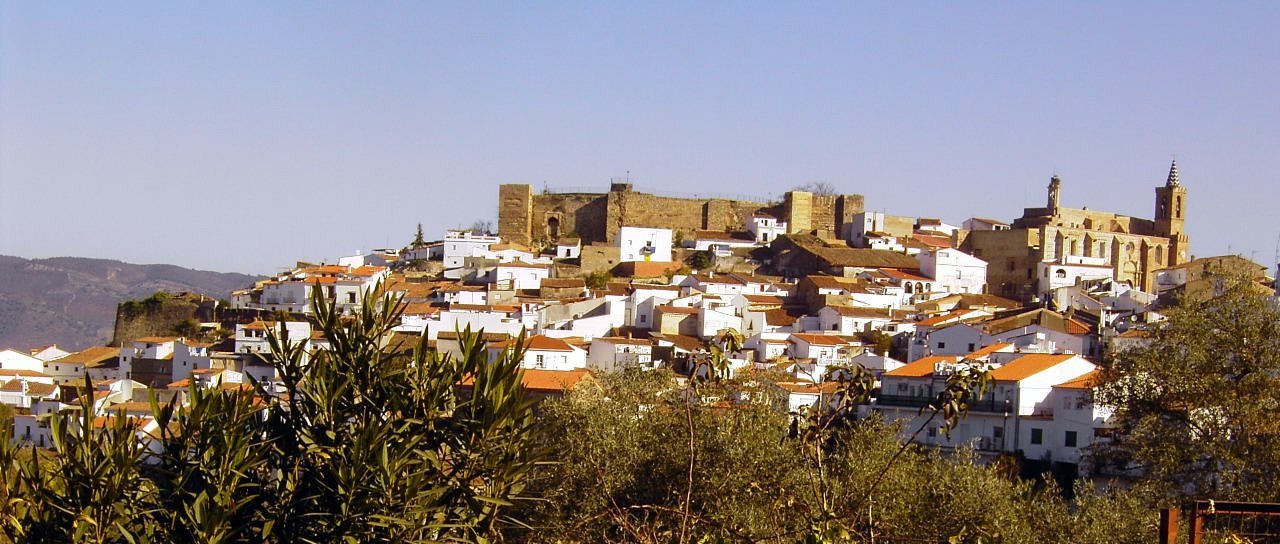
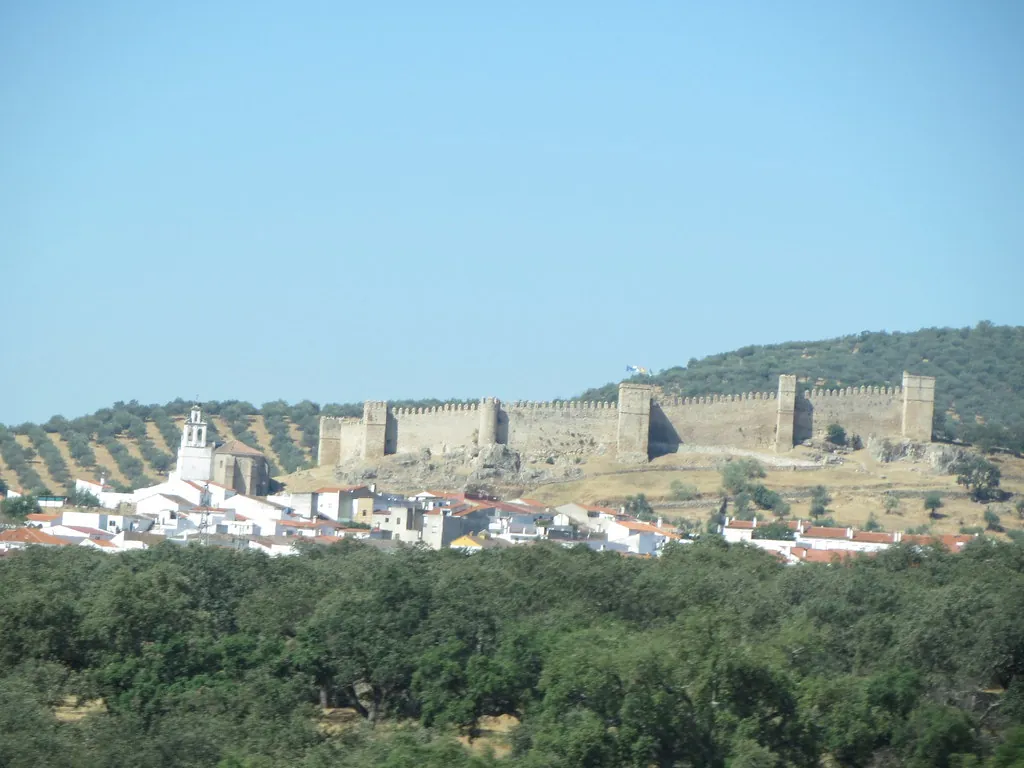
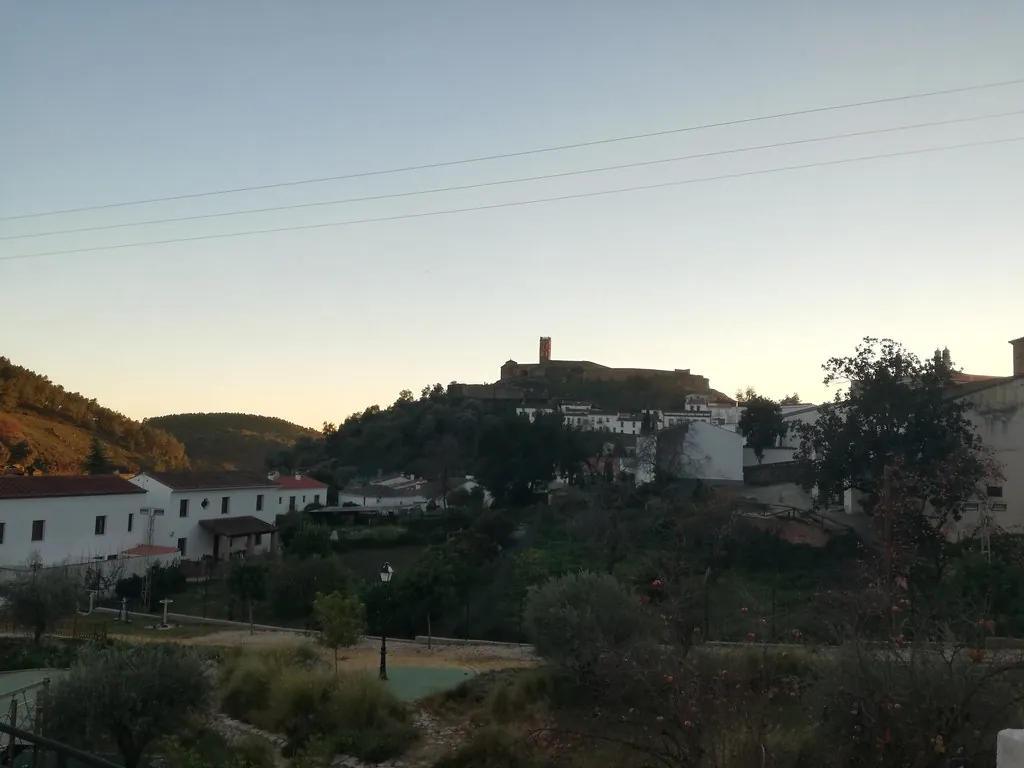
The castle sits above Aracena, watching over the town. The walk up is short but steep. At the top, alongside the castle, stands the main church, larger than might be expected for a place of this size.
What remains of the castle is mainly its walls and a well-preserved tower. It is not a long visit in itself. The real interest lies outside, in the view across the surrounding landscape. Holm oaks spread across the hills, along with dehesas, a type of pasture dotted with trees that is typical of this part of Spain. White villages appear scattered at a distance from one another. From here, it becomes easier to understand how this territory is organised and how people have used it over time.
Eating in the sierra
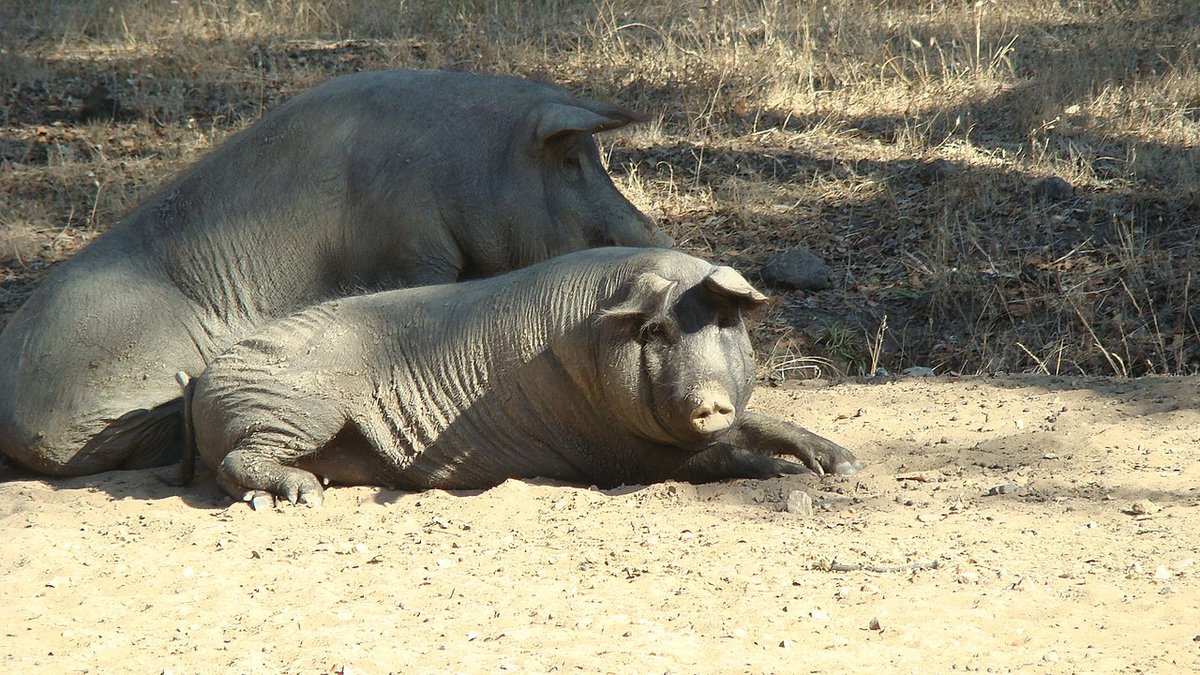
Food in Aracena reflects what the mountains provide. Iberian ham is the obvious centrepiece. In many houses, hams can still be seen hanging and curing.
In season, dishes featuring local mushrooms appear. When the weather turns cold, the cooking leans towards hearty stews: lamb, potato-based dishes and meals meant to be eaten with a spoon. It is straightforward, unfussy mountain cooking rather than anything elaborate.
Arriving hungry is not a problem here.
Streets, squares and paths
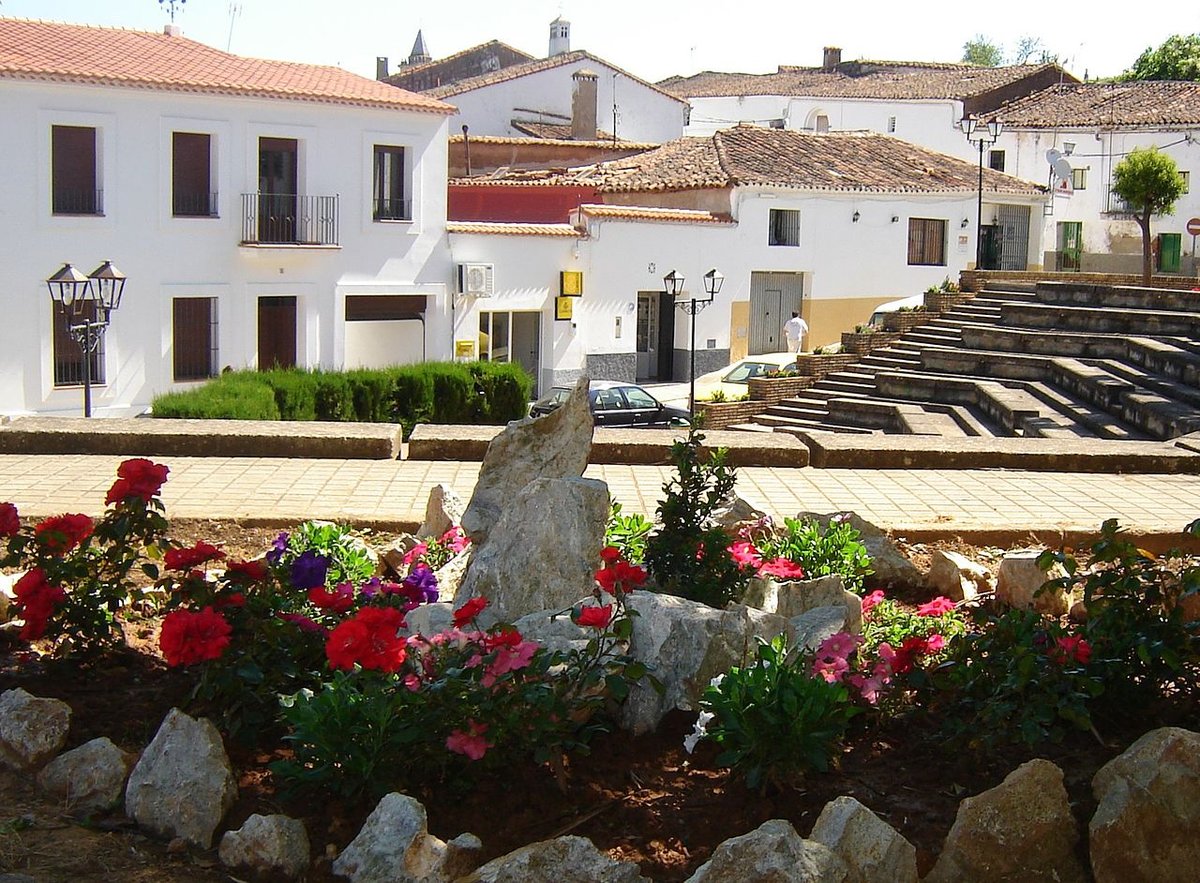
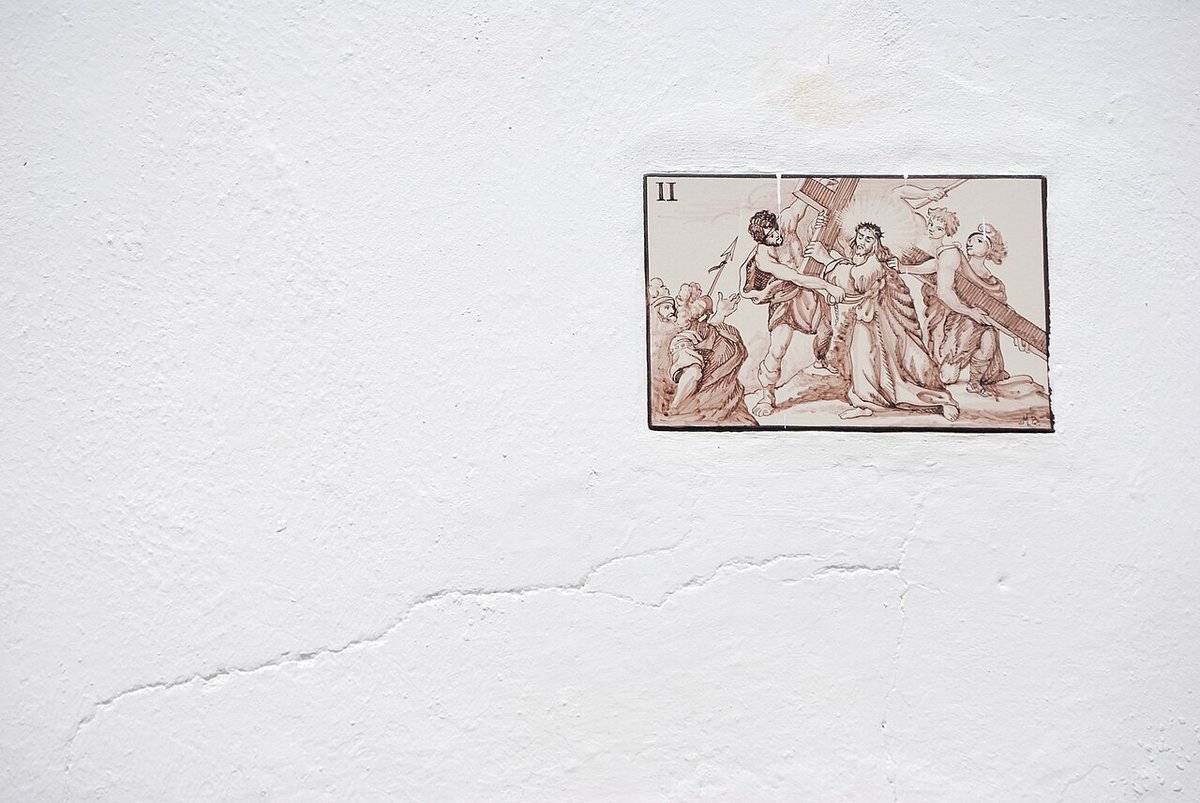
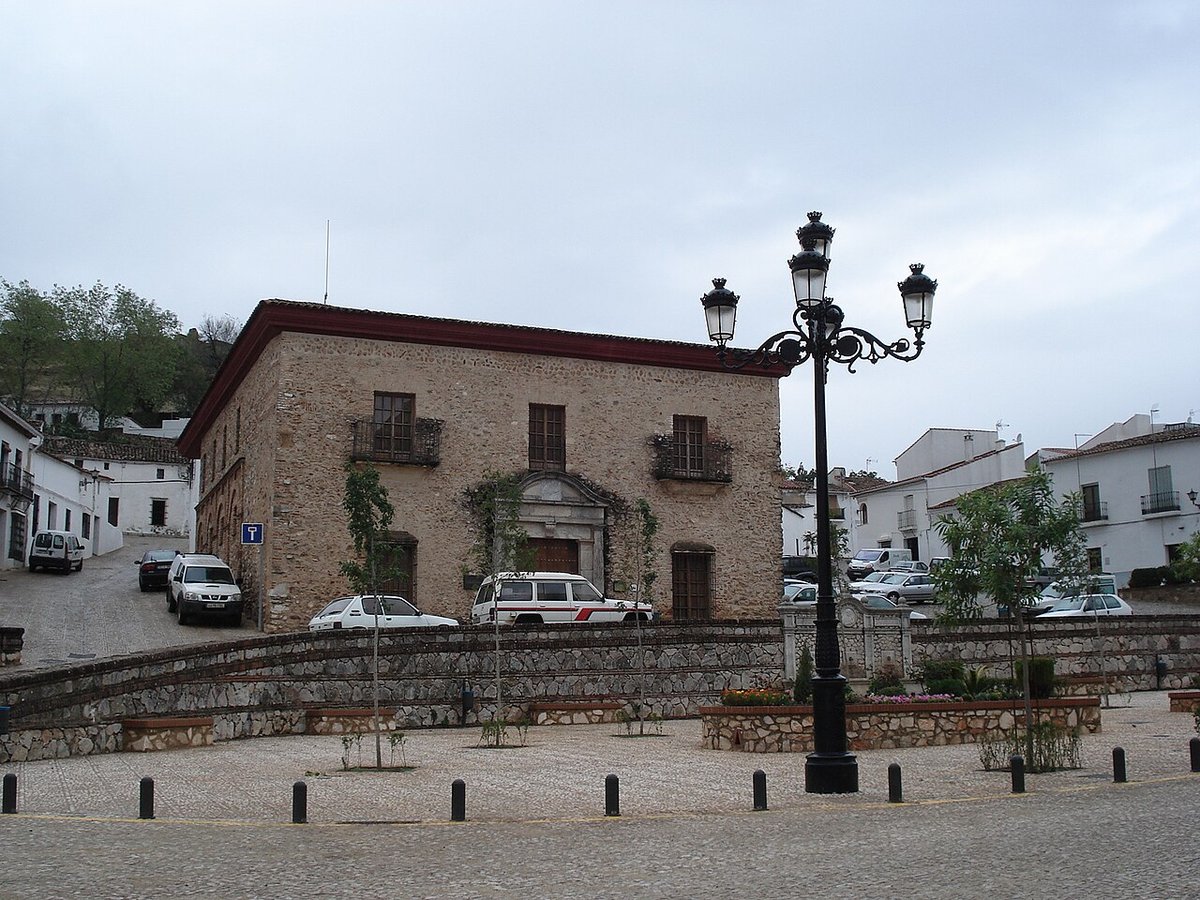
The old quarter can be explored without a map. Narrow streets wind between houses, some marked with old coats of arms, and open out into small squares. The church of the Asunción dominates much of the centre. Its construction took centuries, a detail locals tend to mention with a hint of irony.
If the streets start to feel repetitive, the edge of town is only minutes away. The sierra begins almost immediately. Waymarked paths cross through chestnut groves and dehesas. In autumn, the ground is covered with chestnuts and it is common to see locals gathering them.
Aracena can be seen comfortably in a long half day. If there is a choice of timing, autumn often works well: the heat drops and the surrounding hills feel more active. August brings larger crowds, and queues for the cave grow longer. Starting early in the day makes a noticeable difference.