Full Article
about Aroche
Historic border town with Portugal, home to a major Roman legacy at Turobriga and an Almohad castle, surrounded by ecologically rich natural sites.
Hide article Read full article
Autumn mornings and the smell of the hills
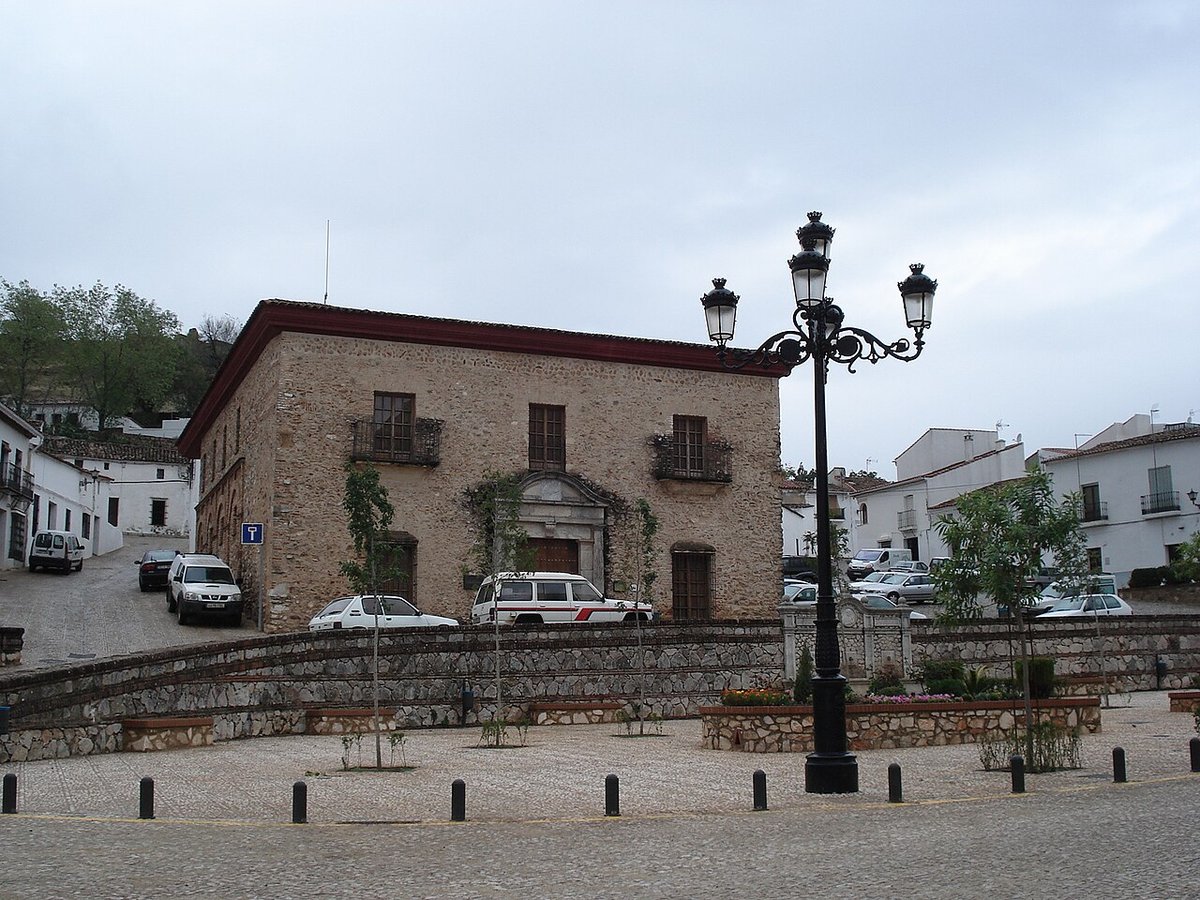
Mushrooms begin to appear as the mist lifts from the ravines. At seven in the morning, in Aroche’s main square, someone opens a wicker basket filled with freshly picked chanterelles. They still carry traces of soil at the base. The air smells of damp الأرض and crushed rosemary underfoot. In autumn, tourism in Aroche revolves around that rhythm: people walking through the hills with their eyes on the ground, and conversations about níscalos taking the place of small talk about the weather.
This is not a place that separates landscape from daily life. The surrounding countryside sets the pace, especially once the temperatures drop and the season for wild mushrooms begins. The experience is simple and direct, tied to what is growing, what is being gathered, and what ends up on the table later in the day.
A castle that once marked the border
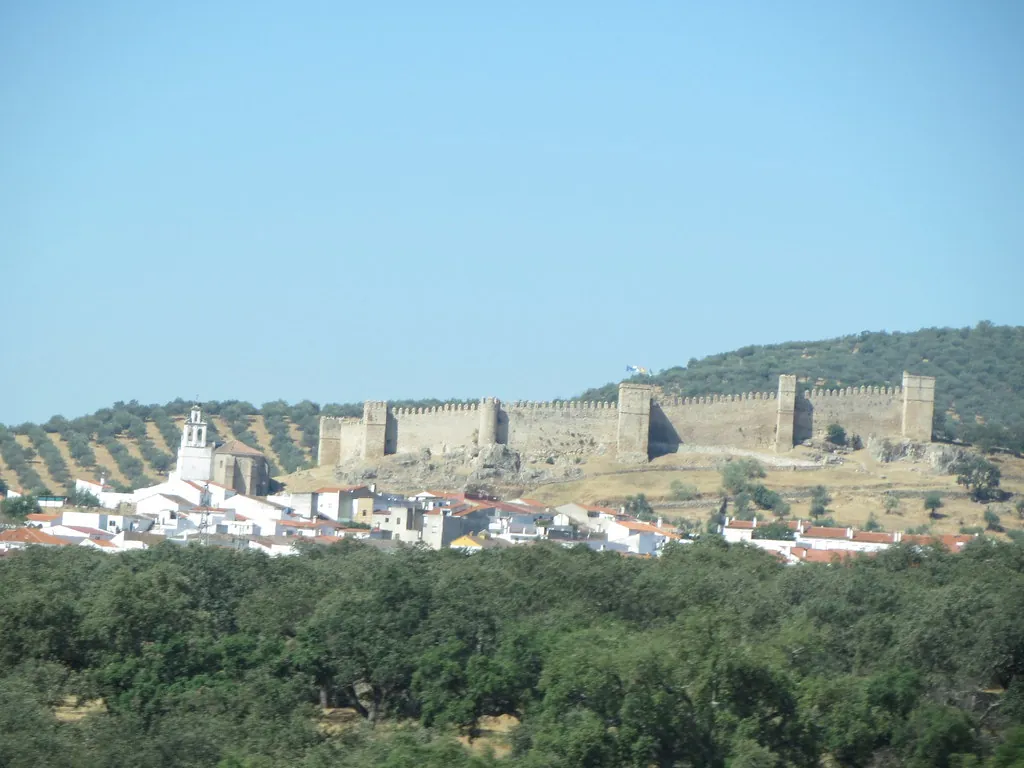
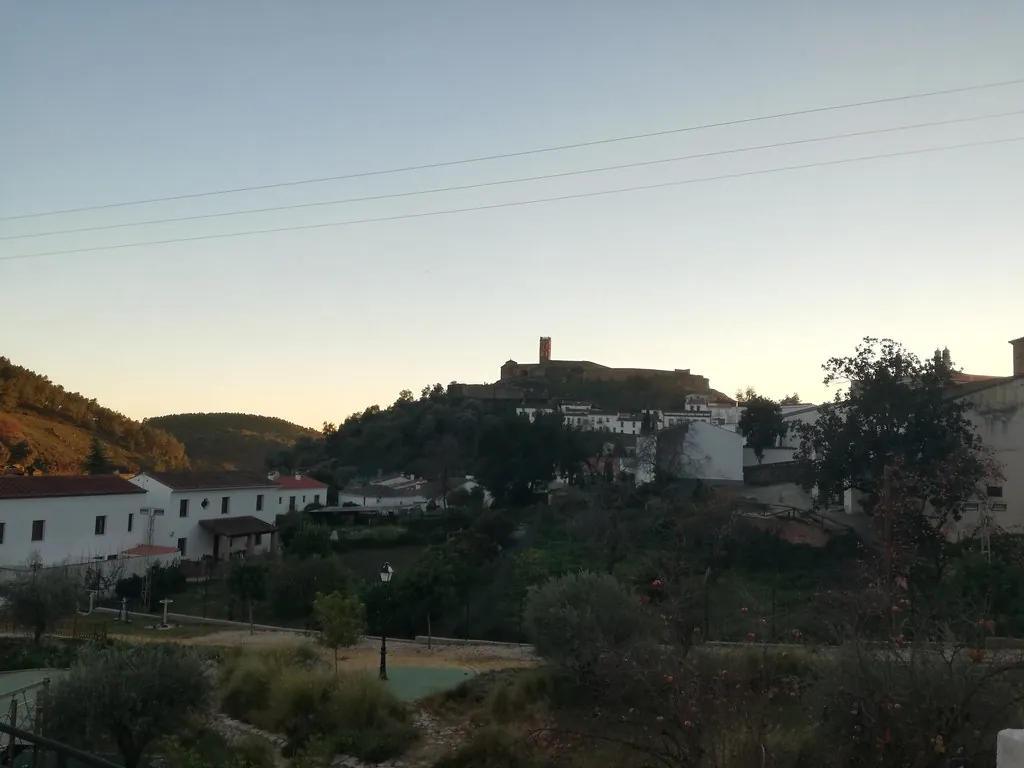
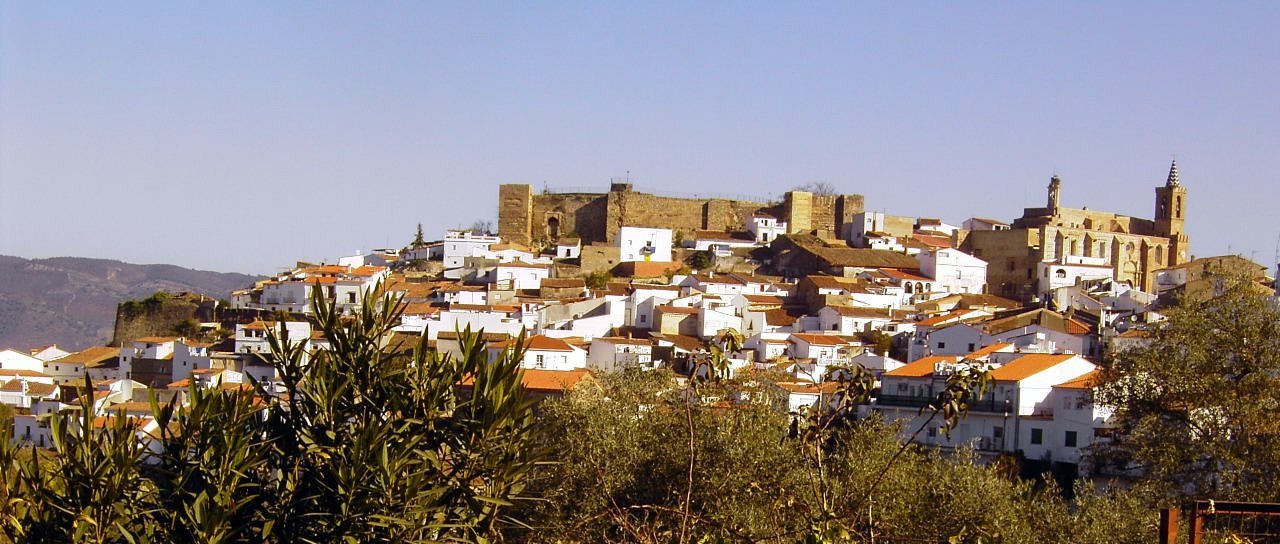
From above, the Almoravid castle looks out towards Portugal. It sits so close to the frontier that its history becomes immediately clear. For centuries, this was a borderland. By midday, the stone heats up and the silence settles against the walls.
Inside the castle there is a bullring. It is not something most visitors expect to find in that setting. The arena fits into the castle courtyard, and the seating rests against the battlements themselves. When it is empty, footsteps echo across the sand.
Aroche changed hands several times during the Middle Ages before becoming definitively part of Castilian territory in the 13th century. That sense of being on the edge still lingers. Streets climb steeply. Houses turn inward. Around the town, a wide stretch of hills acts almost like a natural barrier.
The walk up to the castle is manageable, though the incline makes itself felt in summer. Early morning or late afternoon are the easiest moments to make the climb, when the heat is less intense and the light softens the view over the surrounding sierra.
Arucci, a Roman town among holm oaks
About three kilometres from the village lie the remains of Arucci‑Turobriga, the Roman site of Aroche. A short road leads there through dehesa, the open pastureland typical of this part of southern Spain, dotted with holm oaks.
The site does not present grand columns or large mosaics. What emerges instead are the foundations of houses, part of the forum, and the outlines of streets. The stones sit low, almost level with the ground. The effect is understated, and it asks for a slower kind of visit. Walking carefully helps make sense of how the city was once laid out.
Arucci was founded in the 1st century and for a time held some importance in the region of Beturia. Today, the landscape carries more weight than the ruins themselves. Wind moves through the grass. The oak trees stand apart from one another. Occasionally, a flock appears in the distance. Shade is scarce, so in warmer months it makes sense to come prepared for the exposure.
The taste of the dehesa
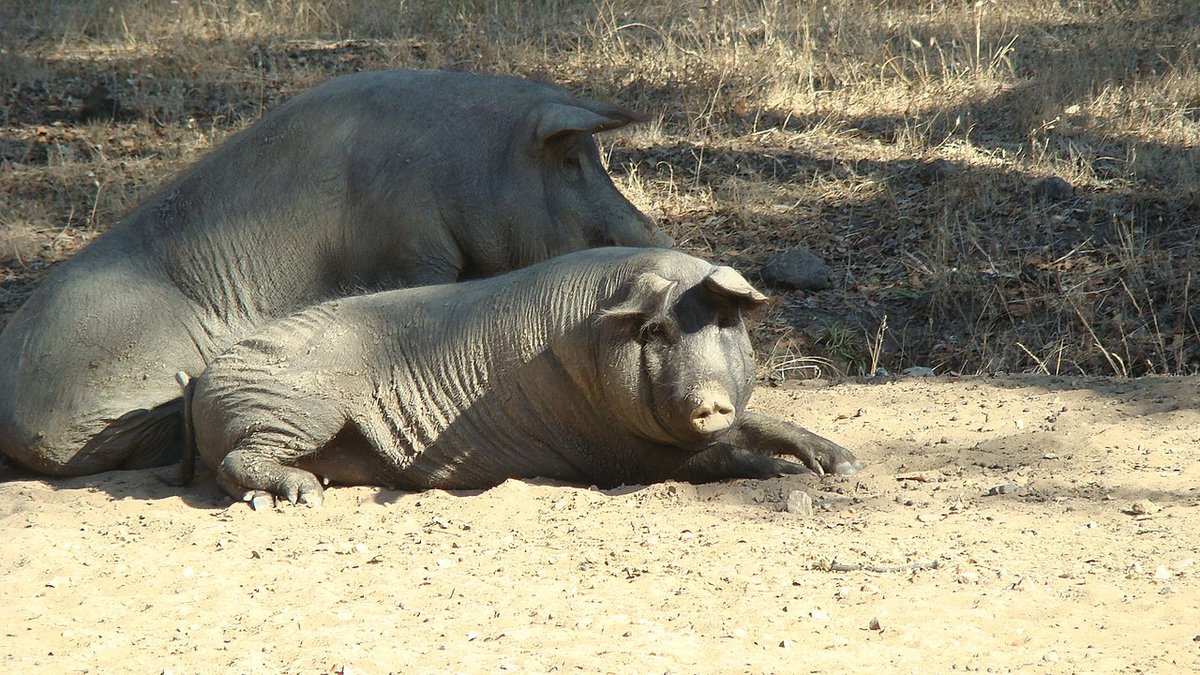
Around Aroche stretches a wide dehesa, where cork oaks and holm oaks grow with plenty of space between them. Iberian pigs graze among the ծառ trunks, animals that will later become the cured ham associated with the Sierra de Huelva. There is no need to look for it behind glass. A short drive along the smaller local roads is enough to see how closely this landscape and its produce are linked.
In the village kitchens, cooking follows the traditions of the sierra. Hot soups appear when the cold sets in. Lamb stews are common. Bread takes on a more prominent role than expected, often forming the base of dishes rather than serving as a side.
Autumn brings dishes built around mushrooms gathered in the nearby hills. Níscalos feature prominently when the season is good. The rhythm of the countryside shapes what is available. Certain recipes appear only at specific times, and not always on a predictable schedule.
Moving through Aroche and choosing the moment
Aroche is easy to explore on foot, although the slopes encourage a slower pace. Parking near the historic centre can take some patience. It is often simpler to leave the car in the lower streets and continue on foot.
Spring is one of the most pleasant times to visit. The countryside turns green and temperatures remain mild. Almond trees flower in the surrounding area during February and March, adding another layer to the landscape.
Summer presents a different side of the town. August brings more activity, but the heat intensifies from midday onwards. Early morning offers the best conditions for walking up to the castle at that time of year. Light arrives low across the sierra, and for a few minutes the façades take on a pink hue while the rest of the village remains quiet.
A Roman stone in a small hermitage
In the hermitage of San Mamés, built next to what was once the Roman forum, a Latin inscription is set into one of the walls. The stone is nearly two thousand years old. It records a citizen dedicating an altar to the health of the emperor.
It is not displayed behind glass. It sits there at hand height.
That simple detail captures much of what defines Aroche. History does not stand apart here. It appears without staging, mixed in with the countryside, the houses and the everyday life of the village.