Full Article
about Castaño del Robledo
The highest village in the sierra, surrounded by chestnut and oak forests; noted for its unfinished church and perfectly preserved mountain architecture.
Hide article Read full article
A small village in the Sierra de Aracena
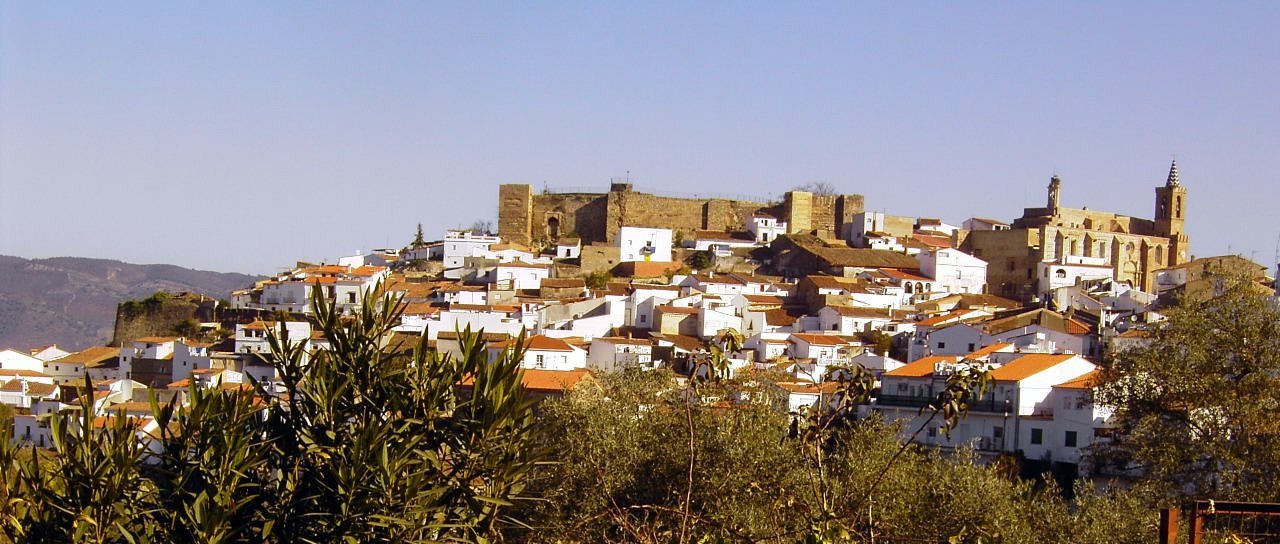
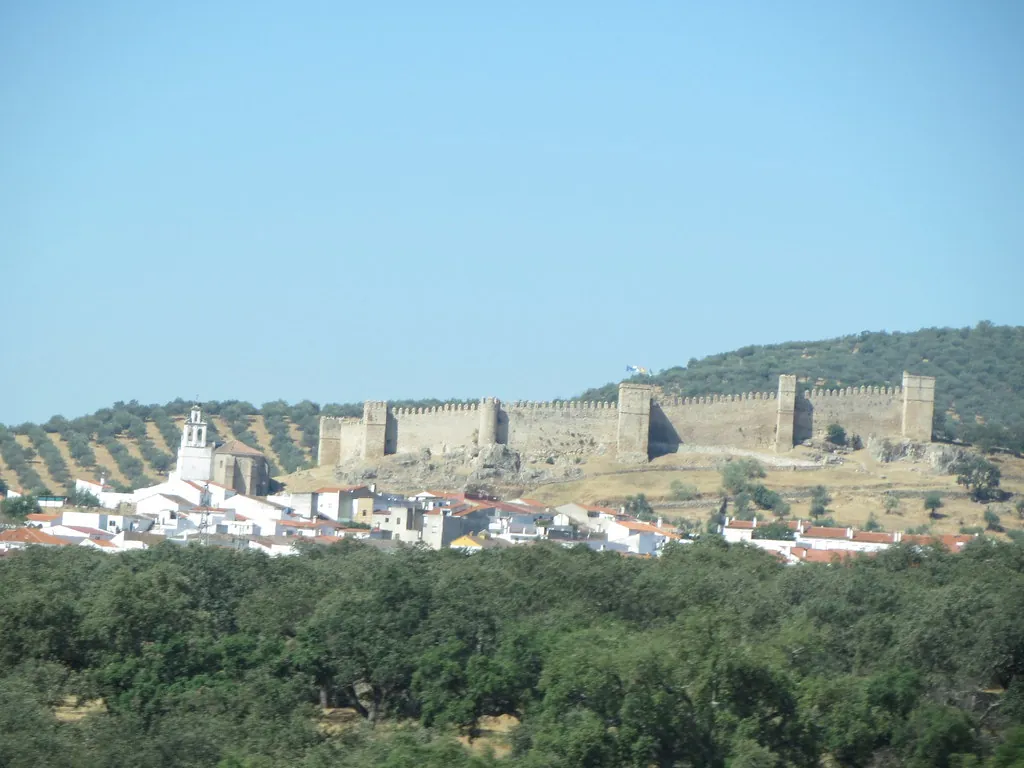
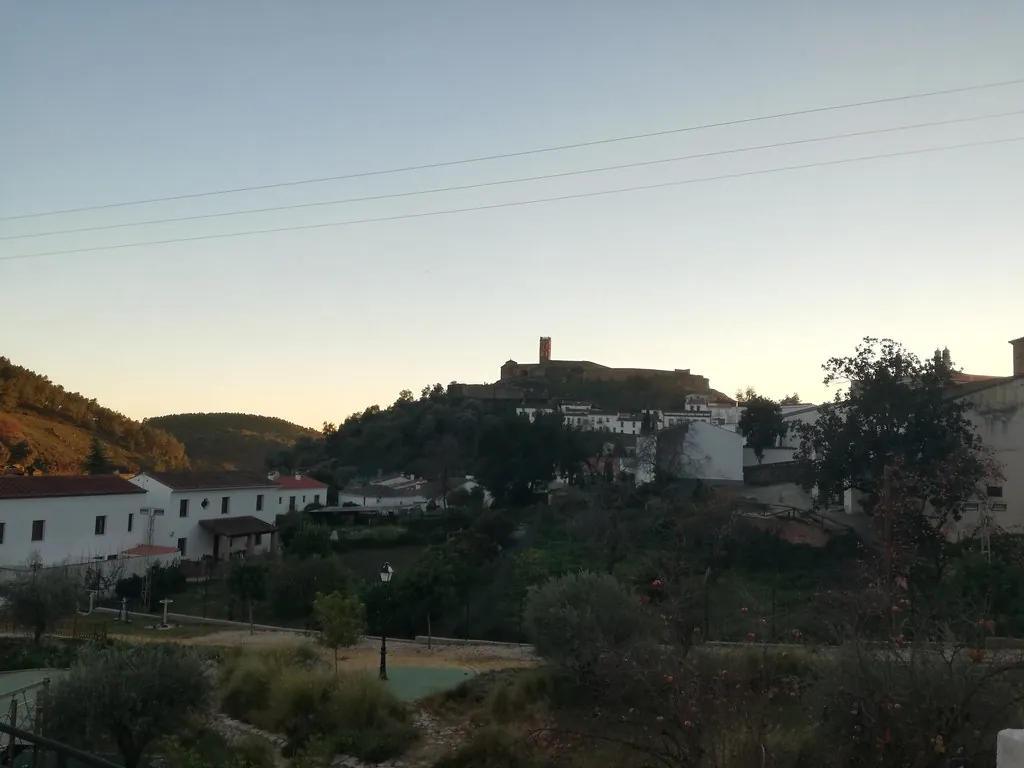
Castaño del Robledo sits at around 738 metres above sea level, in the central part of the Sierra de Aracena, within the natural park it shares with the Picos de Aroche. It is a small settlement, with roughly two hundred registered residents, and it keeps a distinctly domestic scale. Streets are short, slopes are gentle, and whitewashed houses follow the contours of the land rather than reshaping it.
The name of the village reflects its surroundings. Chestnut groves, castañares, have been a key resource here for centuries, alongside oak trees and nearby dehesas, the traditional pasturelands dotted with trees. The chestnut harvest still shapes the agricultural calendar for many families. In autumn, the connection between landscape and livelihood becomes especially clear: paths fill with people working the land, and the ground is scattered with split husks where chestnuts have fallen.
Castaño del Robledo is part of a network of mountain villages that developed around small orchards, forestry work and the old mule tracks that linked the sierra with northern Seville and Extremadura. That history is still visible in the size of the village centre and in how closely it relates to the surrounding countryside.
Two churches, face to face
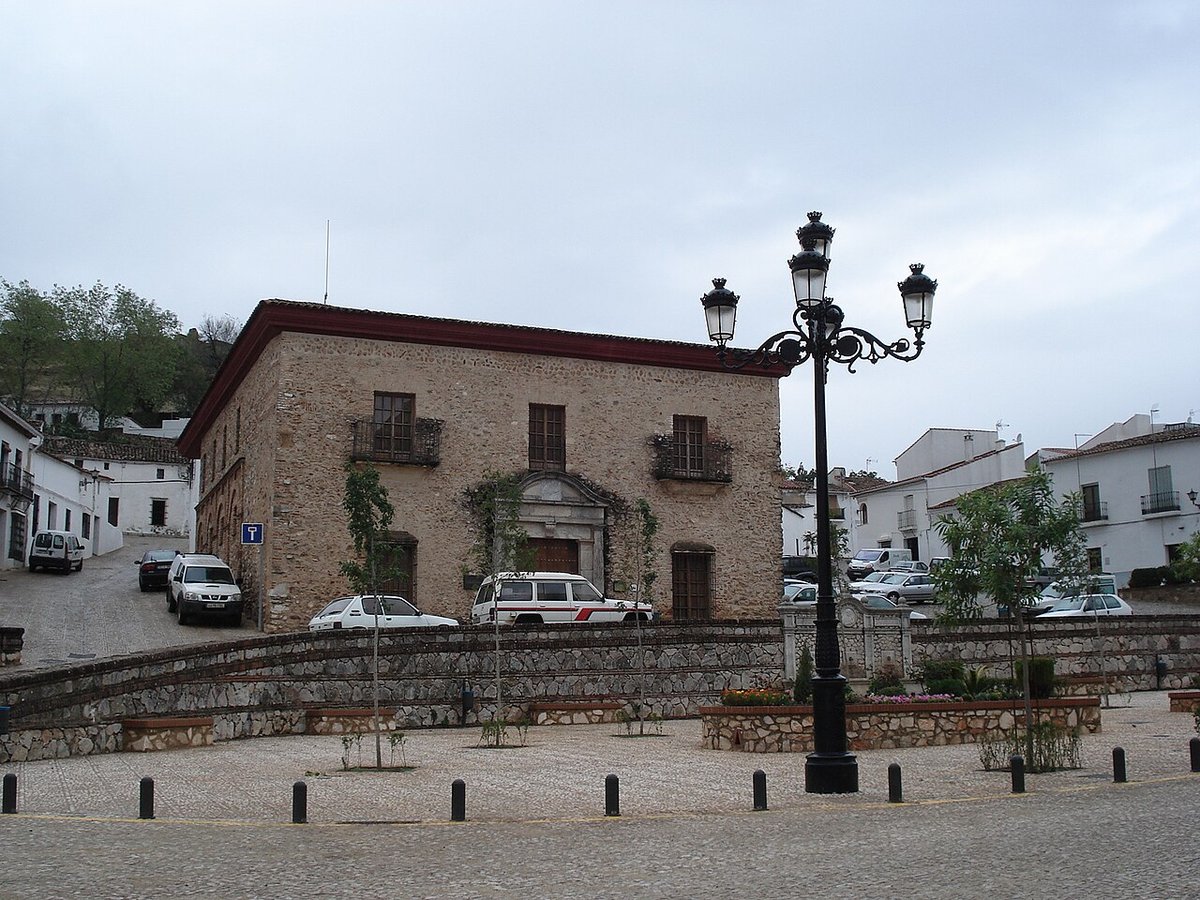
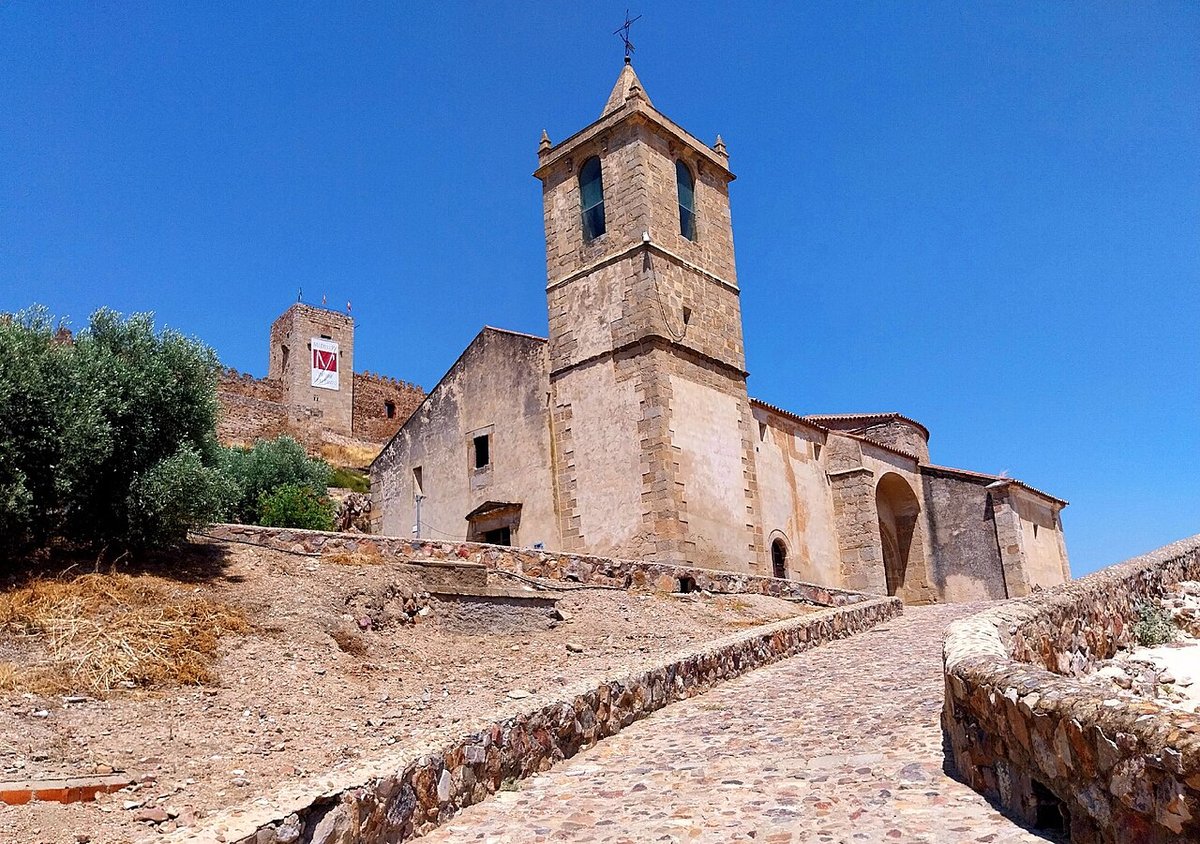
The main square is organised around the church of Santiago Apóstol. Built in the 16th century and later altered, it follows a restrained architectural style common in the area. White walls, a compact structure and a simple tower define its appearance, rising above the cluster of houses. Inside, there are modest Baroque elements, in keeping with a rural parish church.
Just a few metres away stands a very different building: the so-called iglesia nueva. Larger in scale but left unfinished, it now appears almost as a monumental ruin in the middle of the village. Its presence feels unexpected in such a small place. The construction seems linked to a period of economic prosperity in the sierra, probably connected to agricultural trade. When the project was never completed, the structure remained as a trace of that moment, an attempt at expansion that did not fully take shape.
The closeness of these two churches, the older parish and the incomplete temple, creates an unusual scene for a village of this size. It is a reminder that even small communities have experienced shifts in ambition and circumstance.
Streets, chimneys and mountain architecture
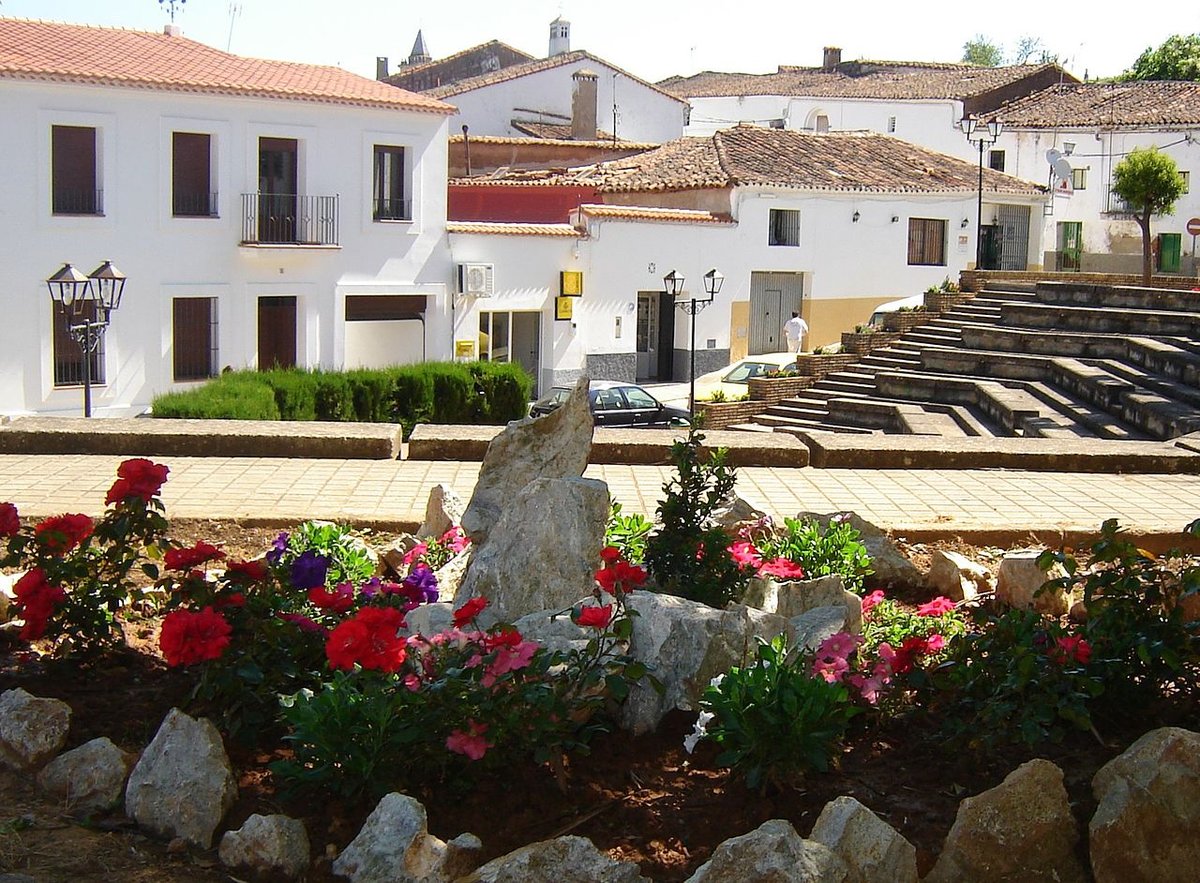
The built centre preserves the characteristic architecture of the Sierra de Aracena. Houses are low, with thick whitewashed walls and roofs covered in traditional curved tiles. Many still have iron balconies and simple stone doorways.
One feature that stands out is the presence of conical chimneys, common across this part of Huelva. Built in brick or stone, they rise above the roofs in a near-cylindrical shape designed to channel smoke from indoor fires. During the colder months, when temperatures drop in the sierra, these chimneys become part of everyday life in the village.
The streets are narrow and gently sloping. Walking through them is less about covering distance and more about noticing small details. There are tucked-away patios, kitchen gardens pressed up against the edge of the village, and old animal pens that recall a time when domestic life and agricultural work were closely intertwined.
The layout does not feel imposed or planned in a rigid way. Instead, it reflects gradual growth tied to practical needs, shaped by terrain and by the routines of those who lived and worked here.
Paths through chestnut country
Beyond the houses, the landscape is dominated by chestnut and oak trees, mixed with areas of dehesa where Iberian pigs graze. Several traditional paths begin directly in the village and lead out across these slopes. Many connect with longer walking routes within the natural park.
In autumn, the scenery shifts noticeably. The chestnut groves turn shades of ochre, and activity in the fields increases as the harvest gets underway. It is a working landscape, not just a scenic one. A practical note applies here: much of the land is privately owned, so not every path allows free access into the plots.
Walking early in the morning or towards evening can reveal signs of wildlife. Tracks of wild boar or deer are not unusual, and forest birds move quietly through these hills. The sense of calm in the area owes something to the relatively low level of disturbance.
The relationship between the village and its surroundings is direct. Paths do not begin at a distance or require planning to reach; they start at the edge of daily life and extend outward into the same terrain that has sustained the community for generations.
Getting there and moving around
Access is usually by local road from Aracena or other nearby villages in the sierra. These roads are narrow and winding, though generally in good condition.
Castaño del Robledo itself can be explored on foot in a short amount of time. In about an hour, it is possible to see the square, both churches and several streets in the historic centre. From there, the nearby paths offer an easy way to extend a walk into the surrounding chestnut groves.
In wetter periods, which are fairly common in this part of the sierra, some of the trails can become slippery. Simple outdoor footwear is usually enough for getting around comfortably.
The village does not present itself as a place of major sights or large-scale attractions. Its interest lies in how everyday spaces, agricultural rhythms and the natural setting come together in a way that remains consistent with its past.