Full Article
about Cortegana
A key mountain town dominated by an imposing medieval castle; host of famous medieval days and surrounded by lush nature.
Hide article Read full article
Morning over the Sierra de Aracena
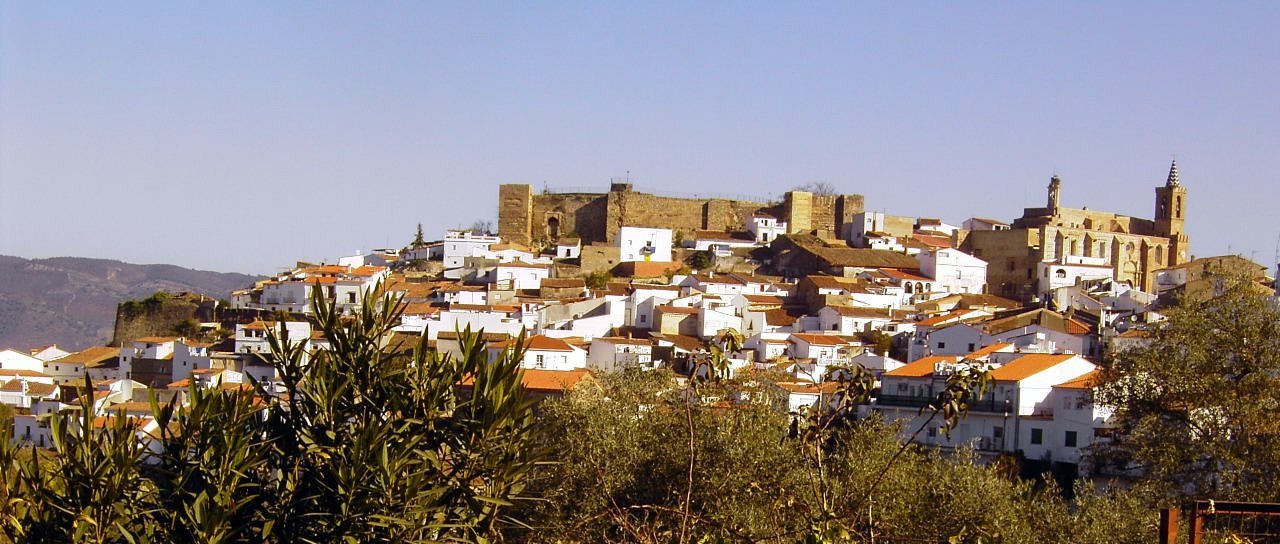
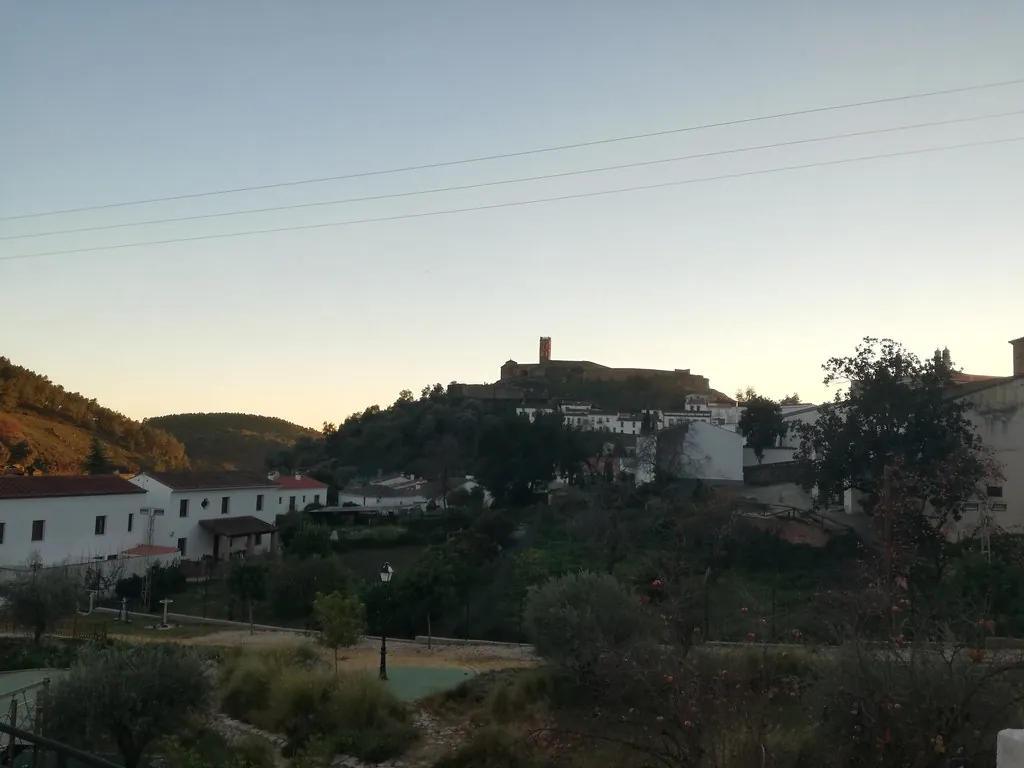
The bells of the Iglesia del Divino Salvador often strike eight while the sun is still working its way up over the Sierra de Aracena. From the castle, in that early chill where the air carries hints of rosemary and damp earth, Cortegana begins to stir. A light comes on behind a window, a car crosses the square without hurry, and thin strands of smoke rise from the first chimneys and hover briefly above the roofs.
It is a gradual start to the day, shaped by the pace of a mountain town. Nothing feels rushed. The landscape and the rhythm of daily life seem closely tied, especially in the early hours when the hills are still quiet and the town is only just waking.
The castle on the hill
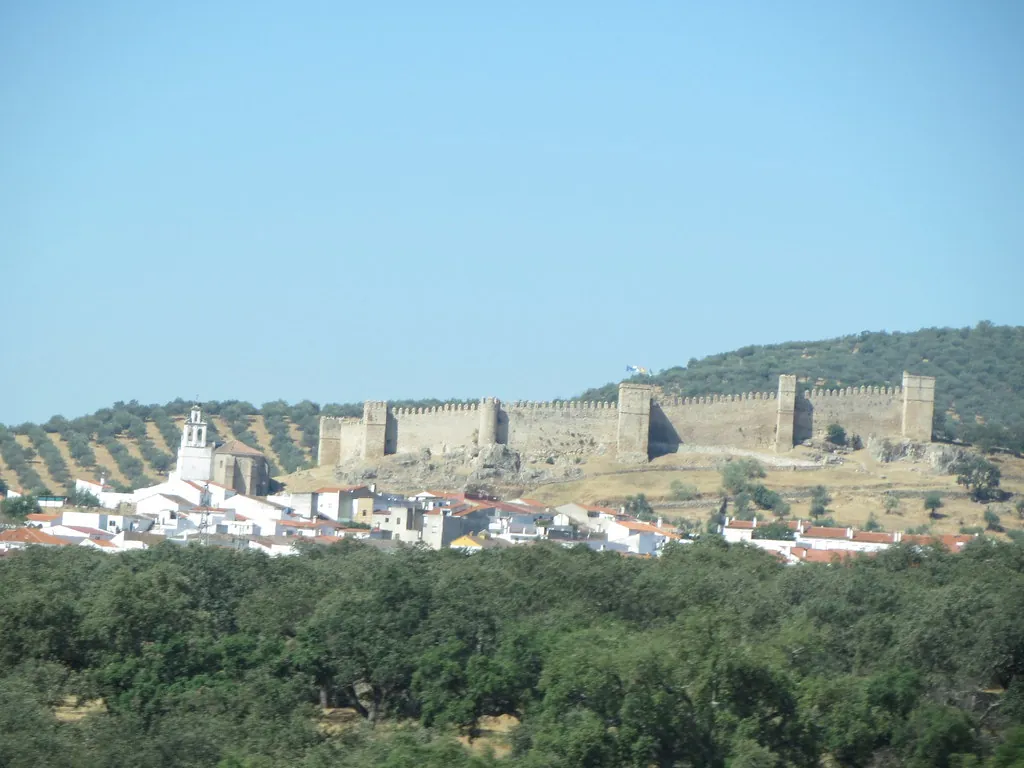
The walk up to the Castillo de Cortegana follows a stone path that cuts through pine woods and patches of holm oak and scrub. In places, the rock still shows marks left by wheels long ago. These traces are not unusual on routes that have led to the same destination for centuries.
The fortress dates back to the late Middle Ages, when this part of the sierra lay close to the border with Portugal. It is not especially large, yet its location explains its purpose. From the top, the surrounding valleys fall away in every direction, along with the rolling dehesa landscapes that stretch westwards.
The main tower rises above the rest of the structure, with notably thick walls. From its height, Cortegana appears below as a cluster of reddish roofs. Beyond that, the hills unfold in soft layers, their green tones shifting with the seasons. On clear days, the distant sierra fades into bluish bands along the horizon.
The climb is best done early or later in the day. Around midday the hill is exposed, and the heat becomes more noticeable.
Streets with the scent of cooking
In winter, when cold air settles into the narrow streets of the centre, the town often smells of slow-cooked dishes. Many homes still prepare local versions of gazpacho that differ from the cold summer variety more widely known. Here it is served warm, closer to a hearty soup. Stale bread, garlic, tomato and paprika are combined and thickened gently over time.
The aroma drifts out through half-open doors and lingers as you walk along Calle Real. It becomes part of the experience of moving through the town, especially on colder days when the contrast between the air outside and the warmth indoors is most noticeable.
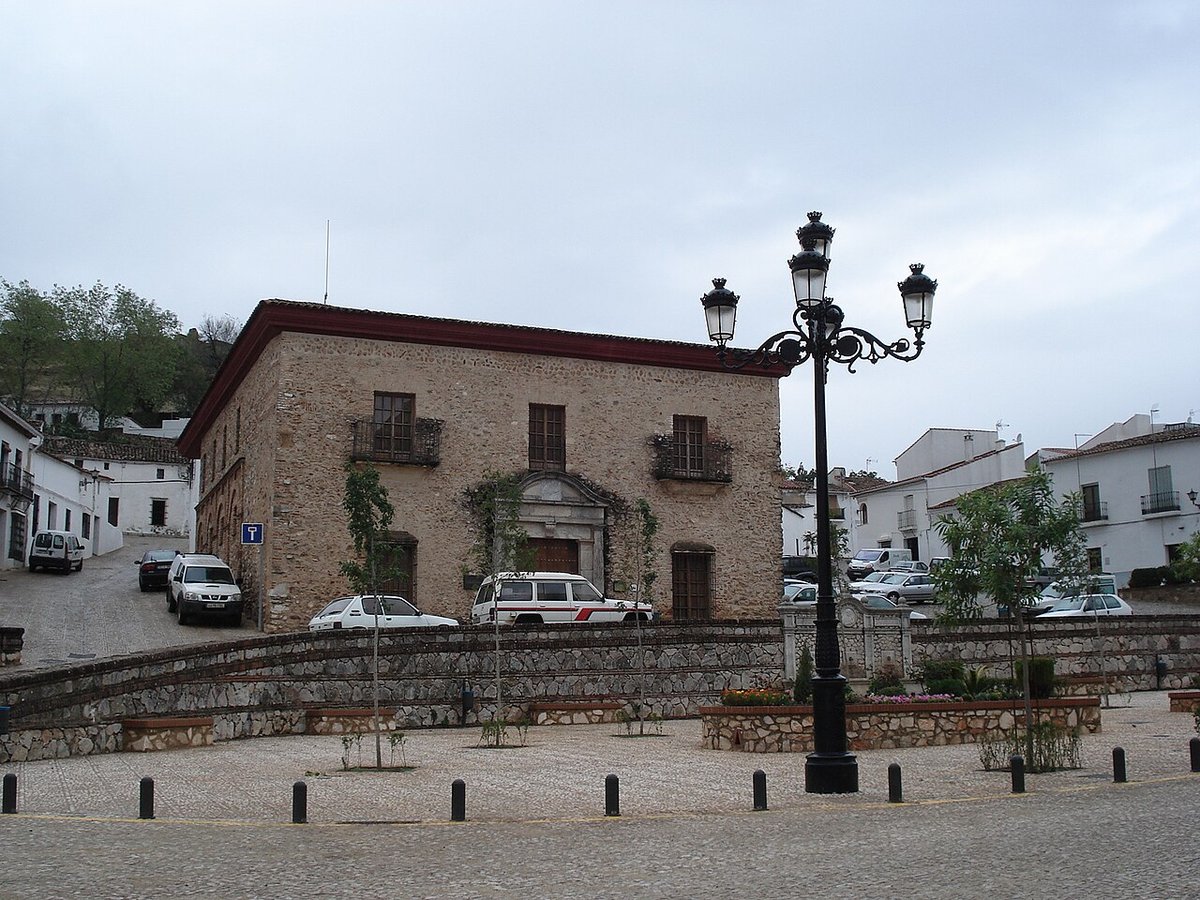
Near the source of the river Chanza stands a building known locally as Casa Mudéjar. It retains brick arches and decorative details associated with Mudéjar architecture from the late Middle Ages, a style shaped by Islamic influence within Christian Spain. Water runs nearby, more quietly than in the past, when streams in the area powered small mills scattered across the valley.
When the town gathers
Each summer, Cortegana hosts medieval-themed days centred on the castle. They are usually held in August. For a few days, the fortress and nearby streets fill with stalls, music and residents dressed in linen or leather. At night, the sound of drums travels up the hillside and echoes against the stone walls.
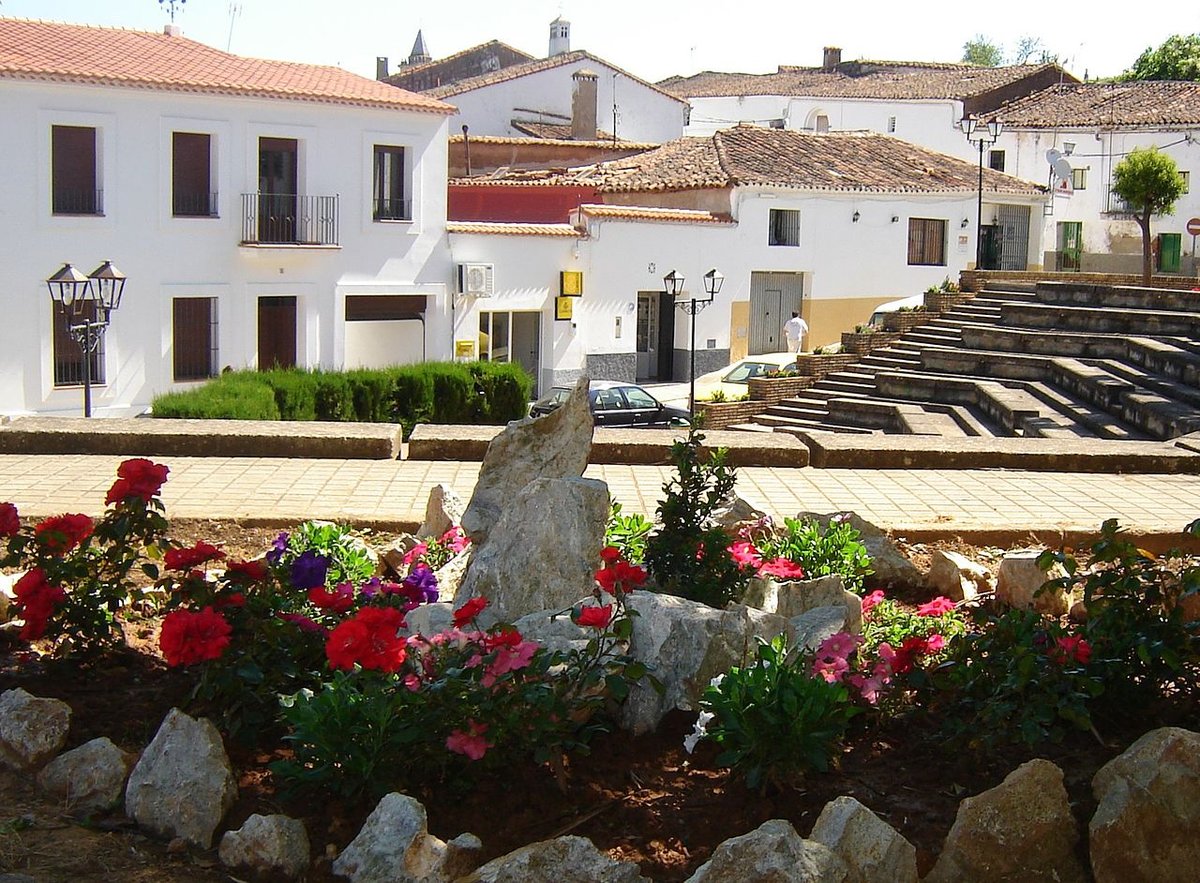
Outside those dates, the atmosphere shifts noticeably. In September, during the celebrations of the Virgen de la Piedad, the focus is more local. Traditional sweets are fried in homes, and it is not unusual for a passer-by to be offered a plate at the right moment. As evening falls, the square fills with people, and the air carries the scent of honey, hot oil and rosemary.
These changes in rhythm mark the year. The same streets and spaces take on different meanings depending on the season, moving between busier gatherings and quieter, everyday life.
Following the water and the old paths
On the outskirts, a route follows the course of the arroyo de la Mina. It stretches for several kilometres through dense vegetation. Ferns grow in the dampest areas, oleanders line the water, and chestnut trees cover the slopes.
Along the way, remains of old watermills appear at intervals. Some still hold parts of their original structure, while others survive only as moss-covered walls. They point to a time when the streams here were more actively used.
The landscape changes with the seasons. In autumn, fallen chestnuts cover the ground and the path crunches underfoot. In spring, the stream usually carries more water, and parts of the route can become muddy. Footwear that can get wet is a sensible choice. By summer, the scene turns drier, and the shade provided by the trees becomes more valuable.
As evening arrives, the higher ground around the castle offers clear views of the sky when conditions allow. Light pollution is low in this part of the sierra, and on nights without a moon, the Milky Way can be seen as a pale band stretching across the darkness.
Quiet workshops and an unhurried pace
In the San Sebastián neighbourhood, small workshops still produce ceramic pieces and traditional utensils. They do not usually have visible opening times or displays aimed at visitors. If a door is open, it is fine to step inside. If it is closed, it may open again later.
That approach reflects how many things work in Cortegana. The pace is steady and shaped more by habit than by schedule. Between the castle above, the streams below and the daily routines in between, the town continues in a way that feels consistent with its surroundings.