Full Article
about Cortelazor
Charming white village in the heart of the natural park, known for its centuries-old elm in the square; offers open-air art and scenic trails.
Hide article Read full article
Why there is a village here
Tourism in Cortelazor often begins with a simple question: why is there a village here at all, set on a relatively tucked-away slope in the Sierra de Aracena? The answer goes back to the medieval repopulation of this part of the mountains, after the area became part of Aracena following the Christian conquest. Small settlements appeared across the landscape, built around the practical use of the surrounding land. Chestnut groves, dehesas and small vegetable plots supported daily life, while local paths linked one community to the next.
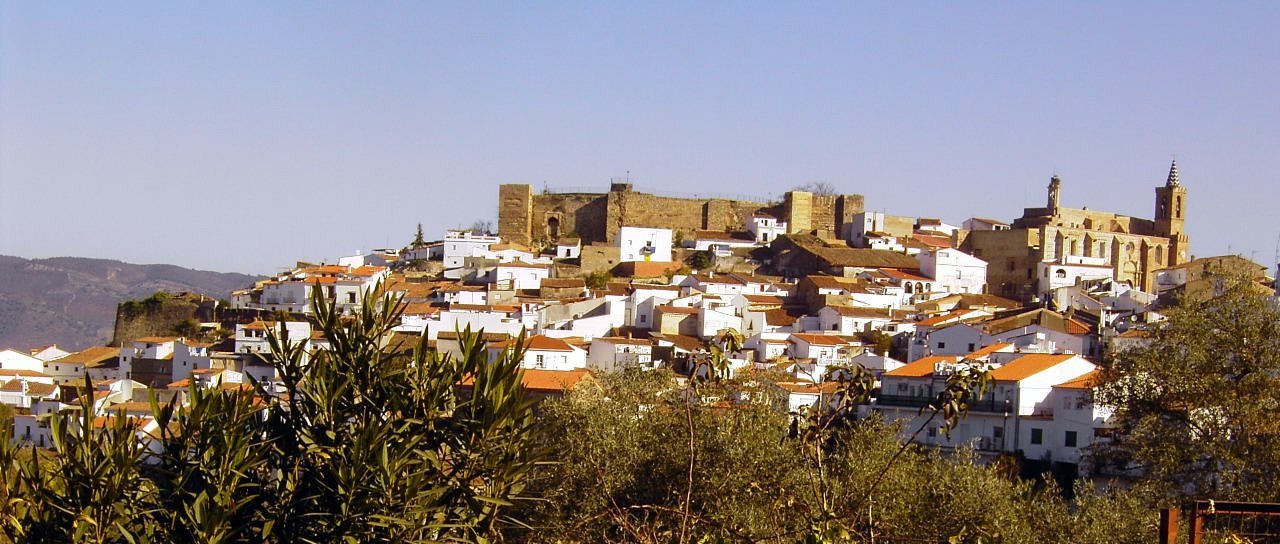
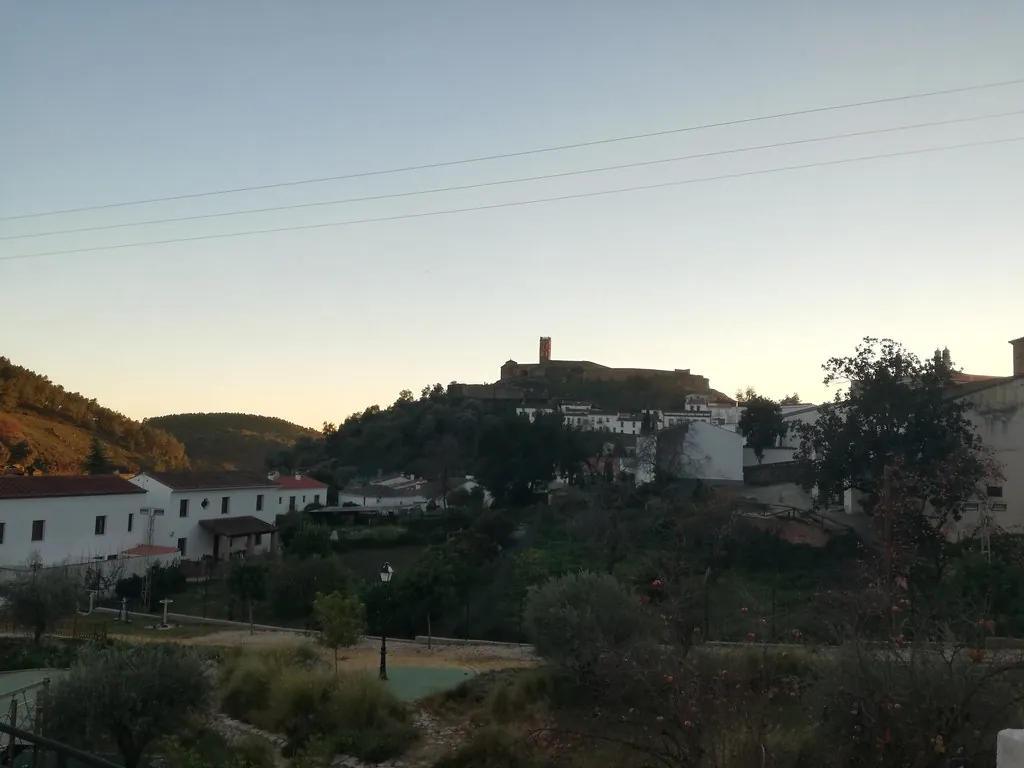
Cortelazor is one of those settlements. It stands at around 600 metres above sea level, on a damp hillside where chestnut trees thrive. The layout reflects how it grew. There is no strict plan or grid. Streets rise and dip with the slope, a common feature in villages that developed gradually rather than being formally designed.
Around the church and the old centre
The most noticeable building is the parish church, set beside the main square. Its current form largely comes from later modifications, probably built over an earlier structure from the time when the village was already established. Parish records across the Sierra mention communities like this from at least the 16th century, when a network of rural parishes was already in place.
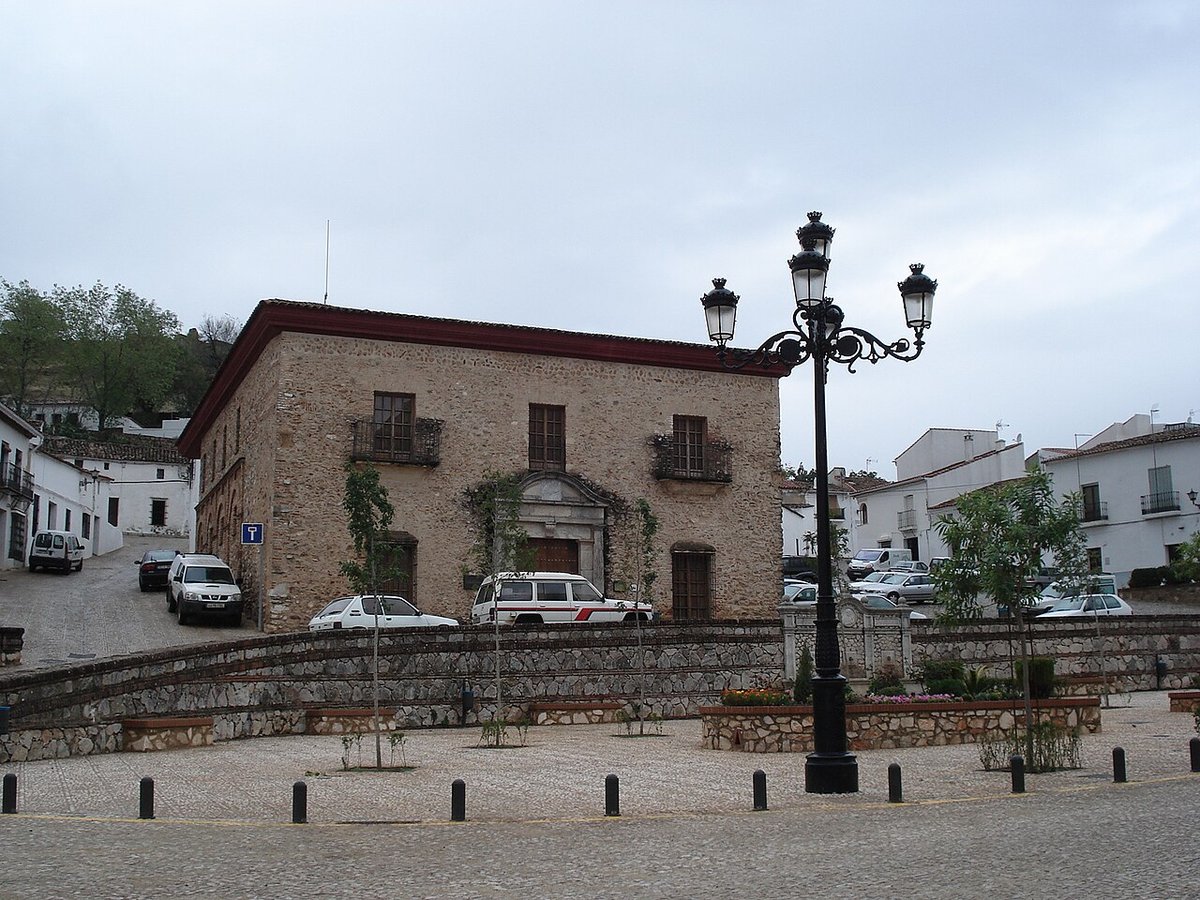
The square acts as a meeting point. It is not large. In villages like those in the Sierra de Aracena, public space tends to be limited because houses were built close together around the church and the main road that once passed through.
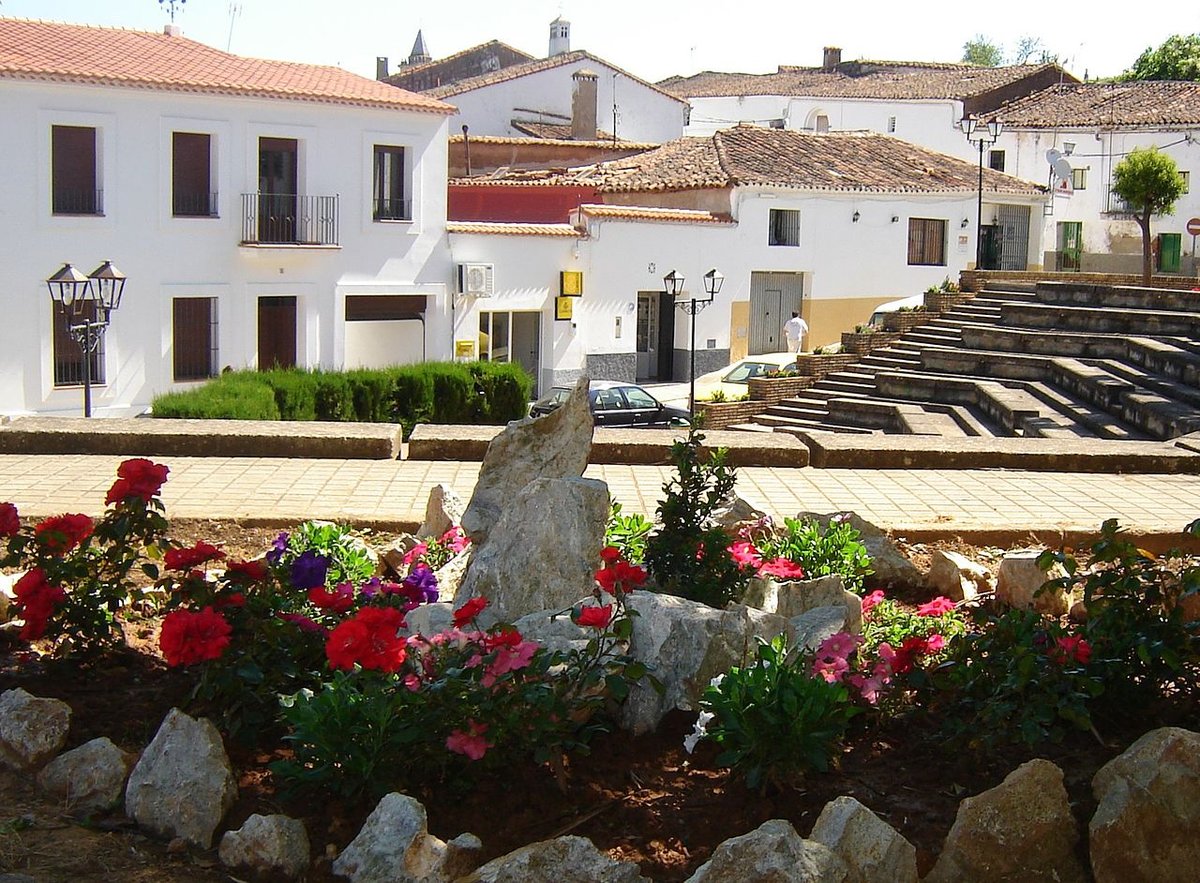
The houses keep many features of traditional mountain architecture. Walls are thick and whitewashed, with tiled roofs. Windows are usually small, designed to keep out the winter cold rather than to open wide views. Behind many façades there are interior courtyards, often still used for small gardens or fruit trees.
Walking through the centre, the sense of adaptation to the terrain is constant. Buildings follow the contours, and every turn reflects the slope beneath it.
A landscape shaped by chestnut trees
The surroundings of Cortelazor explain much of its economic past. The chestnut tree has been central here for centuries. Its wood was used for beams and tools. Its fruit played an important role in the diet during autumn and winter.
Paths leading out of the village pass through groves of chestnut trees mixed with cork oaks and holm oaks. These are not high-altitude routes with sweeping viewpoints. They are old paths, used for generations to reach orchards, farms and neighbouring villages.
In autumn, the ground is often covered with fallen leaves and spiky chestnut husks. In winter, mud is common underfoot. It is something to bear in mind when walking in the area, as the landscape shifts with the seasons rather than being shaped for visitors.
The relationship between the village and these groves is direct. The paths are part of daily history, not just leisure routes, and they still reflect how people once moved through the terrain.
Rural rhythms and local traditions
Life in Cortelazor has long been tied to Iberian pig farming and small-scale agriculture. For decades, the domestic pig slaughter, known in Spain as the matanza, was a central part of family economy and food supply. Today it continues, though less frequently than in the past.
The chestnut harvest still marks the autumn calendar. Across many villages in the Sierra, people gather around bonfires to roast chestnuts, a custom that has been part of local culture for generations. These informal gatherings link seasonal work with social life.
Religious festivals and patron saint celebrations continue to shape the social rhythm of the village. At those times, the square fills again with residents and with people who return specifically for the occasion. These events maintain a connection between past and present, even as everyday life becomes quieter.
Getting there and choosing the moment
Cortelazor lies within the Sierra de Aracena region, in the north of the province of Huelva. The usual approach is via Aracena, followed by local roads that wind through the hills.
Each season brings a different feel to the landscape. In spring, the hills are notably green. Autumn coincides with the chestnut cycle and visible changes in the woodland. Winter brings lower temperatures, and fog often settles in the valleys.
The village itself is small and can be explored on foot in a short time. What stands out is not the number of sights but how the settlement fits into its hillside setting. Observing how the houses adapt to the slope, and walking the paths that lead into the chestnut groves, offers a clearer sense of how the community has been sustained over centuries.
Cortelazor does not present itself through large landmarks or dramatic viewpoints. Its character comes from the quiet continuity between village and landscape, shaped by practical needs and long-standing traditions.