Full Article
about Cumbres de Enmedio
The smallest municipality in the province and one of the least populated in Spain; a haven of absolute peace amid mountain pastureland.
Hide article Read full article
A detour into quiet
Cumbres de Enmedio feels like the sort of place you reach by leaving the main road for a moment, stretching your legs, and finding yourself on a street where nobody passes. No noise. No rush. No shop windows competing for attention. Just whitewashed houses and the occasional open door.
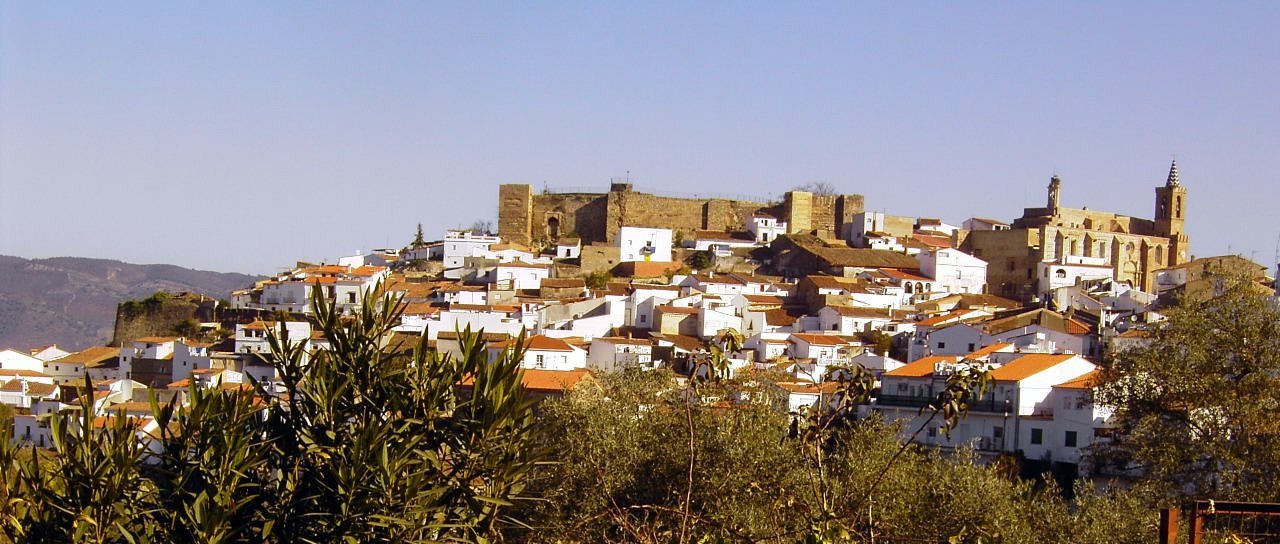
In the Sierra de Aracena there are villages with more movement and a busier rhythm, but Cumbres de Enmedio plays in a different league. Just over fifty people live here, and daily life follows the pace of a place where everyone knows everyone else.
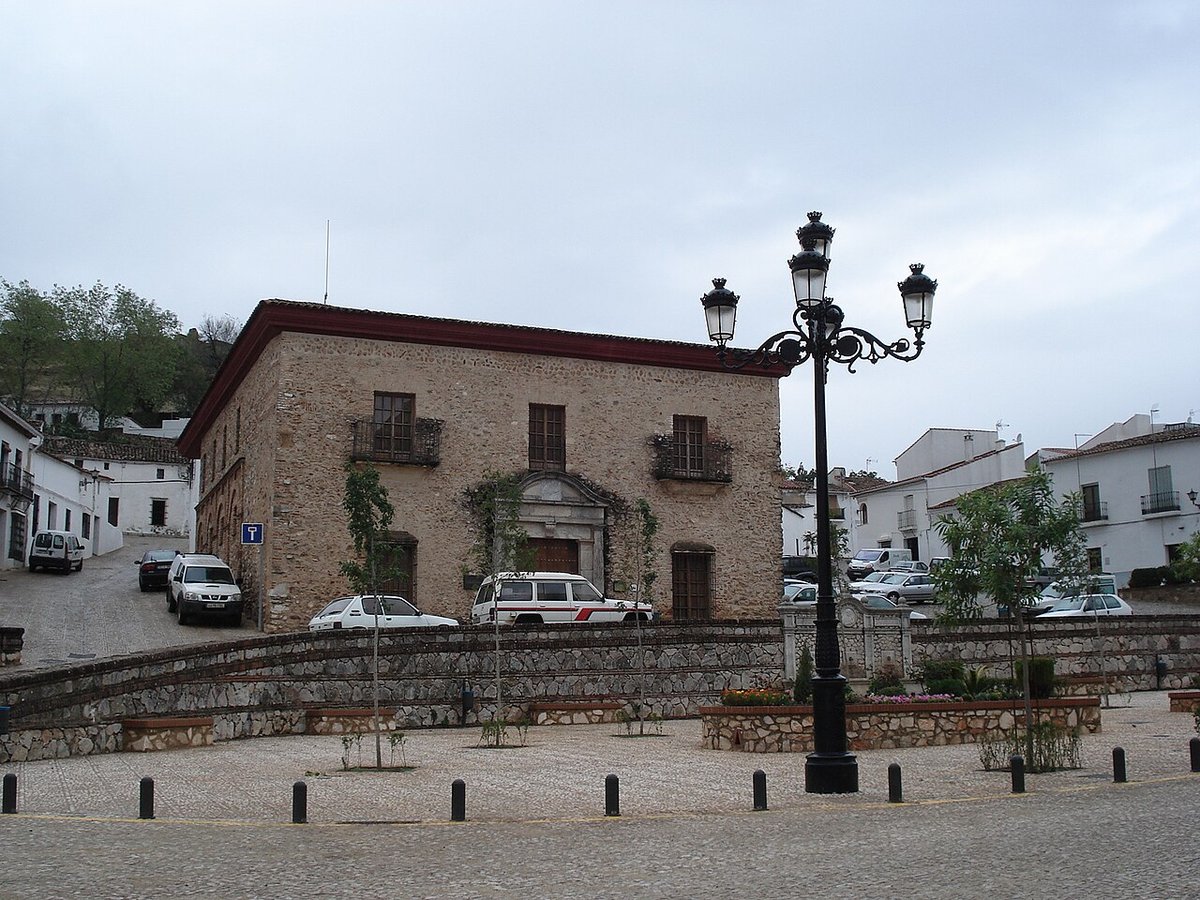
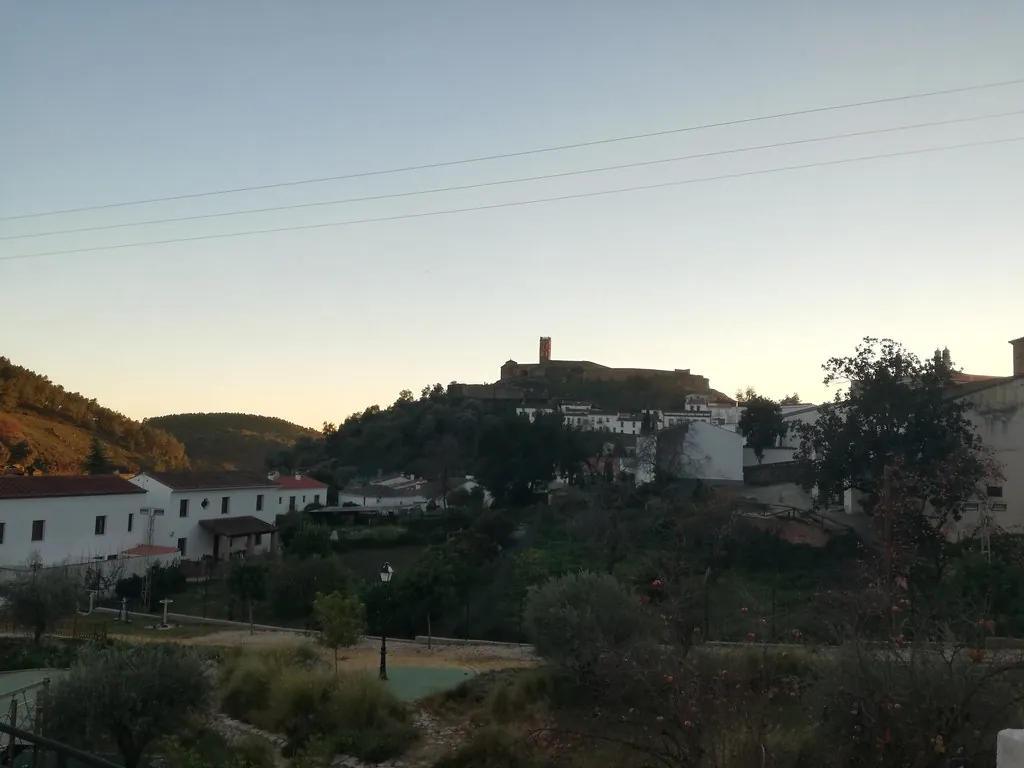
There are no headline monuments and no historic quarter arranged for photographs at every turn. What you find instead is a small village, about 600 metres above sea level, with short streets and an atmosphere that recalls those Sunday afternoons when time seems to move more slowly.
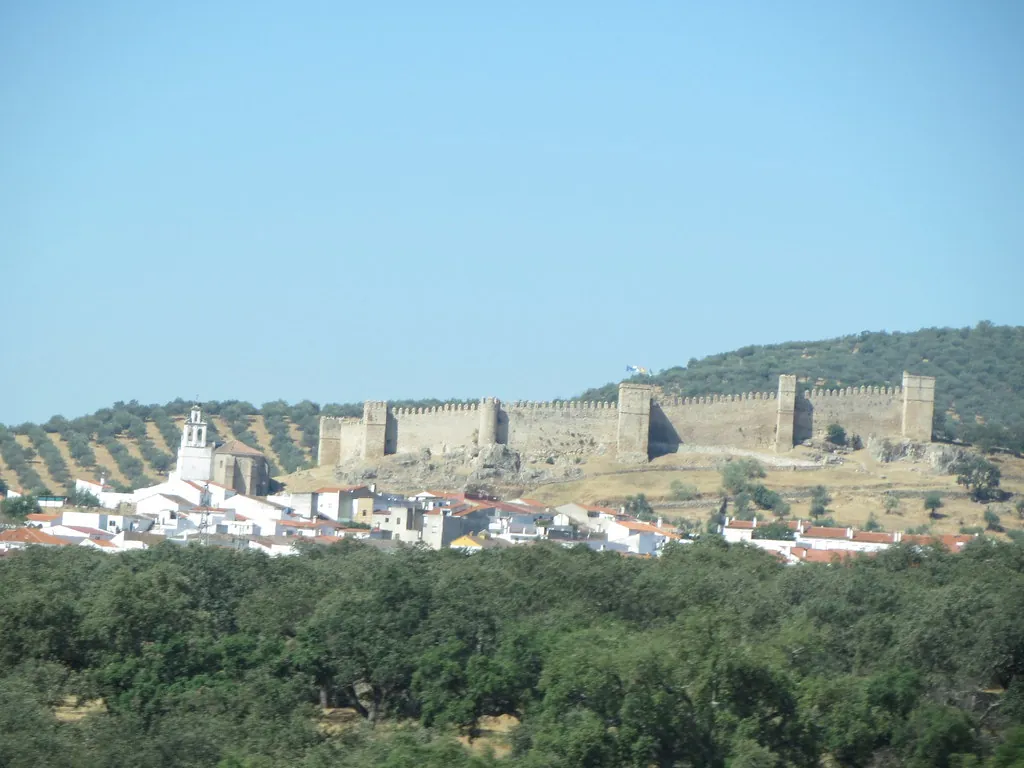
The village sits within the Parque Natural Sierra de Aracena y Picos de Aroche. Beyond the last houses, the countryside takes over. Holm oaks, chestnut trees and paths lead away from the village as if someone had pulled a thread out towards the fields. It is the kind of landscape that does not need explanation boards to make sense.
Streets measured in minutes
Cumbres de Enmedio can be seen quickly. In ten minutes you will have a clear sense of where everything is. It feels less like touring a destination and more like stepping into a relative’s home in a rural town.
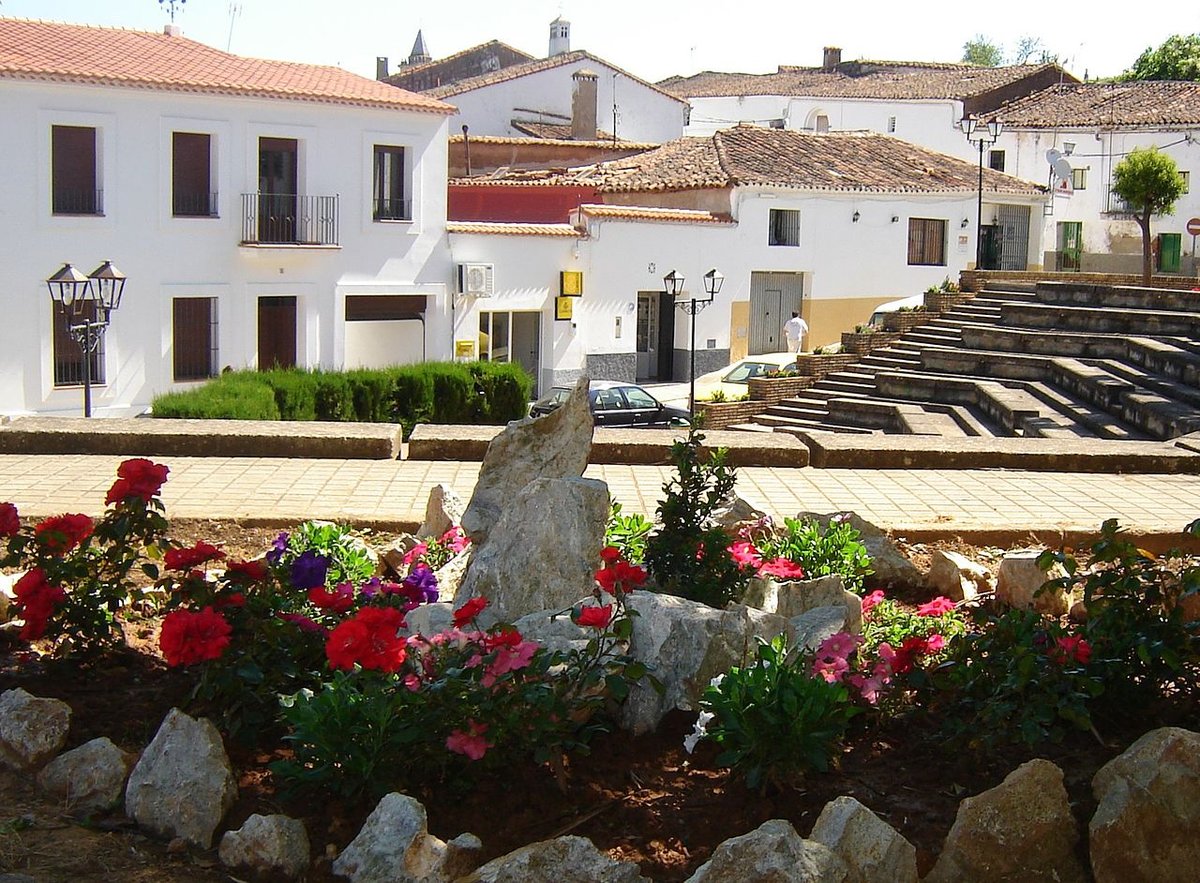
The houses are low and whitewashed, many of them opening directly onto the street. Some have wrought-iron balconies and wooden doors that have seen many winters. There are no grand squares or buildings competing for attention. Quite the opposite. Everything is understated.
A slow walk reveals small details: narrow chimneys, old locks, interior patios only half glimpsed through a door left slightly ajar. Here, looking at walls and doorways often matters more than seeking out a specific landmark.
Just beyond the built-up area, chestnut groves and dehesas begin. The dehesa is the traditional open woodland landscape of western Spain, dotted with oaks and used for grazing. In autumn the ground fills with leaves and the hills turn ochre, as if lifted from a painter’s palette. In winter the countryside becomes barer, the shape of branches clearer once the leaves have fallen.
Some nearby tracks rise gently to small natural clearings. They are not marked viewpoints. They are simply slightly higher patches of ground where you pause and take in how the sierra unfolds around you.
Walking as the main plan
In a village this size, activities are not scheduled or packaged. The most natural thing to do is head out on foot.
Rural tracks leave Cumbres de Enmedio and connect with other parts of the sierra. Some eventually link with routes towards nearby villages such as Valdelarco or Zufre. Others cross farmland, streams and stretches of woodland without leading anywhere in particular.
Walking here has something of a long after-lunch stroll about it. There is no rush and no pressing objective. Chestnut trees give way to holm oaks, then back again, and the landscape shifts gradually rather than dramatically.
Autumn brings chestnuts to the forefront. In this area it remains common for families to gather them from their own plots. Along the paths you may see spiky husks split open on the ground and people working in the fields. Many of these plots are private, so it is important to keep that in mind when wandering.
With the first rains, mushroom enthusiasts appear. The forests of the sierra often produce níscalos, boletus and other varieties. As with fishing, though, knowing the terrain makes all the difference. If there is any doubt about what has been picked, it is wiser to go with someone who understands the local species.
Village celebrations
Festivities in Cumbres de Enmedio have a distinctly local feel. They are not designed to draw visitors from far away, but to bring neighbours together.
In summer there is usually a romería linked to agricultural traditions in the area. A romería is a rural pilgrimage or procession, often with religious roots, though here it has the atmosphere of a large family gathering rather than a public spectacle.
Other moments in the year follow the agricultural or religious calendar. Around San Juan in late June, it is common to light bonfires and organise evening get-togethers among neighbours. These are not large-scale events. They resemble a neighbourhood coming together in a single square to spend the night outdoors.
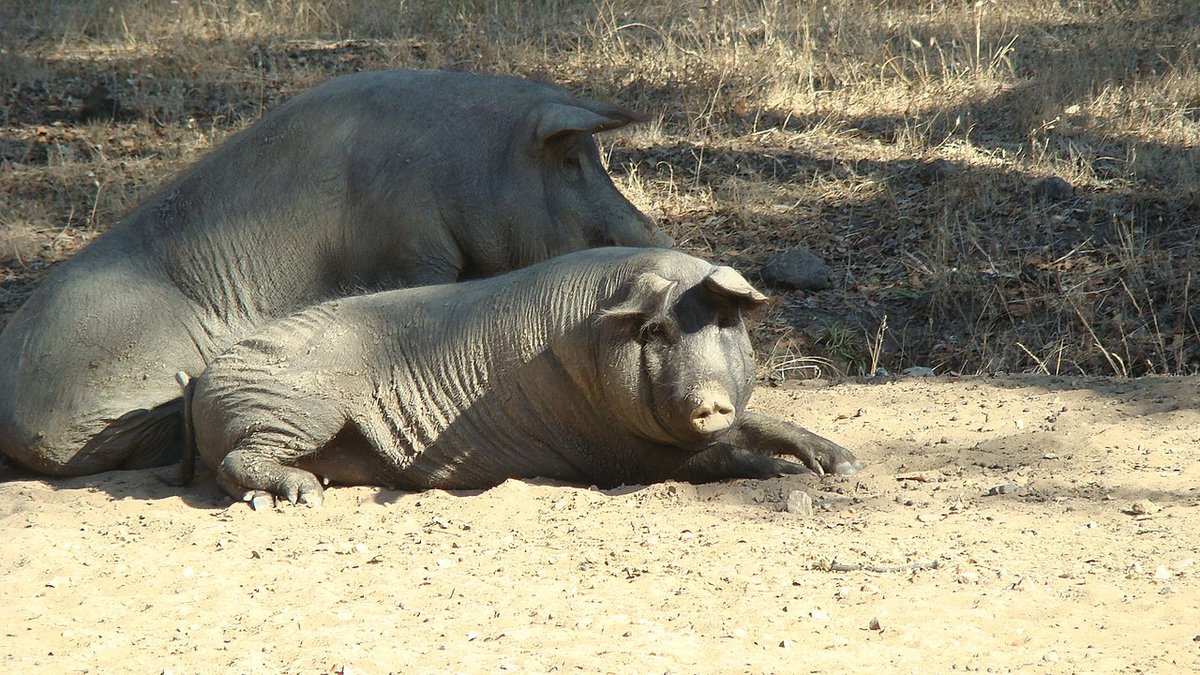
Autumn and winter introduce traditional dishes connected to hunting or to Iberian pork, which is central to the wider Sierra de Aracena. This is slow-cooked, hearty food suited to cooler days, the sort of cooking that makes most sense after a morning spent outside.
When to come
Late autumn and winter are good times to see this part of the Sierra de Aracena. Chestnut trees lose their leaves, the hills change colour and the paths remain quiet.
Mornings can be cold, the kind of cold that settles into your hands before the sun has fully risen. Warm clothing and sturdy footwear make a difference, especially after rain when mud appears on the trails.
Summer brings strong daytime heat, which is typical of inland Andalucía. Nights tend to be cooler, but walking at midday can feel demanding.
Cumbres de Enmedio does not rely on attractions or a packed calendar. Its appeal lies in its scale and its setting within the Parque Natural Sierra de Aracena y Picos de Aroche. For those content with short streets, open countryside and a rhythm set by neighbours rather than timetables, it offers a clear sense of rural life in this part of Andalucía.