Full Article
about Higuera de la Sierra
Gateway to the natural park, known for its static Three Kings parade; white mountain village with traditional anise distilleries.
Hide article Read full article
First Impressions in the Sierra de Aracena
Tourism in Higuera de la Sierra is straightforward and unhurried. You arrive, leave the car near the centre, and walk down to the main square. The village is small, so distances are short and easy to manage on foot. On weekdays or early in the day, it is usually possible to find a space in nearby streets. In autumn weekends or on certain public holidays, it can feel busier than expected.
Higuera de la Sierra sits within the Sierra de Aracena, a little over an hour from Huelva if the journey is direct. The final stretch is typical mountain road, with bends and a slower pace. Nothing unusual for this part of Andalucía, but it does set the tone before you even arrive.
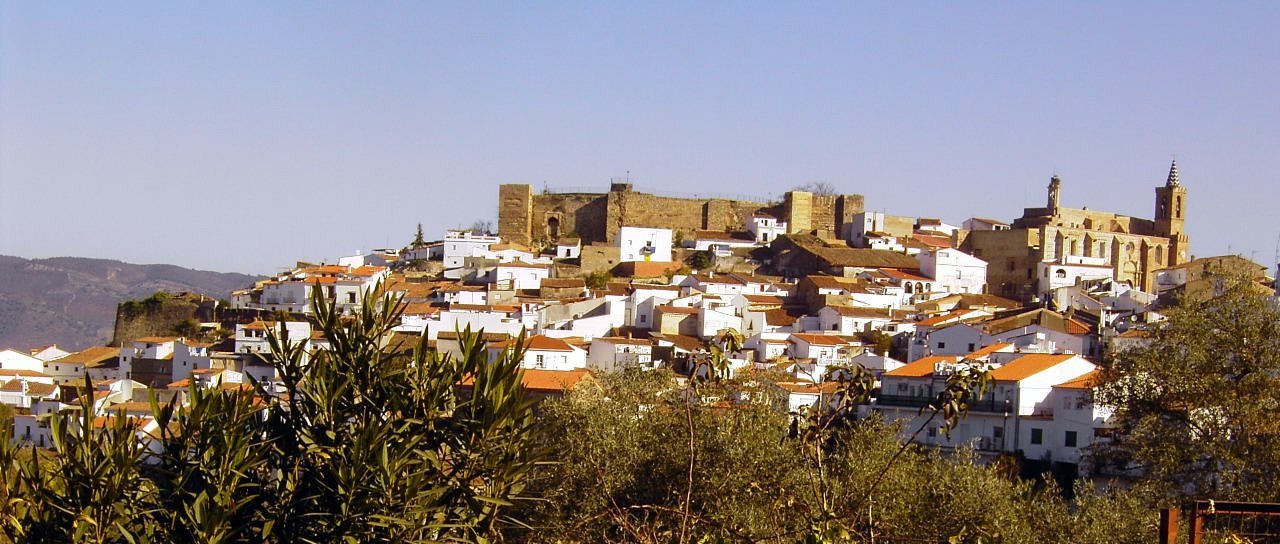
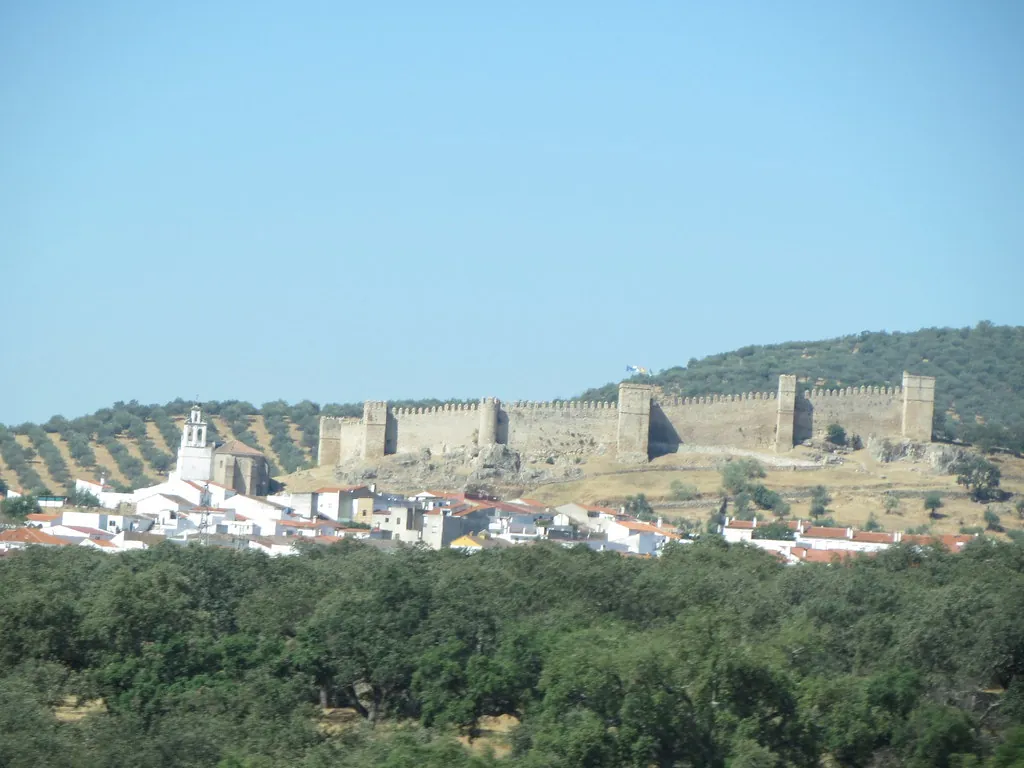
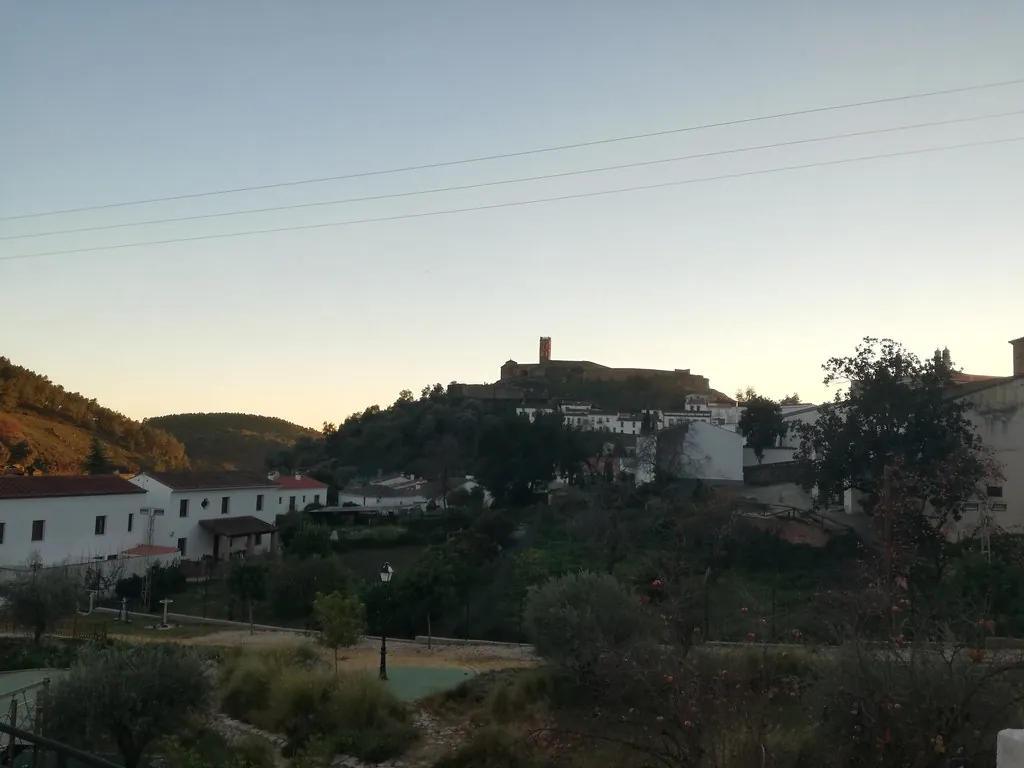
The streets rise and fall between whitewashed houses with simple façades. There are no large monuments dominating the skyline. People tend to come here for the feel of a small mountain village and for what lies beyond its centre rather than for major sights.
Getting There and Moving Around
The usual route is along the N‑433, passing through the Aracena area. The last kilometres wind into the hills, so a calm approach to driving helps.
Once in the village, parking is generally on the street. It is not usually difficult except on a handful of specific dates. If the central square is full, it makes sense to leave the car slightly higher up and walk down. Everything is close enough that this never becomes a burden.
The quieter moments tend to be early in the morning or later in the afternoon. Around midday there is less movement, and many shutters are down, giving the village a slower, almost paused feel.
A Small Centre with Everyday Life
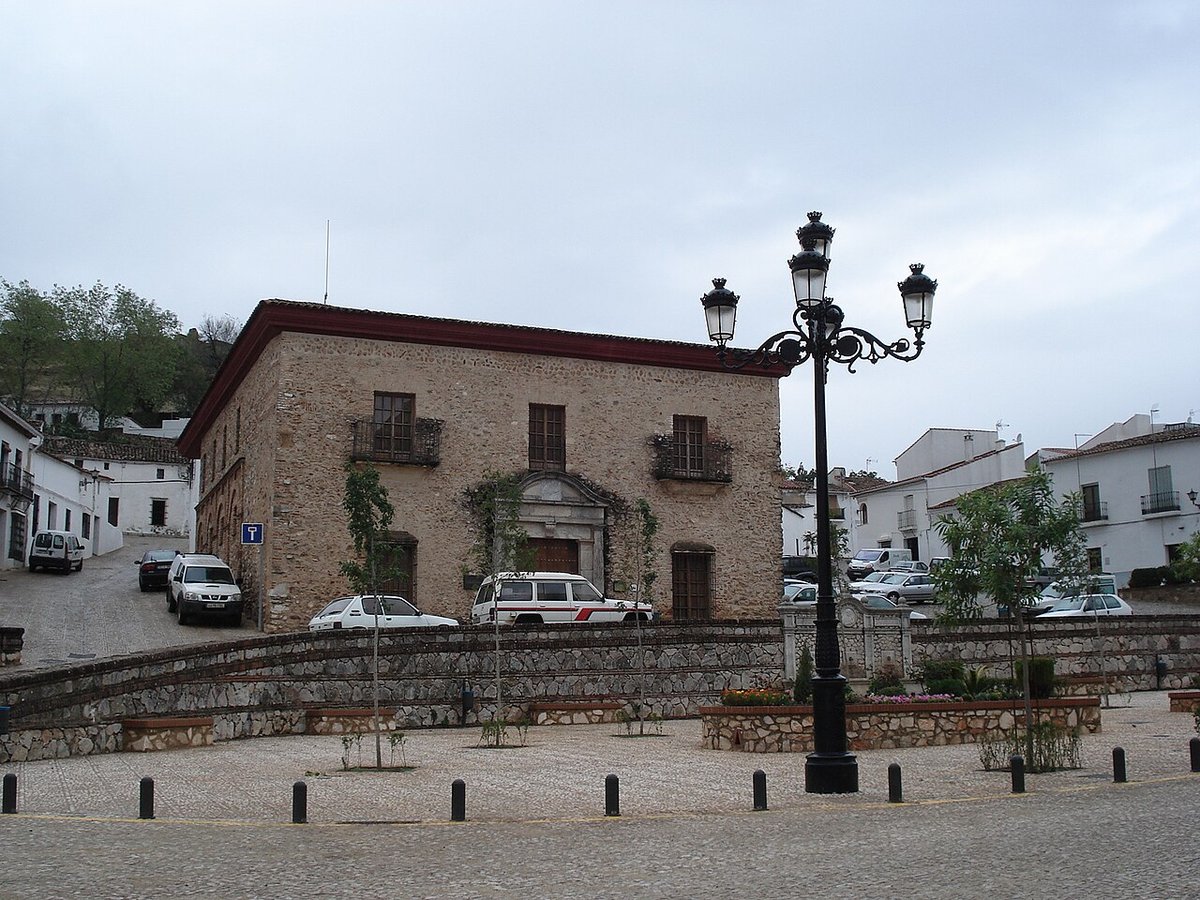
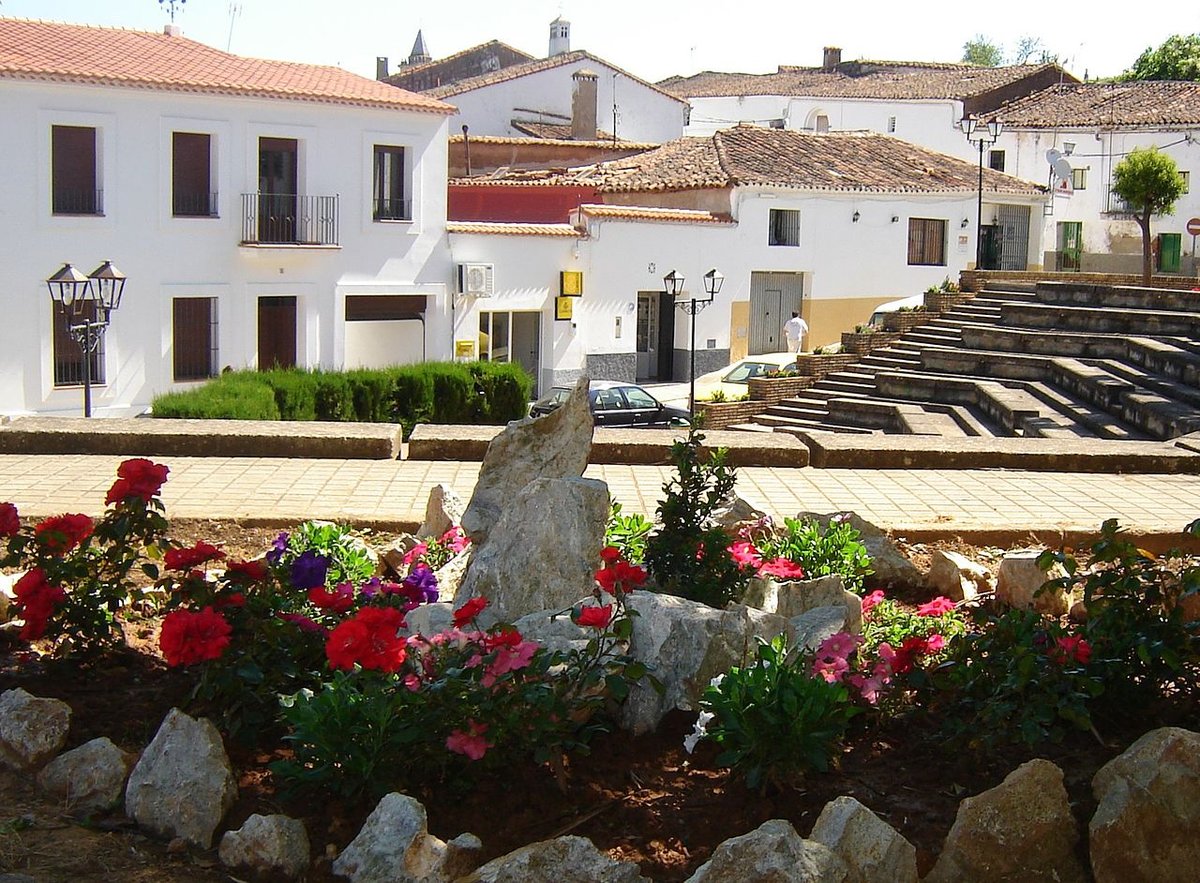
Life in Higuera de la Sierra revolves around the Plaza de la Constitución. It is not a large square, but it is where daily activity gathers. As the afternoon unfolds, neighbours sit and talk on benches while children play nearby, creating an easy rhythm that defines the place more than any landmark.
Close to the square stands the parish church. Its tower is visible from several points around the village and works as a useful reference when walking through the streets.
The old quarter covers only a few blocks. Narrow streets, short slopes, and traditional houses with iron window grilles and inner courtyards give it a clear character. There is no need for a map. Within half an hour, it is easy to get your bearings and understand how everything connects.
Those looking for museums or striking historic buildings will not find them here. The appeal is quieter and more everyday.
Beyond the Village Streets
What stands out most lies outside the built-up area. The municipality opens onto dehesas, landscapes of holm oak and cork oak that are typical of this part of the province of Huelva.
Rural paths begin almost at the edge of the village. Many are used for walking, and some for cycling if the hills are not a concern. The terrain constantly rises and falls, so even short routes can feel varied.
In autumn, the chestnut groves in the area change the look of the surroundings quite noticeably. In wetter years, the ground fills with fallen leaves, and people head out in search of mushrooms. It is something to approach carefully if there is no experience in identifying what is safe to collect.
These surroundings give a better sense of Higuera de la Sierra than the centre alone. The village and its landscape are closely linked, and it is this connection that shapes a visit.
Food and the Village Calendar
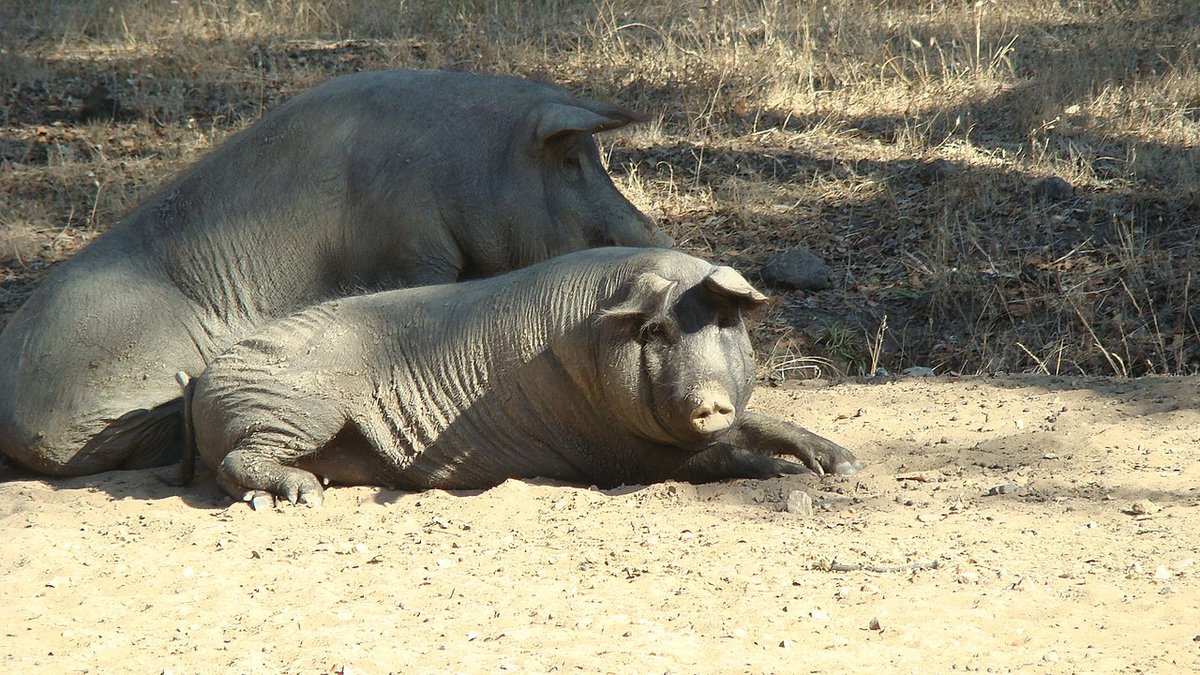
Local cooking is strongly tied to Iberian pork, as is common across the Sierra de Aracena. Dishes based on this ingredient appear frequently. Depending on the season, mushrooms also feature, and chestnuts become part of the kitchen as colder weather arrives.
Many of these foods are still connected to the traditional household slaughter of pigs, known in Spain as the matanza. It remains part of life in a number of homes in the village, maintaining a link between daily routines and older practices.
There are two periods in the year when Higuera de la Sierra becomes more active. In summer, families who live elsewhere return, and the village feels livelier. In December, religious celebrations with deep local roots bring together much of the population and create a very different atmosphere from the rest of the year.
Anyone seeking a quieter visit may prefer to avoid those times.
A Simple Way to Approach It
Higuera de la Sierra works best without rushing or expecting a long list of sights. It suits a short stop or as a base for exploring the wider Sierra de Aracena.
If the centre is crowded, park a little higher up and walk down. After spending some time in the square and nearby streets, head out along the surrounding paths. The place makes more sense when seen from its edges as well as from its centre.