Full Article
about La Nava
Town in the Múrtiga valley, ringed by orchards; known as the heart of the valley for its strategic, fertile site.
Ocultar artículo Leer artículo completo
The first thing you notice is the silence. Not the absence of sound, but a different quality to it – cork oak leaves rustling instead of traffic, a distant chainsaw rather than a ringtone. At 418 metres above sea level, La Nava’s main street ends in a granite fountain where water runs cold enough to numb your fingers even in May. Most visitors stop here just long enough to refill bottles, photograph the view across the Sierra de Aracena, and drive on towards the jamón mecca of Jabugo twelve kilometres west. They miss the point entirely.
A village that prefers stone to selfies
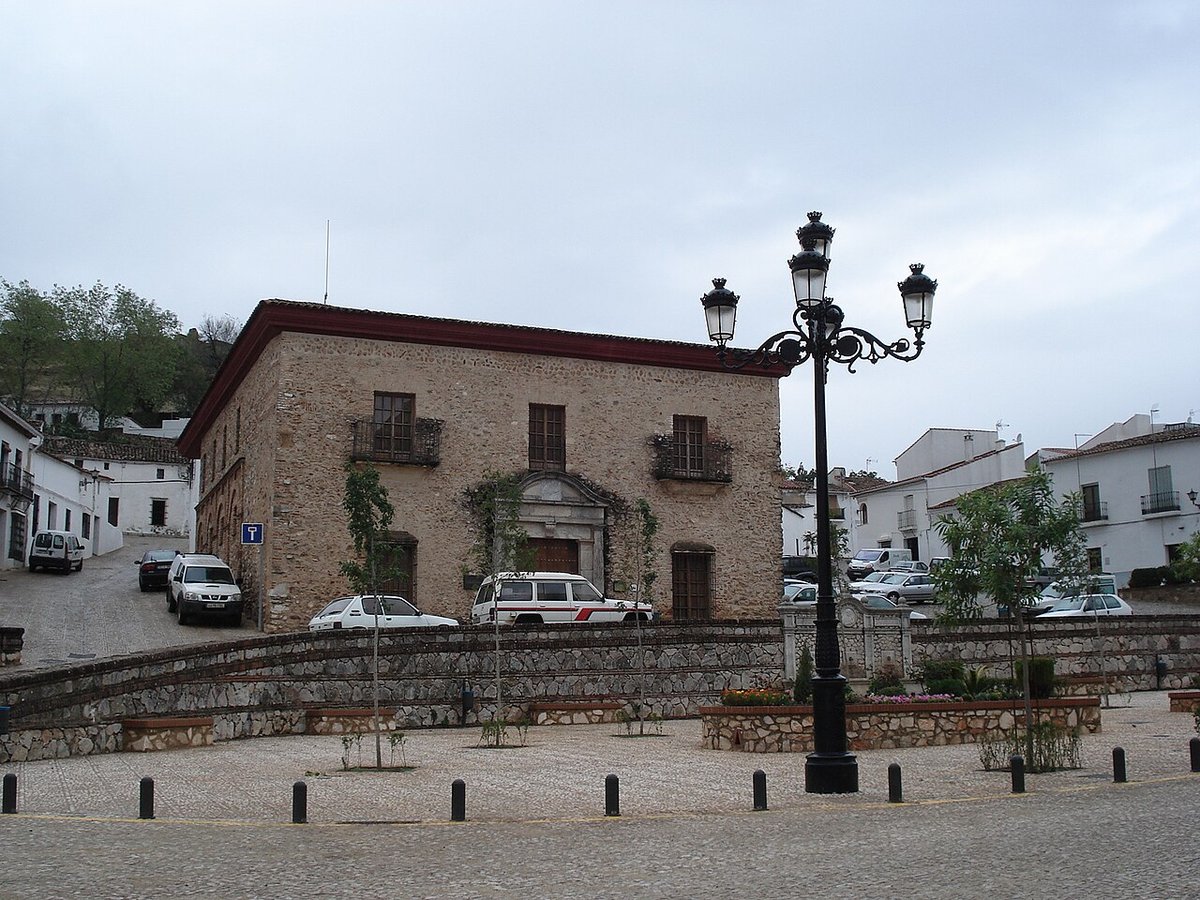
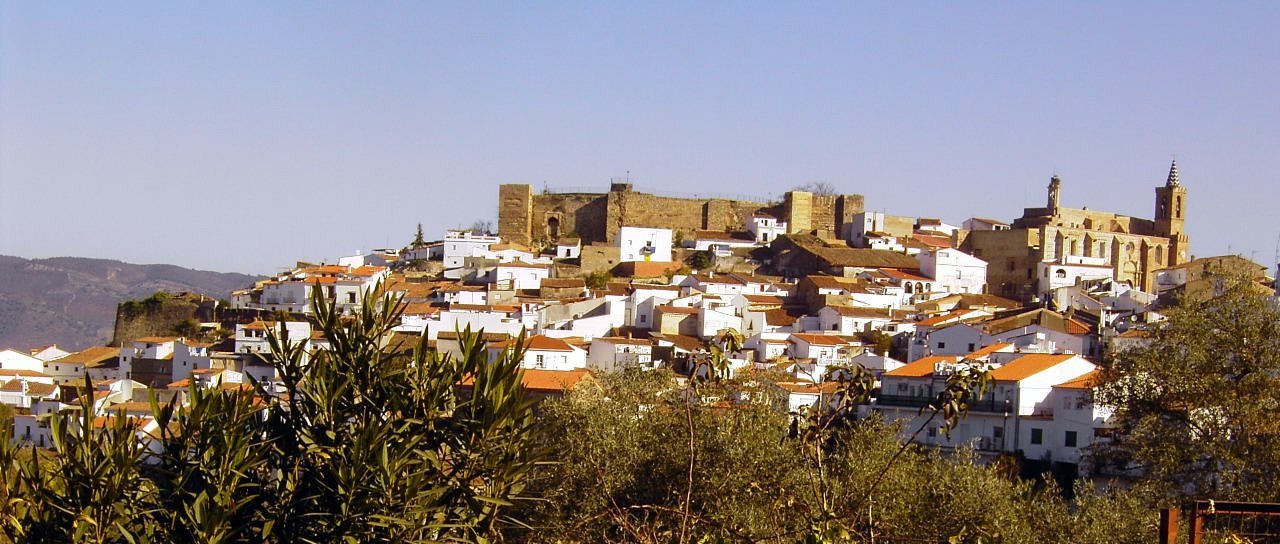
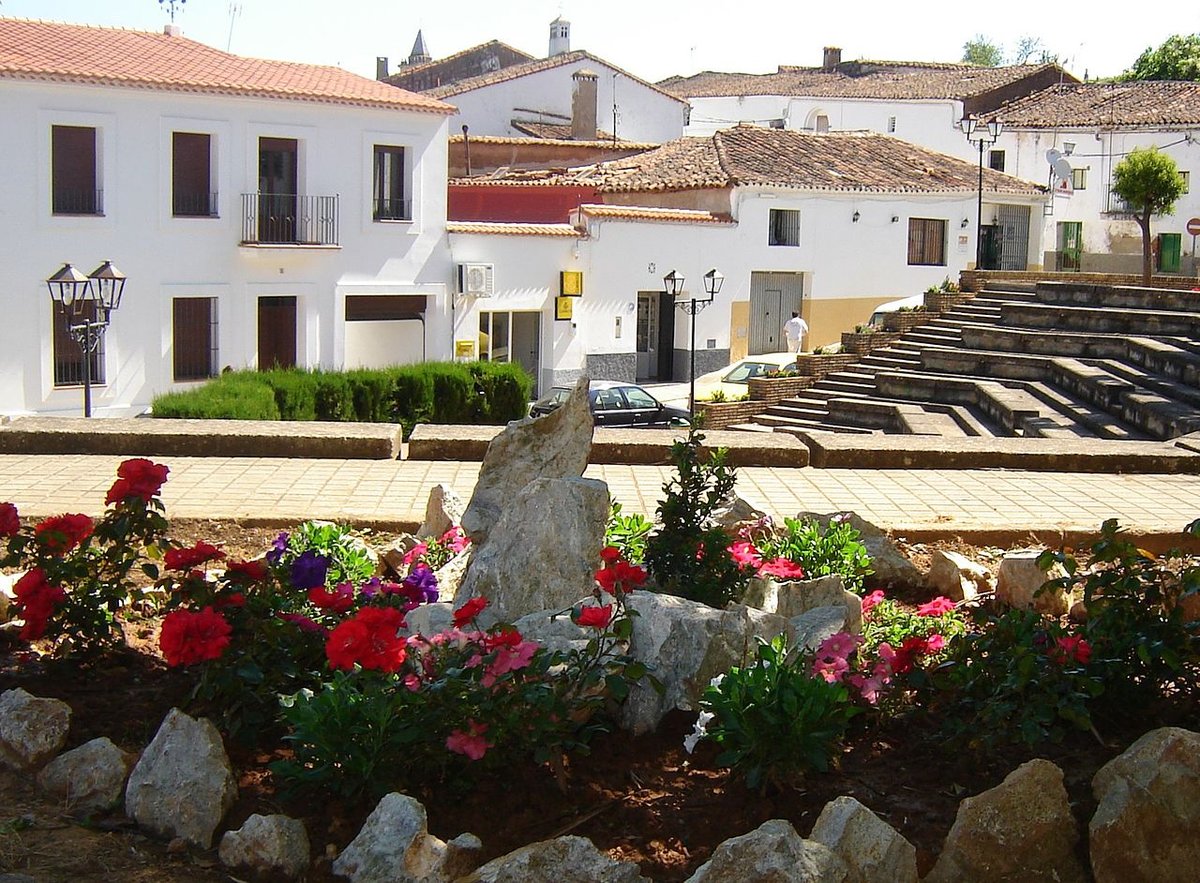
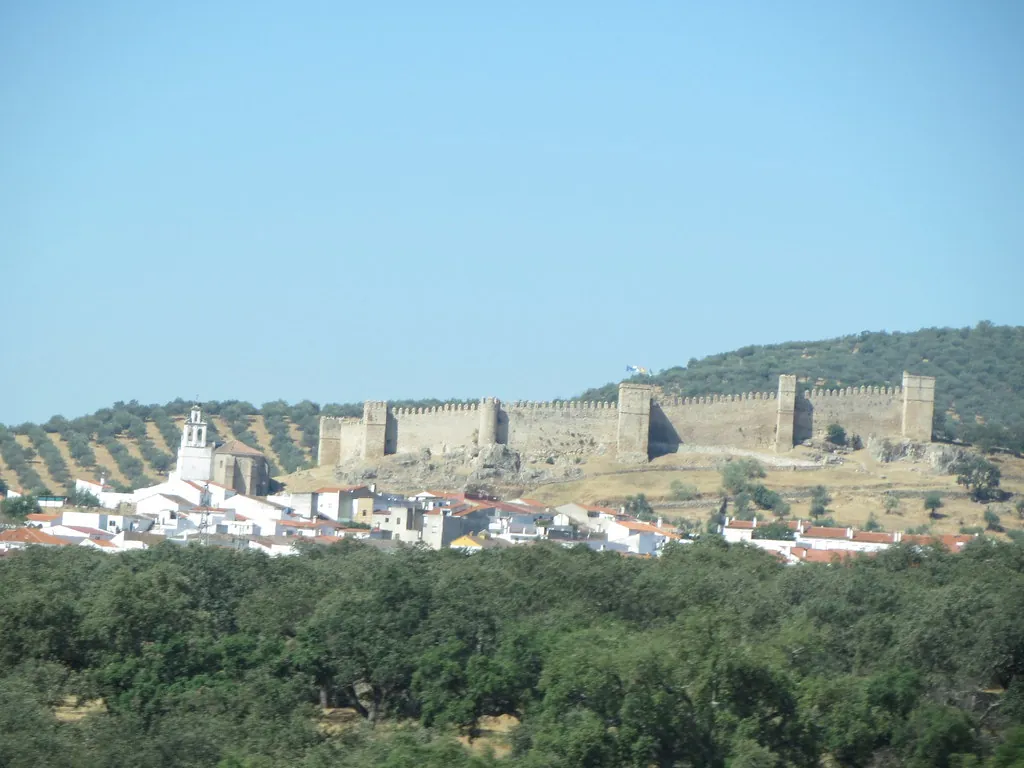
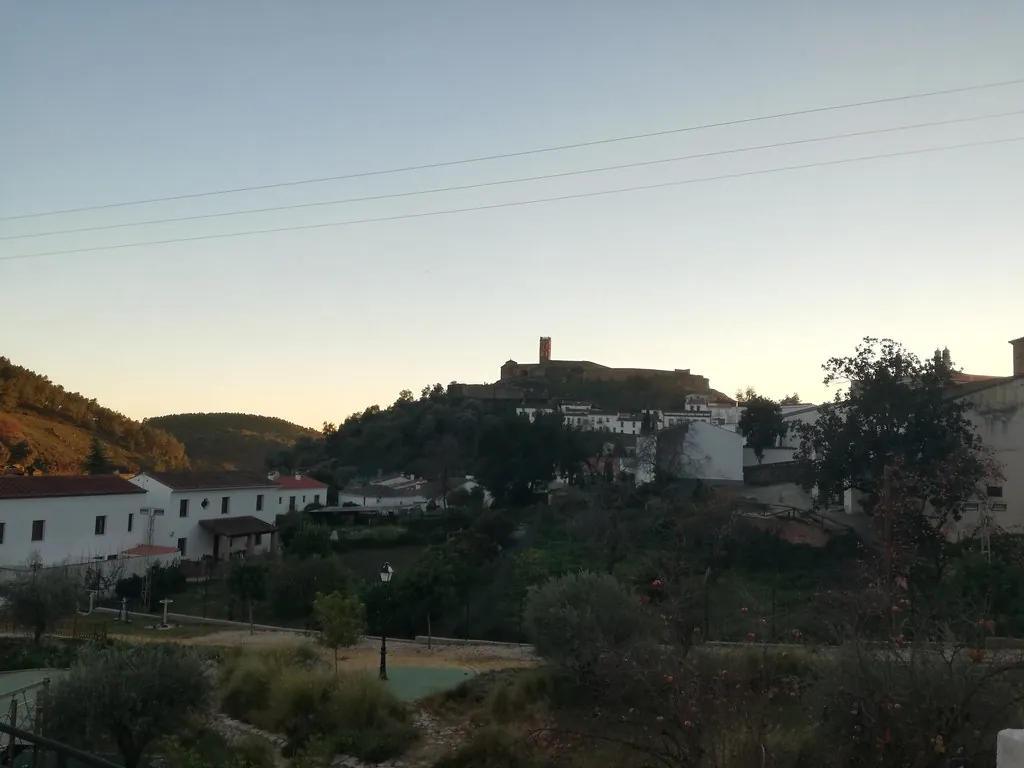
Houses in La Nava are the colour of weathered barley, not the postcard white villages assume further south. Local granite walls support terracotta tiles heavy enough to withstand Atlantic storms that roll in from Portugal. Nothing is taller than the church tower – itself barely three storeys – so buzzards circle above the rooftops at eye level. Population 259, according to the last padrón, though the school only has seventeen pupils and the doctor visits twice a week. The place feels lived-in rather than curated; washing lines criss-cross the narrow lanes, and elderly men still carry groceries in wicker baskets rather than plastic bags.
Architecture buffs will find no grand monuments, yet the consistency is remarkable. Every dwelling follows the same mountain pattern: thick stone to keep heat out in summer, small windows to trap it in winter, and an inner patio where lemon trees grow in half-barrels. Even the new builds copy the old proportions, though they hide solar panels behind Roman-tile ridges. The result is a settlement that appears to have grown from the hillside rather than been dropped on it.
Art in the ermita and food before four
The surprise comes inside the thirteenth-century Ermita del Rosario, ten paces from the fountain. Thursday to Sunday the heavy oak door swings open to reveal what locals call “el museo”: three original graphic works – Picasso, Miró, Dalí – hanging on rough limestone walls where candles once flickered for plague victims. Nobody is quite sure how they arrived; theories range from a Franco-era tax dodge to a wealthy Sevillana’s love affair with the village priest. Whatever the truth, standing alone with a 1958 Picasso linocut while swallows swoop through the chapel rafters feels faintly illicit. Opening hours are 11:00-14:00 and 17:00-19:00; arrive outside those times and you’ll need to ring the ayuntamiento (959 12 10 79) so the key-holder can shuffle down from her kitchen.
Art appreciation works up an appetite, but the village timetable is unforgiving. All four bars stop serving food at 16:30 sharp. Miss that window and dinner becomes a bag of crisps and a caña. The daily menú del día hovers around €10 and usually features gurumelos – wild mushrooms that taste like a cross between porcini and steak – stewed with pork and mountain herbs. If you’re offered winter gazpacho, expect a thick bowl of warm tomatoes, ham and hard-boiled egg rather than the chilled liquid version sold in Covent Garden. Vegetarians should ask for “espinacas con garbanzos”; the spinach is picked from allotments behind the cemetery and the chickpeas come dried from Cádiz, not tinned.
Walking tracks where boar outnumber people
Three way-marked paths fan out from the top of the village. The easiest is a 5 km loop through cork plantation to the Fuente de los Barrancos, a spring where shepherds once washed their flocks. The 10 km trail to Cortegana passes a Bronze-age burial mound and ends beneath a twelfth-century castle, though the only refreshment en route is a stone trough fed by a rivulet – pack at least a litre per person. Early risers often see roe deer on the firebreaks and, if the wind is right, the musky scent of wild boar lingers in the chestnut glades. Mobile coverage vanishes within minutes; download the Andalucía Natural map before leaving the plaza.
Spring brings the wildest display. From late March the dehesa floor turns cobalt with lupins, followed by rockrose and strawberry trees whose blossom smells of honey. By mid-May the first gurumelos push through leaf litter, prompting locals to head out at dawn with wicker baskets and the traditional curved knife. Tagging along is possible, but expect stern instructions on where you may and may not pick – these patches have belonged to families for generations.
When to come, and when to stay away
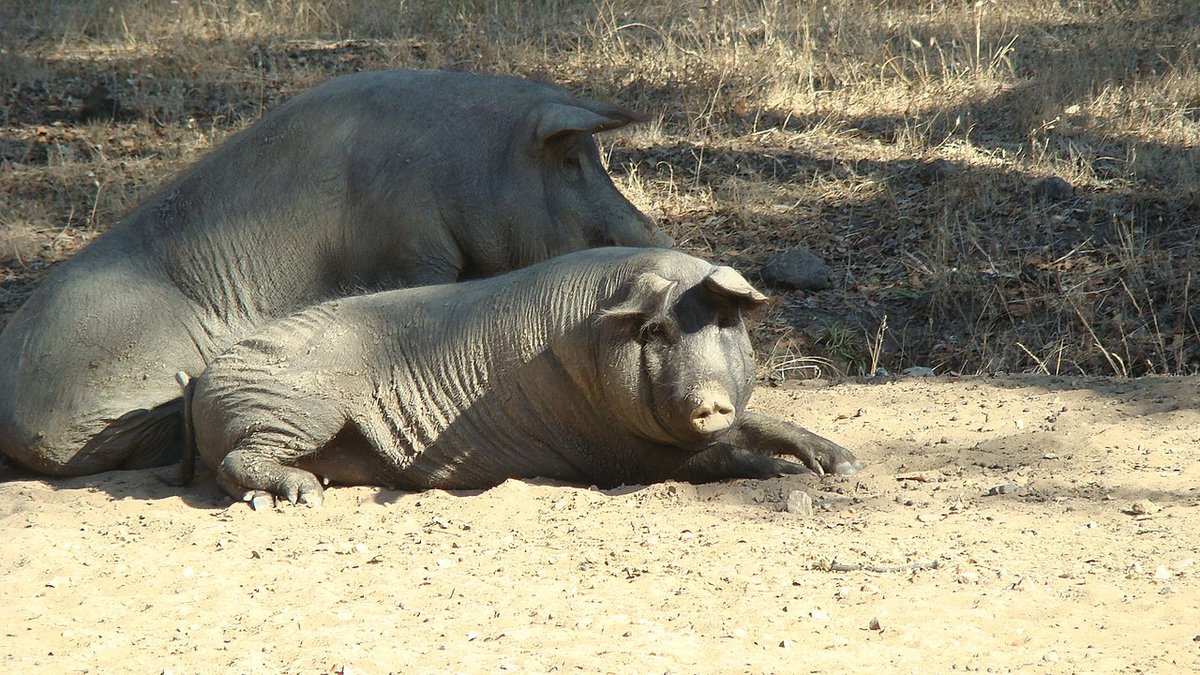
April and May are the sweet spot: daytime temperatures sit in the low twenties, nights cool enough for a jacket, and the landscape is Technicolor green. September offers the same climate plus the added theatre of the montanera, when black Iberian pigs gorge on acorns and grow the marbled fat that makes Jabugo ham famous. The village fiesta, held around 15 August, crams the square with peach-wine cups and loudspeakers blasting sevillanas until 3 a.m. Accommodation within La Nava itself is limited to two self-catering cottages; most visitors base themselves in Aracena twenty minutes away and drive in for the day. There is no hotel, no cash machine, and the nearest petrol pump is in Valverde del Camino twenty-two kilometres south – plan accordingly.
Winter has its own austere charm, but fog can trap the hamlet for days and the single-track road from the N-435 becomes slick as ice. Chains are rarely needed, yet a hire-car without grip control will wheel-spin on the granite chippings. Bars remain open, wood smoke scents the air, and the Picasso chapel empties except for the occasional German hiker seeking refuge from the wind.
Leaving without the souvenir you wanted
There are no boutiques, no fridge-magnet stalls, not even a bottle of local olive oil wrapped in ribbon. The closest thing to a souvenir is a paper-wrapped wedge of jamón from the cooperativa in neighbouring Jabugo, sliced while you wait and cheaper than any London deli. Most travellers depart with nothing more tangible than mud on their boots and the realisation that rural Spain can still function without Wi-Fi or weekend brunch. Whether that sounds like paradise or purgatory will determine if La Nava deserves a night of your holiday or merely a coffee stop on the way somewhere else.