Full Article
about Linares de la Sierra
A small village tucked in a valley, preserving the purest mountain architecture; known for its artistic stone-paved house entrances.
Hide article Read full article
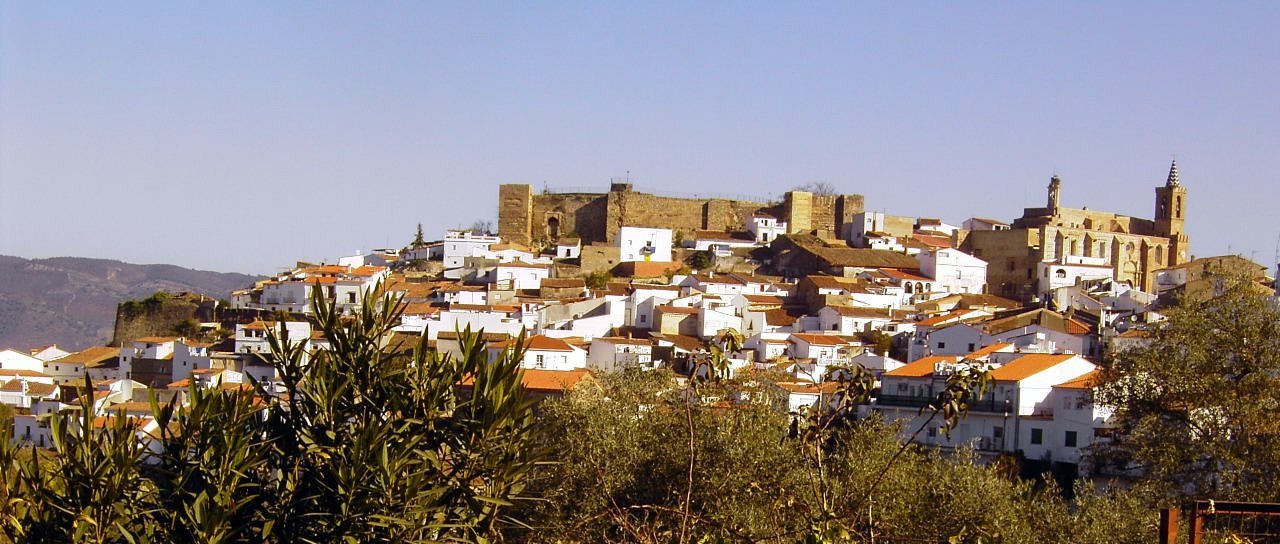
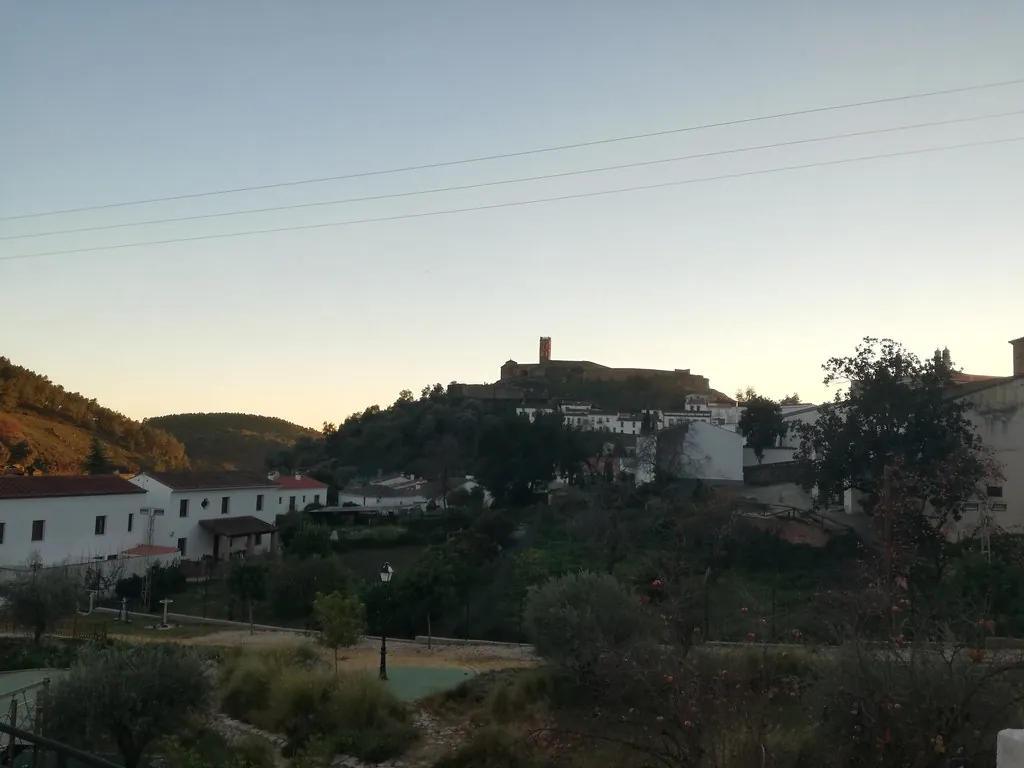
Linares de la Sierra is the kind of village you don't see coming. You're driving through the dehesa, that endless patchwork of holm oaks and pasture, and you round a bend. There it is, all at once, clinging to the hillside. It’s not a grand reveal; it’s more like stumbling onto a quiet backstage area while everyone else is out front. You park, get out, and your voice automatically drops a notch. That’s Linares.
It sits in the Sierra de Aracena, just over five hundred meters up. The scenery isn't about dramatic cliffs or panoramic lookouts. It's the low hum of the dehesa: cork trees, old vegetable plots, stone walls that peter out into footpaths. The kind of landscape that makes you slow down because there’s nothing obvious to hurry towards.
Un pueblo que se recorre en zapatillas
The centre is small. You can walk from one end to the other in about ten minutes, and that’s not an insult—it’s the appeal. Everything feels within arm's reach.
The streets are paved with these light-coloured stones arranged in geometric patterns called llanos. They look like someone decided to bring their grandmother’s patio tiles out into the public square. They’re uneven in that way handmade things are, and your eyes end up following the patterns instead of looking for a monument.
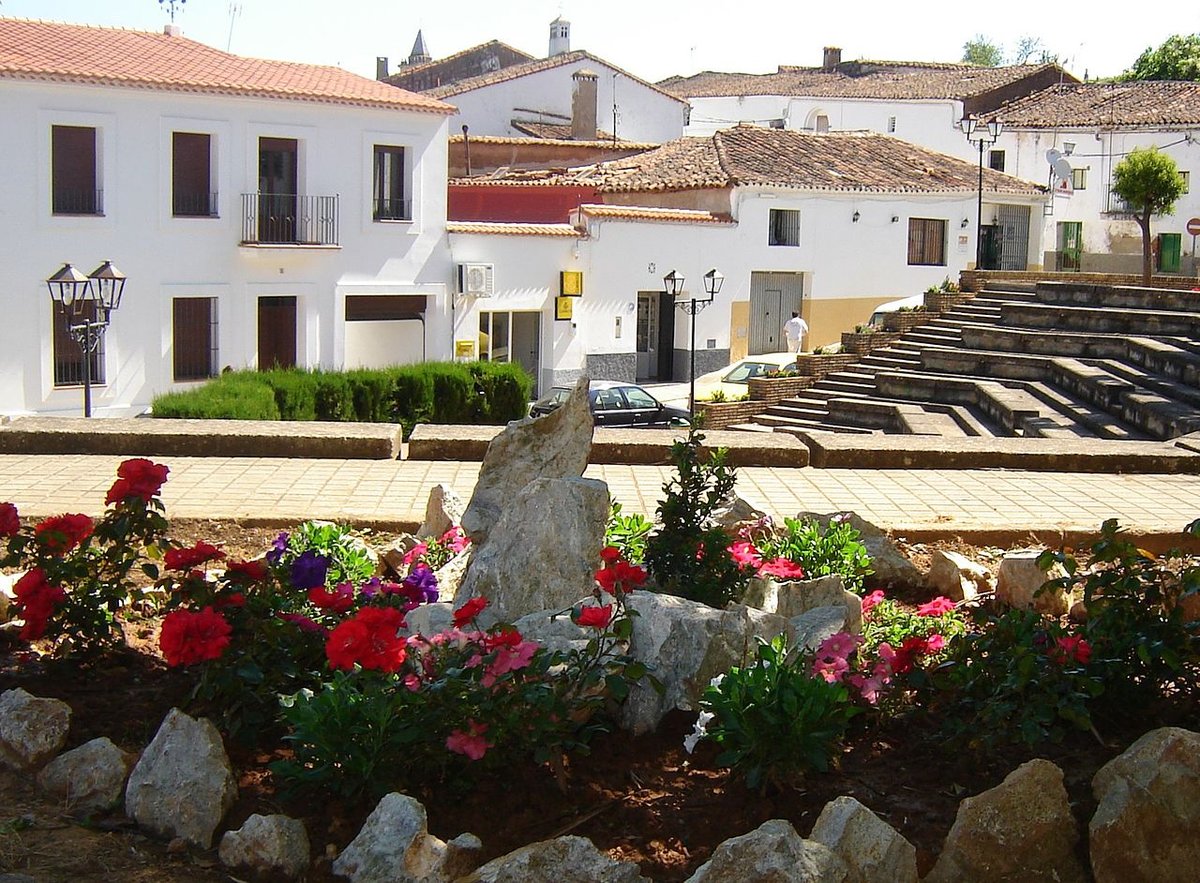
Houses are textbook sierra: white walls, iron grilles on the windows, potted geraniums fighting for sunlight. Nothing feels staged or freshly painted for your Instagram feed. You get the sense people live here first and don’t think much about tourists second.
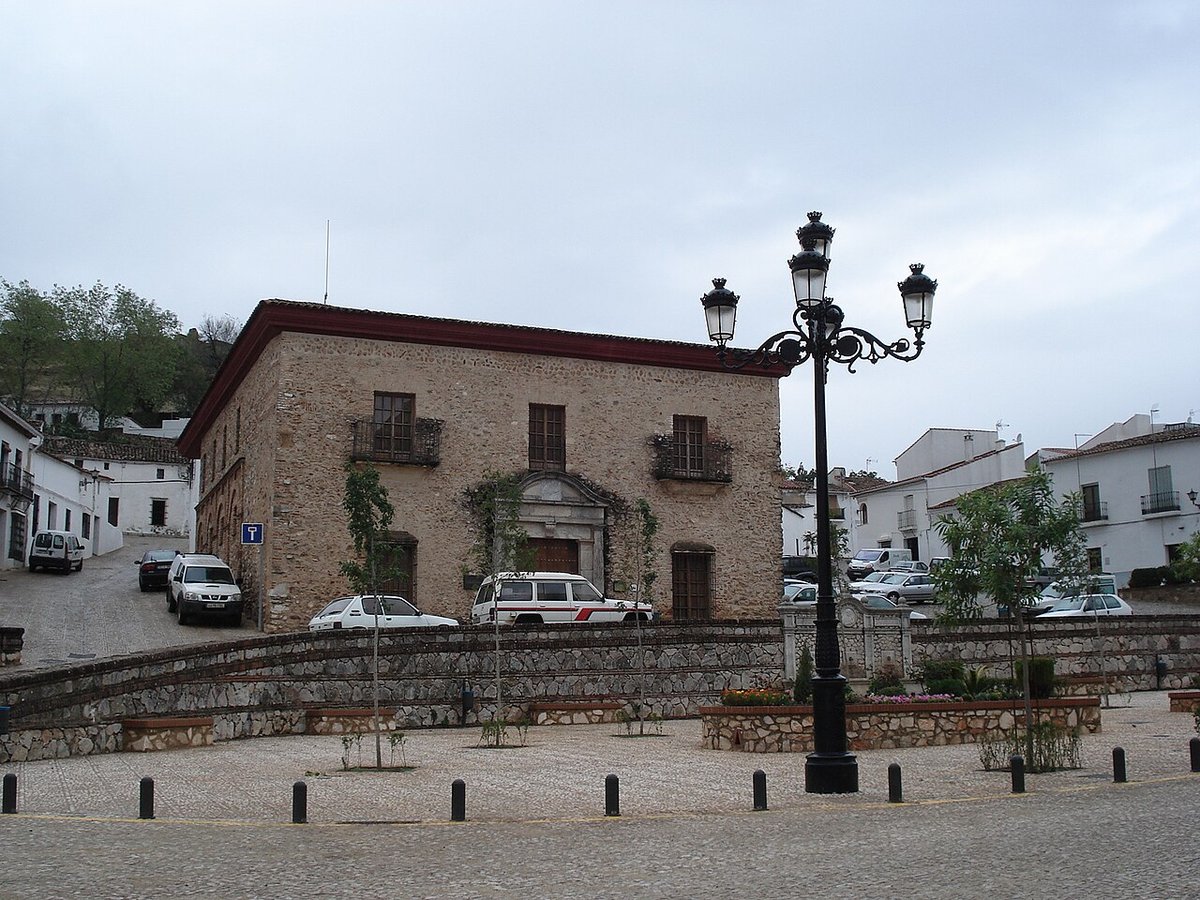
The church of San Juan Bautista sits in the main square. It’s an 18th-century building that doesn't shout for attention; it's often closed, which is pretty standard for villages this size. Its job seems to be just holding the square together, and it does that quietly.
El placer de no tener un plan
The best thing to do here is walk without a destination.
A few turns from the square and you hit the village edges. There are courtyards behind wooden gates, benches welded to sunny walls, and small pens where you might hear goat bells if you time it right. It doesn’t feel curated. You pass someone hanging laundry and they’ll give you a “buenos días” before going back to their task.
You stop looking for The Thing To See. Instead, you notice the shift from cobblestone to dirt track, from someone's front door to an open field of rosemary, from shaded alley to silent olive grove.
Senderos que eran caminos de verdad
A handful of walking routes start from or pass through Linares, connecting it to other dots on the map like Alájar or Los Madroñeros. These are old paths—the kind people used to get to a mill or take pigs to pasture.
You don't need boots; trainers will do just fine. The terrain is gentle but honest: some loose stones underfoot, a steady incline here and there.
Go early or late if you want company. Not human company—the four-legged kind. It's not a zoo, but I've seen wild boar root around in the distance at dusk more than once here. Roe deer too, if you're quiet and lucky.
You'll see traces of work everywhere: repaired dry-stone walls, a crumbling cortijo, terraces that still get used for vegetables. This isn't scenery preserved under glass; it's land that's still being used, just at a different rhythm.
Costumbres que no son para el folleto
Life here still moves to an agricultural calendar. The big fiesta is for San Juan Bautista in summer, but quieter traditions run deeper. In winter, people still do the matanza in their homes. Come autumn, half the village seems to head into the woods with baskets for wild mushrooms (and yes, you need a permit if you plan on joining them).
The food is what you'd expect from this land: Iberian ham from pigs that acorn-feed in those dehesas, local goat cheese, chestnut honey. It's not presented as gourmet; it's just lunch.
Cuánto tiempo y cómo llegar
Let's be clear: Linares isn't an all-day affair. Trying to make it one would feel forced. A solid couple of hours covers it: a stroll through every street, a short walk on one of the paths, a coffee in the square watching nothing happen. That's its natural length.
It works better as part of a circuit. You come from Aracena (a 20-minute drive along peaceful local roads), you wander, you breathe, and then you move on to another village down the road. The Sierra de Aracena makes sense when you hop between these small points, not when you treat each one as a final destination.
With under three hundred people, Linares fits perfectly into that rhythm. It doesn't try to impress you. But later, driving away, you'll find yourself thinking about those stone llanos or that particular quiet more than you thought you would