Full Article
about Puerto Moral
Small mountain village with rural charm and a nearby reservoir; known for its peace and the beauty of its dehesa landscapes.
Hide article Read full article
A Small Village on the Western Slopes
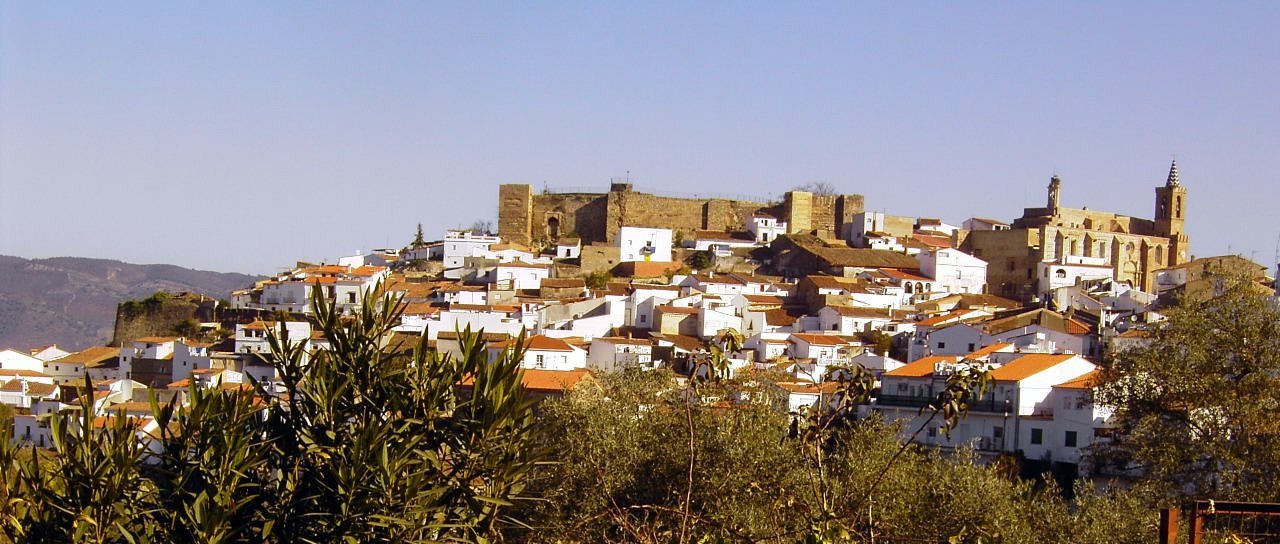
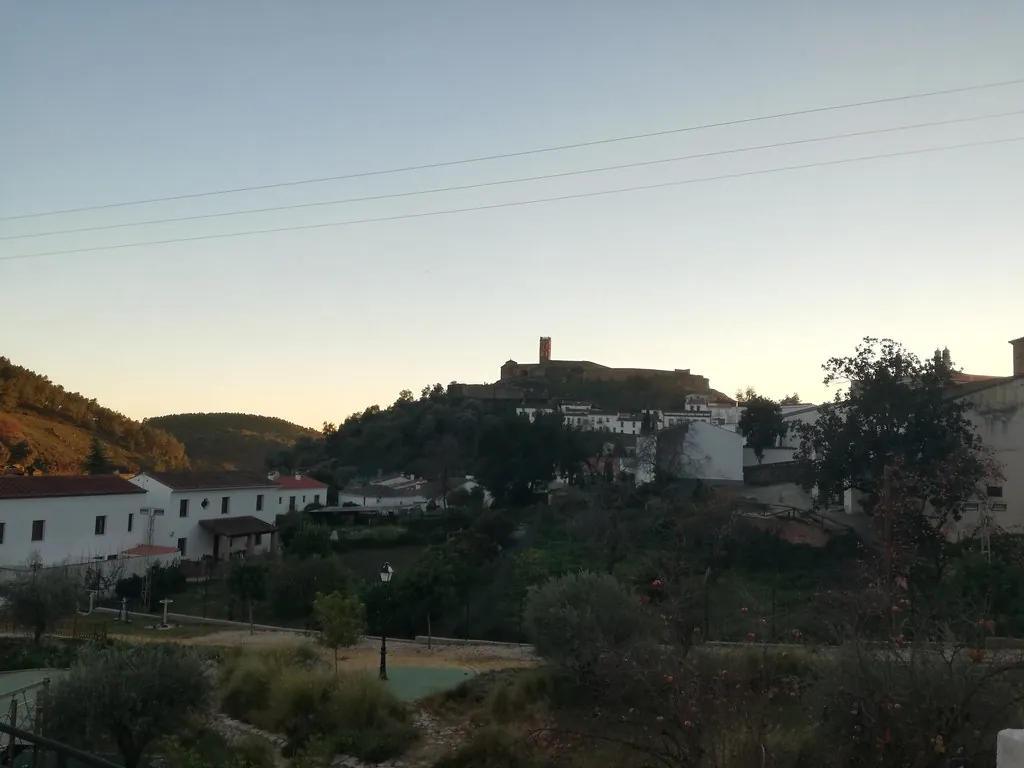
Puerto Moral lies on the western side of the Sierra de Aracena, in a landscape shaped by the dehesa and by a network of small villages that have traditionally lived from farming and livestock. With fewer than 300 inhabitants and set at around 500 metres above sea level, it keeps the scale of a classic mountain settlement: a compact cluster of houses, short streets and a close relationship with the surrounding countryside.
There is nothing expansive or urban about the layout. The village grew gradually, responding to agricultural needs rather than to any formal plan. Its modest size is part of its identity, and it can be explored at an unhurried pace, with the landscape never far from view.
Puerto Moral forms part of a wider rural territory in which neighbouring villages are linked by country roads and agricultural tracks. Life here has long revolved around the rhythms of the land, a pattern that remains visible in both daily routines and seasonal celebrations.
The Church and the Shape of the Village
The most recognisable building in the village centre is the Iglesia de San Pedro, dedicated to the Inmaculada Concepción. Its origins date back to the 16th century, although later alterations were carried out, probably in the 18th century. Like many churches in the sierra, it is sober in appearance. Whitewashed walls and clear, simple volumes give it a practical rather than monumental character.
Inside, there are altarpieces and religious images connected to local devotion. The church remains a reference point for community life, especially during key dates in the religious calendar.
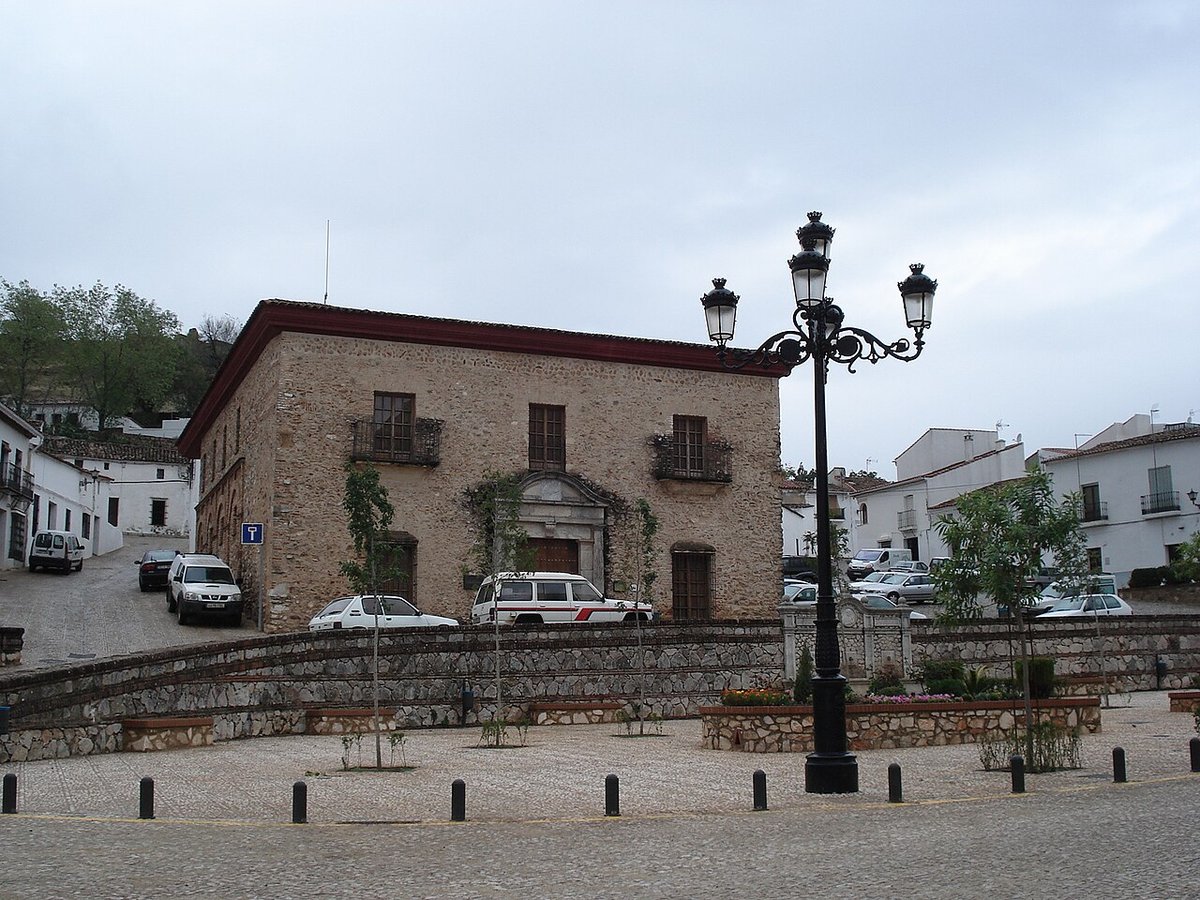
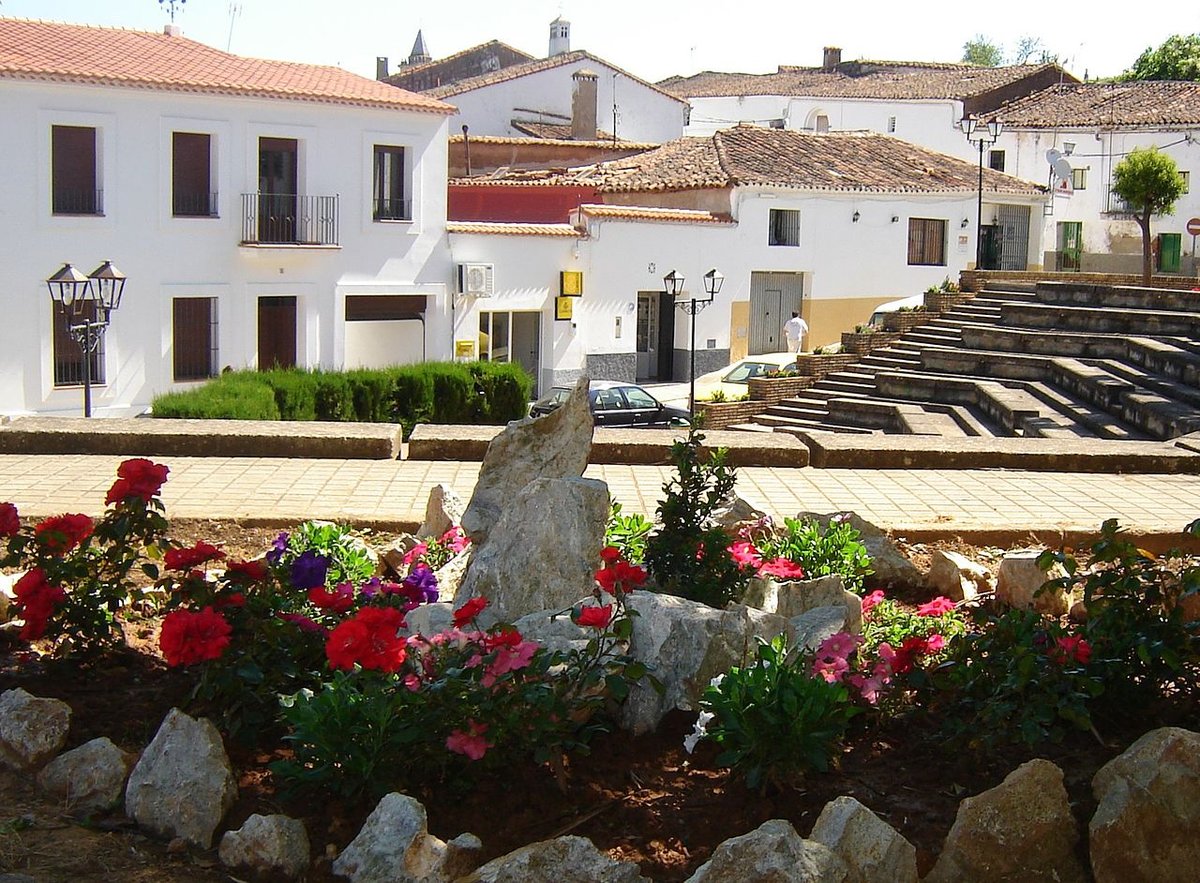
Around it, the houses are arranged along short, slightly winding streets with gentle slopes that encourage a slower pace. Most homes are whitewashed and one or two storeys high. Some feature stone plinths at ground level, wrought-iron window grilles and small interior patios. There are no large squares or broad avenues. The layout reflects the gradual expansion of an agricultural settlement, shaped by the needs of its residents over time.
Walking through these streets gives a clear sense of proportion. The buildings sit close together, creating a compact core that opens quickly onto open countryside.
The Dehesa Landscape
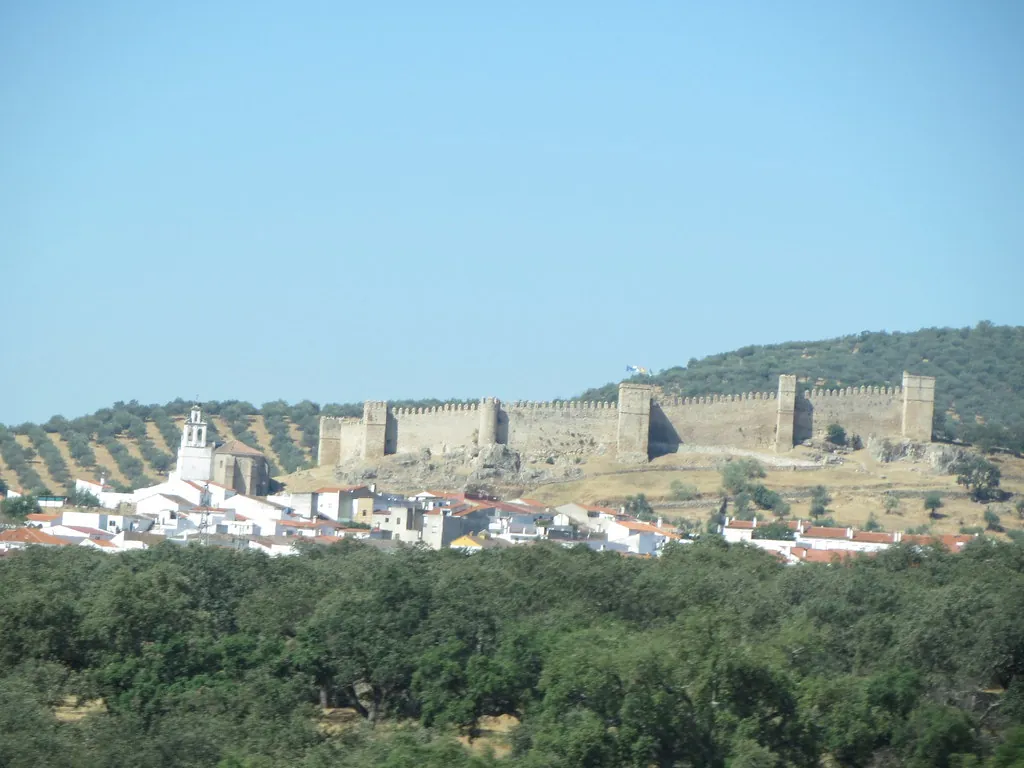
Step beyond the edge of the village and the dehesa appears almost immediately. This distinctive landscape defines much of the Sierra de Aracena. It is a form of managed woodland pasture, where holm oaks and cork oaks stand scattered across open grazing land. Stone or wooden fences divide the fields, creating a patchwork that shifts in colour and texture with the seasons.
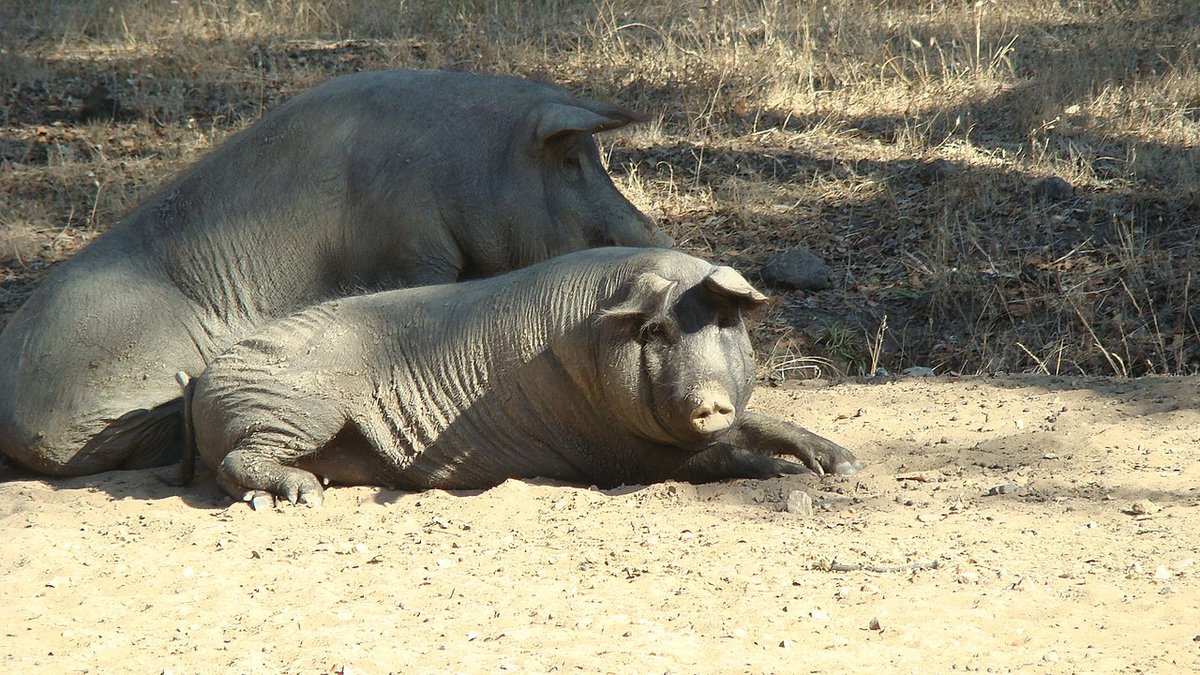
During the montanera, the period when acorns ripen, Iberian pigs can often be seen feeding in nearby estates. The montanera is an important phase in traditional pig rearing, as the animals roam freely and feed on acorns fallen from the oaks. This cycle is closely tied to the food culture of the region.
In certain areas, chestnut trees appear as well. They are more common in other parts of the Sierra de Aracena, but here they are present in smaller pockets. Rural tracks cross these estates, linking Puerto Moral with neighbouring villages and allowing visitors to explore the surroundings without major changes in elevation.
The overall impression is one of openness. The trees are spaced widely enough to let in light, and the horizon is rarely blocked for long. As the year advances, the tones of the grass and leaves shift, altering the mood of the landscape without changing its essential structure.
Walking the Rural Paths
One of the clearest ways to understand Puerto Moral is to walk along its agricultural paths. These are not high mountain routes or especially demanding trails. Most run between fenced fields, seasonal streams and patches of Mediterranean woodland.
The terrain is generally gentle, making it accessible to those who simply want to wander rather than undertake a strenuous hike. In wetter months, some paths can become muddy, so suitable footwear is advisable.
With a bit of patience, birds of prey may be seen circling above the dehesa. At ground level, small animals move through the undergrowth, more often heard than seen. Direct wildlife sightings are not guaranteed, but the prevailing sensation is one of rural quiet and a steady, unhurried rhythm.
In autumn, some people head into the surrounding countryside to look for wild mushrooms, a practice that is fairly widespread across the sierra. It is important to have proper knowledge or to go with someone who can clearly distinguish between species, as toxic varieties also grow in these hills.
These walks do not depend on marked viewpoints or dramatic landmarks. Their appeal lies in continuity: fences stretching into the distance, the shade of scattered oaks and the sense of moving through a working landscape rather than a staged attraction.
Traditions and Seasonal Life
Life in Puerto Moral remains closely linked to the traditional calendar of the Sierra de Aracena. The feast of the Inmaculada Concepción in December holds particular importance, as she is the patron of the parish. The celebration usually combines religious events with gatherings in the streets, bringing neighbours together at the start of winter.
In summer, the village festivities take place, generally in August. This is when many families who live elsewhere during the rest of the year return. Open-air dances and outdoor activities become central to public life for a few days, and the population temporarily increases.
Another enduring custom is the matanza del cerdo, the slaughter of the pig, still carried out in some households during winter. More than a public spectacle, it remains a domestic and family practice. It helps explain much of the local food culture, which is rooted in livestock rearing and in making use of seasonal resources.
These traditions are not presented as performances for visitors. They form part of everyday continuity, shaped by agricultural cycles and by long-established habits within the community.
Getting There and Practical Notes
Puerto Moral is located a short distance from Aracena and is reached by regional roads that cross the sierra. From the city of Huelva, the usual approach is first towards the Aracena area, then continuing along the local road network.
The village itself is small enough to explore entirely on foot without difficulty. For walks in the surrounding countryside, comfortable footwear is recommended, particularly during rainy periods when some paths may be muddy.
Accommodation options within Puerto Moral are limited. For this reason, many visits are organised from other nearby towns in the Sierra de Aracena, using Puerto Moral as part of a broader exploration of the area.
In keeping with its size and setting, Puerto Moral offers a straightforward experience: a compact village, a working dehesa landscape and a way of life still closely tied to the seasons.