Full Article
about Santa Ana la Real
A pioneer town for Nordic walking tourism, set in wooded surroundings; known for its water spouts and traditional lime kilns.
Hide article Read full article
A slow beginning in the Sierra
Early in the morning, when the sun still slips low between cork oaks, Santa Ana la Real carries the smell of damp earth and old firewood. The silence does not last long. A door opens somewhere, a car starts on a slope, and the bells mark the morning with a dry sound that bounces off the whitewashed façades. Visiting Santa Ana la Real is a bit like that: walking slowly and letting the place reveal itself without hurry.
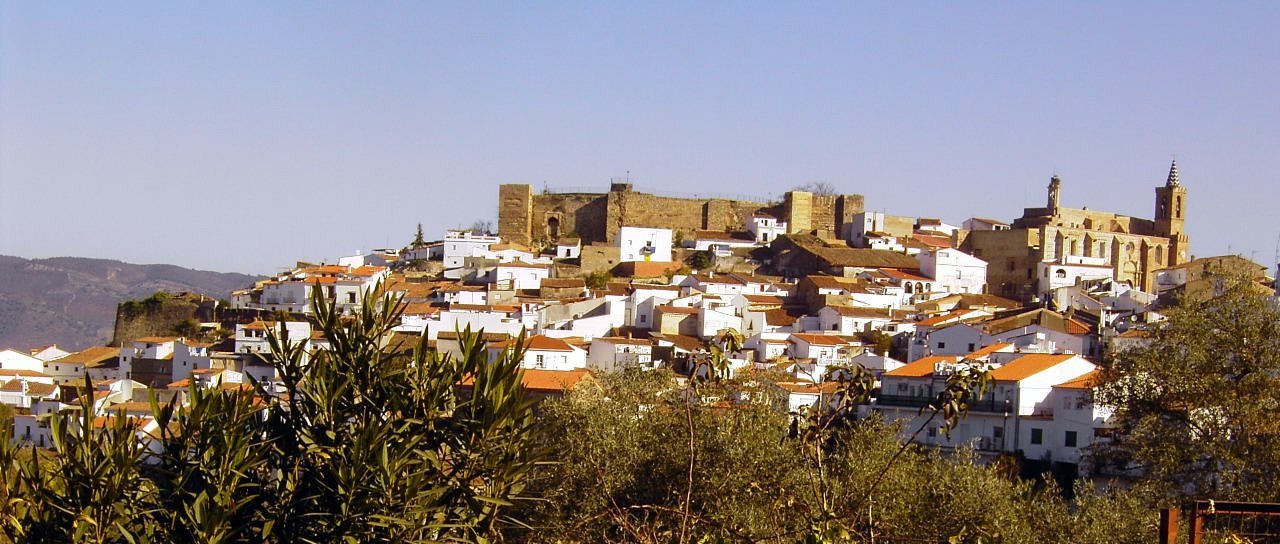
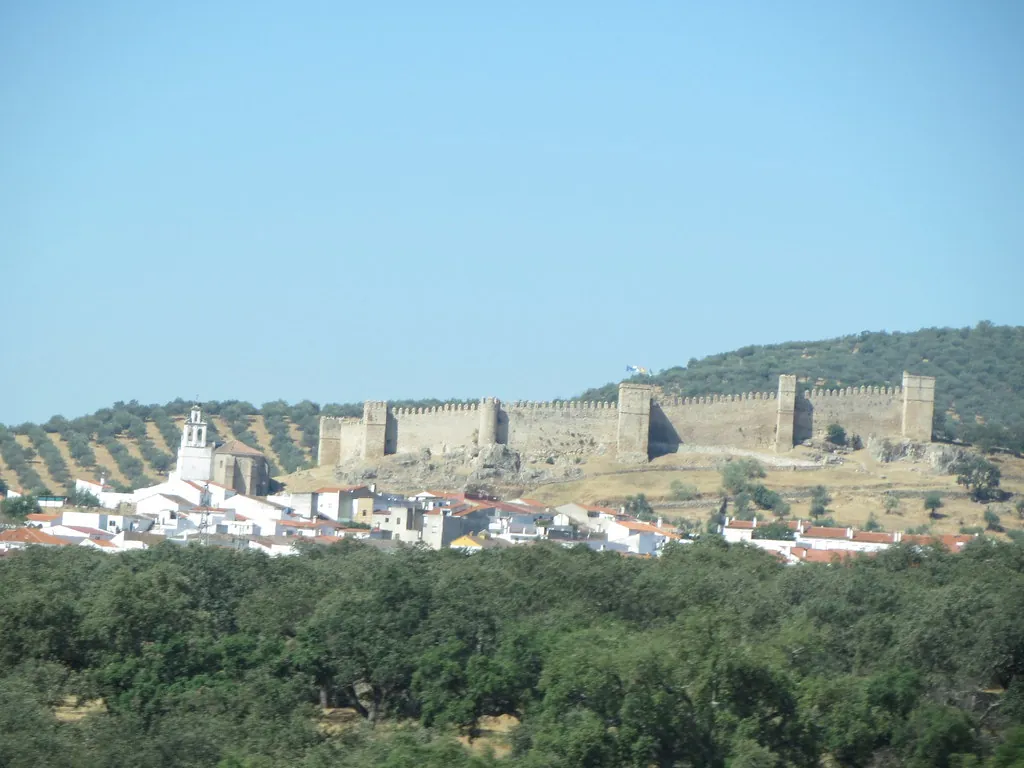
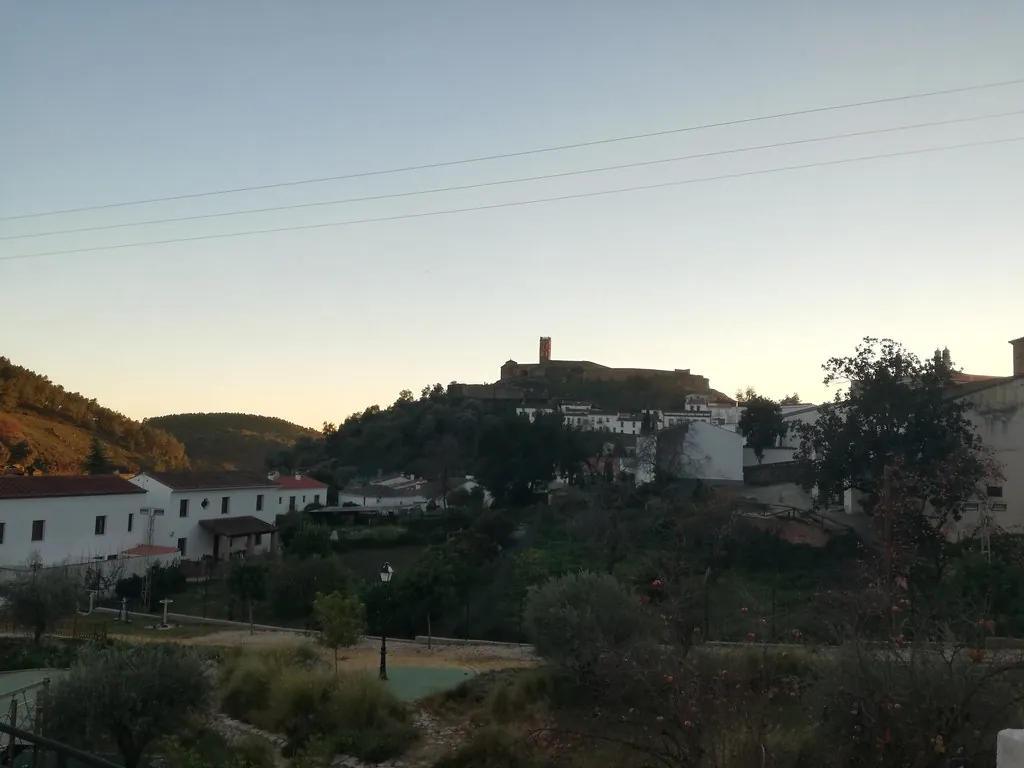
Set in the Sierra de Aracena, this small municipality, home to only a few hundred people, sits among dehesas, a traditional landscape of scattered trees and grazing land typical of this part of southern Spain. From a distance, it stands out for its cluster of white houses arranged along a gentle hillside. There are no grand monuments here. What defines it instead is the pace of rural life and the way the surrounding countryside reaches almost into the last streets.
The square and the church
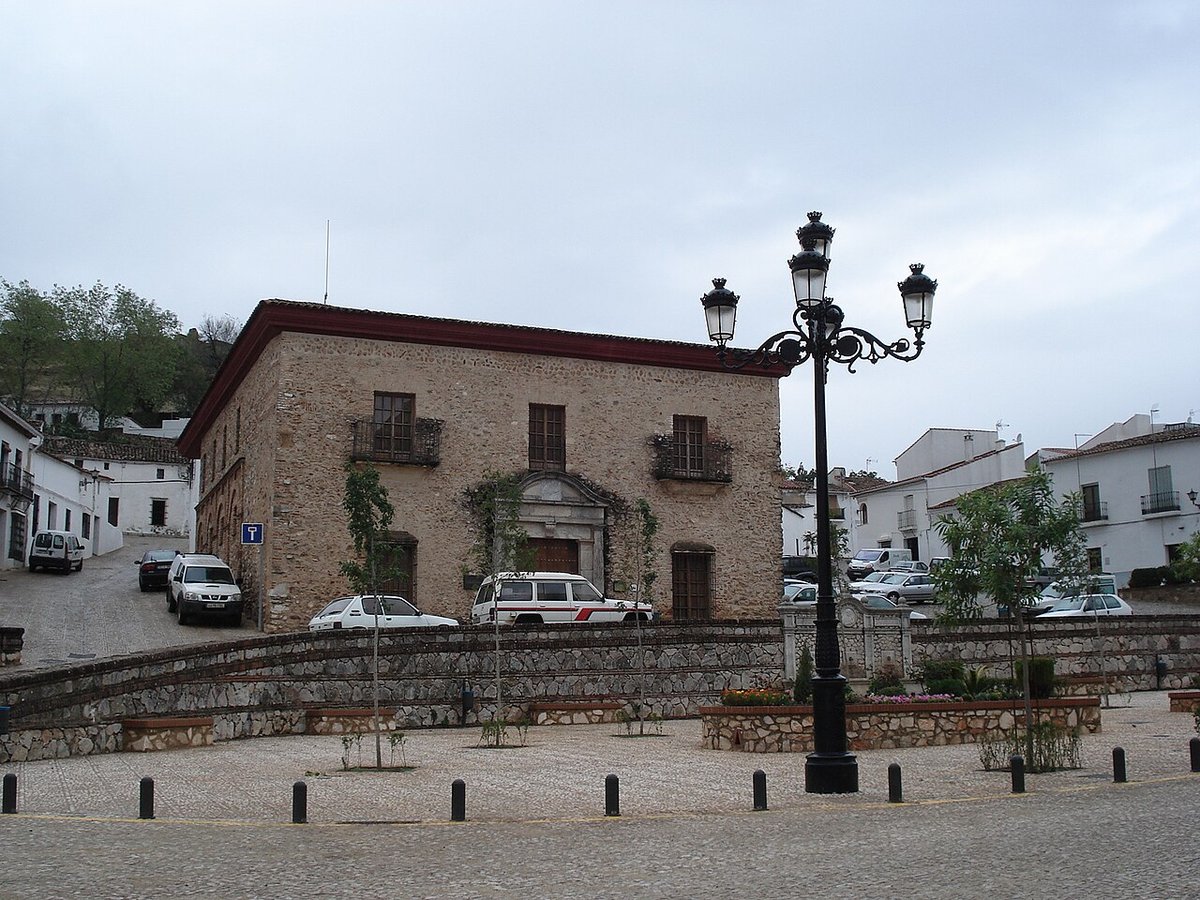
The main square is simple and fairly open. At its centre is a stone fountain where people often pause to talk before moving on. Conversations carry easily because the village, even at weekends, rarely has much background noise.
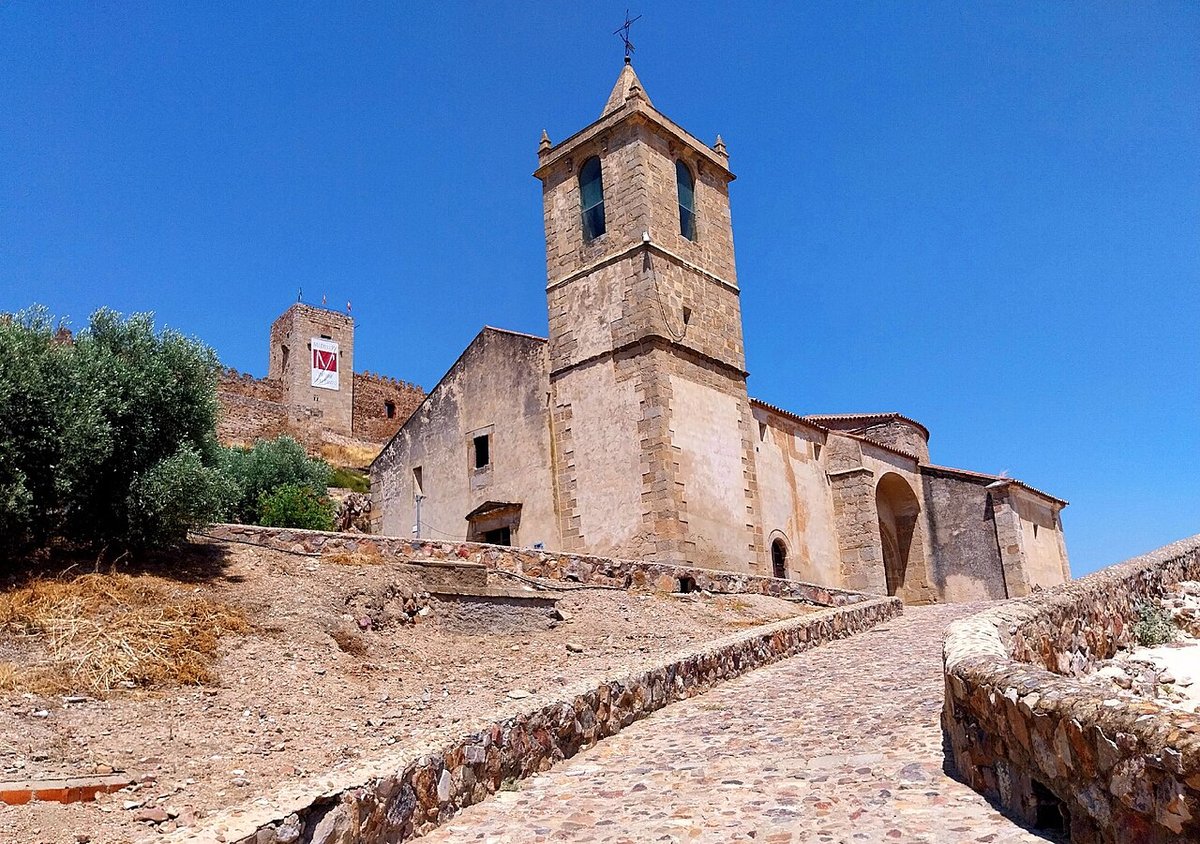
The church of Santa Ana rises beside some of the oldest houses. Its tower is visible from almost anywhere in the village. Inside, the space is restrained, with altarpieces and religious images that show more wear from time than signs of recent restoration. On quiet days, the silence is nearly complete, broken only by the echo of footsteps.
White streets and shaded patios
The streets are narrow, with gentle slopes. Underfoot, the surface changes from one stretch to another: asphalt, uneven stone, the occasional patch of concrete. The façades are whitewashed, and the windows are usually small, protected by dark metal grilles.
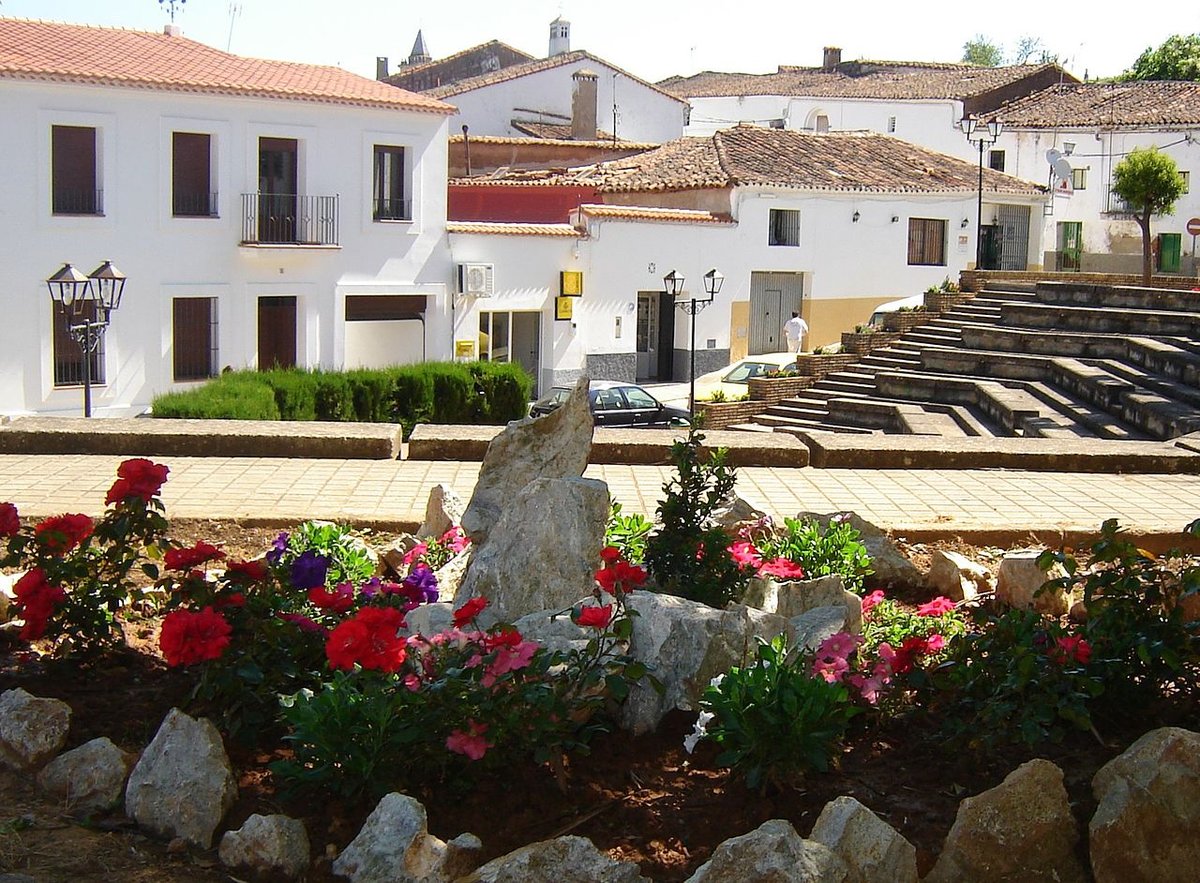
Walking without a plan often leads to small patios where pots of geraniums or aromatic herbs come into view. In summer, the scent of basil and damp soil drifts out when someone waters their plants in the evening. Thick walls and roofs of curved clay tiles, typical of the region, still serve the same purpose they did decades ago: keeping interiors cool when the heat builds outside.
Paths into the dehesa
Just a few minutes from the edge of the village, dirt tracks begin to branch out. Not all of them are signposted. Many are simply paths used by locals to move between plots of land or reach old farmhouses.
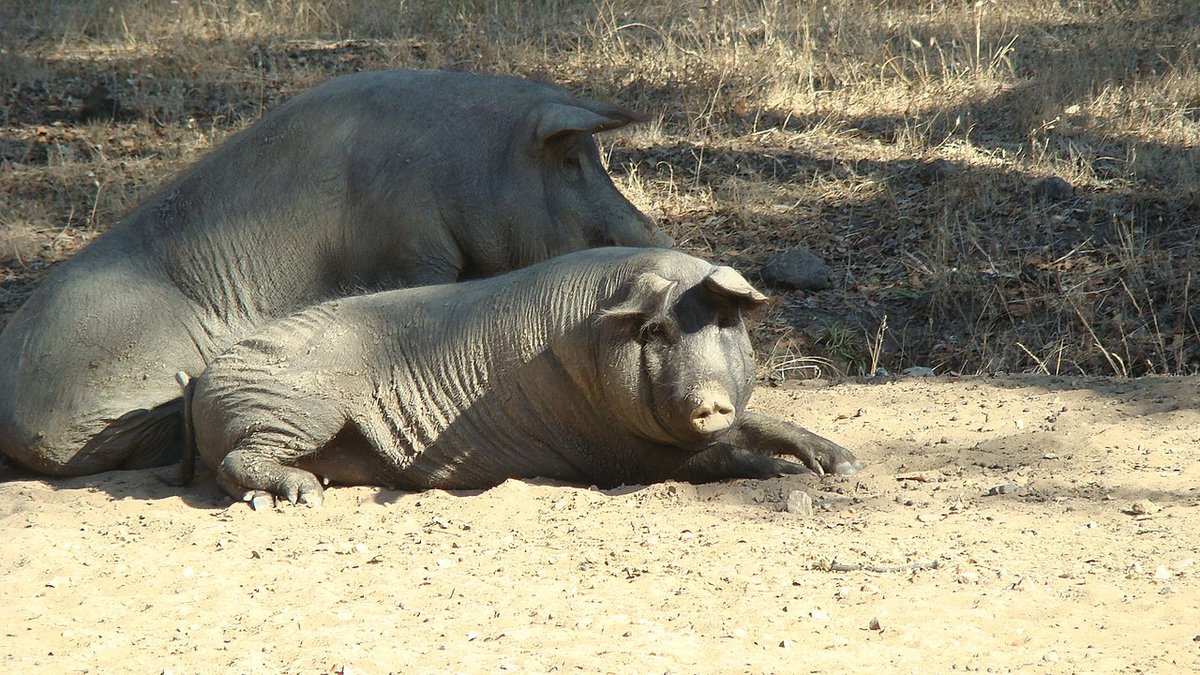
The landscape is the classic dehesa of this part of Huelva province: holm oaks and cork oaks spaced apart, open pasture, and reddish soil that darkens with autumn moisture. In some areas, Iberian pigs can still be seen foraging for acorns during the montanera, the traditional grazing season when they feed freely in the countryside.
From Santa Ana la Real, there are routes linking to other villages in the Sierra, such as Alájar and Galaroza. These walks can usually be done in a few hours if taken at an unhurried pace. It is best to avoid the middle of the day in summer, when heat settles between the trees and shade is not always continuous.
Food shaped by the surroundings
Local cooking depends heavily on what the land provides. Products from the Iberian pig appear frequently on tables in the village, sometimes served simply in thin slices over bread.
In colder months, more substantial dishes return. Migas, a traditional preparation based on fried breadcrumbs, slow-cooked stews, and scrambled dishes that include wild asparagus or mushrooms gathered from nearby woodland are common. When autumn brings enough rain, mushroom enthusiasts head early into the cork oak groves. Some highly prized varieties grow in the area, though it is important to know the terrain well or go with someone who can identify them properly.
Dark nights and village celebrations
Once night falls, the sky turns deeply dark. Street lighting is limited, and it takes only a short walk beyond the last houses to see far more stars than usual. In winter, the air often carries the smell of wood smoke, and sometimes the call of an owl can be heard from the surrounding hills.
Local celebrations revolve around Santa Ana and the summer festivities. These are the moments when residents who live elsewhere return, and the streets fill more than usual. There are no large stages or elaborate setups. What changes is the atmosphere: more conversations in the square, more light at night, more people moving slowly through the streets.
Santa Ana la Real is best understood through these small details. The crunch of gravel underfoot on a path, the sound of a flock passing near the village, the orange light settling on white walls at the end of the day. It rewards an unhurried visit, and, if possible, avoiding the hottest hours in summer. The village shows itself more clearly when the sun softens and the air begins to move again among the trees.