Full Article
about Zufre
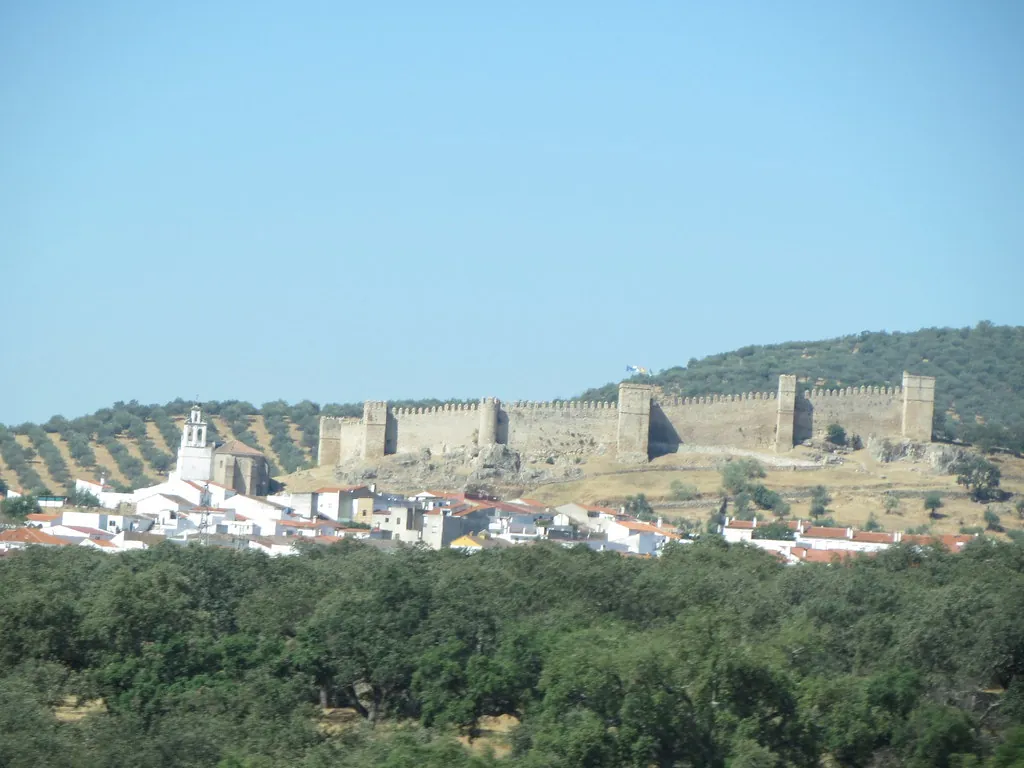
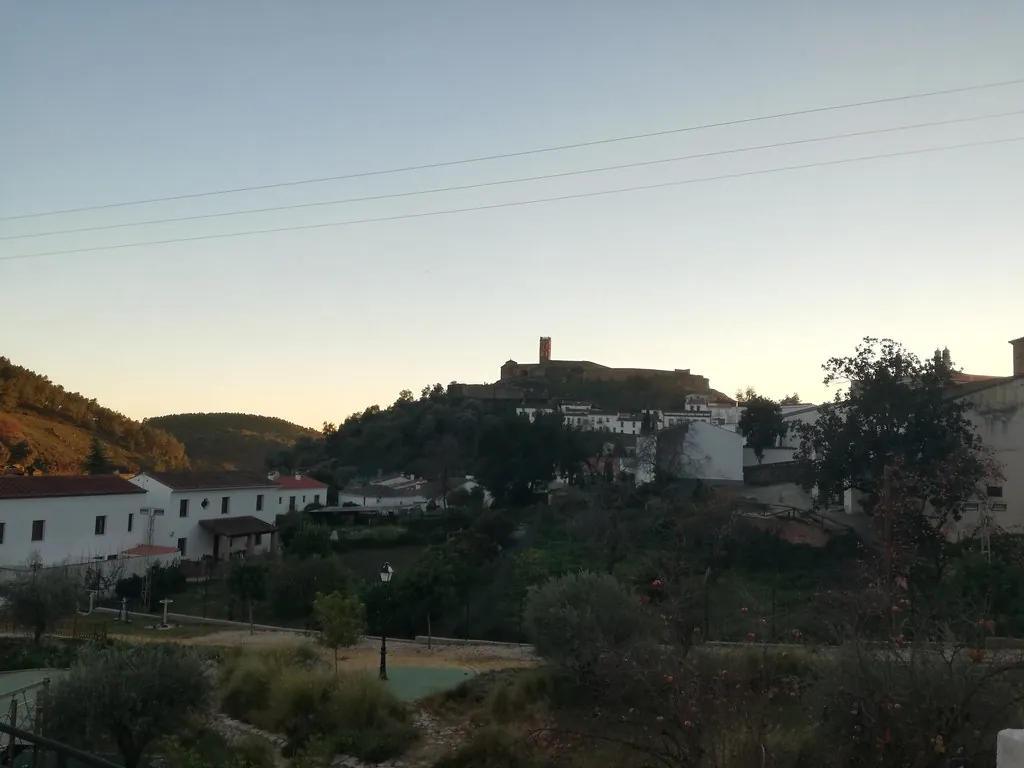
Sierra balcony with sweeping views and a historic center listed as a Cultural Heritage site; highlights include the town hall and the church square.
Hide article Read full article
A Hilltop Village That Sets Its Own Pace
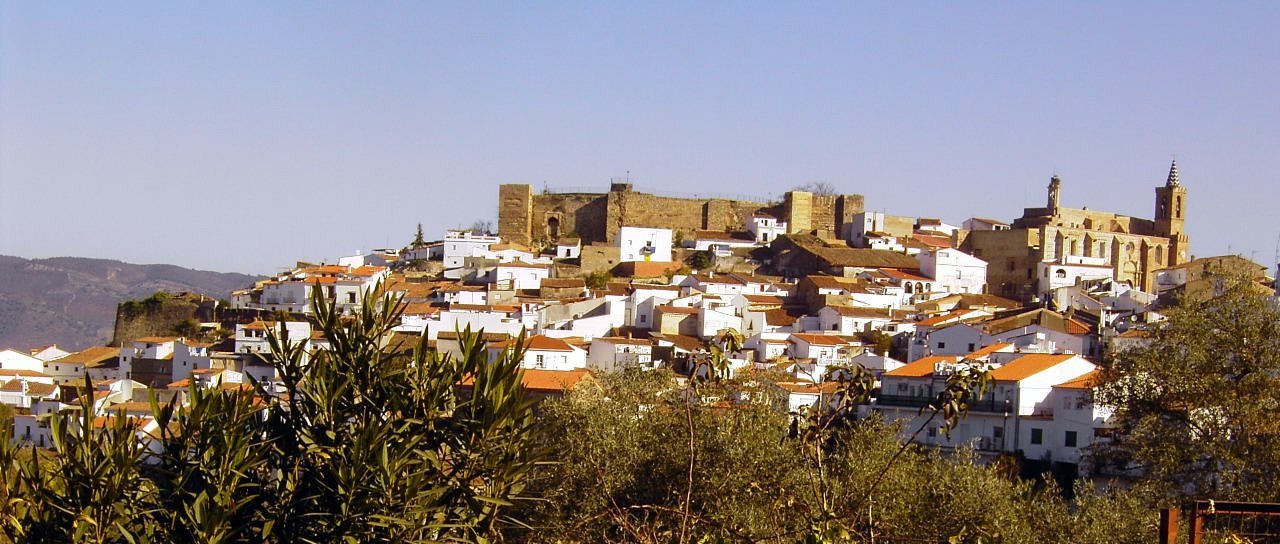
Some places seem to insist that you slow down. Zufre is one of them. You arrive along the road, park the car and within minutes you are walking more gently, as if the village itself is saying there is no need to rush here. Set high on a hill in the Sierra de Aracena, in the province of Huelva, Zufre looks out over dehesa pastureland and cork oak trees. It has the feel of a place where change comes gradually and nobody appears to be in a hurry.
With just over seven hundred residents, everything works on a small scale. A handful of streets climb and dip across the hillside, a central square anchors daily life, and the countryside begins almost at the edge of the last houses. The Zufre reservoir lies relatively close by, and the sierra opens out all around. Step beyond the village limits and you are among holm oaks, dirt tracks and long stretches of quiet.
The Historic Centre and the Heart of the Village
Much of life in the old quarter revolves around the Iglesia de la Purísima Concepción, built in the 16th century. It is not a cathedral and does not try to be, yet it has the calm presence of a building that has watched generations pass through its doors. Its base is late Mudéjar in style, with later additions layered on over time, something quite common in this part of Andalusia. For visitors unfamiliar with the term, Mudéjar refers to a style shaped by Islamic artistic influence within Christian-ruled Spain, often visible in brickwork and decorative details.
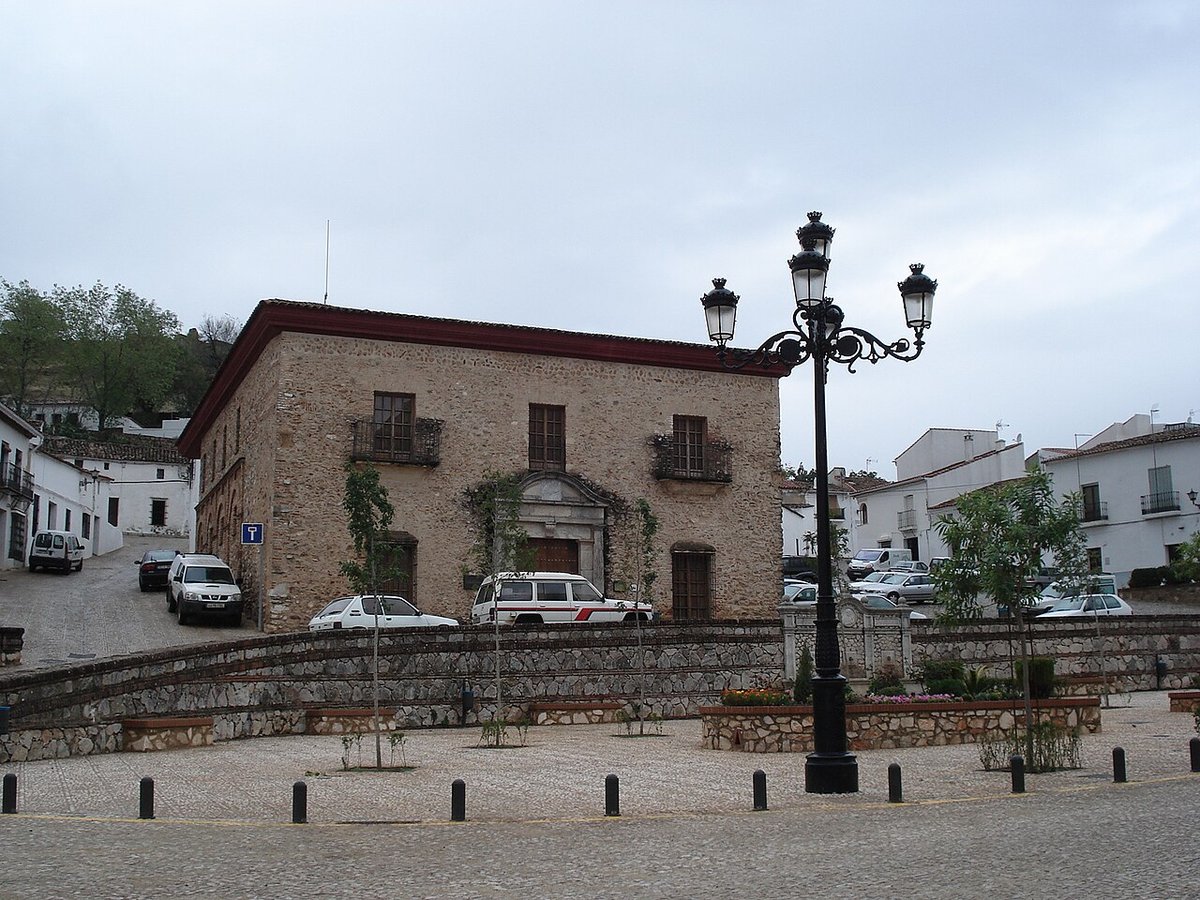
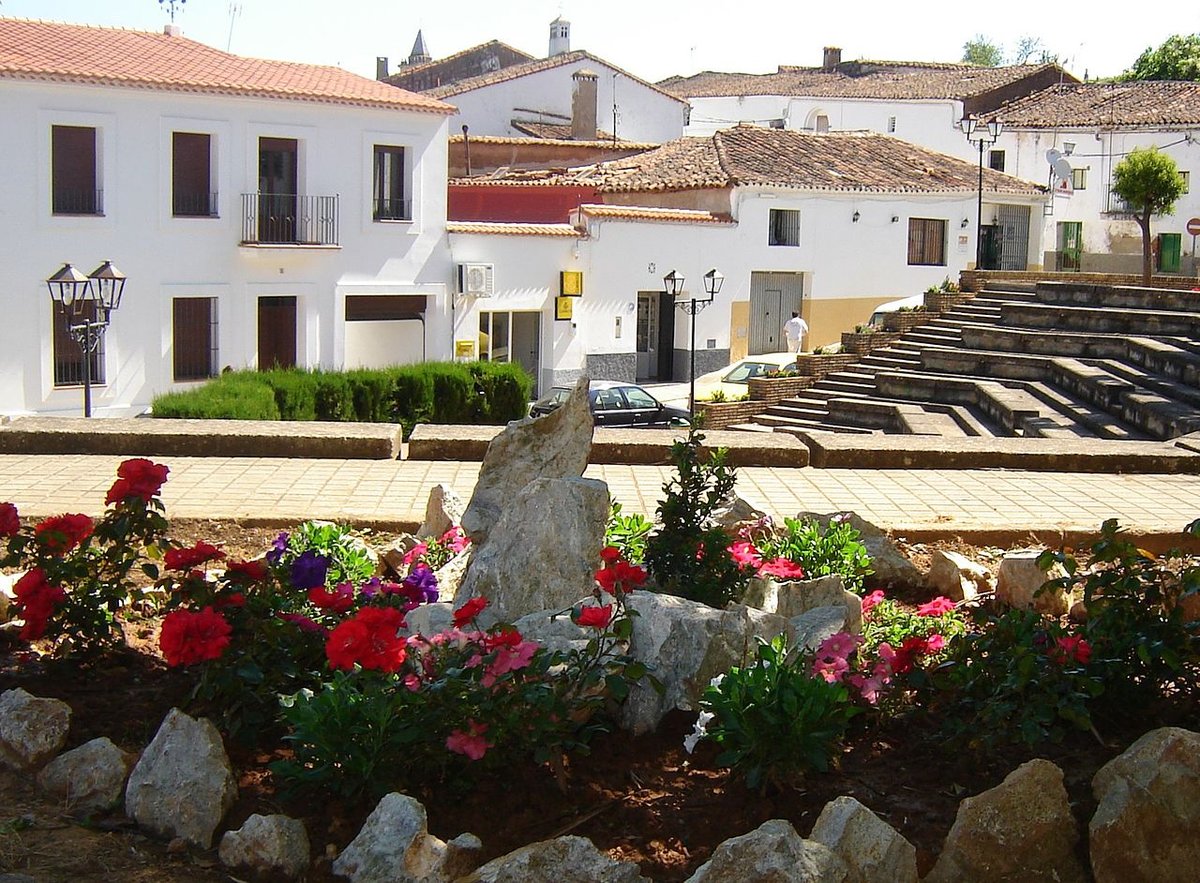
A short walk away lies the Plaza de la Constitución, effectively the village sitting room. Whitewashed houses frame the square, their wrought-iron balconies overlooking arcades where people often sit and talk. In villages across the sierra, conversation tends to outlast coffee, and neighbours address each other by name. Zufre follows that same rhythm.
From the square, narrow streets branch off with little apparent logic, rising and falling as they adapt to the hillside. It is the sort of place where wandering without a plan makes sense. One turn might lead to an improvised viewpoint between houses; another to a slope that feels steeper and longer than it first appeared. The scale is intimate, and the landscape never feels far away.
San Sebastián and the Reservoir Views
On the outskirts stands the ermita de San Sebastián, reached by a walk from the centre. Many people head up for the views. From here, much of the Zufre reservoir comes into sight, along with the surrounding hills covered in holm oaks.
If watching the landscape change with the light appeals, this is somewhere you may linger longer than expected. At sunset, when the sun drops towards the west and the dehesa shifts in colour, it becomes easier to understand why locals speak so often about their surroundings. The setting is not dramatic in an obvious way; it is expansive and quietly absorbing.
The relationship between village and landscape is clear from this vantage point. Houses cluster together on the hill, while beyond them the countryside stretches out in a patchwork of pasture and woodland. It is a view that sums up Zufre’s scale and its place within the sierra.
Dehesa Paths and the Route of the Mills
Nature is almost as central to Zufre as the village itself. The dehesa surrounds it on all sides: holm oaks, cork oaks, grazing livestock and tracks that have connected farms and hamlets for decades, sometimes centuries. The dehesa is a traditional Iberian landscape, shaped by human use over time, where trees are spaced out across pastureland used for grazing.
One of the routes often mentioned locally is the Ruta de los Molinos, which follows the trace of old watermills once used to grind grain. Some remains can still be recognised among vegetation and along the streams that run down through the valley. It is not a particularly demanding route, although it is wise to check the condition of the ground depending on the time of year.
Walking in this area has an unforced quality. There is no need to search for a specific landmark or attraction. Interest often appears on its own: a group of vultures circling overhead, footprints in the mud, the sound of a stream after rainfall. The experience is less about ticking off sights and more about paying attention to what is already there.
Rural paths leading out of Zufre connect with other villages in the comarca, so it is possible to cover considerable ground without repeating the same scenery. Cyclists also use the forest tracks, though some of the climbs can prove more testing than they seem from below. The terrain undulates steadily, and distances can feel different once you are on the move.
Everyday Sierra Life and Local Traditions
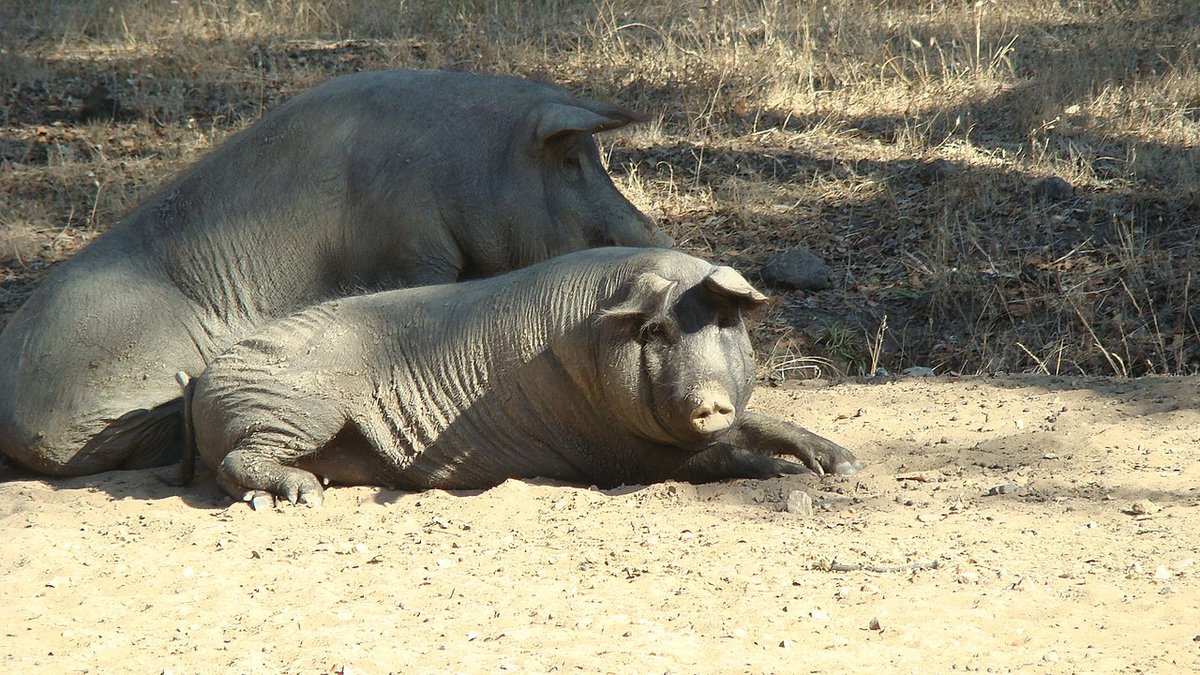
Beyond walking and viewpoints, Zufre’s character is tied to daily life in the sierra. The connection to the dehesa runs deep, particularly through the rearing of the Iberian pig and the products that come from it. In many houses, traditional matanzas, winter pig slaughters, are still carried out. This is not something arranged for visitors or presented as a spectacle. It is simply part of how life continues here, following patterns established over generations.
The village calendar revolves around celebrations that residents have maintained for many years. In December, festivities linked to the Purísima Concepción take place, including processions and lively scenes in the streets. These patronal celebrations draw people together and give the historic centre a different tempo for a few days.
In January comes the pilgrimage, or romería, of San Sebastián, which makes its way up to the hermitage along country paths, accompanied by outdoor gatherings. When summer arrives, evening fêtes and lighter activities appear, usually after dark when the heat eases. Each season brings its own moment, but none feels detached from the everyday life of the village.
Zufre does not attempt to impress. It is the kind of place where a few hours pass between a walk through the old streets and a pause at the hermitage overlooking the reservoir. The workings of the Sierra de Aracena reveal themselves quickly enough: slowly, with dehesa stretching in every direction and little inclination to change what already works.