Full Article
about Espera
A farming town crowned by the ruins of a Fatimid castle, noted for its archaeology and traditional mollete.
Hide article Read full article
A hill shaped by its surroundings
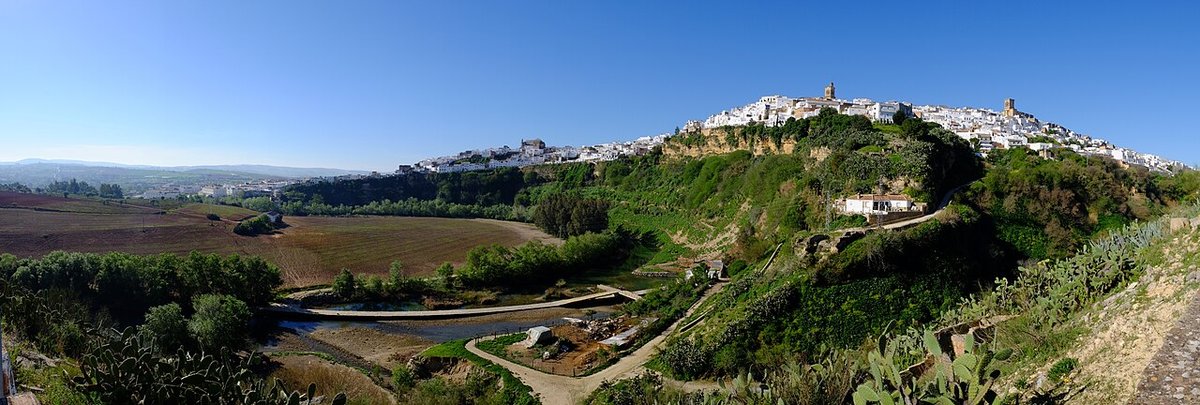
Tourism in Espera begins with its setting. The town stands on an isolated hill in the countryside of the Sierra de Cádiz, positioned between the inland sierras and the agricultural plains that stretch towards Jerez. This elevated location defines the layout of the historic centre. Streets climb steadily towards the summit, and houses cluster tightly around the castle. The design is not decorative. For centuries, it served as a practical way to oversee the surrounding land.
The area has been inhabited since very early times. Archaeological remains from Phoenician-Punic and Roman periods have been documented nearby, linked to the city of Carissa Aurelia. That settlement stood at the site of Esperilla, not far from present-day Espera. Carissa Aurelia controlled trade routes connecting the Cádiz coast with the interior of the Roman province of Baetica. When the population later moved to the current hilltop, materials from the earlier city were reused or left buried in nearby fields.
The hill and the Castle of Fatetar
At the highest point of the town stands the Castillo de Fatetar. The fortress has Islamic origins, most likely from the Almohad period, and it was modified after the Castilian conquest in the 13th century. Like many frontier castles, it evolved over time. Towers were rebuilt, walls were raised, and new elements were added as needs changed.
From the top, the purpose of the location becomes clear. The view extends across a large part of the countryside and reaches the ridges of the sierra to the north. The choice of this hill for watching over routes and farmland is easy to understand once seen from above. Access is on foot via a short but steep climb. The stone paving can be slippery after rain, so some care is needed.
Two churches, one long story
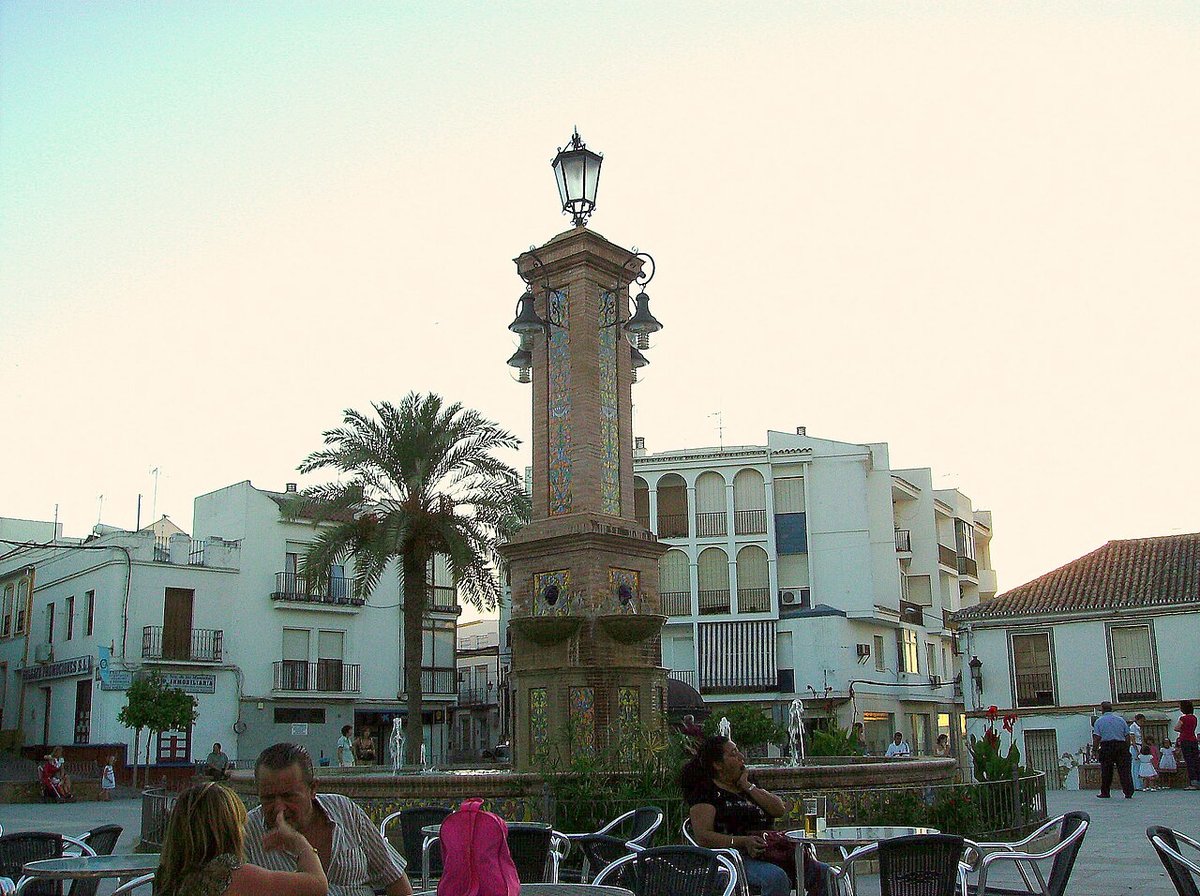
Espera’s main parish church is San Juan Bautista, located on one of the central squares. Yet the building that often draws more attention is the Iglesia de Santa María de Gracia.
This church stands on the site of a former mosque. Its tower still preserves features that recall the original minaret, something that appears in several towns across the Cádiz countryside. Inside, a large Baroque altarpiece depicts scenes from the Passion. It is not widely known beyond the local area, though it reflects the dramatic religious imagery that spread through Andalusia during the 17th and 18th centuries.
In the sacristy, there is also a painting of the Annunciation. Local tradition attributes it to a disciple from Murillo’s circle, referring to the famous Sevillian painter Bartolomé Esteban Murillo. The attribution is uncertain, yet the work continues to attract interest from visitors who are drawn to religious art.
Lagoons shaped by the weather
On the outskirts of Espera lies the Complejo Endorreico de Espera, a group of lagoons with no outlet to rivers or the sea. Their water levels depend almost entirely on annual rainfall, so the landscape changes noticeably throughout the year.
During wetter months, these lagoons become an important habitat for waterfowl and migratory birds. Flamingos can often be seen passing through, along with black-winged stilts and other wading species that use the area as a resting point. In dry summers, parts of these bodies of water shrink considerably, altering both the scenery and the wildlife presence.
Simple walking paths run around some of the lagoons. These are not long routes, but conditions can vary. After rain, the ground may be muddy, so suitable footwear makes a difference.
A mill on the road to Bornos
On the road leading towards Bornos stands an old hydraulic mill known as the Molino de Espera, also called the Casa de la Tercia. The rectangular building, constructed with masonry, reflects traditional milling systems that relied on small watercourses and irrigation channels.
The term “tercia” refers to a historical tax paid as a portion of agricultural produce. Buildings like this served a dual role. They were used both for grinding grain and for storing it. Today, the mill remains part of the town’s heritage and is occasionally used for demonstrations or educational purposes.
Finding your way around
The historic centre can be explored in a relatively short time. Walking without a strict plan works well here, especially along the streets that lead uphill towards the castle. Various points along the way open out onto wide views of the surrounding countryside.
For travel in the wider area, a car is the most practical option. Local roads connect Espera with other towns in the Sierra de Cádiz, as well as nearby places such as Bornos and Arcos.
Seasonal changes have a noticeable impact on the experience. Spring usually brings greener landscapes, and the lagoons tend to retain water. Summer, by contrast, brings strong heat typical of the countryside, and many streets become very quiet during the middle of the day.