Full Article
about Grazalema
Mountain village with Spain’s highest rainfall; flawless vernacular architecture amid a unique Spanish-fir landscape.
Hide article Read full article
Morning Light in the Sierra
At seven in the morning, on the main street of Grazalema, the light falls at an angle and catches on the whitewashed walls. Small patches of damp still cling to the surface, slow to dry in the early sun. At that hour there is barely a sound: a shutter being raised, footsteps tapping against the cobbles, water running in a nearby fountain. Later come the cars, the day-trippers, the steady murmur of the square. At dawn, though, the village still moves at its own unhurried pace.
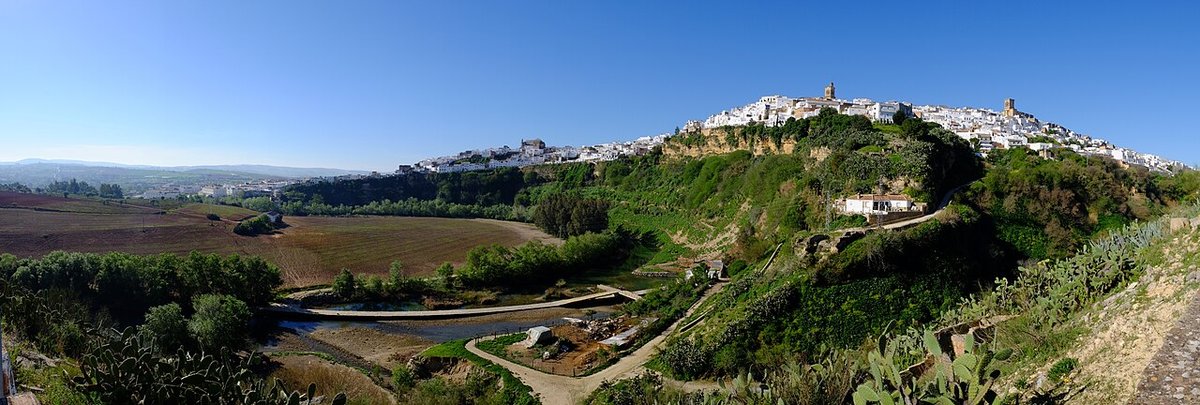
Grazalema sits at around 800 metres above sea level, in the heart of the Sierra de Cádiz, surrounded by the mountains of the natural park that shares its name, the Sierra de Grazalema Natural Park. From a distance it appears as a white smudge against an unexpectedly green backdrop, something that often surprises visitors to western Andalucía. Rainfall here is higher than many imagine, and the dampness shows in the pine-covered slopes and in the forests of pinsapo that survive in the higher reaches.
White Streets and Two Churches
The historic centre is compact and easy to explore without rushing. Narrow streets thread between low, whitewashed houses with small balconies and flowerpots balanced on window ledges. By mid-morning the sun bounces off the façades and makes you squint.
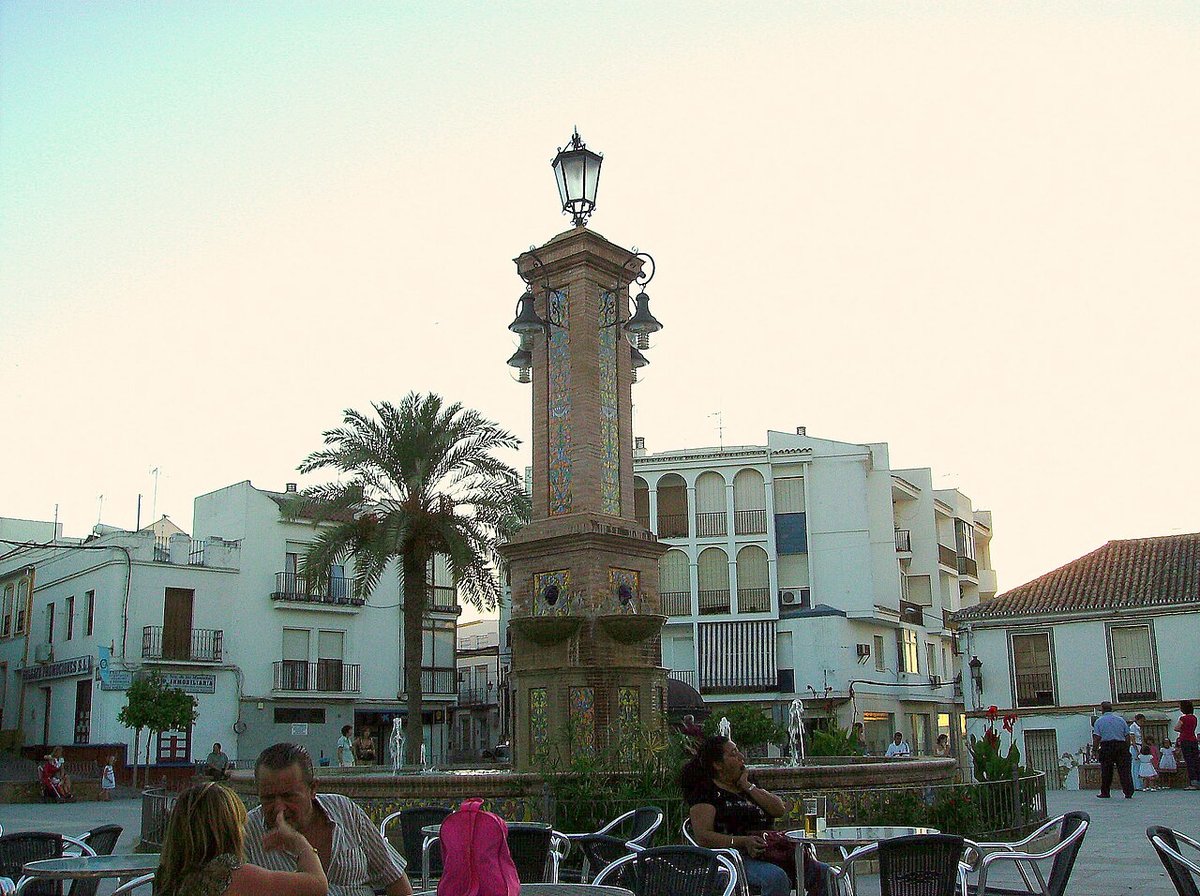
On the main square stands the Iglesia de San José. Built in pale stone, it has a sober exterior. Inside there are usually altarpieces and elements dating from around the 18th century. It is not always open, but when it is, the air carries that familiar blend of wax, wood and humidity found in many mountain churches.
A little higher up is the Iglesia de la Aurora, simpler in style. From this part of the village the land begins to fall away towards the valley, opening out onto wide views of green hillsides, especially after several days of rain. The contrast between the white houses and the deep greens beyond is part of what defines Grazalema’s setting.
Viewpoints and the Road to Puerto del Boyar
Leaving the built-up area, natural viewpoints begin to appear. They are not always marked as such. Sometimes it is enough to follow a bend in the road or step a few metres away from the tarmac.
One of the best-known spots is Puerto del Boyar, a few kilometres from the village. From here the landscape unfolds in layers of mountains fading towards the horizon. On clear days the limestone ridges stand out sharply. When low cloud rolls in, the peaks drift in and out of the mist, changing the outline of the sierra from one minute to the next.
Anyone arriving by car should take this road steadily. It is narrow, with tight bends, particularly when there are hikers or cyclists moving along the same stretch. The journey is part of the experience, with each curve offering a slightly different perspective on the surrounding hills.
The Pinsapar and Mountain Trails
The pinsapo is central to the area’s natural identity. This rare fir, a relic species found in only a few places in southern Spain, has a dense, dark green appearance that alters the character of the mountainside. In shaded areas the forest becomes almost silent, the ground covered in fallen needles and the light noticeably cooler.
The Ruta del Pinsapar passes through one of these zones and usually requires prior authorisation from the natural park authorities. The route involves changes in elevation, so carrying water and wearing footwear with good grip is advisable.
For those who prefer something shorter, there are footpaths around the village that descend towards the valley or circle the lower slopes. From these trails you can see small orchards, dry stone walls and the occasional flock moving slowly across the hillside. The sense of rural continuity is strong, shaped by grazing and small-scale cultivation rather than large developments.
Cheeses and Mountain Cooking
Local cooking reflects a place where winters can be cold and damp. In many homes and bars in the area, substantial stews, oven-roasted meats and spoon dishes remain common.
Cheeses made from the milk of the payoya goat, sometimes blended with sheep’s milk, form a key part of the sierra’s food identity. The payoya is a native breed from this part of Andalucía, and its milk is used to produce both semi-cured and fully cured cheeses. In the village and surrounding area it is usual to find small-scale producers selling their own pieces, with flavours that vary depending on ageing and mixture.
This is straightforward mountain food, shaped by climate and terrain. After a walk in cool weather, a hot stew or a slice of mature cheese feels entirely in keeping with the landscape.
Beneath the Limestone: Caves and Chasms
Under these limestone mountains lies an active subterranean world. The area is known among caving enthusiasts for its caves and deep shafts, some of them reaching significant depths.
Anyone without experience is advised to seek information first at the natural park’s information points. They usually provide guidance on permitted access, the availability of guides and areas where it is possible to walk without risk. The terrain above ground can appear gentle in places, yet the geology below is complex.
The presence of these caves adds another dimension to Grazalema’s surroundings. What is visible on the surface is only part of a wider landscape shaped by water and rock over time.
When Grazalema Fills Up
Grazalema changes noticeably depending on the season. Autumn and spring weekends attract plenty of visitors who come to walk in the sierra, and the streets fill quickly.
Those who prefer a quieter atmosphere should aim to arrive early in the day or visit during the week. In the first hours of the morning, the village still holds on to its slower rhythm: neighbours greeting one another from their doorways, the smell of freshly baked bread, and the mountains beyond still half-covered in shadow.
That balance between whitewashed streets and green peaks, between village life and open mountain, defines Grazalema. It is a place shaped as much by rain and altitude as by tradition, where the day begins in silence and gradually opens out towards the wider sierra.