Full Article
about Olvera
Icon of the sierra, its church and castle overlooking the landscape from above; capital of rural tourism and the Vía Verde.
Hide article Read full article
A village clinging to the rock
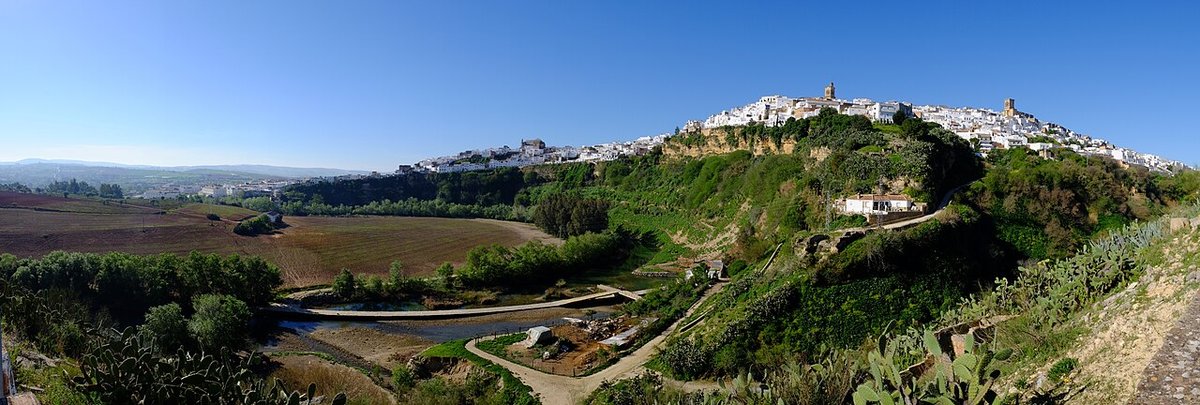
Tourism in Olvera starts with a moment that feels slightly unreal. You arrive along the road, take a couple of bends, and suddenly the whole village appears, climbing up a rocky outcrop as if it had been placed there by hand. It is white from top to bottom, sitting more than 600 metres above sea level, with a castle watching over everything from above.
The approach can feel confusing at first. Directions seem to point straight up, and the road really does twist its way upwards until it leaves you close to the centre, with the car working hard on the final slopes.
Once inside, the layout quickly explains how people have lived here for centuries. The old quarter is compact, with narrow streets, steep inclines and houses pressed tightly together to make the most of the rock. It is not a large place, but it encourages you to look upwards more than ahead, simply because of how it is built.
Castle and church on the same ridge
Olvera’s outline is defined by two buildings that share almost the same rocky base: the castle of Islamic origin and the church of Nuestra Señora de la Encarnación. In photographs, they can look as if they are competing for the highest point.
The fortress dates back to medieval times, when this area formed part of a frontier. The climb to the top brings a clear reward. From there, the landscape of the Sierra de Cádiz opens up, with olive groves spreading out around the village and, on clear days, distant mountain ranges marking the horizon.
The church came much later and changes the visual balance of the hill. It is large, neoclassical and strikingly white, almost as if a city building had been placed on top of the ridge. Over time, though, it has become inseparable from the village’s silhouette, just as recognisable as the castle beside it.
The Vía Verde de la Sierra
One of the main reasons people come to Olvera is the Vía Verde de la Sierra. This route follows a former रेलवे line that was never actually put into service and is now a long, accessible path for walking or cycling.
The full stretch runs for around 36 kilometres to Puerto Serrano, passing through tunnels carved into the rock and across several viaducts over the valley. The gradient is gentle, and many people choose to travel downhill from Olvera, which makes the journey manageable even for those who do not cycle often.
Along the way, there are old stations, rocky cuttings and bird colonies that use the bridges and cliffs for nesting. Some sections are so quiet that the only sound is the steady crunch of wheels over gravel. The route is less about speed and more about moving through the landscape at an easy pace.
A cemetery with a view
It may sound unusual, but one of the most talked-about places in Olvera is its parish cemetery. A few years ago, it received recognition in a national cemetery competition, largely because of its setting.
It sits on a hillside with open views across the valley, all in white and carefully ordered, echoing the look of the village itself. It is a calm place where the surrounding landscape becomes just as important as the site.
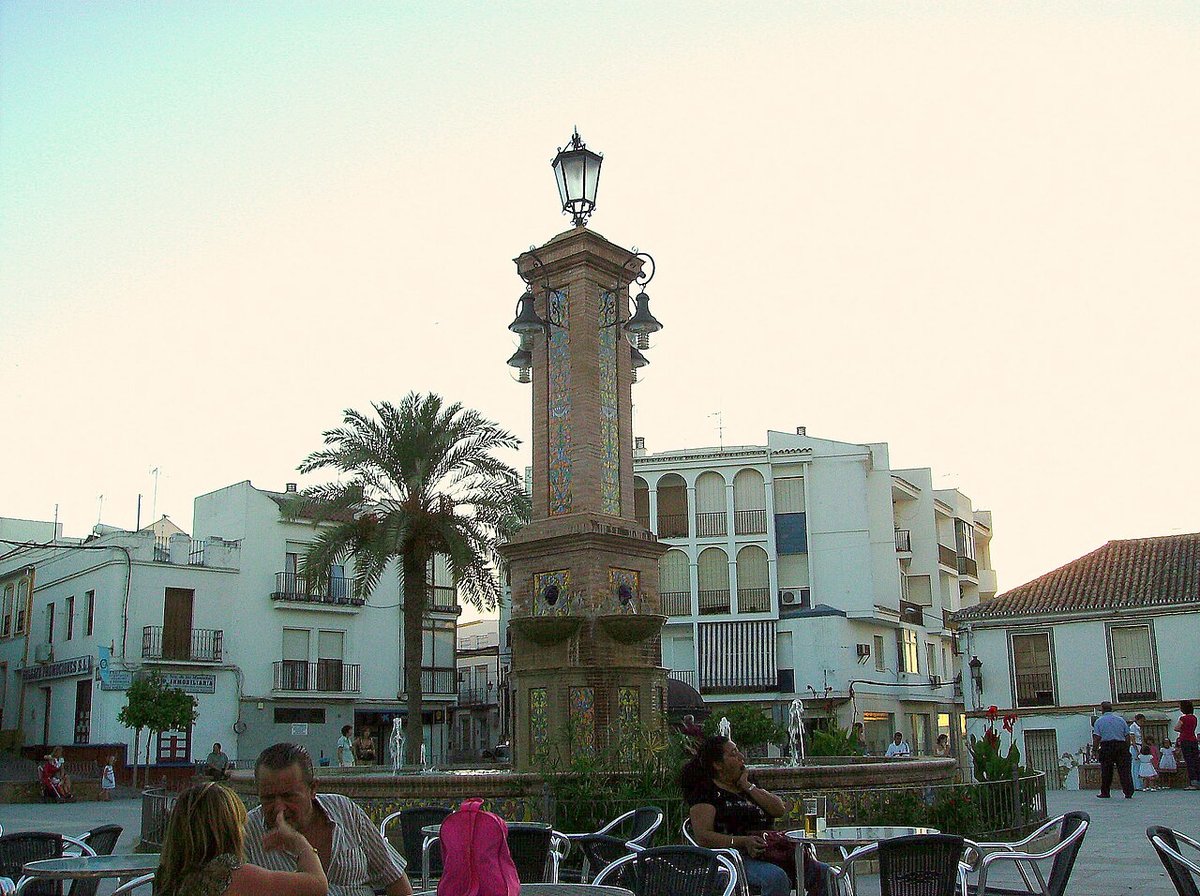
Near the main square stands the Casa de la Cilla, an 18th-century building once linked to the collection of agricultural tithes. Over time it has served different purposes, and today it functions as a cultural space and a place to interpret the surrounding area.
Eating in Olvera
Local cooking in Olvera reflects what comes from the surrounding countryside. Olive oil plays a central role and is noticeable from the first dish.
You will often come across mountain-style versions of soups and gazpachos, which can be surprising if you expect the chilled varieties more typical of coastal areas. There are also hearty, spoon-based dishes, along with cured meats and goat cheeses tied to livestock farming in the Sierra de Cádiz.
Honey is another recurring presence, widely available in local shops and markets. It is produced in the nearby hills and tends to carry the flavour of aromatic plants from the sierra, something that stands out straight away.
A straightforward way to experience Olvera
Olvera is not necessarily the most photogenic of the white villages in the area. In the Sierra de Cádiz, there are strong rivals such as Zahara or Grazalema.
What it does offer is a particular combination: a hilltop castle, wide views, a small historic centre that can be explored at an unhurried pace, and the starting point of one of Andalucía’s best-known greenways.
A simple approach works well here. Leave the car in the lower part of the village and walk up. Wander through the streets around the church and the castle, pause at the viewpoints, then make your way down towards the old station if the idea of cycling part of the Vía Verde appeals.
In just a few hours, it is possible to get a clear sense of the place. And that, for a village in the sierra, is often exactly what you want: to walk it slowly, understand where you are, and then carry on your way.