Full Article
about Puerto Serrano
Starting point of the Vía Verde de la Sierra on the banks of the Guadalete River; quiet farming town surrounded by orchards.
Hide article Read full article
When the village isn't where you expect it
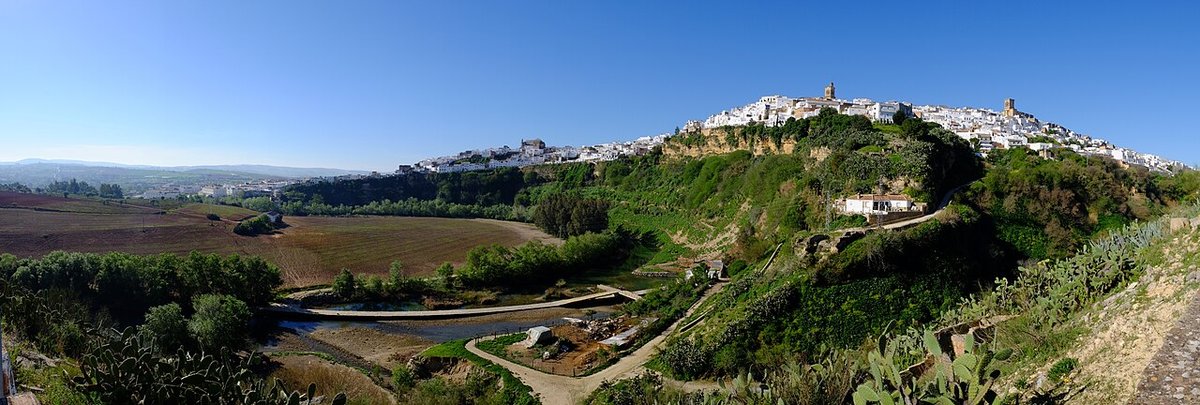
You’re driving through the Sierra de Cádiz, looking for the cluster of white houses. Your map says you’ve arrived, but all you see is a main road, a junction, and an old train station. You check your phone, thinking you’ve missed a turn. That’s Puerto Serrano for you.
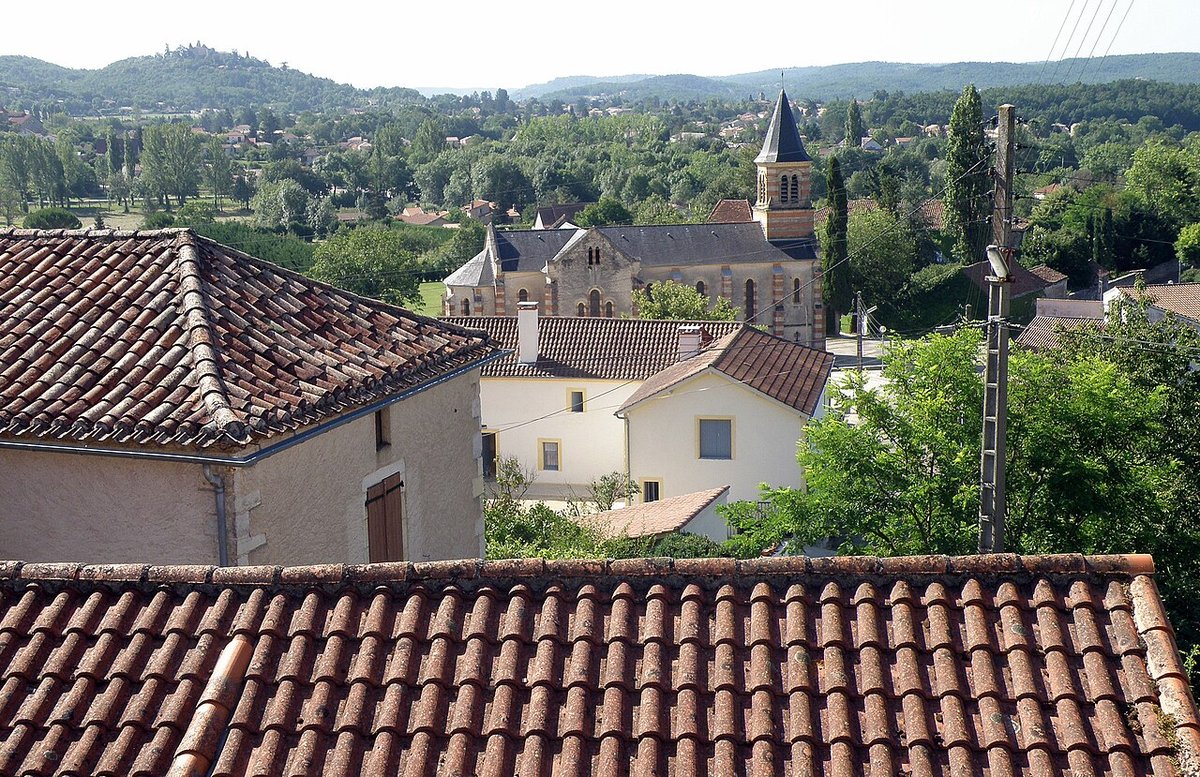
The actual village is up the hill, tucked away from the through road. The houses look like they were tossed onto the slope and left to settle where they landed. There’s no grand plaza waiting for you. The layout is practical, born from people needing to live on a steep piece of land. It feels real, not designed for a postcard.
The greenway that used to be a railway
This town grew because of a train line. When that line from Jerez shut down, Puerto Serrano could have been left with a decaying piece of history. Instead, they kept the 1920s engine shed and the station, and turned the tracks into the Vía Verde de la Sierra.
It’s now a thirty-six kilometre path for bikes and boots that runs all the way to Olvera. Let’s be clear: it’s not a casual stroll. The Cádiz sun doesn’t play around out here, and long sections have zero shade. The sierras rise up on either side, which is spectacular but also reminds you how far you are from anything else.
Do it for one reason: the vultures. Near the Peñón de Zaframagón rock face, dozens of griffon vultures ride the thermals. Seeing them circle silently above makes the sweat feel worth it. It puts the landscape into perspective.
Order gazpacho and get a stew
If you ask for gazpacho in a local bar here, don’t expect a cold tomato soup. Gazpacho serrano is its opposite: a hot, hearty pot of bread, ham, egg, and broth. It makes sense once you’re here. This isn’t coastal Andalusia; it’s hill country where food sticks to your ribs.
Come in spring and you might see people heading into the scrub with baskets and knives. They’re after wild asparagus—espárragos trigueros. Cooked simply in a pan with olive oil and salt, they taste like the countryside smells after rain: earthy and strong.
A bandit's hideout on Calle Real
There’s a house on Calle Real with a plaque for José María “El Tempranillo”. He was a real bandit who used these hills to vanish into. The landscape explains it perfectly: thick scrubland, hidden paths, isolated farms—it was made for disappearing.
The small exhibition inside is straightforward; no flashy museum here. What I like is how the town handles it. They don’t build their whole identity around the bandit legend. It’s just part of their history, acknowledged without fanfare.
The weekend everyone heads for the hills
Forget quiet weekends in mid-May. That’s when Puerto Serrano celebrates San Isidro Labrador, their romería. The town empties out toward the sierra in a procession of carts, horses, and people in traditional short jackets.
It feels like a massive family picnic with religious roots. You’ll see pots simmering over open fires everywhere. The classic dish is a stew made with tagarninas, a local wild thistle. Every family has their own version—some add ham, others a bit of cured meat or even carob for sweetness. It tastes better than it sounds.
How to spend half a day here
Don’t come with a checklist of sights. Puerto Serrano works better as a pause in your journey than as a destination itself.
A good plan is to come on a spring morning. Rent a bike and ride just part of the Vía Verde—even going to the first tunnel and back gives you the idea without committing to hours in the sun. Then walk up through those steep streets behind the church. Finish by crossing the old iron bridge over the Guadalete river. It shudders when cars pass over it but has held firm for generations.
You can see what matters in two or three hours. What stays with you isn't one particular monument. It's more about seeing how life moves at its own pace here. Sometimes that's what you need from places in these sierras—a bit of ordinary rhythm