Full Article
about Casarabonela
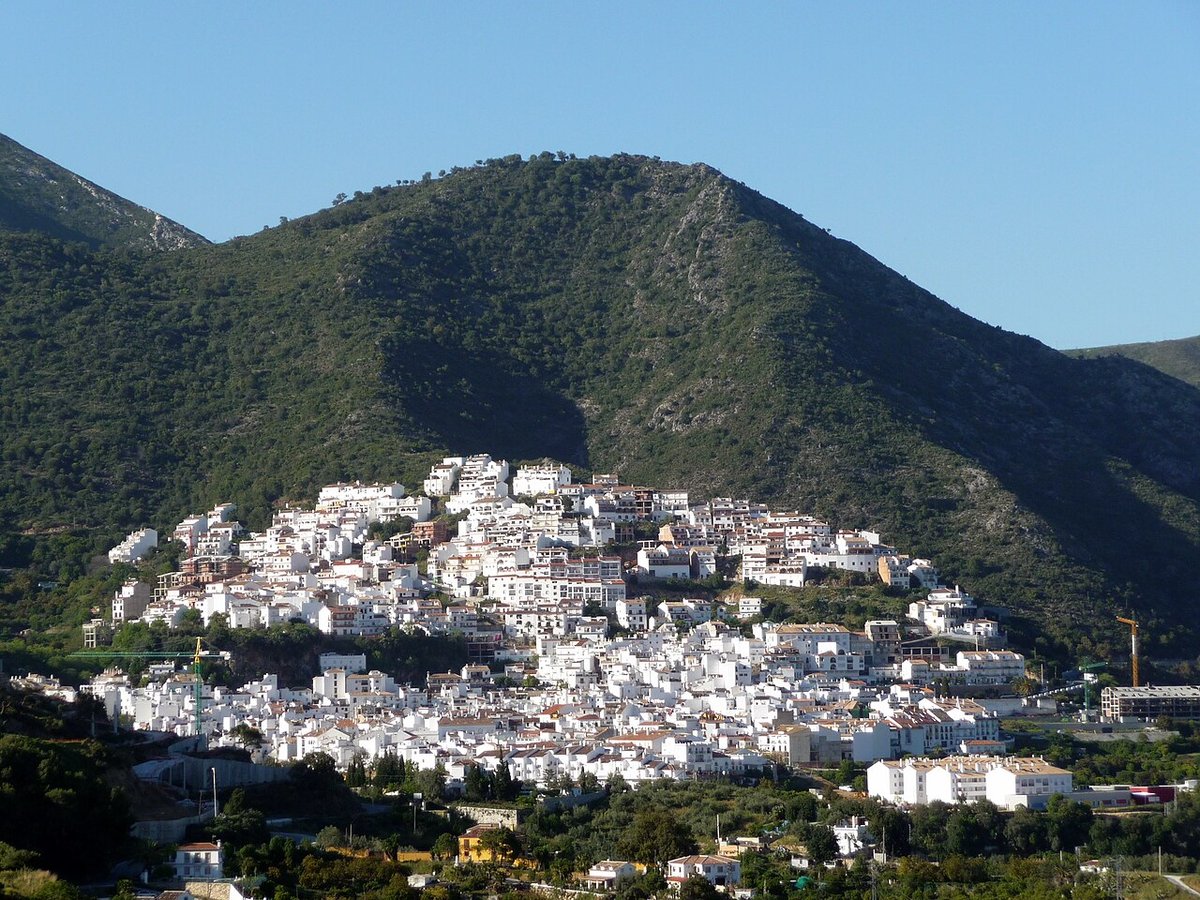
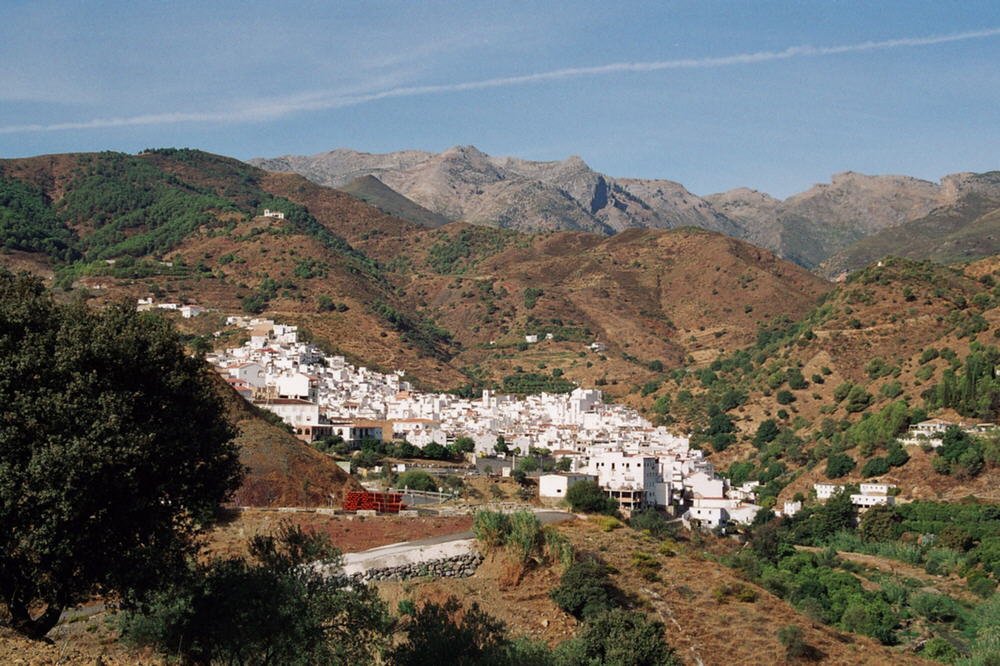
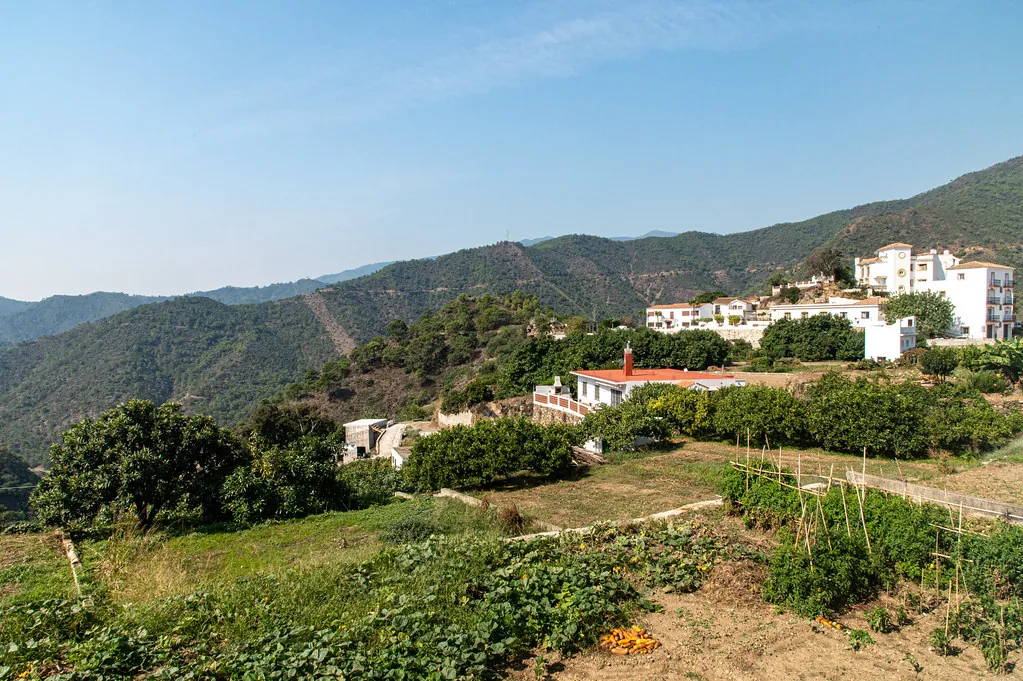
A Moorish-layout village of narrow, steep streets that keeps an Andalusian feel and a cactus botanical garden.
Hide article Read full article
First impressions on arrival
Park in the first space you find. Casarabonela is built around one main street with several smaller ones branching off, and if you leave the car too low down you will feel the climb on the way back. On Saturdays there is usually a small market. It brings a bit of noise and is the only time of the week when parking becomes slightly awkward. The rest of the time, the pace is slow and the streets stay calm.
This is a town of around 2,800 people, with an agricultural character that shapes daily life. There is no rush here. Things move steadily, without much fuss.
The castle that is not quite a castle
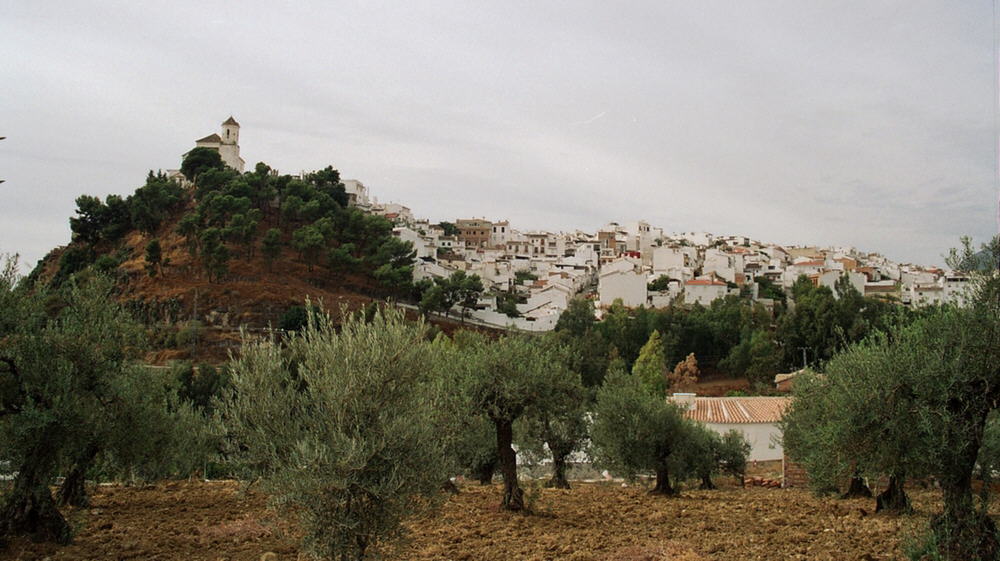
At the top, the first thing you see is a wire fence and a sign marking it as a protected site. The so-called Castillo de Qasr Bunayra is in a very ruined state. What remains are a few stretches of wall and a scattering of stones. Its origins are usually placed in the Andalusí period, and after the Christian conquest parts of it were dismantled to build houses in the town below.
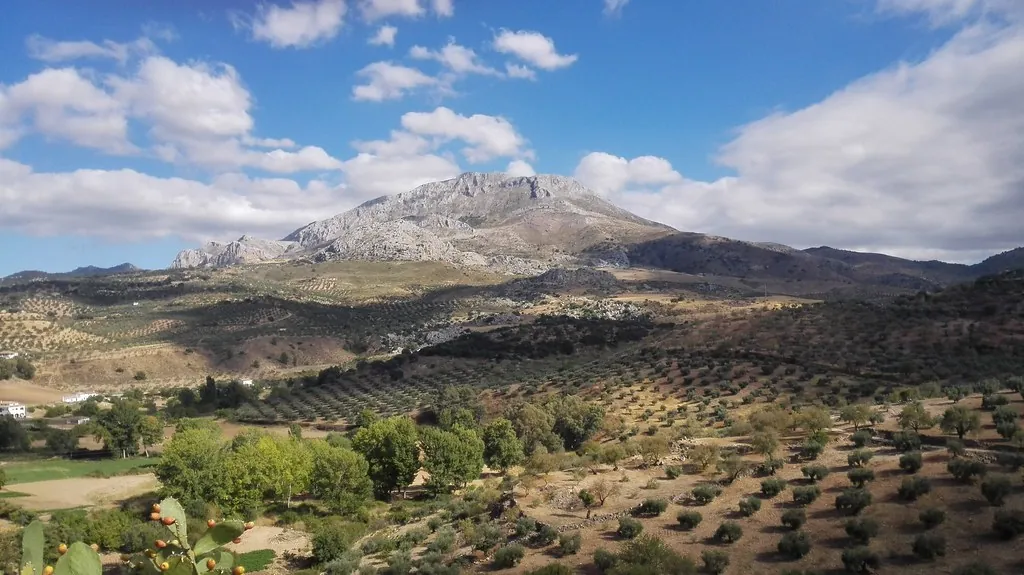
The walk up takes about five minutes. Once there, the view opens over the Valle del Guadalhorce, with olive groves spreading across the landscape. On very clear days, more distant mountain ranges appear towards the east.
It is worth going up early if possible. By midday the sun becomes intense, and there is no shade at the top.
A botanical garden you would not expect
In the middle of the town sits a small botanical garden, the Jardín Mora i Bravard. Its story is straightforward. It began with private collections of cacti and other succulents and gradually expanded.
Today it brings together thousands of species adapted to dry climates. Some look almost unreal; others appear slightly shrivelled yet remain alive, which is what matters with this kind of plant. A visit takes a little over half an hour if you stop to read the signs.
It often closes around the middle of the day, so it makes sense to check before heading uphill.
Simple food and local habits
Do not expect a street lined with places to eat. There is just enough for the town itself. A couple of bars gather around the main square, and little else.
On Sundays, callos malagueños sometimes appear if someone has prepared them at home. These are a traditional tripe dish typical of Málaga. During the week, the focus is on simple tapas rather than anything elaborate.
Tortas de aceite, a type of olive oil flatbread, are made by a local neighbour in a domestic oven. Asking in the village shop will usually tell you whether a batch has been made that day. If not, there is often a bakery along the road selling standard cakes and sweets.
Walking into the surrounding hills
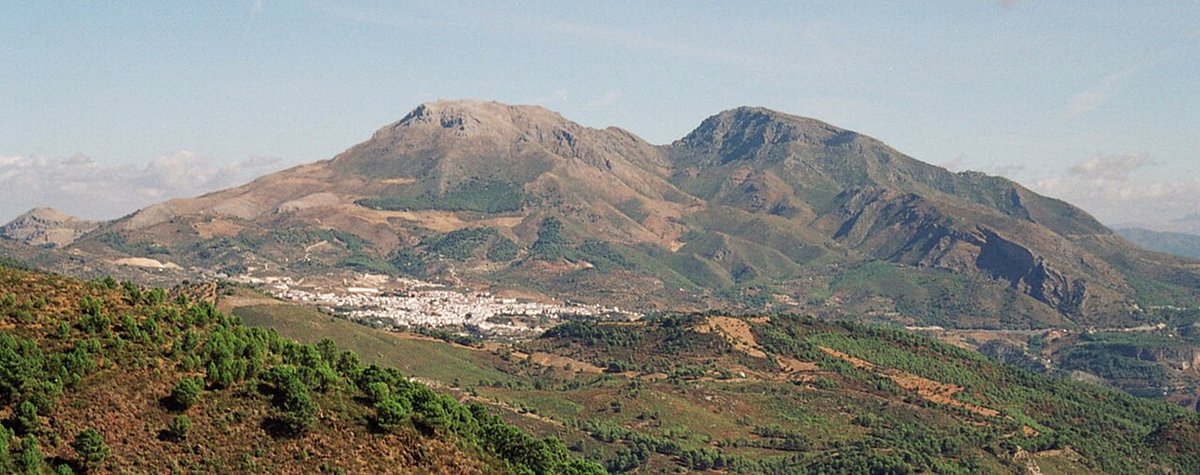
Several marked routes run through the nearby sierra. One of the better known heads towards the Cueva de la Jácara. It involves a steady climb of a few kilometres through the Sierra Prieta, leading to a cave with remains of schematic paintings. The site itself is modest, but the walk is enjoyable.
Another classic route leads towards the peak of Alcaparaín, with a significant change in elevation. In spring the air carries the scent of rosemary and thyme. In summer the mountain becomes very hot. Taking proper water is essential. There are few natural springs, and the paths do not pass by bars or kiosks.
When to go, and when to leave
From March to May the countryside is usually green, and decorated crosses appear in some streets. In July, the Feria de Santiago brings a few days of straightforward local celebration.
On 12 December, Los Rondeles take place. Residents walk down Calle Mayor carrying burning baskets. The air fills with smoke and the smell of burnt oil, and the town becomes noticeably busier.
August can be tough. The heat is strong, shade is limited, and many people are away on holiday.
A direct piece of advice fits well here: spend a morning. Walk up to the castle, wander through the garden, and have something in the square. After that, continue towards the Guadalhorce or head into the sierra.
Casarabonela does not try to be lively or loud. It is a quiet place where daily life unfolds at its own speed. Those looking for nightlife will need to look elsewhere. Here, everything moves slowly, and that is the point.