Full Article
about Guaro
Known for its Festival de la Luna Mora, when the village glows with thousands of candles and turns magical.
Ocultar artículo Leer artículo completo
The morning bus from Málaga reaches Guaro at 12:05 sharp. It empties in front of the Bar Central: two teenagers with rucksacks, a woman cradling almond branches, and the driver who lights a cigarette before turning the coach round for the switch-backs down to the coast. By 12:07 the plaza is silent again, save for the clink of coffee cups and the creak of the village’s only traffic light swaying in the breeze. At 350 m above sea level, the air is already a degree cooler than on the coast forty-five minutes behind you; the smell is of wood-smoke and wet stone rather than sunscreen and diesel.
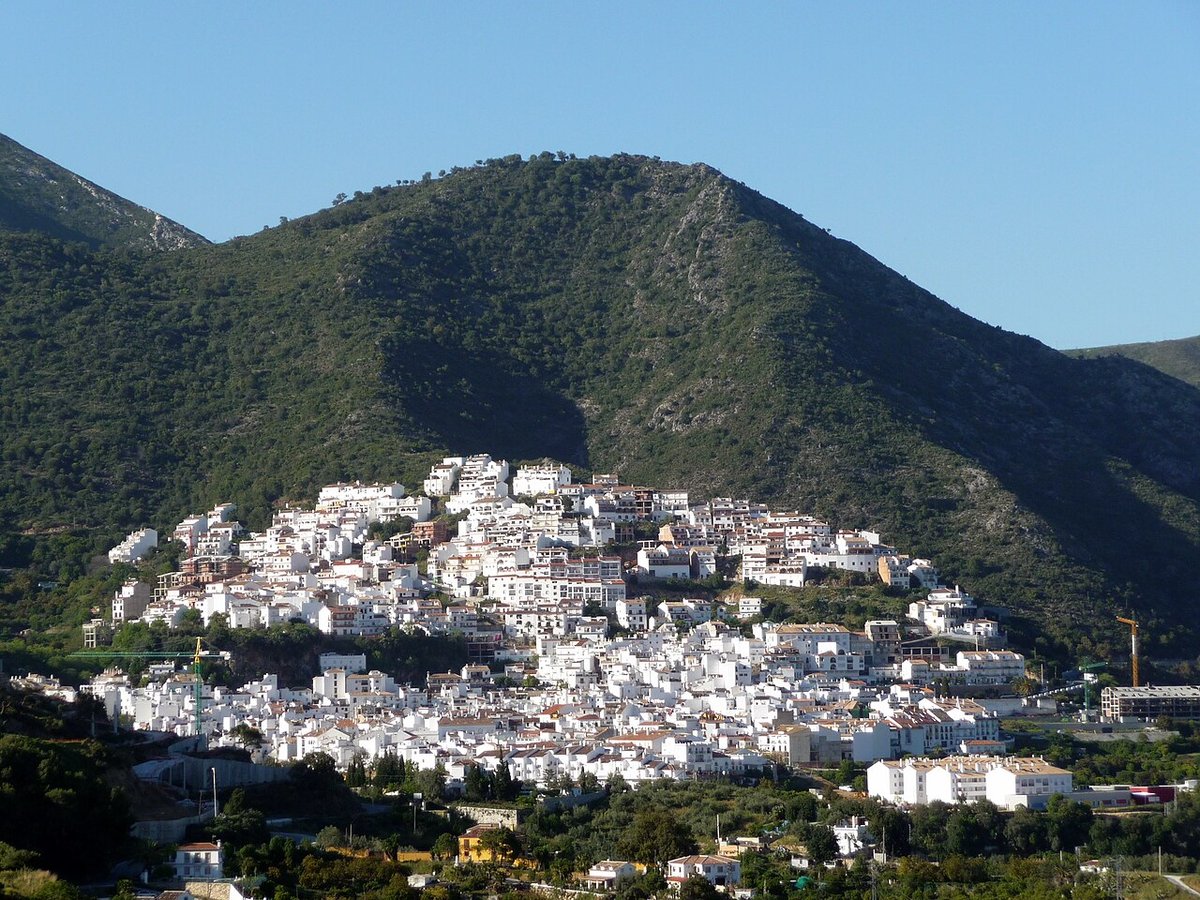
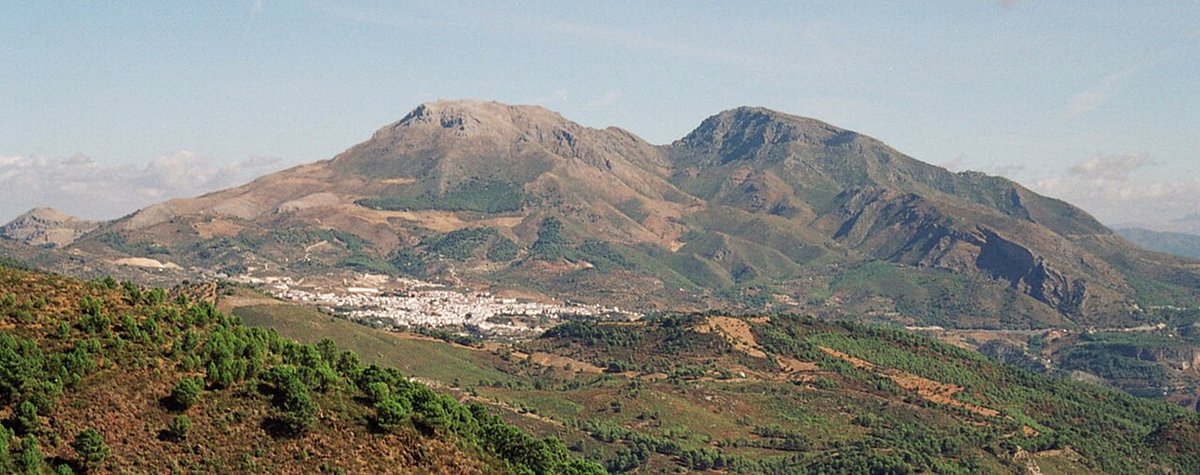
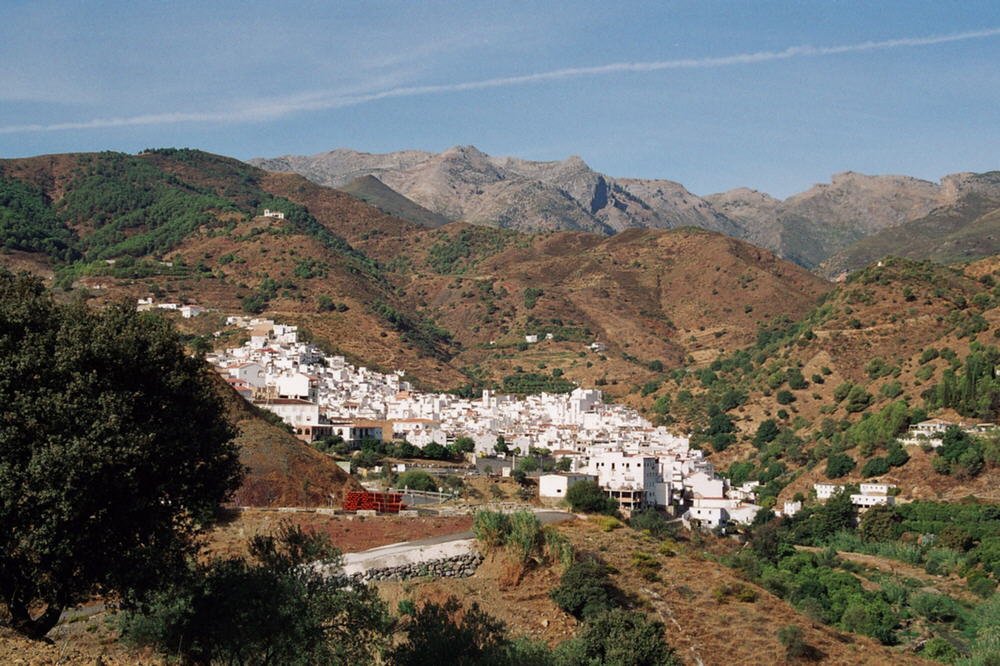
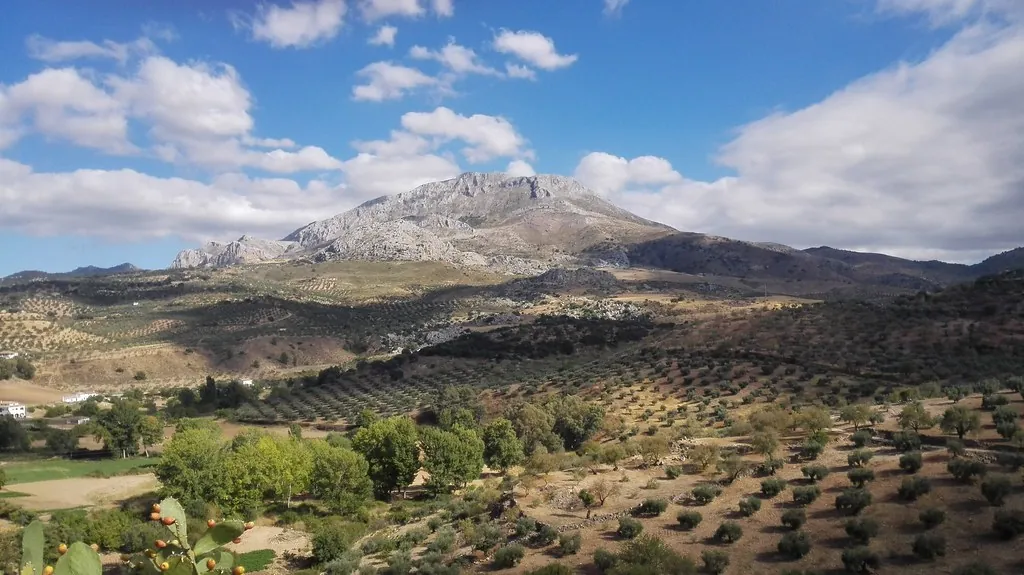
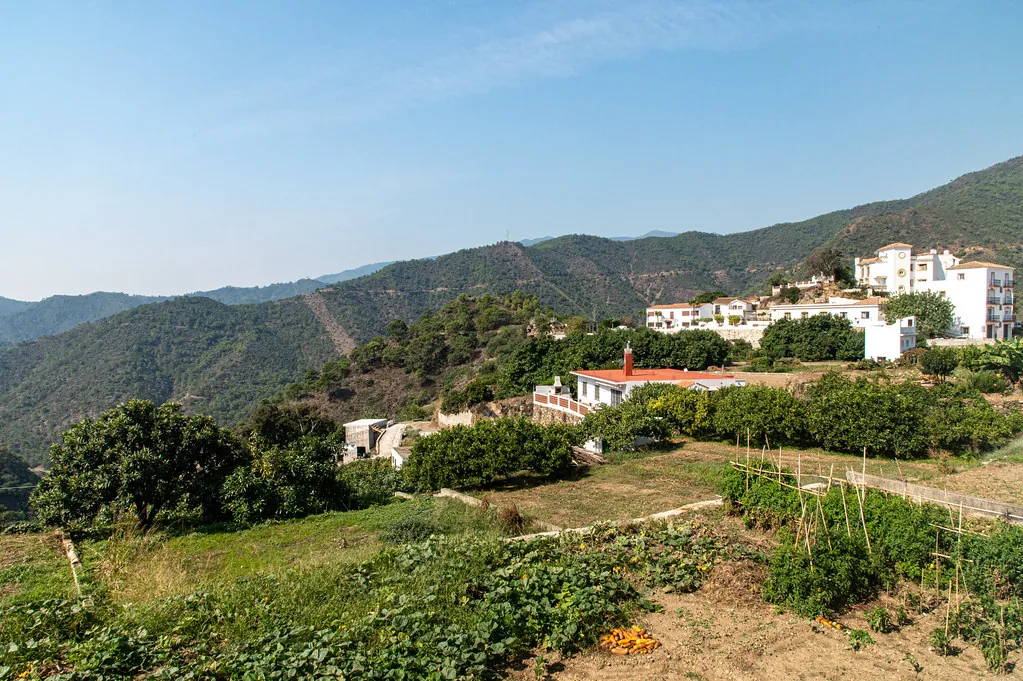
Guaro sits on the first proper ridge of the Sierra de las Nieves, close enough to the Mediterranean to glimpse a sliver of silver on very clear days, far enough inland to escape the Costa del Sol’s gravitational pull. Its 2,300 inhabitants live in whitewashed houses stacked like sugar cubes up the hillside. There are no souvenir stalls, no Irish bars, no PR men proffering laminated menus. Instead you get a butcher who knows the name of every pig he carves, a bakery that runs out of bread by 11 a.m., and streets so narrow that two umbrellas cause a jam.
Walking uphill, thinking sideways
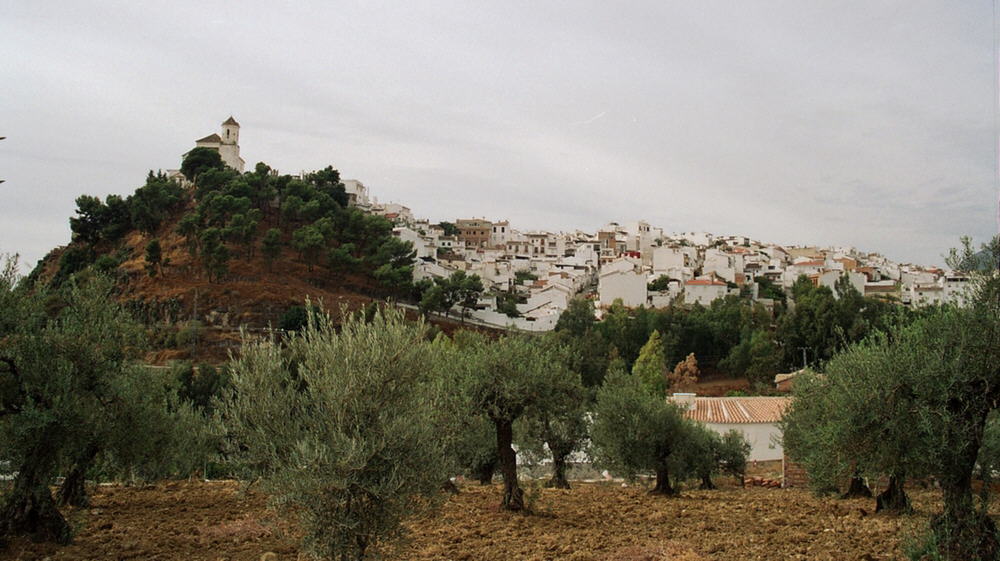
The village itself is walkable in twenty minutes if you don’t stop. Most people do. The callejones tilt at angles that would give a mountain goat pause; summer visitors learn quickly to follow the shade. Half-way up, the sixteenth-century church of San Miguel Arcángel blocks the lane like a ship run aground. Its tower is the reference point for every set of directions: “continue until you see the tower”, “turn left at the tower”, “if you’ve passed the tower you’ve gone too far”. Inside, the nave is plain, almost severe, but someone is usually replacing flowers or polishing brass, and the door is left open until siesta time.
Keep climbing and you emerge onto a bare ridge where picnic tables sit under pines. From here the view stretches west to the Ronda mountains and south across the orange groves of the Guadalhorce valley. On hazy August afternoons the coast appears as a faint metallic stripe; at dusk the lights of Málaga airport wink like a low constellation. The ridge is also the trail-head for several marked walks. The shortest loop (5 km, 90 min) circles through olive terraces and returns along the irrigation channel; the longest (14 km, 5 h) climbs to the pinsapo forest, a relict of the Ice Age guarded by Spanish firs and griffon vultures. None are technically difficult, but the sun is relentless and signage assumes you can read stones rather than arrows. Allow double the guidebook time and carry more water than you think sensible.
Oil, almonds and things that bleat
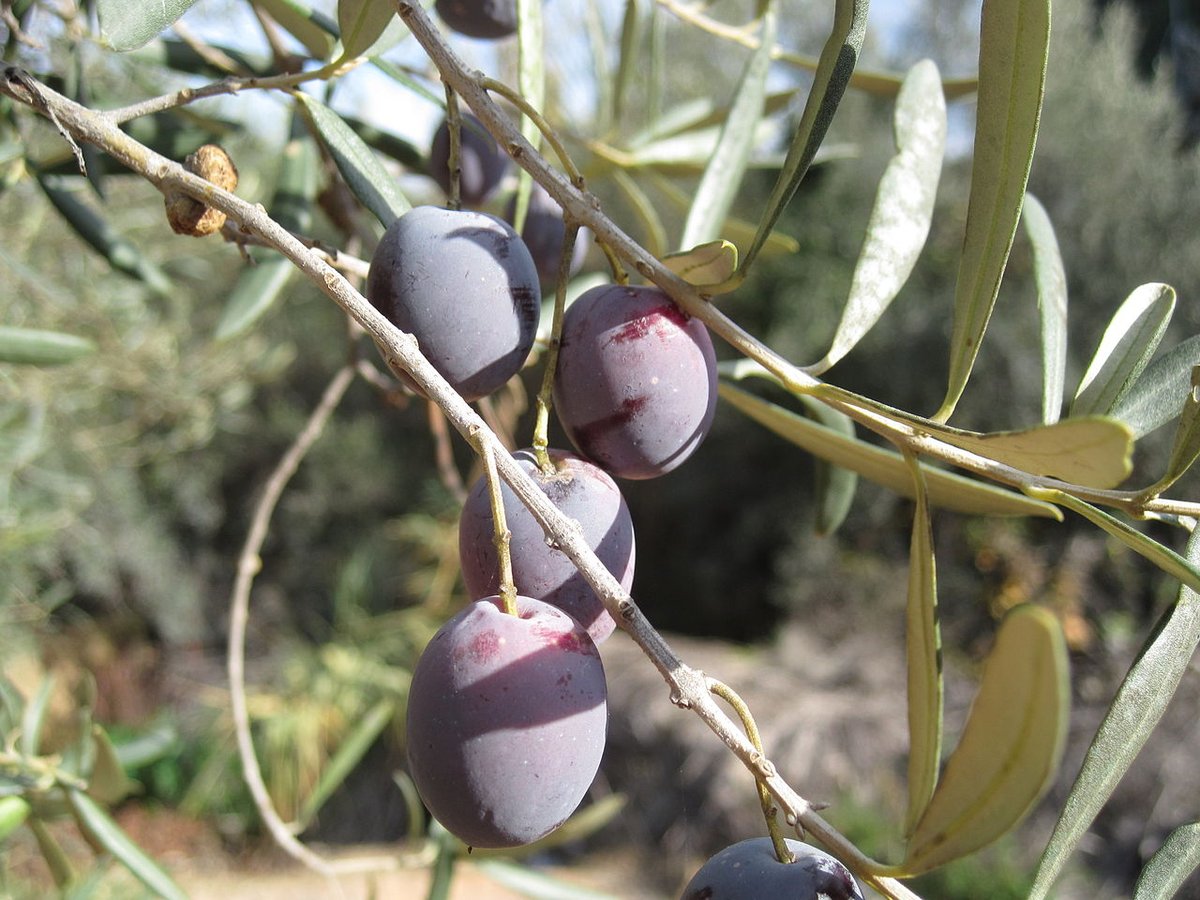
Agriculture here is not heritage theatre. The surrounding hills are quilted with olives whose average age exceeds that of most nation states. Between them, almond trees explode into pink-white blossom during February, turning the slopes into a pointillist canvas for ten days only. Cooperative trucks still trundle through the lanes at dawn during harvest; the mill on the Coín road offers free tastings between November and January, when the scent of crushed olives hangs thick enough to taste. Buy a two-litre bottle for €7.50 and your suitcase will smell like a deli for months.
Meat eaters should time their visit for a Saturday, when the mobile slaughterhouse parks behind the football pitch and the butcher’s counter in Supermercado Lola fills with ruby-red cuts wrapped in waxed paper. Ask for chivo lechal and you’ll get milk-fed kid, milder than lamb, slow-cooked with wine and thyme. Rabbit in almond sauce tastes reassuringly like a British casserole, assuming your grandmother stocked the larder with Sherry. Vegetarians survive on galipuche, a thick vegetable-and-egg soup, though you’ll need to specify “sin jamón” or the chef will lob in a fistful of cured ham for colour.
Festivals that run on wax and wine
Guaro’s calendar is mercifully free of inflatable bananas. The big noise is Luna Mora, held over two weekends in September. For forty-eight hours the village bans cars, dims every bulb and lights 20,000 candles instead. Moorish music drifts from the Arab souk, belly-dancers jangle past children eating churros, and the fortress-like bread oven becomes a tea house where mint fumes mingle with wood-smoke. Entrance is free but parking is not: after 18:00 you’ll be directed to a field three kilometres away and shuttled in for €2. Book accommodation early; half of Málaga province appears to own a cousin with a spare room here.
Easter is quieter, though no less intense. Processions squeeze through lanes barely wider than the floats; bearers shoulder the weight of a Baroque Virgin while a brass band plays funeral marches that echo off the walls like slow thunder. Visitors are welcome, but space is first-come: arrive an hour early, wedge yourself against a doorway and pretend you know the responses.
When to come, when to stay away
Spring is the sweet spot. Daytime temperatures hover in the low twenties, almond blossom scents the air, and the walking tracks firm up after winter rain. Accommodation is cheaper than on the coast; expect to pay €70 a night for a two-bedroom village house with roof terrace and olive-grove view. May can flip to 30 °C without warning; by July the mercury kisses 38 °C and the streets empty between 14:00 and 18:00. Evenings are cooler—pack a fleece for star-gazing—but the water park in neighbouring Monda is unheated; British children have been known to turn blue in August.
Autumn brings the chestnut harvest and the Fiesta de la Castaña, when every patio hosts a improvised barbecue and the air smells of burnt leaves and caramelised sugar. Winter is genuinely quiet: many bars close on random Tuesdays, the sierra can be dusted with snow, and daylight is gone by 18:00. Drivers should note that the final three kilometres from the A-357 involve hair-pin bends and the occasional free-range goat; if you meet a lorry coming the other way, one of you is reversing.
The bottom line
Guaro will not change your life. It offers no Michelin stars, no infinity pools, no souvenir magnet worthy of a fridge door. What it does offer is a place where the bread is still warm at 08:00, where the priest rings the church bell himself when the electricity fails, and where the night sky is dark enough to remind you what the Milky Way actually looks like. Come for three nights and you’ll leave with olive oil on your clothes, almond blossom in your camera roll, and the unsettling realisation that forty-five minutes from the Costa del Sol, Spain still keeps its own time.